Power & Resistance in Latin America

As a region at the heart of the emergence of modern  imperialism and colonialism, Latin America has been historically and intrinsically shaped by unequal power relations in terms of class, gender, race, culture, and international location. Conflicts generated by theseunequal relations have thus been played in multiple arenas of domination, contestation, and negotiation involving a wide variety of social actors,institutions, and issues. While the specific contours of power struggles in the region shifted according to particular historical contexts, they undoubtedly inform the current dynamics of contemporary Latin American societies and help explain the fact that Latin America is currently the most unequal region in the world.

The goal of the Research Cluster on Power and Resistance in Latin America is to foster dialogue among members, graduate and undergraduate students, and the wider community on the varied nature and multiple aspects of power relations in Latin America. The scholars who formed this interdisciplinary, multi-institutional research cluster are motivated by their shared research and teaching interest on different aspects of those themes. Its members, affiliated with the University of Manitoba, the University of Winnipeg, and the Collège Universitaire de Saint Boniface, represent a broad range of disciplines, including Anthropology, History, Literature and Spanish, and Aboriginal, Community Health and Family Social Sciences.

Please see upcoming and past events hosted by the Research Cluster on Power and Resistance in Latin America listed below, and refer to the Institute for the Humanities News and Events listings for other upcoming Research Cluster and Institute presentations.

Contact Person: Dr Jorge Nallim (History)  nallimja@cc.umanitoba.ca


Fall/Winter 2010-11 Events 


"Universities, Communities and Other Stakeholders Working Together to Improve
Pest Management Practices in Costa Rica, Honduras, and Nicaragua"

a public talk by
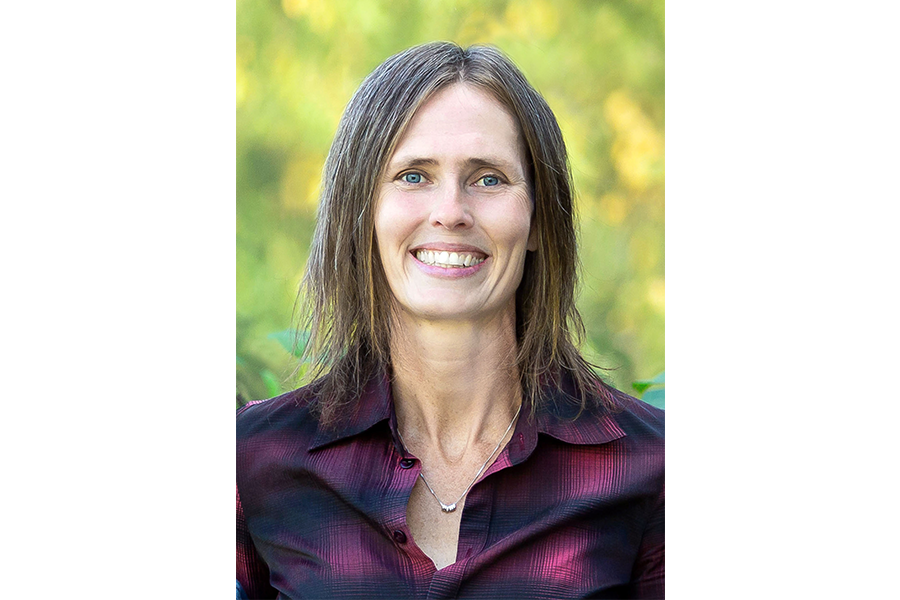
Dr. Annemieke Farenhorst
Department of Soil Science
University of Manitoba

Friday, January 21st
2:30 pm
409 Tier

Dr. Annemieke Farenhorst’ research interests include fate processes of pesticides and estrogens in soil, water and air; chemical transport modeling; and environmental and public health. She has on-going research collaborations in Latin America with scientists and their students at universities in Argentina, Colombia, Costa Rica, Honduras and Nicaragua. Dr. Farenhorst and her Canadian collaborators--Laura Sims, David Lobb and Martin Entz-- received the 2010 University of Manitoba Outreach Award for their extensive outreach activities associated with the project Community-based Pest Management in Central American Agriculture. Dr. Farenhorst’s presentation will discuss the human and environmental health problems created by pesticide use in Central America, highlighting some of the successes gained in improving pest control practices in communities of Costa Rica, Honduras and Nicaragua.

______________________________

Technology, Education, and New Literacies in Theory and Practice: Studies from Brazil

Dr. Maria Cristina Lima Paniago Lopes
Dom Bosco Catholic University

Dr. Roseanne R. Tavares
Federal University of Alagoas

Luiz Henrique Magnani
Universidade de São Paulo

Tuesday, November 23rd
2:30 pm
409 Tier Building

 This event brings together a group of visiting Brazilian scholars at UofM’s Faculty of Human Ecology and the Centre for Globalization and Cultural Studies, who will present on their shared research interests in education, technology, and critical literacies. Dr. Paniago Lopes is professor at the Dom Bosco Catholic University’s Education Post-Graduation Programme and  leader of the Group of Research and Studies about Educational Technology and Distance Eduation (GETED) registered at Brazil’s National Council for Scientific and Technological Development (CNPq). Dr.Tavares is professor at the Federal University of Alagoas’s Language Postgraduate Program, director of the research group “Observatory of language in use,” and research member of the national project on literacies and multi-literacies in Brazil. Luiz Magnani is a PhD researcher at the Universidade de São Paulo, whose research focuses on the relationship between video games, meaning-making, and critical literacy.

Videos of the individual presentations can be viewed online through the links to
each speaker's name, above.  Thank you to Dr Diana Brydon (Canada Research Chair,
Centre for Globalization and Cultural Studies
) for sharing these links. 

______________________________

Contesting Power: New Orientations in Latin American History
 
Friday, November 5, 2010
9:00 AM - 3:00 PM
Room 409 Tier Building 

The UMIH Research Cluster on Power and Resistance in Latin America is pleased to present this one-day symposium on Latin American history, which celebrates Timothy Anna’s distinguished career of over forty years at the University of Manitoba’s Department of History.

Dr Anna not only built a reputation as a collegial and committed colleague at UofM, his scholarship has also been widely recognized in the field of Latin American history as his path-breaking research on colonial and early-national Mexico and Peru influenced a generation of scholars.

Program:

Panel 1
9:00-10:30 am - Gender, Culture, and Representations

Patricia Harms (Brandon University): "Gendering Guatemalan History"

Jorge Nállim (University of Manitoba): “Symbolic Power Struggles: Ideological Appropriations and Anti-Peronism in Argentina, 1946-1955”

Kelly Saxberg (Independent Filmmaker): "Putting Research on Film"

Break: 10:30-10:45

Panel 2
10:45-12:15 pm - Ethnicity, Class, and Power

Mark Meuwese (University of Winnipeg): "Unsettling Spanish Peru: Alliances between the Mapuche and the Dutch in Seventeenth-Century Chile"

Jason Yaremko (University of Winnipeg): “'Contrato de Sangre' ('Contract of Blood'): Continuity, Change, and Persistence in Colonial Indigenous Labour Forms and Elite Strategies in Nineteenth-Century Cuba”

Ronald Harpelle (Lakehead University): “Facing Foreigners: Labour, Ethnicity and Space in a United Fruit Enclave”

Karl Koth (University of Manitoba): "Tupac Katari, Simon Bolivar, Che Guevara and Evo Morales: The Four Horsemen of the Bolivian Constitutional Apocalypse. But Who Rides the White Stallion?"

Lunch break: 12:15-1:30 pm

Remarks and Keynote Address: 1:30-3:00 pm

Mark Gabbert (Head, Department of History, University of Manitoba)

Timothy Anna

Keynote Presentation:
Jim Handy (University of Saskatchewan): "So What's Different About Latin America? Land, Labour and Capitalism in Late Nineteenth-Century Latin America"

Everyone is welcome to attend!


Past Cluster Events


“Women, Poverty, and Social Policy in Contemporary Brazil,”
a public talk by Dr Neuma Figueiredo de Aguiar
(Universidade Federal de Minas Gerais, Brazil)

“Women, Poverty, and Social Policy in Contemporary Brazil,” a public talk by ()

Tuesday, March 23rd
2:30 pm
409 Tier Building

Dr. Neuma Figueiredo de Aguiar is Emeritus Professor of Sociology at the Federal University of Minas Gerais, Brazil. She holds degrees from the Catholic University of Rio de Janeiro and Boston University, and two Ph.D. degrees from Washington University and the University of Wisconsin-Madison. She specializes in gender, development, and women movements in Brazil. Dr. Figueiredo de Aguiar’s distinguished academic career was recognized by the Brazilian Sociology Association, who awarded her the prestigious Florestan Fernandes prize for her contributions to the development of sociology in Brazil.

The Research Cluster gratefully acknowledges the generous collaboration of the Canadian Association for the Study of International Development (CASID), the Faculty of Human Ecology, the Department of History, and the Office for International Relations for making this event possible. 


The Institute for the Humanities Research Cluster on Power and Resistance in Latin America presents:

“Masculinities and Intimacies: Performance and Negotiation in a
Transnational Tourist Town in Caribbean Costa Rica,”
a public talk by Kristofer Maksymowicz (Department of Anthropology).

Thursday, March 4th
2:30 pm
409 Tier Building

A Master’s student in the Department of Anthropology, Kristofer Maksymowicz recently conducted ethnographic fieldwork on Western/Northern masculinities in a transnational tourist town located on the Caribbean coast of Costa Rica. He will present his research on the expression and embodiment of such masculinities in the context of touristic intimacies, in particular, the role of homosociality in the production of masculine and sexual subjectivities that occur in Western/Northern men’s intimate relationships with local women. 


"Human Thinking about an Illicit Nation: Panamanian State Formation, U.S. Empire, and Illegality across the Isthmus"
Matthew Scalenna
(State University of New York-Stony Brook)

Thursday, February 11th
12:30 pm
409 Tier Building

Matthew Scalena is a Ph.D. Candidate in History at the State University of New York-Stony Brook.  A native of Winnipeg, he has recently returned from sojourns in Vancouver (MA, Simon Fraser University) and New York, via Panama and Washington D.C., to work on his dissertation.  His presentation will be based on this project that focuses on the relationship between smuggling and other transnational illegal “flows” passing across the Isthmus of Panama and the tandem early twentieth-century developments of Panamanian state formation and U.S. empire building.  Everyone is welcome to attend this talk. 


“Democracy for Whom?: The United States and Latin America
in John Pilger’s The War On Democracy

Monday, February 1st
2:30 pm
409 Tier Building

This event will consist of the projection and discussion of The War on Democracy, a 2007 award-winning documentary directed by John Pilger. Based on a wide range of interviews and archival footage, it explores the nature and history of US intervention in Latin America in the twentieth-century and its role in the overthrow of democratic movements and governments. Pilger’s inclusion of the latest developments in countries such as Bolivia and Venezuela brings to discussion questions regarding social movements, popular resistance to imperialism, and the basis for the construction of a genuine democracy.  Everyone is welcome to attend.


The UMIH Research Cluster on Power and Resistance in Latin America presents Two Research Talks 

“The Influence of English Language in the Socio-Economic and Political Development of Contemporary Cuba”
Dania Yudith Suárez Abreu
Universidad de Ciego de Ávila (Cuba)

and

“A Case Study of the Brazilian Centre for Agrarian Reform (NERA)”
Janaina Francisca de Souza Campos
Sao Paulo State University (UNESP)

Dania Yudith Suárez Abreu and Janaina Francisca de Souza Campos are graduate students who have been awarded scholarships from the Emerging Leaders in the Americas Program (ELAP), a federal program aimed at supporting the development of human capital in the Americas and strengthening linkages between Canadian and Latin American and Caribbean universities. In this shared presentation, they will present their ongoing research that they are carrying out as part of their current affiliation with UofM’s Faculty of Human Ecology.

Friday November 27th
2:30 pm
409 Tier Building


 "To be Disappeared Twice: Human Rights Commission of El Salvador and the Archival Imperative"

A public research talk by Graham Stinnett
(U of M History Department-Archival Program)

A graduate student at the Department of History’s Archival Program, Graham Stinnett recently curated the exhibit “To Remember Spain: The Winnipeg Committee to Aid Spanish Democracy” for the University of Manitoba’s Archives and Special Collections. He will present his research on the importance of records and records creators from human rights non-governmental organizations. Based on his work on the Comisión de Derechos Humanos de El Salvador (San Salvador) and the Resource Center of the Americas (Minneapolis), he will discuss the role of the archivist as activist and active participant in social change through the inclusion of marginalized voices that can inform the larger dialogue of people’s history.

Monday November 16th
2:30 pm
409 Tier Building


 "Civil Society and Popular Resistance to Military Coup in Honduras"

 A public talk by Grahame Russell (Rights Action)

Grahame Russell is a non-practising lawyer (University of Ottawa’s Faculty of Law) and global human rights and development activist. For over 10 years, Grahame lived in Mexico and Central America, working with grassroots organizations and NGOs on environment, development and human rights issues.  Since 1995, Grahame is co-director of Rights Action (http://www.rightsaction.org/) that raises funds for community-controlled development, environment and human rights projects in Guatemala and Honduras, as well  as in Chiapas, El Salvador and Oaxaca; and that carries out education and activism work in the USA and Canada related to global human rights, environmental and development issues.

Tuesday, October 27th
2:30 pm
409 Tier

The Research Cluster on Power and Resistance in Latin America gratefully acknowledges the support of Rights Action, the Global Political Economy Program, and the University of Winnipeg’s Aboriginal Governance Program and Politics Department in making this event possible.


"Masculinities in an Age of Conquest"
A public talk by Dr Asuncion Lavrin

Dr Asuncion Lavrin is Professor Emeritus at Arizona State University. The author of numerous articles and chapters, she has published four books on gender in Latin America.  Her most recent work, Brides of Christ: Conventual Life in Colonial Mexico (2008), won the Rocky Mountain Council for Latin American Studies, John McGann Award for Outstanding Book of 2008.  Her current research focuses on notions of masculinity within male religious communities of the colonial era in New Spain.

Thursday October 1st
2:30 pm
Room 409 Tier Building

The Research Cluster on Power and Resistance in Latin America gratefully acknowledges the support of the Brandon University History Department and Gender and Women's Studies Program in making this event possible.


 Past Events


"A New Colonization? Contemporary Bolivia and the Impact of Tourism in Global Context”
A Conversation with Ton van Zantvoort

Ton Van Zantvoort is an independent Dutch filmmaker, whose work on the lives and conditions of peoples in different countries challenges the audience to consider, in his words, “a different world where all human life is valuable". His films, shown in numerous festivals, have received prizes and recognition around the world. Mr Van Zantvoort was in Winnipeg as part of the Margaret Mead Traveling Film and Video Festival for the presentation of his film Grito de Piedra (Scream of Stone), which deals with the lives and experiences of mine workers in Potosí, Bolivia. In his presentation at U of M, he was joined by Dr Karl Koth (History), who engaged with Mr Van Zantvoort’s presentation and discussed it within broader historical and social frameworks.

Friday, January 16th
2:30 pm
409 Tier Building

The Research Cluster on Power and Resistance in Latin America gratefully acknowledges the generous financial and administrative support of the Department of Anthropology which was essential in making this event possible.


"A Higher Moral Ground: The First Inter-American Congress of Women in Guatemala City, 1947"
a talk by
Dr  Patricia Harms (History, Gender and Women’s Studies, Brandon University)

Tuesday, January 27th
2:30 pm
409 Tier Building

Dr Patricia Harms is Assistant Professor at Brandon University’s Department of History and the Gender and Women’s Studies Program. She has published articles and collaborations on twentieth-century Guatemalan and Latin American history, transnational gender and women’s history, and comparative Indigenous history. 


"Under Rich Earth: Ecuadorian Peasants and their Struggle against
Global Capitalism"

a documentary and discussion by
Malcolm Rogge

Wednesday, February 4th
2:30 pm
409 Tier Building

Born in Winnipeg, Malcolm Rogge is a filmmaker and writer based in  Toronto. He holds a Masters in Environmental Studies from York University and he is also a graduate of Osgoode Hall Law School in  Toronto. With an extended career in the performing and visual arts, his fiction, poetry, and academic articles have been published in books, magazines, and journals. Mr. Rogge's films and videos, which combine his passion for arts and politics, have been exhibited widely in a variety of theatres, festivals, and galleries. In this event at UofM, he presented his documentary Under Rich Earth, which displayed the struggle of coffee and sugarcane farmers and  Ecuadorian peasants who resisted the dispossession of their land to make way for a mining project by a Canadian company. The projection was followed by a discussion of the film with Mr. Rogge.


“Money, Markets and Myths: Resistances to Centralizing and Socializing Discourses in Santa Cruz, Bolivia"
a talk by
Dr Karl Koth (History, University of Manitoba)

Tuesday, February 10th
12:30 pm
409 Tier Building

Dr Karl Koth has published extensively on different aspects of Latin American history. Among his works, he is the author of Waking the Dictator: Veracruz, the Struggle for Federalism and the Mexican Revolution, 1870-1927 (University of Calgary Press, 2002). He has been Associate Dean of the Faculty of Arts at Okanogan University College (Kelowna, British Columbia) and currently teaches in the UM History Department. Dr Koth discussed his current research project on contemporary Bolivian history.


 "Blackness and Whiteness in the Montevideo Carnival, 1900-2000"
a talk by 
Dr George Reid Andrews (History, University of Pittsburgh)

 Thursday, February 26th
2:30 pm
409 Tier Building

Dr George Reid Andrews is Distinguished Professor and UCIS (University Center of International Studies)  Research Professor of History at the University of Pittsburgh. In his outstanding scholarly career, he has researched and published extensively on the history of race relations and black populations in Latin America, subjects on which he is a widely acknowledged authority in the field. His books include The Afro-Argentines of Buenos Aires, 1800-1900 (Madison, 1980), Black and Whites in São Paulo, Brazil, 1888-1988 (Madison,1991), and Afro-Latin America, 1800-2000  (Oxford 2004), which was awarded the 2005 Arthur P. Whitaker Prize by the Middle Atlantic Council of Latin American Studies and was designated the 2005 Choice Outstanding Academic Title.


"Stigma, Social Inequity, and HIV/AIDS
among Dominican Male Sex Workers"
a talk by
Dr Mark Padilla (School of Public Health, University of Michigan)

Wednesday, March 11th
 3: 00 pm
409 Tier Building

Mark B. Padilla is Assistant Professor in the Department of Health  Behavior and Health Education, School of Public Health, and Adjunct Assistant Professor in the Department of Anthropology, at the University of Michigan.  He is a medical anthropologist with cross-training and experience in global health and HIV/AIDS prevention in Latin America and the Caribbean. His recent book, /Caribbean Pleasure Industry: Tourism, Sexuality and AIDS in the Dominican Republic/, won the Ruth Benedict Award for 2008.  The book discusses in-depth one of the primary aspects of his ethnographic research: the intersection of sexuality, health, and political economy in the Caribbean.  With several years of applied anthropological research in Latin America and among Latinos in the U.S., his work addresses intervention and policy applications to HIV/AIDS among vulnerable populations.  His current research, funded by the National Institutes of Health, concerns the design of culturally-sensitive interventions that consider the social features of tourism areas, sex
work, and HIV in the Dominican Republic.

Dr Padilla's talk was part of the Department of Anthropology's 2009 Colloquium Series, and was sponsored by the Department of Anthropology, Global Political Economy, the Institute for the Humanities Research Cluster on Power and Resistance in Latin America, and Community Health Sciences


Latin American Transitions in the New Century - A Two Day  Roundtable

In this year’s final event, the members of the Power and Resistance in Latin America  Research Cluster held a two day roundtable on a wide range of issues related to ongoing power struggles in different Latin American countries. Based on their areas of interest and research, each member made a brief presentation (10-15 minutes), followed at the end of each session by an open debate which included the audience.

First Session: Wednesday, March 25th
2:30 pm
409 Tier Building

  • Tim Anna (History, University of Manitoba):"Mexico: Burying the Revolution"
  • Karl Koth (History, University of Manitoba): "Bolivia: Preventing  Revolution: the Santa Cruz Autonomy Movement"
  • Jason Yaremko (History, University of Winnipeg): "Cuba: Burying the Revolution?"
  • Jorge Nállim (History, University of Manitoba): "Argentina: A (Potential?) Revolution Unmade"  

Second Session: Friday, March 27th

2:30 pm
409 Tier Building    

  • Mark Meweuse (History, University of Winnipeg): "The Final Frontier? Indigenous Peoples in the Brazilian Far West"
  • Wilder Robles (Family Social Sciences, University of Manitoba): "The ‘New Republic’ and Land Reform in Brazil: A Critical Evaluation, 1985-2009"
  • Javier Mignone (Family Social Sciences/Community Health Sciences,  University of Manitoba): "Colombia: Indigenous Health Care Organizations -Power as Health"
  • María Inés Martínez (French, Spanish, and Italian, University of  Manitoba): "Security as Power Politics: Álvaro Uribe’s Colombia"