 |
 |
FPG (Frederick
Philip Grove Felix
Paul Greve):
A Chronology in Three Parts

Solar Grove PPtCov
Blue ©gd June 2005
|
compiled,
with notes, by
Gaby Divay
How
to cite this e-document

Greve (1879-July
1909) FPG (Aug.
1909-Sep. 1912) Grove (Sep.
1912-Aug. 1948)
Greve, 1879-1909
-
Felix Paul Greve is
born on February 14, 1879 in Radomno,
near Deutsch-Eylau. [1] Later, as Grove,
FPG will maintain his place of birth in
form of "a Russian German border-town" near
the Vistula. It is instructive to view
the area in an historical atlas: until
World War I, Radomno was squarely within
the boundaries of Wilhelmine Germany. After
1918, it became a Polish-German border
town with the creation of East Prussia
which was separated from the rest of Germany
by a corridor. After World War II, it became
part of the Soviet Union
-
Greve's Family moves
to Hamburg in 1871 Greve's family
was from Mecklenburg near Schwerin. Greve's
only sister was born on the stately, yellow
brick premises of Thurow in the vicinity
of this area on August 25, 1877. Grove
would claim a white "castle Thurow" as
his childhood residence which he relocated
to southern Sweden
-
In 1886 Greve
starts school at the "Realschule" of
St. Pauli, the famous harbour part of Hamburg
-
In 1896 he enters
the Real-Gymnasium branch of an illustrious
Hamburg school, the Johanneum
-
In 1897 he transfers
to the Humanistic branch of the renowned
Gymnasium
-
In early 1898 he
passes the graduation examinations (Abitur)
with distinction, although he had to catch
up on the classical languages largely on
his own. Grove was always rightly proud
of this achievement
-
In May 1898 he
enrolls at the University of Bonn in Classical
Philology and Archaeology
-
Almost immediately after
Greve's arrival, his mother, Bertha (Reichentrog)
Greve dies in Hamburg (15.10.1855-6.5.1898)
-
1898-1900 Greve
studies diligently with distinguished professors
at Bonn
-
He leaves Bonn University
in 1900, perhaps, to continue in
Munich and to travel
-
In October 1901 Greve
registers as a "private scholar" (Privatgelehrter)
in Munich. Soon, he publishes his first
known reviews of Nietzsche's works and
of Stendhal's Lucien Loewen in the
local [Münchener] Allgemeine Zeitung
-
Until October 1902 he
courts the city's literary circles, particularly,
those surrounding Karl Wolfskehl and the "Master" Stefan
George. He is mentioned in Theodor Lessing's
memoirs (1935) as having danced with the
most glamorous of Munich's bohemian women,
Franziska (Fanny) von Reventlow
-
In early 1902 he
produces the poetry collection Wanderungen and
the lyrical play Helena & Damon as
well as Oscar Wilde's Intentions as Fingerzeige.
He also seems to be collaborating with
renowned archaeologist, Adolf Furtwängler,
on an authoritative catalogue of Greek
vases
-
He travels to Paris
(in May 1902) and to Gardone on
Lake Garda (in August 1902) with
his friend from his Bonn student days,
Herman [sic!] Kilian. On the way to Paris,
the friends visit Stefan George in Bingen,
and evaluate Daisy Broicher's translation
of George's poetry into English
-
In mid-October 1902,
and apparently related to the staging of
Oscar Wilde's comedies in Berlin with the
genial director Max Reinhardt at the newly
founded Kleine Theater, Greve settles in
Berlin where he befriends August Endell,
a Jugendstil architect of some growing
renown
-
During frequent afternoon
teas he becomes attracted to Endell's wife
Else, to whom he writes while she is at
a sanatorium built by her husband in Boldixum
on the Frisian island Föhr. He also
sends her his translation of Oscar Wilde's
comedy The Importance of Being Earnest (Bunbury)
-
At Christmas 1902 Else
and Greve become lovers
-
In January 1903 the
doubly betrayed Endell accompanies the
adulterous pair to Hamburg and hence on
a steamer to Palermo. He is left behind
in Naples with a consolation bicycle
-
In May 1903 Greve
travels to Bonn on business -- he is arrested
on arrival, tried, and sentenced to one
year in prison for defrauding his friend
Kilian for the enormous sum of M10,000
-
Before and during his prison
term in 1903, Greve writes two essays
on Oscar Wilde. [2] Greve
also pursues his career as a literary
translator in earnest now: Gide, H. G.
Wells, Meredith, and Swinburne are among
the contemporary authors he introduces
to the German public from now on. Initially,
he translates for Bruns publishers, but
soon he obtains assignments from other
establishments as well
-
Immediately after his
release in June 1904 Greve visits
André Gide in Paris who records
his impressions at the time, and publishes
them in 1919 as "Conversation avec
un Allemand". An historical-critical
edition of this intriguing text from Gide's
1904 notes & manuscripts has been published
by the eminent Gide-scholar Claude Martin
in the Bulletin des amis d'André Gide,
October 1976, & exists in French & English
at:
http://www.umanitoba.ca/libraries/units/archives/collections/fpg/gide_conv/conv04f.html
Two confessional letters by Greve were found in Gide's "Conversation" file, & Claude
Martin included them in his edition accordingly. The second
is of particular interest, since it expounds a manic list
of projects, including detailed plans concerning the "Fanny
Essler" complex [see below]
-
Shortly afterwards,
Greve visits H. G. Wells for the first
time, then Else and Greve move to Wollerau
near Zürich in Switzerland. There
they remain until mid-1905
-
In 1905 Greve
publishes his first novel about Else's
experiences in Berlin and Munich with the
title Fanny Essler. Under the joint
pseudonym Fanny Essler, Greve and Else
also publish an accomplished Petrarchan
poetry cycle in Die Freistatt, 1904/5
["Gedichte" (2) - "Drei
Sonette: ein Porträt" - "Gedichte" (2)].
In a wing-altar structure, Else/Fanny describes
how she misses her unnamed, absent lover
Greve in "Tunis"/Palermo & "Husum"/Wyk
auf Föhr, while setting him a time- & spaceless,
abstract "Portrait"-monument
in the three central sonnets.
On occasion of the 100th anniversary of publication, these
poems have been e-published in German & English at http://home.cc.umanitoba.ca/~divay/FEPoems05/
-
In June 1905 the
couple move to Paris-Plage / Étaples
in Northern France where they live until early
1906. The proximity to Boulogne allows
for convenient day-trips to England in
general, and to H. G. Wells in particular:
the author lives across the Channel at
Sandgate, a mere mile from the ferry harbour
of Folkestone
-
In February 1906 they
move back to Berlin where Greve, over the
next three-and-a-half years, produces an
incredible amount of literary classics
in German translation, now mostly for Insel
Publishers. Else's "story of my childhood" appears
as Greve's second novel, Maurermeister
Ihles Haus
-
In 1906/7 there
is much talk about Greve's comedy Der
heimliche Adel. It is uncertain if
it was ever staged. In Berlin Greve and
Else lead a fairly quiet life. Sparse letters
to O.A.H. Schmitz prove that they socialized
with him and the editor of Die Schaubühne,
Siegfried Jacobsohn. Schmitz' chatty diaries
and memoirs mention the couple several
times during these years, and also Else's past
relationship with Richard Schmitz in the
late 1890s. -- On August 22, 1907, after
years of legal wrangling about Else's & August
Endell's divorce resulting from her elopement
with his friend Greve in January 1903,
the "scandalous pair" DID tie
the knot in Berlin, so that both Else & Greve
became bigamists in America in November
1913 & August 1914 respectively! Gisi
von Freytag-Loringhoven made this sensational
discovery in late 2001, & Irene Gammel
published this information in her biography
of Else, Baroness Elsa, MIT Press, [April]
2002, p.144.
-
In 1909 Greve's
travel impressions "Reise in Schweden
I" appear in the newly merged journal Neue
Revue und Morgen. Friend Schmitz was
involved in the merger, and partly financed
it. The Roman numeral "I" indicates
that more of the same or of a similar kind
would follow, but it was to remain one
of Greve's last known contributions
-
In late July 1909 Greve
leaves Germany with a staged suicide. Soon,
he travels second-class on the White Star
Liner Megantic from Liverpool to
Montreal, [3] exactly as described by Grove
in the opening pages of his 1927 autobiographical
novel
-
Else "Greve" sends
a distraught note to Insel director A.
Kippenberg on Friday, September 17,
1909 -- on Tuesday, September 19, he
elegantly defends himself and his establishment
against charges of having pushed Greve
over the edge by overworking and underpaying
her now presumably dead "husband" and
also by unjustly criticizing his translations. [4] He
furthermore points out as tactfully as
possible that Greve had recently double-sold
one of his latest translations [probably,
Swift's Prosawerke, Berlin, v. 1,
Oesterheld, 1909; v. 2-4, Reiss, 1910],
and implies that this might have been a
compelling raison for Greve's disappearance,
Kippenberg excuses Else's impertinent tone
with her "understandable agitation" and
offers his financial support
-
Else joins Greve in
Pittsburgh in late June 1910, having
crossed the Atlantic from Rotterdam New
York on the Rijndam. When she clears
immigration on June 29, she is a 35 year
old author from Swinemünde who is
on her way to meet her brother-in-law,
a certain T. R. Greve. His address is on
4th Ave 57 in Pittsburgh.
-
In the "Nekrolog" (obituary)
section of Kürschner's 1910 Literatur-Kalender
Felix Paul Greve is listed as deceased.
His brief entry is marked by a symbol meaning
that the information stems from the postal
authorities.

FPG in Limbo,
1909-1912: United States
Note: For these
obscure three years in between FPG's two
lives, there are far more open questions
than answers. The main sources for this period
remain Grove's two autobiographical books
of 1927 and 1946. Only four facts have been
ascertained so far: (1) FPG took passage
in July 1909; (2) in early 1910, before Else
joined him, he was a New York publisher's
agent in Pittsburgh, and therefore likely
involved in the daring book-selling scam
described in his 1927 book; (3) Greve was
farming with Else near Sparta, Kentucky,
for the year 1910/11; and (4) he worked for
the Chaffee family at the huge Amenia & Sharon
Bonanza Farm near Fargo, North Dakota, before
coming to Canada in September 1912.
-
Did Greve go to Toronto
upon arrival in Montreal on July 30th,
1909?
-
Did he really work in "a
cheap eatery" on Toronto's Yonge Street
for several weeks?
-
When did he in fact
go to New York? [our guess: in August/September
1909]
-
Was he implicated in
the "History of the World" book
scam, by peddling the twenty-volume set
to rich, but gullible industrialists like
steel-Baron "Kirsty" in Pittsburgh? [5]
-
An entry in the 1910
Pittsburgh Directory reads: "F. P.
Greve, mgr [=manager], 524, 4th Ave., h
[=home] Carrick." A contemporary city
atlas shows that this address is located
in the heart of the city's financial district,
just around the corner of the Allegheny
Court House with adjoining jail [6]
-
-
Did FPG really live
as a hobo for nearly two years, tramping
down from New York State, then following
the Ohio River through Pennsylvania and
Ohio?
-
Why does Greve as Grove
keep absolute silence about the entire
year he spent with Else near Sparta, Kentucky,
in 1910/11? Both in his first Canadian
pioneer novel, Settlers of the Marsh in
1925, and in his first autobiography, A
Search for America in 1927, any allusion
to this experience is carefully avoided.
Else wrote numerous poems dedicated to
FPG, some make reference to Kentucky, but
only one, entitled "Schalk",
also specifies "Sparta, Kentucky,
am Eagle Creek" [7]
-
In his A Search for
America (1927, web-edition ©2000)
Grove describes his stay at a North Dakota
Bonanza Farm during the early 1890s.
This multi-million enterprise, where
FPG did work temporarily in 1912, could
be identified as the Amenia & Sharon
Land Company near Casselton [5m] and
Fargo, North Dakota [ca. 15m] in March
1996

Grove, 1912-1948: Canada
Manitoba, 1912-1929 Ontario,
1929-1948
-
Greve shows up in the
Prairie Province of Manitoba, Canada, as
Frederick Philip Grove in September
1912[8]
-
He obtains a teacher's
certificate from the Province's Education
Minister Fletcher and proceeds to teach
in predominantly German-speaking areas
like Kronsfeld, Haskett, Morden, and Winkler
-
In 1913/14 he
falls in love with fellow-teacher Catherine
Wiens (1872-1972). They are married in
Swift Current, Saskatchewan, on August
2, 1914. The Marriage Certificate states
that Grove is 41 years old [= b. 1873,
and six years older than he is, his real
age being 35], that he was born in Moscow,
Russia, that he is a widower, and that
his parents are Edward Charles Grove and
Bertha Rutherford-Grove [= Carl Eduard
and Bertha Reichentrog-Greve were FPG's
parents]
-
Soon after the outbreak
of World War I, in November and December
1914, Grove publishes his first Canadian
article in four issues of the German-Canadian
newspaper Der Nordwesten: "Rousseau
als Erzieher" is a rambling essay
reminiscent of Greve's Oscar Wilde criticism.
It also harks back to Nietzsche's Third
Untimely Consideration (1876), entitled "Schopenhauer
als Erzieher"
-
Both Groves teach in
a variety of isolated places for the next
fifteen years. In 1915, in Virden,
their daughter Phyllis May is born (1915-1927).
Gladstone, Ferguson, Leifur, and Eden are
more or less lengthy stations before Grove
becomes Principal of the Rapid City school
in 1922
-
In 1915 Grove
enrolls as an extra-mural student at the
University of Manitoba. After seven years
he graduates in 1922 with a BA in
French and German. He is awarded a $150
scholarship
-
In 1917, while
Principal in Gladstone, Mrs. Grove teaches
in the isolated Falmouth School near Waldersee
and Amaranth, Manitoba. Grove's weekly
visits to his wife and daughter there involve
a perilous drive with horse-and-wagon over
thirty miles of rough and marshy country
roads, and provide the material for his
nature essays which are to become his first
Canadian book five years later
-
There is evidence in
Grove's 1919 correspondence with
his first Canadian publisher McClelland & Stewart
that Grove wanted to publish his upcoming
nature essays under the pseudonym "Andrew
R. Rutherford." The same name appears
in relation to Grove's unpublished novel Jane
Atkinson[9] in
his archives. Note that this name refers
to the maternal grand-father of Herman
Kilian, the friend whom Greve defrauded
and who had him sentenced to one year in
prison in 1903/4!
-
In October 1922,
shortly after settling in Rapid City for
the next seven years, Grove publishes his
first book of nature essays, Over Prairie
Trails. Within a year, a sequel appears
in print under the title The Turn of
the Year (1923)
-
Related to these first
English publications, Grove establishes
friendships with several influential faculty
members of Wesley College, University of
Manitoba, in Winnipeg, notably Arthur Leonard
Phelps (1887-1970) and Watson Kirkconnell
(1895-1977). Greve is invited to give readings
or addresses in Winnipeg on several occasions after
1922/23. Particularly the ca. 155 letters
Grove wrote to Phelps throw light on these
events. The University of Manitoba Archives
was able to acquire this invaluable correspondence
when it surfaced quite surprisingly in
1997
-
In June 1924 Grove
retires from teaching to devote his time
to his writing
-
In October 1925 his
first novel, Settlers of the Marsh,
is published. This seemingly impersonal
book is in fact an account of Greve's Kentucky
year in 1910/11, and the final phases of
his ten-year-old relationship with Else
who is depicted in quite unflattering terms
as the depraved Clara Vogel. In June 1925,
Grove participates in the Canadian Authors'
Association's convention in Winnipeg, where
he meets A. Gordon, John Dafoe, and Charles
Roberts [10]
-
In April 1926 Grove
is forced to lance a hasty disclaimer to
the Canadian Bookman who had published
in its April issue (on p. 110) a brief
biographical note of the author [b. 1872,
son "...of a wealthy Swede and a Scotchwoman" and "...actively
cooperating with H. G. Wells, Wilde and
their group in the ninety-nineties; and
editing personally, at that time, the first
complete edition of Swift's Gulliver's
Travels..."]. This note was based
on information Grove had told to Watson
Kirkconnell. In his letter of April 30,
1926, Grove modestly defers the honour
of editing Swift's novel to Temple Scott,
and limits his own role to the "...re-collation
of early editions and the South Kensington
Ford MSS." He acknowledges that he
may have been "instrumental" in
the publication of certain "continental
editions." To recall, one of Greve's
last translations was a four-volume edition
of Swift's Prose Works. It was based
on Temple Scott's edition which is also
extant in Grove's Library Collection
-
Barely three months
before his first autobiographical book, A
Search for America, is launched in
October 1927, and just days before her
twelfth birthday, Phyllis May Grove dies
during an appendicitis operation in Minnedosa
on July 20, 1927
-
In February 1928 Grove
embarks on the first of three coast-to-coast
lecture tours organized by the Canadian
Club. It takes him through Ontario until
April. Then, from September to November
1928, he is touring in western Canada.
During this time, his second pioneer novel Our
Daily Bread appears and benefits from
the publicity
-
The last lecture tour
takes Grove to eastern Canada during January,
February and March of 1929. All
three voyages are very well documented
by numerous letters the author wrote to
his wife in Rapid City, Manitoba. For the
first six months of this year, he is also
Associate Editor of The Canadian Nation.
And Grove's only Canadian translation,
Gustav Amann's Legacy of Sun Yatsen,
appears with Carrier's imprint
-
In March 1929,
a collection of critical essays is published
as It Needs to be Said. They originated
with an aborted lecture Grove had prepared
for the 1926 convention of the Canadian
Authors' Association in Vancouver. It contains
six essays of criticism, including "A
Neglected Function of a Certain Literary
Association." Partial manuscripts
of these essays exist in Grove's notebooks
-
No doubt related to
the enormous success on his three Canadian
Club Lecture Tours, Grove entertains lofty
expectations of success and employment.
By the fall of 1929, the Groves
consider leaving rural Manitoba and moving
East. First, they think Grove might be
employed by one of the big publishing houses
in Toronto; then they hope for a lucrative
government position in Ottawa, perhaps
in the diplomatic service. When nothing
seems to materialize, there are even hints
that they may transfer to Europe -- France
or Switzerland are mentioned in Grove's
correspondence to Kirkconnell and Phelps
at the time

Grove, 1929-1948: Ontario
-
The Groves leave Rapid
City in September 1929 and spend
most of the fall in friends' cottages in
Northern Ontario (Canton, in October, and
Bobcaygeon). Grove is giving occasional
lectures and is doing some writing. The
couple also consider settling here by acquiring
property in the area
-
In December 1929 Grove
accepts a position at Graphic Publishers
in Ottawa. Graphic had published Grove's Search
For America in October 1927. It was
commissioned to the newly-founded Carillon
Book Club in January 1928, and reprinted
in June 1928
-
In 1930 Grove
is flying high with the anticipated success
as figure-head editor of Graphic's new
subsidiary Ariston. Scraps of stationary
and a glossy advertising blurb have recently
been found inserted in Grove's Library
Collection, and his unpublished letters
to Phelps are full of bragging about his
salary, his importance, his publishing
plans for large and expensive editions
of world literature. Ariston would
only publish two books, both in 1930 [11]
-
On October 14, 1930 Grove's
son Leonard is born on the outskirts of
Ottawa where the Groves have moved earlier
in the year. The address given on personal
letter-heads is a post office box in "Cummings
Bridge". Phelps, after whom Grove's
son was named and who christened the child,
Kirkconnell and others are magnanimously
invited to the spacious property during
the spring and summer of this year. Also
in October 1930, Grove's novel The Yoke
of Life is published by Macmillan
-
There are many financial
and also political problems at Graphic
Publishers by the spring of 1931.
It has been noted that Grove cleared out
just in time before the entire venture
was faced with bankruptcy. However, by
summer Grove is seriously concerned about
his future. He even announces to Kirkconnell [12] that
he has sold the family's belongings and
bought "tickets for Europe." Once
again, he threatens, not without melodramatic
tones, to burn his books, as he frequently
does when things are not going his way.
This is the only time, though, that he
darkly speaks of "a holocaust of my
Mss". Equally pessimistic is his article "Apologia
Pro Vita et Opere Sue" which appears
in the August issue of Canadian Forum
-
By October 1931,
Grove has acquired an estate in Simcoe,
Ontario, where he retires from the urban
Ottawa region to realize his life-long
dream of living and writing as a gentleman-farmer.
Hard-hit by the severe economic depression
and later by ill health, this is where
Grove was to remain for the rest of his
life. To a large extent, he owed the luxury
of his writing to his wife Catherine, who
operated a thriving Froebel school, which
at times included the care of the emotionally
and/or mentally challenged
-
Grove is represented
in the very first issue of the University
of Toronto Quarterly with the article "Thomas
Hardy: A Critical Examination of a Typical
Novel and His Shorter Poems" in 1932
-
By December 1932,
Grove is the active leader of the English
Club in Simcoe. The secretary/Treasurer,
Mrs. Jackson, presents a paper about Hebbel's Gyges
und sein Ring. Grove has proposed the
topic, and he has lent a helping hand with
her preparations. Mrs. Jackson's paper,
many other documents about the Club, and
her reminiscences on occasion of the 1977
Grove Symposium in Simcoe are extant in
the Grove Collections
-
In January 1933 Grove
publishes Fruits of the Earth. Note
that the title of his new novel mimics
both Gide's Les nourritures terrestres (1897)
which book Greve claimed to have translated
in 1905, and Knut Hamsun's Markens Grøde / Growth
of the Soil (1917), for which Hamsun
received the Nobel Prize in 1920. Hamsun
spent some time working in the Red River
Valley in the 1880s: he mentions the Dalrymple
Bonanza Farm which is adjacent to the neighbouring
Amenia Bonanza Grove knew in 1912 (but
claims to have known in ca. 1892/3)
-
Later in the year 1933,
and until February 1934, Grove gives
a series of Carnegie Foundation Lectures
on the appreciation of literature at McMaster's
University in Hamilton [13]
-
In June 1934 Grove
is one of the first five recipients of
the Lorne Pierce Medal. Ever since 1926
it was awarded every second year by the
Royal Society of Canada for outstanding
literary achievement. Dr. Pierce, with
whom Grove corresponded much about those
of his books produced by Ryerson in the
1930s, was quite hurt when he learnt of
the fact that Grove had cashed in his 1934
award for a radio
-
In January/February 1939 Grove
publishes his latest novel, Two Generations,
privately. Though complaining constantly
in highly dramatic fashion about the desperate
state of his financial affairs, he is able
to produce a "de luxe edition" a
copy of which he promptly sends to Thomas
Mann in Princeton [14]
-
Grove's 60th birthday
in 1939 sets off a period of soul-searching
and deep reflections. His enigmatic, oracle-like
fragment "St. Nishivara, the Saint" can
be dated to this time, and offers an encoded
chronology of FPG's two lives in form of
some sixty aphorisms. These are imitating
Nietzsche's Zarathustra
-
Grove also drafts a
new and much longer preface for the 1939
Ryerson edition of his 1927 Search
for America, in which he acknowledges,
though still in veiled fashion, the model
of Goethe's Dichtung und Wahrheit. Goethe's
famous autobiography is, however, openly
mentioned in the corresponding manuscript
draft extant among Grove's papers
-
Piqued by the successful
memoirs of André Gide, Grove embarks
on writing his own "true" [versus
fictional] autobiography, My Two Lives in late
1939. It was not published until 1946
as In Search of Myself
-
From April to June 1940,
Grove's "juvenile," The Adventures
of Leonard Broadus, appears in The
Canadian Boy. Also,
the future "Prologue" to In
Search of Myself is published separately
in the October issue of University of
Toronto Quarterly
-
The Canadian Writers
Foundation starts supporting Grove financially
with regular monthly payments from 1940 onwards
-
In April 1941 Grove
is elected into the folds of the prestigious
Royal Society of Canada. His article "Peasant
Poetry and Fiction from Hesiod to Hémon" appears
in the Society's Proceedings of
that year
-
Grove's rather bitter "Postscript
to A Search for America" appears
in the third issue of Queen's Quarterly in 1942
-
In the summer of 1943 Grove
is running unsuccessfully for a seat of
the "Co-Operative Commonwealth Federation" in
the provincial elections of Ontario
-
Half-a-year later, in April
1944, Grove suffers a first stroke
which leaves him paralyzed on his right
side. He is 65 years old, but still claims
to be at least six, seven, or eight years
older (he seems less consistent now than
in the 1920s when he was fairly regular
in applying the seven year age- and the
1872-birth year rules)
-
In December 1944, The
Master of the Mill is published by
Macmillan. The panoramic novel, which,
among other sources like Thomas Mann's Buddenbrooks (1901)
or Galsworthy's Forsyte Saga,
may well have drawn on the affluent Chaffee
dynasty who owned and operated the North
Dakota Bonanza Farm Grove describes in
both his autobiographical books, suffers
from serious faults of chronology and
plot
-
In July 1945 Desmond
Pacey publishes the first full-length bio-bibliographical
book about Grove
-
In May 1946 Grove
receives an Honorary Doctorate from his Alma
Mater, the University of Manitoba,
and in the fall, another one from Mount
Allison University
-
In June 1946 he
is declared an Honorary Member of the Canadian
Authors' Association. Ironically, by the
time these academic and professional honours
are bestowed on him, Grove has suffered
another crippling stroke (in early May
1946) which has left him incapacitated
-
Catherine Grove is conducting
business with publishers from May 1946 onwards.
She reports on her husband's decline in
rather depressing letters to Carleton Stanley [15] who
had reviewed The Master of the Mill for
the Dalhousie Review in 1945, and
to whom Grove dedicated his second autobiography In
Search of Myself (1946).
-
In February 1946,
just weeks before the final devastating
health blow, Grove is severely rattled: Carleton
Stanley is reading the manuscript version
of Grove's presumably "straight" autobiography In
Search of Myself at this time while
it is being published by Macmillan. He
has pointed out a discrepancy in the author's
own latest chronology: the archaeologist
Adolf Furtwängler did not lecture
in Munich before 1892, a time when FPG
claimed to have already travelled to North
America. Grove is forced to amend the passage
in the book immediately. He adds a few
words signaling that the renowned professor
[and father of the famous conductor] was "expected
in Munich" when young FPG planned
to go there
-
In October 1946 Grove's
second autobiographical book In Search
of Myself is published by Macmillan.
The disturbing paragraph has been neutralized
just in time
-
In January 1947 the
fragment of Grove's satirical novel "Consider
Her Ways" appears in print. This "Ant
Book," as Grove liked to refer to
it in better times, is doubtlessly inspired
by Swift's writings which FPG knew intimately
well
-
Given just how much
is invented, transformed, or, in Brecht's
terminology, "verfremdet" [distorted],
it is rather ironic that Grove's autobiography In
Search of Myself should be honoured
with the Canadian Governor-General's Award
for Non-Fiction in July 1947
-
By the summer of
1948, Grove is in a nursing home.
His wife hopes for him to meet his death
quickly, so he need not suffer a prolonged
ordeal. On August 19, 1948 her
wish is granted. The author is buried
next to the grave of his daughter Phyllis
May in Rapid City, Manitoba
-
Catherine Grove survived
her husband by a near-quarter of a century:
she died on January 9, 1972. Only
weeks before, she validated Spettigue's
discovery of October 1971 that Grove had
been Felix Paul Greve. Hardly a month later,
and she would have celebrated her eightieth
birthday.
|

Notes
[1]Unless otherwise indicated, all primary
and secondary sources consulted for this
chronology are part of the FPG (Greve/Grove)
and Freytag-Loringhoven Collections at
the University of Manitoba Libraries,
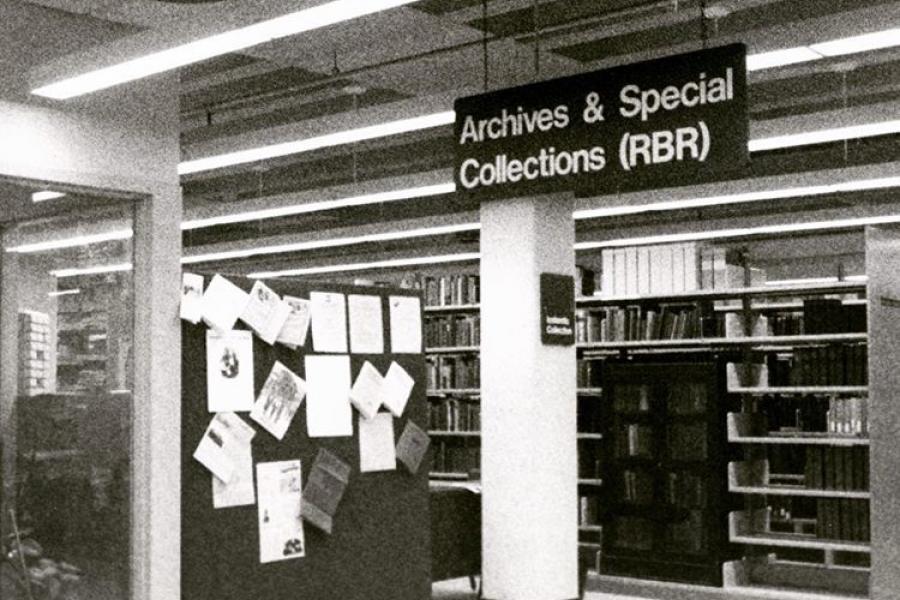
Archives & Special
Collections
[2]Axel Knönagel has demonstrated the
complete turn-around of Greve's attitude
which is manifest in these two documents.
The same change of heart is also documented
in Gide's Conversation: after
prison, Greve opts for the "Life" pole
in the decadent "l'art-pour-l'art" equation
which favours "art" over "life."
[3]This most important discovery was not
made until November 1998, shortly after
the international anniversary symposium "In
Memoriam FPG 1879-1948-1998" in
Winnipeg.
[4]Because of Kippenberg's letter, which
is published in German and English in
Desmond Pacey's 1976 edition of Grove's Letters on
pages 548-552, Pacey assumed that Greve's
alleged suicide took place in September
1909 (p. xxvii). This being a perfectly
plausible conjecture, most scholars have
believed that Greve's disappearance occurred
then, and not in July.
[5]Since November 1999 we do know the precise
title of the multi-volume venture, the
editors, the New York publishing firm,
and Greve's role as their Pittsburgh
agent.
[6]This information was found in April 1995
at the Pittsburgh Historical Society,
and presented in late May to the German-Canadian
Historical Association Meeting during
the Learned Societies Congress in Montreal.
[7]Found in April 1991 in the Freytag-Loringhoven
Collection, University of Maryland,
College Park; published in facsimile
in Greve/Grove & Fanny
Essler, Poems/Gedichte, Winnipeg,
1993.
[8]Pacey erroneously assumed in his 1976
edition of Grove's Letters, xxvii,
that FPG came to Manitoba in December
of 1912. Most scholars have repeated
this error. However, Grove's naturalization
certificate, which was issued to him
in 1921, clearly shows the Greve arrived
in September 1912. A fall date also agrees
much better with Grove's 1946 reminiscences.
[9]The
pseudonym and title appear on the verso
of a piece of scrap paper in Grove's
Poetry Notebook. It was discovered
while preparing FPG's poetry edition
between 1990 & 1993. An electronic
edition of Jane Atkinson is in preparation
for 2001.
[10]Unpublished letter to Phelps, 7.6.1925.
The archives have substantial holdings
of John Dafoe who was the editor of the Winnipeg
Free Press for many years. Charles
Roberts was an author, and "Dr.
Gordon" was likely a Professor
who also was involved in editing the Canadian
Forum in the 1920s. Grove autographed
the so-called "American Edition" of
his Search for America to him
while on his third lecture tour in early
1929.
[11]Pacey 1976, n.3, 280.
[12]Grove on August 6, 1931, in Pacey's
edition of Letters, 295-296.
[13]Grove to Pelham Edgar on January 16,
1934, in Pacey, 302; medal sold, n.8,385 & ISM,
454.
[14]On February 10, 1939 -- acknowledged
and specified in Mann's reply to Grove,
19.4.1939 (Spettigue Collection, UM Archives).
[15]Carleton Stanley was born in 1886
and died in 1971. He was a Professor
of Classics at McGill (1925-1931)
and at United College which became
the University of Winnipeg (1946-1953).
From 1931-1945, he was President
of Dalhousie University, and
he left a lengthy manuscript
about Grove which unfortunately
is missing today [Dec. 2000,
gd]. This information stems from
Pacey, 1976, n. 3, 451.
|
 |
|
 |
|
|