




Image of Human Rights Museum with ABCC logo.

Schedule - ABCC 2027

February 18

TBA

February 19

TBA

February 20

TBA 

February 21

TBA

February 22

TBA

Locations

  • FEB 20

    Asper School of Business

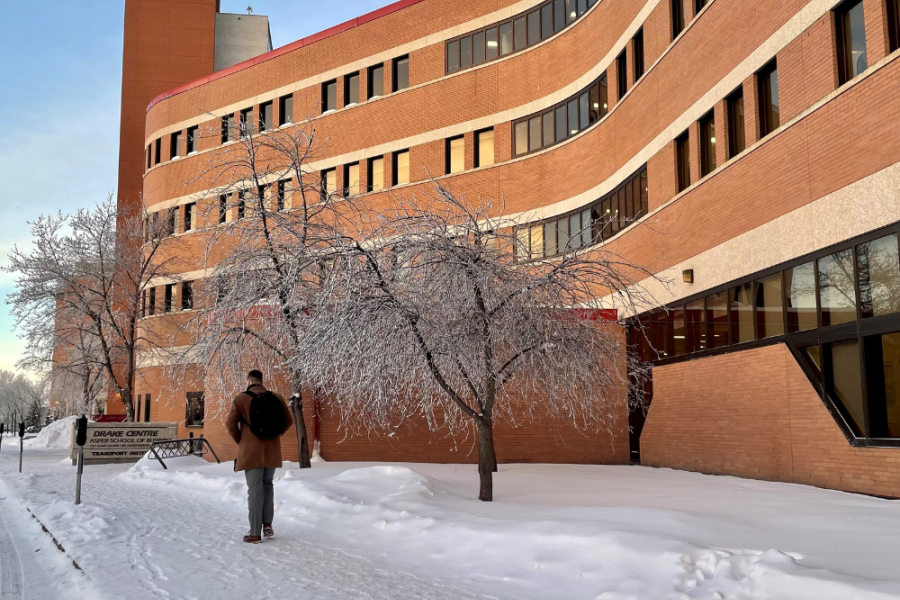
    The Drake Centre, which opened in 1987, was designed by Architect Etienne Gaboury. It houses the Asper School of Business and the Transport Institute.

  • FEB 21& 22

    Asper School of Business, Drake Centre, University of Manitoba

    The Drake Centre, which opened in 1987, was designed by Architect Etienne Gaboury. It houses the Asper School of Business and the Transport Institute.

  • Image of the Drake Centre in winter.
  • ACCOMODATION

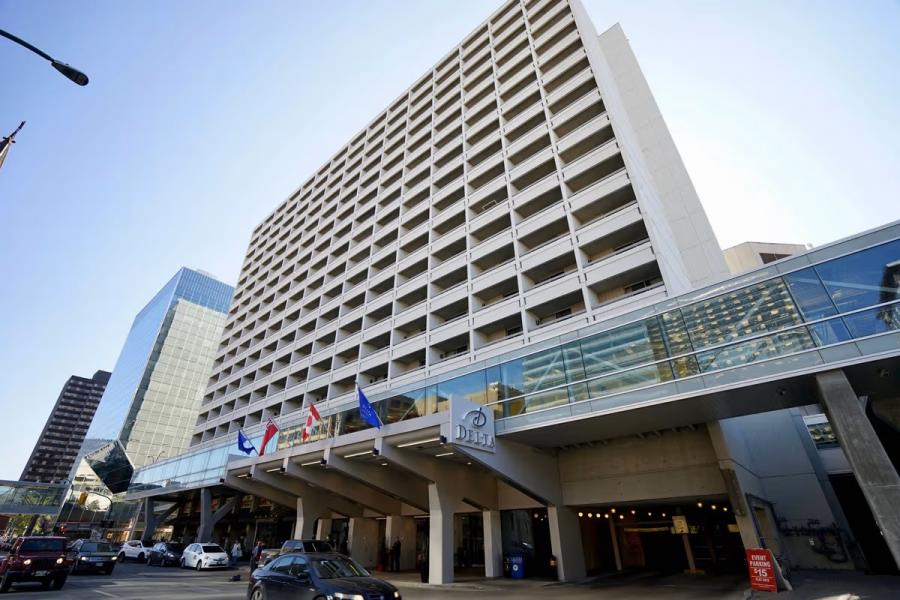
    Delta Hotels Winnipeg

    With skywalk access to the Winnipeg Convention Centre and the MTS Centre, this modern downtown hotel includes a British-inspired pub and restaurant on-site.

Case Instructions

Case 1: Prepared Case

  • Presentations will be 25 minutes long, with a 15-minute question period.
  • Teams will receive a 5-minute (yellow card) warning and a 1-minute (red card) warning in both the presentation period and the question and answer period.
  • Every team member must speak during the presentation.
  • There are no limits to the number of slides and exhibits a team may use.
  • Teams may use all resources at their disposal for the prepared case. This includes course materials, advisor input, and all other available material.
  • However, please refrain from reaching out to employees of the case sponsor organization.
  • Should the team not submit on time they will be placed in the bottom of their pool for that round.

Case 2: Boardroom Case


  • Once the case is released participants are not allowed to contact coaches or anyone outside of their team.
  • Students are asked to use their own laptops (one laptop per student) and as such, prebuilt templates are allowed. No other electronic devices beyond the four laptops are allowed.
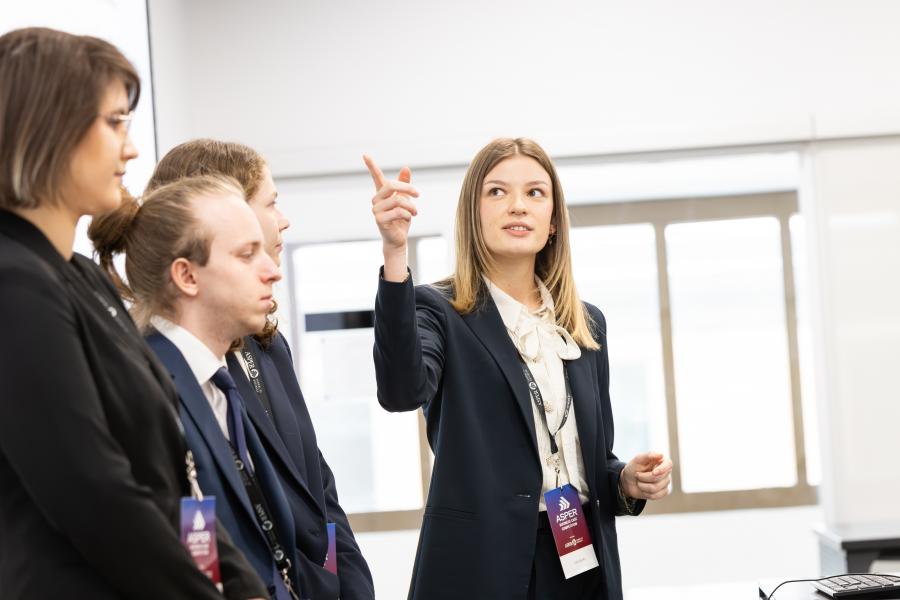
  • Students will engage in a discussion with judges. This will be a boardroom style presentation and as such the team will be seated. A wireless keyboard and mouse will be provided for students to navigate their deck.
  • Judges will be provided with a black and white copy of the one-page brief to read in advance of the discussion. Following this, teams will have 3 uninterrupted minutes to present their recommendation to judges using their single summary slide (appendices may not be accessed during this time). Teams will receive a 1-minute (red card) warning during this time
  • After 3 minutes have elapsed, there will be a 22-minute discussion person where teams may access both their executive summary slide as well as their appendix slides. Teams will receive a 5-minute (yellow card) warning and a 1-minute (red card) warning during this time. Teams are encouraged to use the provided mouse to navigate through their slides.
  • There are no limits to the number of appendix slides.
  • Every team member must speak during the discussion but everyone does not need to speak during the 3 minutes of protected time.
  • Cellphones or smart watches are not permitted.
  • Volunteers may step into the preparation room periodically to ensure that rules are being followed.
  • Competitors will be seated for the presentation.

Case 3: Traditional Case

  • Presentations will be 20 minutes long, with a 10-minute question period.
  • Teams will receive a 5-minute (yellow card) warning and a 1-minute (red card) warning in both the presentation period and the question and answer period.
  • Every team member must speak during the presentation Participants are not allowed to contact coaches or anyone outside of their team.
  • Students are asked to use their own laptops (one laptop per student) and as such, prebuilt templates. No other electronic devices beyond the four laptops are allowed.
  • Cellphones or smart watches are not permitted.
  • There are no limits to the number of slides and exhibits a team may use.
  • Volunteers may step into the preparation room periodically to ensure that rules are being followed.

Final Round Presentation

  • Scores will be tabulated from the prepared case round and the traditional case round. Prepared case is weighted 25%, boardroom case is weighted 30% and the traditional case is weighted 45%.
  • Three teams will be selected to participate in the final round where they will present their traditional case to a new panel of judges.
  • Teams are not allowed to make changes to their slide deck.
  • In the event of a tie, the team with the higher traditional case score will proceed.
  • Faculty advisors whose team makes it to the final round are prohibited from communicating with their team until after they have presented
  • Teams that qualify for the final round will be escorted to a holding room until it is time to present.
  • Presentations will be 20 minutes long, with a 15-minute question period.
  • Teams will receive a 5-minute (yellow card) warning and a 1-minute (red card) warning in both the presentation period and the question and answer period.
  • Should there be a tie, we will look at performance in each round. The team that does better in the highest weighted rounds will proceed to the finals. If the weighted rounds are the same, performance in each category of the rubric will be look at with the highest weight prioritized.
“I am a huge supporter of this method of experiential learning, particularly at the graduate school level. The face-to-face, peer-to-peer, competitive nature of these events presents a real life, out-of-classroom opportunity for students to engage with peers from graduate business schools across Canada, and to build their confidence as they prepare to face the myriad of complex problems in their future business careers. All the best and good luck to the participants and organizers of this event.”
Dr. Stu Clark [BComm(Hons)/76, LLD/2011]

Sponsors

The Asper School of Business gratefully acknowledges the generous support of sponsors, and we look forward to continuing the legacy of giving for our future competitions.

  • The Associates logo.
  • Diamond Sponsors

    The Associates

    For 41 years Manitoba’s business community has merged its skills in leadership, mentorship and entrepreneurship into The Associates. Comprising 368 business executives, The Associates have relentlessly provided guidance, financial support and networking for the I.H. Asper School of Business and its students. 

    To know more, click here.


    Stu Clark Graduate School

    The Stu Clark Graduate School, also known as the Asper School of Business at the University of Manitoba, offers a variety of graduate programs, including MBA, MFin, and MSCM degrees. It focuses on developing new businesses and fostering entrepreneurial thinking among students. The school also provides resources for students to turn their ideas into successful ventures, including workshops and competitions aimed at enhancing entrepreneurial skills.

    To know more, click here.

  • Stu Clark Graduate School Logo

Interested to know more?

What is a Business Case Competition?

Case competitions are a transformative experiential learning opportunity. They provide students with real-life experiences while developing and leveraging their problem-solving and analytical skills. 

Students are given complex business challenges and are asked to work as a team to provide a recommendation that considers the needs of all stakeholders, the resources required, and the changing nature of business. 

The Asper Business Case Competition hosts graduate teams from top Canadian business schools to tackle contemporary business challenges through three rounds of competition, each with a different style of case analysis and presentation. 

The event helps students develop skills including adaptability, confidence in public speaking, and creativity that will be widely applicable to their professional careers. 

Contact us

Drake Centre
181 Freedman Cres.
University of Manitoba
Winnipeg, MB R3T 5V4

Judith Jayasuriya 
Instructor & Lead, Experiential Learning

Steven Harrison 
Case Competition Coordinator