

These opportunities include, but are not limited to:
- Fireside Chats
- Full Moon Ceremony
- Sweat Lodge Ceremony
- Two-Spirits Talking
- Oskâpêwis Training Program (Scaabe School)
The University of Manitoba campuses and research spaces are located on original lands of Anishinaabeg, Ininiwak, Anisininewuk, Dakota Oyate, Dene and Inuit, and on the National Homeland of the Red River Métis. More
University of Manitoba
Winnipeg, Manitoba Canada, R3T 2N2

October 27 | 4:30–8 p.m. | Migizii Agamik Foyer
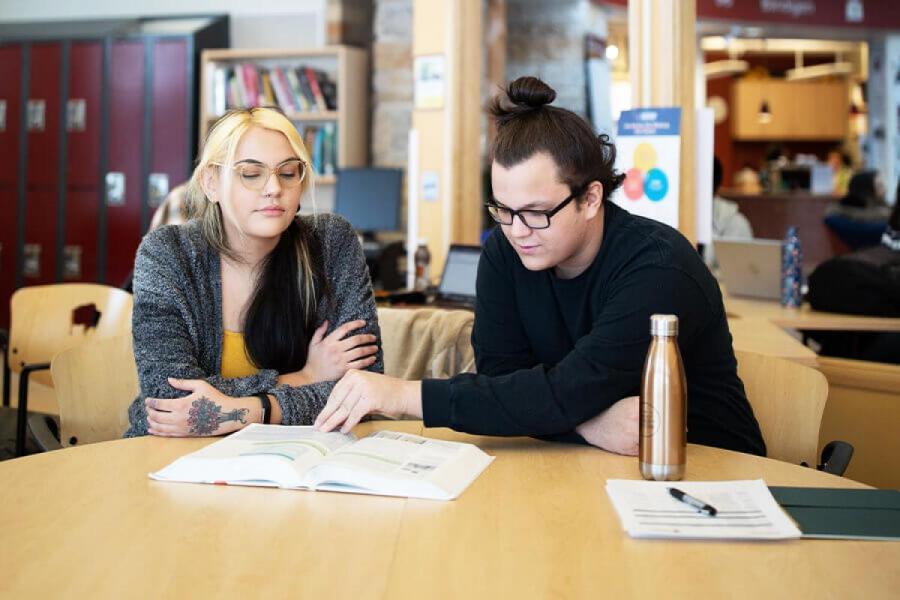
Need time to catch up on assignments? Join us for an evening of studying, good food and support. Drop in—no RSVP required!
The University of Manitoba offers Indigenous students rich and meaningful opportunities to get involved with the Indigenous and broader UM communities on campus.
Chantelle shares her experience as an Indigenous student and how it has benefited her educational journey.
The Indigenous community at UM offers opportunities to engage in social, cultural and spiritual programs and events as part of your campus experience.
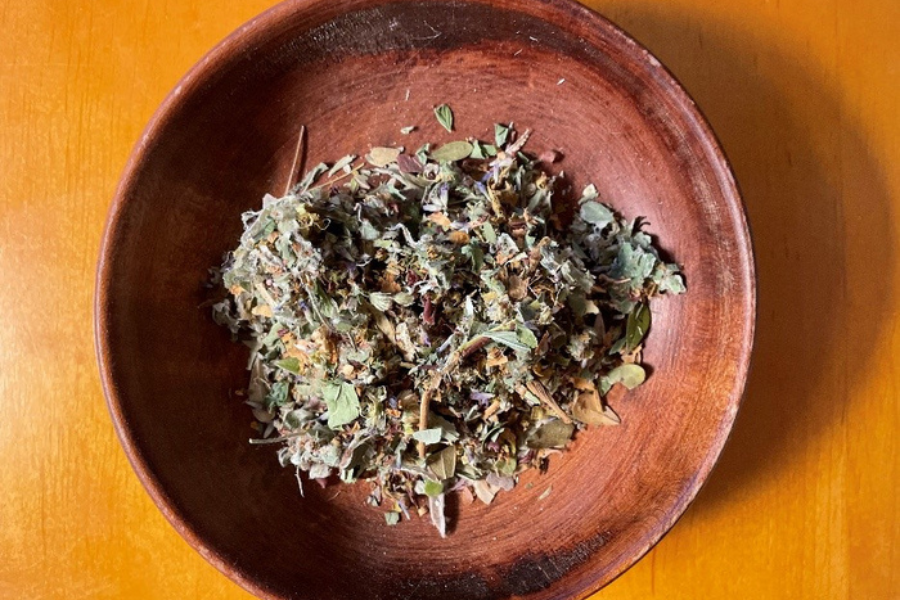
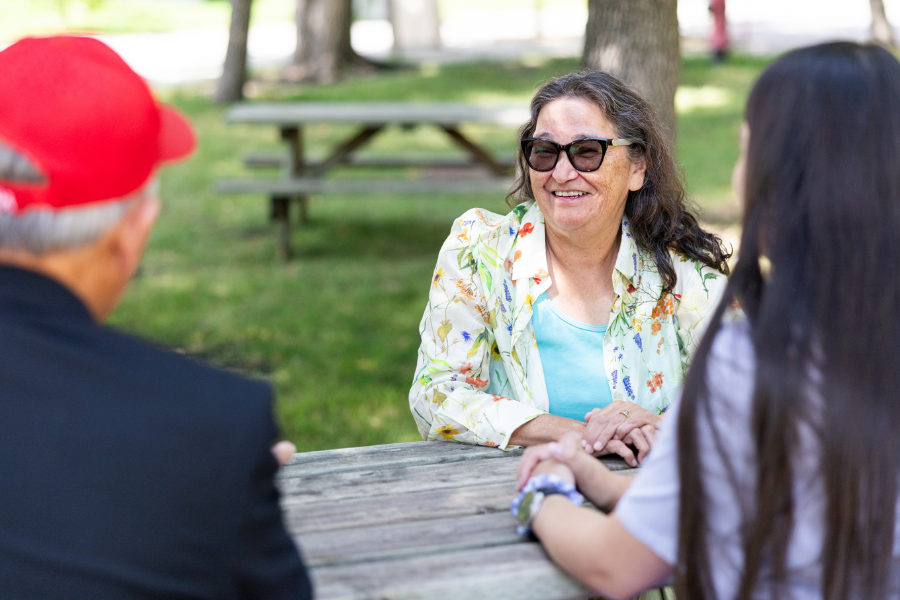
The Indigenous Student Centre hosts virtual community sharing circles for students and community on Zoom. Each person has an opportunity to share their thoughts, feelings or experiences in a non-judgmental environment.
"In the circle, we are all equals. Your voice matters and your voice is sacred." -Karen Courchene, Grandmother-in-Residence
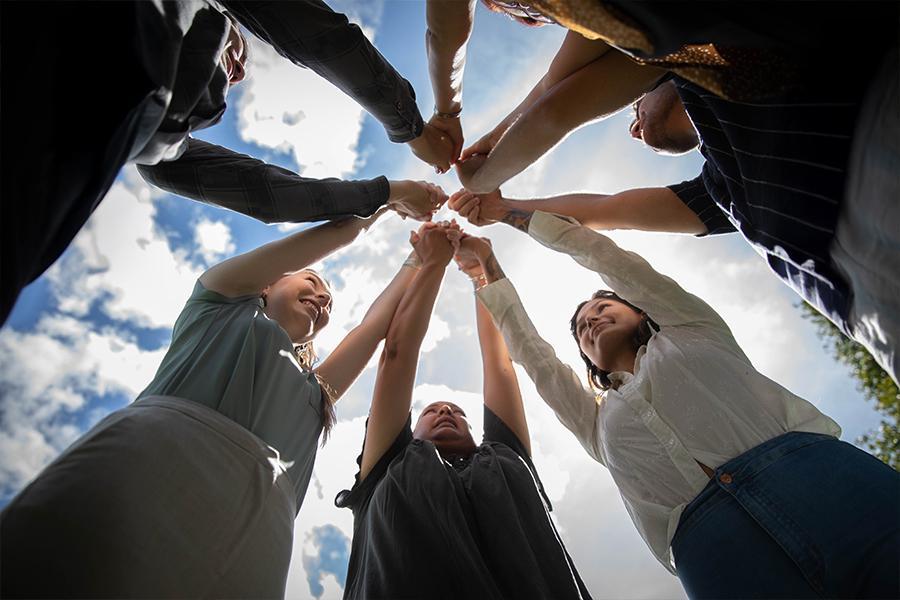
A sharing circle is a respectful, inclusive gathering where people come together to speak, listen and connect. They are an opportunity to share personal stories and experiences, to be heard and understood, to find support and to celebrate growth.
Sharing Circles are confidential spaces for reflection on personal experiences. For experiential learning assignments, students are kindly asked to choose another program or event.
Elders-in-Residence at Migizii Agamik support well-being, provide cultural and spiritual guidance and offer community connection for First Nations, Métis and Inuit students as well as members of the greater UM community.
Elders share Indigenous knowledges and ways of being and offer opportunities to learn from their lived wisdom.
Engaging with an Elder is an opportunity to build relationships, mutual respect and openness. It does not need to be formal - instead, it can just be a visit with a grandparent-figure. Anyone who comes iwth respect for learning can meet with an Elder.
Visiting with an Elder is as simple as checking in at Migizii Agamik when you're looking for guidance, grounding or connection. You are also welcome to make an appointment.
Phone: 204. 474. 8850 | Email: isc@umanitoba.ca
Details about upcoming Sharing Circles and other cultural offerings including Mawadishiwe - a weekly visiting hour with Elders for students - are shared in the Indigenous Events Calendar.
Indigenous ways of knowing, being and doing are increasingly reflected across UM campuses. Explore cultural gatherings, learn about protocols and find more information about opportunities to connect with culture on UM's Culture and protocols webpage.
Indigenous student groups and representatives create space for connection, advocacy and leadership. Get involved, share your voice and help shape campus life.
Created by and for Indigenous students, these groups offer peer support, resources, events and activities, including opportunities to join a student council.
This University of Manitoba Students' Union (UMSU) Board position advocates for Indigenous students by helping plan Indigenous Students Month and working closely with UMSU executives and the Indigenous Student Centre.
If you're interested in learning more or getting involved:
Provides opportunities to connect with community, build meaningful relationships, and develop skills in collaboration and engagement.
Brings together students, staff and faculty who love birds and nature. It’s a way to connect, get outside and honour Indigenous knowledges.
Every September, Indigenous Orientation offers a welcoming opportunity to connect with the Indigenous campus community at UM through culture, connection and fun.
Every first Saturday in May, Annual Traditional Graduation Pow Wow celebrates and honours UM's Indigenous graduates — including First Nations, Métis and Inuit students. Everyone is welcome to attend.
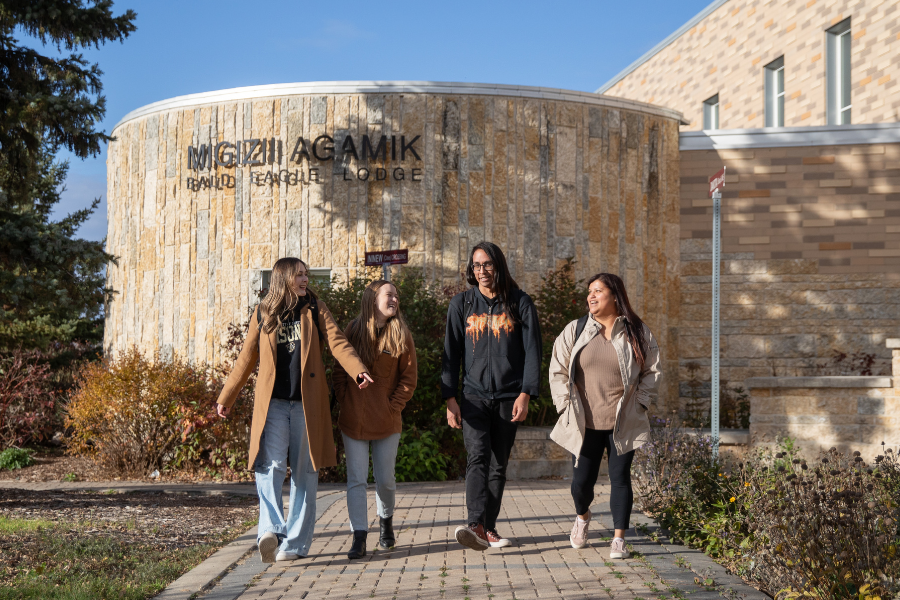
All of the supports listed below are offered through the Indigenous Student Centre at Migizii Agamik – Bald Eagle Lodge. It’s a welcoming space for community and connection on the Fort Garry campus.
To book an appointment with any of the people and resources located at Migizii Agamik, contact the Indigenous Student Centre at isc@umanitoba.ca or 204-474-8850. You can also visit us in person at 114 Sidney Smith St.
Become a Circle member to access Migizii Agamik – Bald Eagle Lodge after hours. It’s a great place to study and connect with community.
Members can access the computer lab and kitchen. Locker rentals are available each September.
Migizii Agamik hours:
Boss Security is on site evenings and weekends to support a safe environment, alongside UM Security walk-throughs. They give a 10-minute heads-up before closing.
Student advisors at the Indigenous Student Centre are here to support your academic journey. Current students can get help with creating academic plans, understanding university policies, and connecting with key on-campus services, resources, and programming.
Indigenous graduate students can join SAGE (Supporting Aboriginal Graduate Enhancement), which is a program designed to enhance the graduate student experience for Indigenous students.
SAGE provides holistic programming to support the cultural, academic, personal and professional development of Indigenous graduate students throughout their master’s and doctoral studies.
Programming is open to all graduate students who identify as First Nations, Métis, Inuit, as well as those interested in Indigenous ways of knowing. Prospective Indigenous graduate students are also welcome.
To learn more, email Alana Wilcox, Indigenous Graduate Student Success Coordinator.
In partnership with the Manitoba Métis Federation, UM creates opportunities for Métis students to access support, celebrate their heritage and build a sense of belonging on campus. The UM Métis Inclusion Coordinator supports students with:
To get in touch, email Jessica Burzuik, UM’s Métis Inclusion Coordinator.
Karla Penner is a student counsellor from Student Counselling Services who works directly with the Indigenous Student Centre. She offers support for mental health concerns, personal challenges, relationship issues or if you just need someone to talk to.
Karla is available at Migizii Agamik on Thursdays and Fridays. To book a session, contact ISC at 204-474-8850 or isc@umanitoba.ca.
Antoanela Denchuk, the Content and Study Skills Tutoring Coordinator, offers free support with academic writing and study strategies. Her office is in Migizii Agamik, Room 108, next to the computer lab.
To book an appointment, contact the Indigenous Student Centre or log in to the Content and Writing Tutor system. Select "Content and Study Skills Tutors" and choose the Migizii Agamik location.
Valdine Bjornson, the Indigenous Student Centre Reading Specialist, is available by phone, FaceTime or Zoom on a flexible basis to help you with your textbook readings and test preparation needs.
Contact the Indigenous Student Centre to book an appointment with Valdine or email Valdine at Valdine.Bjornson@umanitoba.ca.
Lyle Ford, the Indigenous Reference Librarian, can help with research and other library questions. You can reach him by phone at 431-275-9908, on Teams, or in person at the Architecture/Fine Arts Library (John A. Russell Building, 84 Curry Place).
To connect, email Lyle.Ford@umanitoba.ca or schedule an appointment.
A UM Career Services Indigenous Career Consultant provides drop-in services at Migizii Agamik on a bi-weekly basis (September to April). They can help you plan your career, find occupational information, as well as identify and help you apply for job and volunteer opportunities.
Visit the Indigenous Events Calendar for drop-in dates or contact Jordan Robinson directly at Jordan.Robinson@umanitoba.ca.
UM is committed to Indigenous achievement and to ensuring the success of First Nations, Métis, and Inuit students and graduates. By self-declaring as an Indigenous student, you will:
If you have not previously declared your ancestry or want to change your response:
The Indigenous Student Recruitment and Community Relations team is here to help you become a UM student—whether you are applying directly from high school, are coming from an adult learning centre or are a mature learner.
Student advisors at the Indigenous Student Centre are here to support your academic journey. Current students can get help with creating academic plans, understanding university policies, and connecting with key on-campus services, resources, and programming.
If you're unsure where to start, you can email indigenous.engagement@umanitoba.ca.