Get the information you need for academic planning and connect with experiences to develop the knowledge, skills and attributes that employers are seeking.

This resource is meant as a guide to provide suggestions throughout your time at university (refer to the Academic Calendar for a complete list of program requirements). Develop a plan and timeline that suits you best. Make intentional choices for your courses and work experiences.

  • Student spotlight

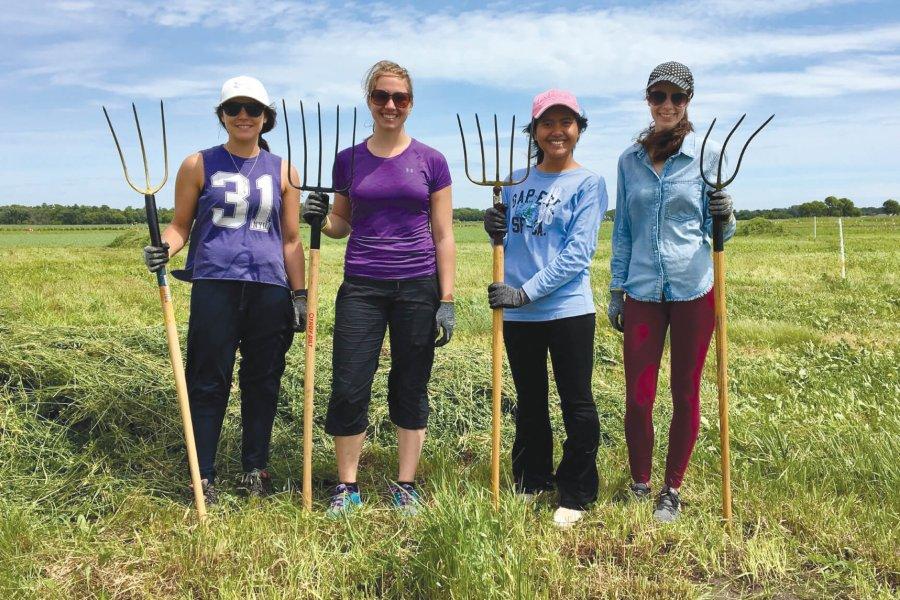
    “Try different things to figure out what interests you. This could range from taking different science courses to participating in student groups or getting involved in research. Test the waters to find your passion and what you want to study.”

    Anna Liu, general science student

General Science at UM

The three‐year General program is intended to provide diversified training in Science. The program provides students with broad exposure to the major areas of Science at the introductory level with a requirement for more advanced studies in one or more areas of Science. This program is not intended for students who desire to practice in some field of specialization in the Sciences. Students with that intent are recommended to pursue the Honours or the four‐year Major program

Skills you will gain by studying GENERAL SCIENCES

  • The ability to safely operate complex equipment, and follow technical manuals with accuracy and proficiency
  • The ability to collect, analyze and interpret data using statistical analysis, and make reasoned judgements on the basis of the available data
  • The ability to think critically and apply both scientific and mathematical theories to solve complex problems
  • The ability to communicate effectively both verbally, by giving effective presentations, and in writing, by preparing technical reports

Academic Success


Year 1 - 30 credit hours

Course requirements:

  • 9 credit hours from COMP, MATH, or STAT
  • 6 credit hours from ASTR, CHEM, or PHYS
  • 6 credit hours from BIOL, or MBIO

See the Academic Calendar for a list of acceptable options to fulfill these requirements.

To do this year:

  1. If you are deciding between a 3-year or 4-year degree, choose courses from the Balanced or Focused Approach course lists in the First Year Planning Guide.
  2. When selecting introductory level courses, choose courses that will provide you with the prerequisites for advanced level course work.
  3. Use UM Achieve to explore different options & corresponding requirements.
  4. If you need academic support, visit one of the Help Centres, or attend a Supplementary Instruction session through the Academic Learning Centre.

Year 2 - 60 Credit Hours

Course requirements: Complete 36 credit hours of 2000-4000 level Faculty of Science courses.

To do this year:

  1. Consider focusing your education by selecting advanced level courses in areas of interest. Please note pre-requisite courses fulfill first year requirements. Plan ahead.
  2. Use UM Achieve to prepare a plan for registration.
  3. Considering a professional program? Refer to the Applicant Information Bulletin and meet with a science advisor to familiarize yourself with the pre-professional requirements of your intended program.

Year 3 - 90 Credit Hours

Course requirements: Complete advanced level course work and any outstanding program requirements.

To do this year: 

  1. Use UM Achieve to check eligibility to graduate.
  2. Confirm eligibility to graduate with a science advisor and declare intent to graduate in Aurora.

Career Tips


Year 1 - 30 credit hours

Start planning your career:

  1. Meet with a career consultant to generate career ideas based on your interests, values, personality and skills.
  2. Research occupations that match your skills and interests.
  3. Utilize UM Connect to view job postings and register for workshops and events.
  4. Access the UM Experiential Learning Catalogue to explore involvement opportunities on campus. Throughout your studies, access your Experience Record to track and reflect on your competencies.

Year 2 - 60 Credit Hours

Make professional connections:

  1. Join the Career Mentor Program to learn from professionals.
  2. Attend career fairs to connect with employers.
  3. Develop professional connections with professors by applying for an Undergraduate Research Award.

Investigate your career options:

  1. Look at sample job postings to ensure you have the qualifications upon graduation.
  2. Develop employability and essential skills sought by employers.
  3. Create a LinkedIn profile to network with professionals.

Year 3 - 90 Credit Hours

Market your skills: Develop your resumé and cover letter and refine your interview skills.

Start job search 9 months in advanced: Contact Career Services to refine your job search and self-marketing strategies. You can visit the office up to 6 months after graduation.

If you are continuing to a professional program: Finalize your application materials and search for funding and awards to help finance your continuing education. Contact your department to find out how their awards deadlines are advertised.

Volunteer & Work Experience


Year 1 - 30 credit hours

Link experiences to your career interests. Options include:

  1. Student groups including UMSU and Science Students' Association.
  2. Volunteer for UM Orientation events to help welcome new students to campus while gaining experience.
  3. Student work opportunities including Work-StudySTEP Services or Federal Student Work Experience Program.
  4. Experiential education opportunities such as Community Engaged Learning programs and the Student Leadership Development Program.

Year 2 - 60 Credit Hours

Explore student research opportunities: Apply for a research assistant position, Undergraduate Research Award or NSERC grant.

Gain practical experience by volunteering: Check out Let's Talk ScienceWinnipeg Regional Health Authority, WISH Clinic or environmental conservation and ecological organizations (e.g. Ducks Unlimited).

Check out student job opportunities with: City of WinnipegMini UOffice of Rural and Northern Health and WISE Kid-Netic Energy.

Earn while you learn: Consider applying to the General Science Internship Program (GSIP) once you have completed 24 credit hours.


Year 3 - 90 Credit Hours

Search for job opportunities online: Check out Science.caJob BankFind My JobIndeed or other search engines.

Use your network and connections: Inquire about unadvertised job openings (the "hidden job market").

Ensure you have references in place: Ask your professor for a reference or a letter of recommendation if you're applying to a professional program.

Assess your resumé: Identify any gaps in experience and fill them through volunteering, work placements or internships such as the Post-Secondary Recruitment Program.

Cultural Opportunities

Cultural experiences offer valuable exposure and learning opportunities that help us engage with and appreciate the diversity in our communities and future workplaces. Learn more about Indigenous and International communities at the University of Manitoba.


Year 1 - 30 credit hours

Engage in intercultural experiences: Visit the International Centre website to learn more about volunteer opportunities for UM students. Engage in Indigenous cultural learning by attending Indigenous events on campus.

Indigenous Student Programming: If you’re an Indigenous Student, explore supports and programs at the Indigenous Student Centre.  

Interested in studying abroad to gain intercultural experiences and skills employers want? Visit the student exchange programs website and book an appointment with the student mobility coordinator to learn more. Also learn about a full year abroad experience through McCall MacBain International Fellowships.


Year 2 - 60 credit hours

Applying for an international exchange program?  Students apply almost one year in advance of their exchange. Book an appointment with the student mobility coordinator on the exchange programs website to start the process.

Participate in cultural learning opportunities on campus: Participate in Indigenous learning opportunities such as Fireside Chats, Tea with Auntie, Indigenous Studies Colloquium, and other events within your faculty. Your active and respectful participation is welcome at Indigenous ceremonies on campus. Please note that some ceremonies are confidential spaces; feel free to ask about cultural protocols. 

Join a student community: There are many student groups at UM, including those that represent a wide variety of cultures and communities - the UM Indigenous Students’ Association (UMISA), UM International Students' Organization, and many more!  

Looking to learn a language? Visit the Language Centre for a variety of resources and join the Language Exchange program or Language Partner Volunteer Program.


Year 3 - 90 credit hours

Develop global career skills and expand intercultural learning: Participate in the Intercultural Leaders program to enhance cultural awareness and develop intercultural skills for a variety of settings, both in and out of the classroom. Participate in 8 sessions with topics on leadership, self-awareness, intercultural competency, communication, conflict resolution and more.  

Volunteer at the International Centre’s Welcome Mentors program and/or Graduation Pow Wow.

Engage locally: Learn more about the Treaty Relations Commission of Manitoba and your responsibility as a Treaty partner. Enroll in Community Engaged Learning programs; Indigenous students may wish to explore programs such as Land and Water: Land-Based Education. 

Expand your knowledge on Indigenous culture and protocols, including developing your own Territory Acknowledgement. Explore resources provided by Canada's National Research Centre for Truth and Reconciliation and take part in the educational programming offered during Truth and Reconciliation Week!

What do employers want?

Industries such as business, education, pharmaceutical development, public health and medicine would value a general science degree in combination with the employability skills that are highly sought after by employers. These include:*

  • Oral and written communication
  • Numeracy and data use
  • Critical thinking
  • Problem solving
  • Teamwork
  • Digital technology
  • Industry specific knowledge
  • Continuous learning

Attain skills through your classroom education by taking advantage of experiential education opportunities.

*Information has been adapted from Employability Skills 2000+ and Workplace Education Manitoba – Essential Skills.

Alumni stories

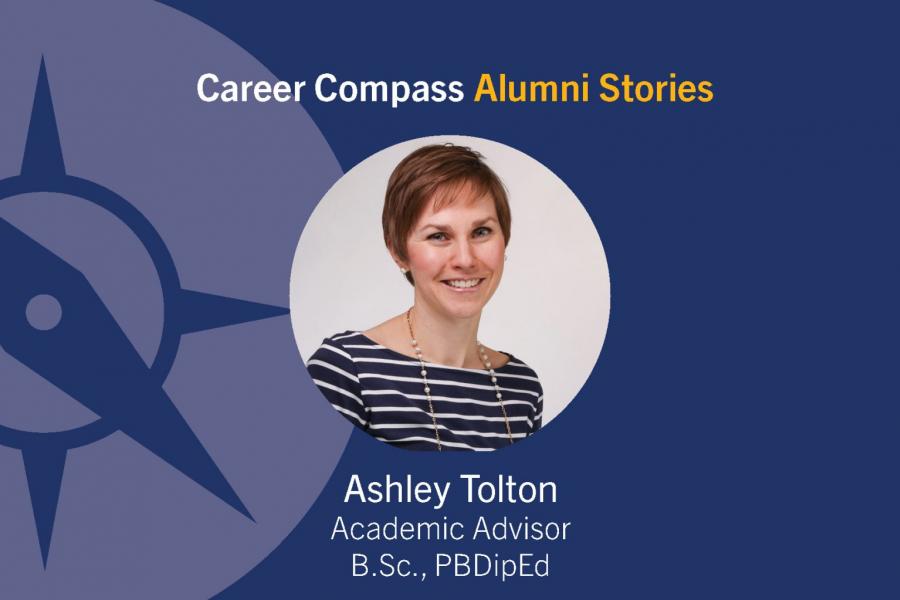
Career Compass General Science Alumni Story: Ashley Tolton, Academic Advisor, B.Sc., PBDipEd

Ashley Tolton, B.Sc., PBDipEd

Ashley Tolton has been an academic advisor at the University of Manitoba for 10 years. She currently works in the Faculty of Science. Ashley interacts with students helping them to facilitate making connections between their career goals and academic plans; helping them get where they want to go.

Read more about Ashley Tolton's career path

Briefly, tell us about your job. What do you find most rewarding? What are your greatest challenges within this profession?

I have been an academic advisor at the University of Manitoba for 10 years. I currently work in the Faculty of Science. Daily, I interact with students helping them to facilitate making connections between their career goals and academic plans; helping them get where they want to go. Sometimes this is developing course plans at other times it is looking at alternate options or supporting a student with resources in times of stress or academic difficulty. University is an exciting time of change and growth for students and it is rewarding to see students learn and grow as they navigate their future by developing and gaining practical skills and experiences.

What experiences and activities helped you to map out your career pathway?

My degree was one step in the direction of my current job. When I was a student I had the opportunity to volunteer on and off campus. It was these experiences and contacts that allowed me to take the skills I learned in the classroom and apply them to real life career settings, opening doors for job opportunities.

As a student, did you see yourself in your current career? What stayed the same and/or changed?

No, I don’t think I was even aware that academic advising was a career option. As an advisor now, I see students looking for career options with limited knowledge of pathways available to them and how to get there. Resources like career compass are a great way for students to get to know themselves and the careers out there to help make informed decisions.

What advice do you have for students who are interested in pursuing a degree in general science?

The Bachelor of Science general degree offers students a breadth of science knowledge and I would encourage students to take opportunities both in and outside the classroom to enhance their university experience; volunteer, talk to your professors, join a student group, find a cause close to your heart and support it, ask questions and get to know yourself. These experiences will only add to your classroom learning and link classroom learning to real life.

What job search advice do you have for students and recent graduates?

Embrace planned happenstance; you don’t know where connections you make and experiences you have in and outside the classroom will lead you!

Tell us a fun fact about your career path.

As a summer student I was able to work in a lab with honey bees. Testing bees for various diseases and mites has given me a lifelong appreciation of the little pollinators!

Campus resources and supports

Get one-on-one help

  • Meet with a career consultant

    Meet with a career consultant for a confidential discussion about your career goals, job search, resumé/CV and interview preparation.

    Contact Career Services at cs.receptionist@umanitoba.ca or call 204-474-9456 to make an appointment.

  • Talk to an academic advisor

    Talk to an academic advisor who will guide you to resources to help you make important decisions for your future. Advisors are specialized, often by program, faculty/school or unit.

    Find your advisor

Continue exploring

Select a Career Compass

Use Career Compass as a guide to develop a strong connection between your studies and your occupational choices. It will provide you with suggestions for academic and career planning specific to your program.

Advisors and Educators Guide

Contact us

Connect with the faculty

Faculty of Science
230 Machray Hall
186 Dysart Road
University of Manitoba (Fort Garry campus)
Winnipeg, MB R3T 2N2

204-474-8256

Connect with Career Services

Career Services
Room 474 UMSU University Centre
65 Chancellor's Circle
University of Manitoba
Winnipeg, MB R3T 2N2 Canada

204-474-9456
204-474-7516
Monday to Friday, 9:00 a.m. to 4:00 p.m.