Student spotlight
"...engage more into volunteer work and seek a job related to the nutrition field. It is important to apply the theoretical knowledge gained from books into real life."
Ka Chun Cho, human nutritional sciences student

The University of Manitoba campuses and research spaces are located on original lands of Anishinaabeg, Ininiwak, Anisininewuk, Dakota Oyate, Dene and Inuit, and on the National Homeland of the Red River Métis. More
University of Manitoba
Winnipeg, Manitoba Canada, R3T 2N2
Map out your career pathway from the start of your academic journey!
Get the information you need for academic planning and connect with experiences to develop the knowledge, skills and attributes that employers are seeking.
This resource is meant as a guide to provide suggestions throughout your time at university (refer to the Academic Calendar for a complete list of program requirements). Develop a plan and timeline that suits you best. Make intentional choices for your courses and work experiences.
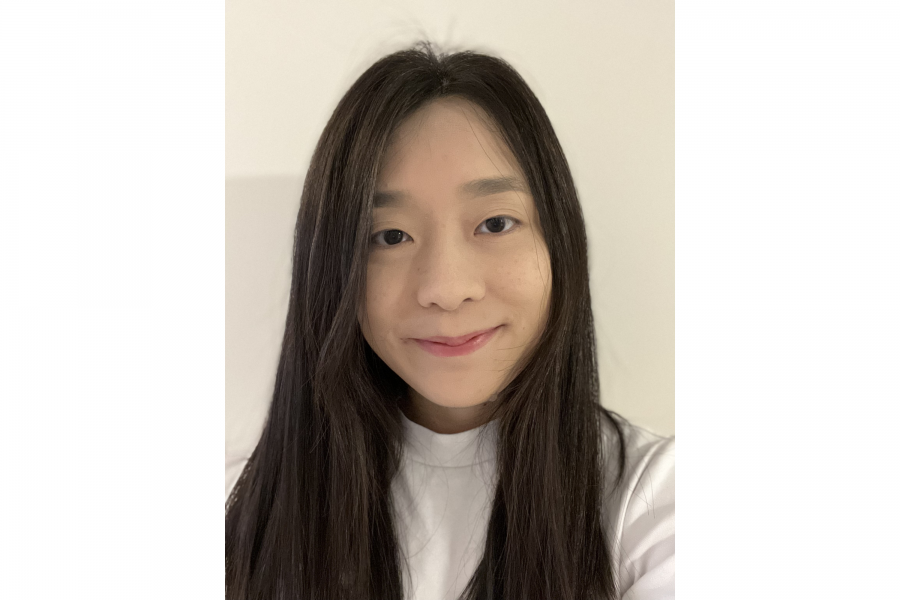
"...engage more into volunteer work and seek a job related to the nutrition field. It is important to apply the theoretical knowledge gained from books into real life."
Ka Chun Cho, human nutritional sciences student
As a human nutritional science student in the Faculty of Agricultural and Food Sciences, you will learn about how nutrition applies to different human needs and lifestyles, the importance of nutrition to community health and the role nutrition plays in preventing and managing disease. The human nutritional sciences program has many opportunities for you to explore, with four program options:
Use the UM Competencies Framework to reflect on skills gained during your coursework and extracurricular experiences.
AGRI 1600, HNSC 1200, HNSC 1210, CHEM 1100, CHEM 1110 or CHEM 1130, BIOL 1410 (or BIOL 1020 and BIOL 1030), BIOL 1412, PSYC 1200 or SOC 1000, and electives depending on selections.
HNSC 2000, HNSC 2130, HNSC 2140 HNSC 2160, AGRI 2400, STAT 2000 (or STAT 2000 requires STAT 1000 as free elective), CHEM 2730, CHEM 2740, CHEM 2750, FOOD 2500
Nutrition or Foods: HEAL 2600
Dietetic Prep or Food Industry option: GMGT 1010 or ABIZ 1000
FOOD 4150, HEAL 3000, plus all required courses in your stream (Nutrition, Dietetics Prep, Foods or Food Industry Option)
HNSC 4100, plus all required courses in your stream (Nutrition, Dietetics Prep, Foods or Food Industry Option)
Market your skills: Develop your resumé and cover letter and refine your interview skills.
Consider continuing your studies: check out the Faculty of Graduate and Postdoctoral Studies, Extended Education or other professional programs.
Start job search 9 months in advance: Contact Career Services to refine your job search and self-marketing strategies. You can visit the office up to 6 months after graduation.
If you are continuing on to a professional program or graduate school: Finalize your application materials and required tests. Use the awards database to search for funding and awards to help finance your continuing education. Contact your department to find out how their awards deadlines are advertised.
Link experiences to your career interests. Options include:
Explore student research opportunities: Apply for a research assistant position, Undergraduate Research Award or NSERC grant.
Gain practical experience by volunteering: Check out CanU, Canadian Diabetes Association, Heart and Stroke Foundation, Osteoporosis Society and WISH Clinic.
Obtain certificates employers may require, including: Certified Food Handler, Smart Choices Responsible Service Certification, Good Manufacturing Practice, WHMIS and First Aid/CPR.
Continue or start research: Participate in the Undergraduate Research Showcase and consider taking HNSC 4400 (Research Project) or HNSC 4122 (Research Project) in year 4.
Check out student job opportunities with: Mini U, Public Health Agency of Canada, Winnipeg Regional Health Authority, personal care homes and food service industries.
Search for job opportunities online: Check out AgCareers.com, Job Bank, Indeed or other search engines.
Use your networks and connections: Inquire about unadvertised job openings (the "hidden job market").
Ensure you have references in place: Ask your professor for a reference or a letter of recommendation if you're applying for graduate school.
Find opportunities to market yourself: Become a Dietitians of Canada Student Representative.
Assess your resumé: Identify any gaps in experience and fill them through volunteering, work placements or internships such as the Dietetics Practicum Programs, Nutrition or Food Industry Practicum courses.
Cultural experiences offer valuable exposure and learning opportunities that help us engage with and appreciate the diversity in our communities and future workplaces. Learn more about Indigenous and International communities at the University of Manitoba.
Engage in intercultural experiences: Visit the International Centre website to learn more about volunteer opportunities for UM students. Engage in Indigenous cultural learning by attending Indigenous events on campus.
Indigenous Student Programming: If you’re an Indigenous Student, explore supports and programs at the Indigenous Student Centre.
Interested in studying abroad to gain intercultural experiences and skills employers want? Visit the student exchange programs website and book an appointment with the student mobility coordinator to learn more. Also learn about a full year abroad experience through McCall MacBain International Fellowships.
Applying for an international exchange program? Students apply almost one year in advance of their exchange. Book an appointment with the student mobility coordinator on the exchange programs website to start the process.
Participate in cultural learning opportunities on campus: Participate in Indigenous learning opportunities such as Fireside Chats, Tea with Auntie, Indigenous Studies Colloquium, and other events within your faculty. Your active and respectful participation is welcome at Indigenous ceremonies on campus. Please note that some ceremonies are confidential spaces; feel free to ask about cultural protocols.
Join a student community: There are many student groups at UM, including those that represent a wide variety of cultures and communities - the UM Indigenous Students’ Association (UMISA), UM International Students' Organization, and many more!
Looking to learn a language? Visit the Language Centre for a variety of resources and join the Language Exchange program or Language Partner Volunteer Program.
Develop global career skills and expand intercultural learning: Participate in the Intercultural Leaders program to enhance cultural awareness and develop intercultural skills for a variety of settings, both in and out of the classroom. Participate in 8 sessions with topics on leadership, self-awareness, intercultural competency, communication, conflict resolution and more.
Volunteer at the International Centre’s Welcome Mentors program and/or Graduation Pow Wow.
Engage locally: Learn more about the Treaty Relations Commission of Manitoba and your responsibility as a Treaty partner. Enroll in Community Engaged Learning programs; Indigenous students may wish to explore programs such as Land and Water: Land-Based Education.
Expand your knowledge on Indigenous culture and protocols, including developing your own Territory Acknowledgement. Explore resources provided by Canada's National Research Centre for Truth and Reconciliation and take part in the educational programming offered during Truth and Reconciliation Week!
Industries such as biotechnology, business, education, government, health and food manufacturing would value a human nutritional sciences degree in combination with the employability skills that are highly sought after by employers. These include:*
Use the UM Competencies Framework to reflect on skills you’ve developed throughout your academic and extracurricular experiences. These may be discussed with employers during interviews and within your resumé/CV.
*Information has been adapted from Employability Skills 2000+ and Workplace Education Manitoba – Essential Skills.
Details of that report can be found here.
Briefly, tell us about your job. What do you find most rewarding? What are your greatest challenges within this profession?
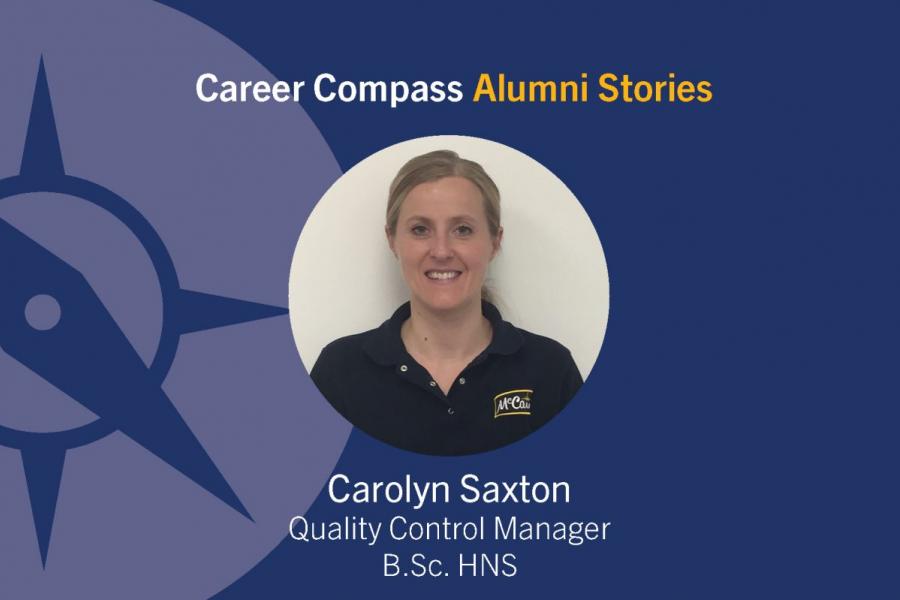
I am a quality control manager at McCain Foods in Othello, WA. I oversee the overall microbiological, food safety and product quality of over 180 different frozen potato products and approximately 450 million pounds of product per year, including major product brands such as McDonalds, KFC and Burger King. I manage a staff of 36 individuals and operate a yearly budge t exceeding $550,000.
One of the most rewarding parts of my jobs is the knowledge that millions of consumers are enjoying safe food products every day. One of the greatest challenges in my position is continually dealing with the unknown. For example, potato processing involves the handling of live raw material every day and each day encompasses a new challenge. Another challenge is understanding the product needs and requirements of a wide variety of customers. We sell products to 40 different countries throughout the world and each country has different cultures and expectations. My goal as a quality control manager is satisfying the quality and food safety expectations of each and every customer we supply.
What experiences and activities helped you to map out your career pathway?
I met with academic advisors who helped me to get a better understanding of the different options within the human nutritional sciences degree and what type of positions are available through each stream.
As a student, did you see yourself in your current career? What stayed the same and/or changed?
No, I did not. I started down the path of human nutritional sciences expecting to graduate and become a dietitian. Once I realized that the positions in dietetics were somewhat limited, I started exploring the foods side of the degree as opposed to nutrition. After sitting down with an academic advisor and getting a better understanding of the degree options and range of career options, I switched my major over from nutrition to foods.
What advice do you have for students who are interested in pursuing a degree in human nutritional sciences?
Understand what careers and different opportunities are available to you after you graduate. Don’t wait until you have completed your degree to understand what you can do with your degree. Apply for summer positions at the employers of your choice. In my experience, many employers do not advertise summer positions, internships, and/or co-op programs, but if you reach out to them directly and express your desire to be a permanent part of their team, many are willing to give you opportunities.
What job search advice do you have for students and recent graduates?
Be open to possibilities. More often than not, the job you end up in isn’t necessarily the position that you had in mind upon graduating. If you are open to different possibilities you may find yourself going down a career path that you never expected, like making French fries!
Tell us a fun fact about your career path.
For a field trip in one of my courses we went to the Food Development Center (FDC) in Portage La Prairie. While walking into the FDC, I looked over at the McCain manufacturing facility which is directly across the street and thought to myself ‘maybe we’ll be lucky enough to get a job there one day’. As luck would have it, I started my first job at the McCain facility in Carberry, Manitoba and two years later was promoted to the quality manager position.
Briefly, tell us about your job. What do you find most rewarding? What are your greatest challenges within this profession?
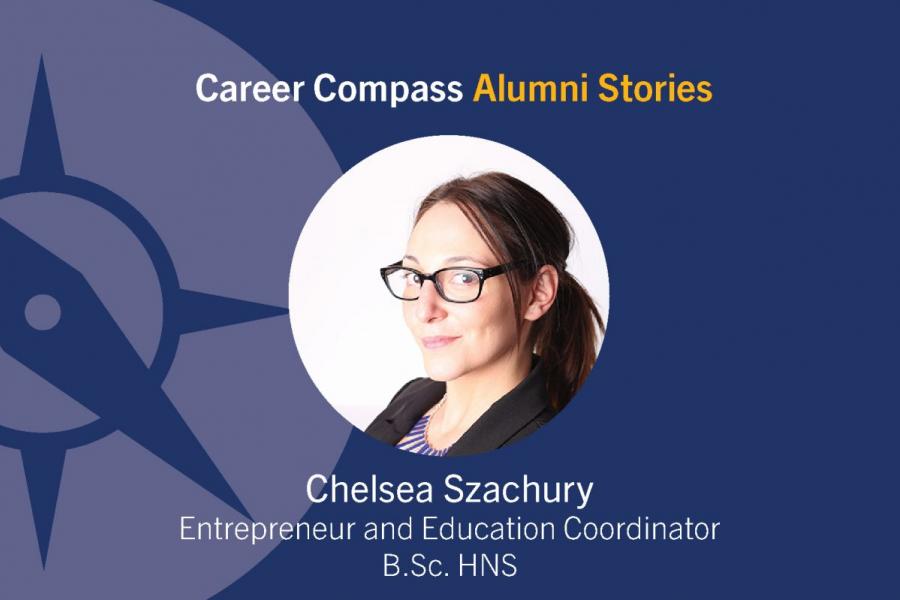
I am the founder of The Bar Lady. We provide chocolate bars that are compliant with many dietary restrictions (dairy, soy and preservative free, gluten friendly, etc.). I am also the education coordinator for Cloverbelt Local Food Co-op. I work in the Northwestern Ontario region to promote nutrition and food literacy through many different educational outlets. Partnering with teachers, we develop ways to intertwine food and nutrition into the education curriculum. The most rewarding part of my job is providing students with the tools to make more knowledgeable food choices by helping them understand the food system and the role nutrition plays in healthy living.
The most challenging part of my career is the ‘time poverty’ when it comes to educating. There is so much information that can be passed on and there are simply not enough hours in the day for one person to teach a community. There needs to be more of us. With more nutritional professionals working towards food literacy, communities will find a happier and healthier population.
What experiences and activities helped you to map out your career pathway?
Unlike many human nutritional sciences students, I did not volunteer at hospitals or health clinics. This is a great option if you are interested in working in the healthcare sector but I knew that I wanted to start my own business so I focused on networking with local entrepreneurs who have been successful in the health and business fields.
As a student, did you see yourself in your current career? What stayed the same and/or changed?
I knew I wanted a career in nutritional sciences, however, I did take courses from other faculties such as business, agriculture and English. I became extremely interested in both business and nutrition which led me to find a happy medium between the two by starting a nutrition-related business. The Bar Lady currently has a line of 10 different products and distributors throughout Ontario and Manitoba.
What advice do you have for students who are interested in pursuing a degree in human nutritional sciences?
With appropriate and educated application, nutrition can be an extremely influential part of one’s life through their entire lifecycle. Nutrition can nourish premature babies, provide stunted youth with the tools their growing body requires to thrive, support a mother through pregnancy and breastfeeding and is also a key component in the management of chronic diseases. If you find the influence in which nutrition has on one’s quality of life fascinating, then this degree may be exactly what will lead you into a fulfilling life career.
What job search advice do you have for students and recent graduates?
Expand outside your comfort zone with jobs and location. My job responsibilities are very wide and diverse because of the small population I work with. I have had many different experiences due to the fact that I live in a small rural city. I operate a greenhouse, teach students of all grade levels and work daily with farmers to develop more sustainable economic and agricultural ways for our region. If you want to try your hand at many different opportunities, I would suggest broadening your job search. Find out what you really like to do; it may be quite different than what you thought you would like to do.
Tell us a fun fact about your career path.
My entire job is fun! The diversity definitely keeps it interesting. My chocolate bar business brings a lot of joy to my career; who doesn’t like making chocolate? Aside from chocolateering, I find the most fun in working with the community. Hearing stories from the farmers who have grown up on their fourth generation heritage farm, seeing the children smile as they transplant the seedlings that they’ve raised themselves and knowing that I’ve made a difference in a community are heartwarming and fun at the same time. Life is about learning. Learning is about life experiences. What fun is life if it doesn’t include food?
Briefly, tell us about your job. What do you find most rewarding? What are your greatest challenges within this profession?
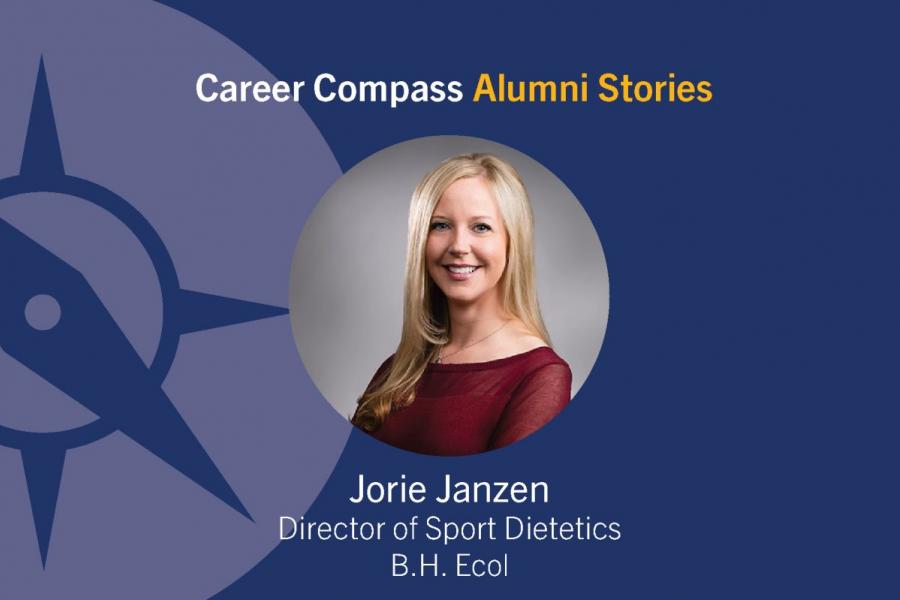
As a registered dietitian working in sport nutrition I wear several hats. I work full time as the director of sport dietetics at the Canadian Sport Centre Manitoba (CSCM). At the CSCM I work with an integrated support team consisting of an exercise physiologist, strength and conditioning coaches, a sport psychologist, athlete services manager, the communications and marketing coordinator and the general manager of the centre. Together we provide services to National, Olympic and Paralympic level athletes in Manitoba. I also keep a small private practice on the side, which includes sports nutrition for health and performance, as well I work with individuals, athletes and teams and corporations. I have provided services from the grass roots level up to the NHL level in sport. I also provide services to those with eating disorders who either just completed the eating disorder program or are waiting to get into the program. I provide mentorship for students who are interested in a career in sport nutrition. For past 13 years, I have been providing opportunities for nutrition students, recent grads, dietetic interns and dietitians to both observe and get hands-on experience in working in sport nutrition.
My job is not 8 to 4 or 9 to 5, nor is it Monday to Friday. If you want to work in sport you have to be both flexible with and protective of your time. This has been and continues to be a challenge for me. Coaches and athletes are not always available during normal working hours. Or, they need to discuss issues and concerns before they can move on with their work. This can mean calls, texts, emails, face time/Skype meetings late into the evening, beyond your already full workday. It is exactly this that I do find rewarding and challenging at the same time. I absolutely love what I do (most days!) and love knowing that those I work with know they can count on me when they need me. And at the same time, drawing the line as to when to shut things down so that I can recover and be my best can be a hard thing to do.
What experiences and activities helped you to map out your career pathway?
When I first started at the University of Manitoba I had no idea what I really wanted to do for the rest of my life. I thought that teaching would be great. I was also really interested in the social sciences but I just couldn’t commit to either area. I went to Career Services for assistance and what showed up was the field of nutrition. The defining moment that lead me to where I am today was a course in the nutrition program that required us to conduct an interview with a dietitian working in the area we were interested in. I assumed that had to be diabetes or the elderly as these were major topics in the course work. However, my schedule could not line up with the dietitians I tried to connect with. One day, out of desperation to get my assignment done, I flipped through the Yellow Pages (that was a business phone book we used before the internet came along) and found a sports nutritionist. I had absolutely no idea what a sports nutritionist did; but I am sure glad I made that contact. The dietitian took me under her wing and not only mentored me but truly gave me my start in sport nutrition…thank you Rennie Benedict!
As a student, did you see yourself in your current career? What stayed the same and/or changed?
As a student, I had no idea what a dietitian really did, never mind working and specializing in sport nutrition. So, no, I did not see myself in my current career. In fact, in my last year when I was starting to think how I could work in sport nutrition I was told by a classmate that I could never be a sports dietitian because I was not a high-level athlete. I have to admit, I was pretty bummed when I heard those words come out of her mouth. After all, I am not a high-level athlete and there were no courses at the time in sport nutrition. That said, I am not a quitter and I was not going to let a little thing like not being a high-level athlete stop me from pursuing an area I had fallen in love with. Does someone specializing in diabetes or cancer have to have experienced diabetes or cancer? Or, being a great athlete does not necessarily translate into becoming a great coach. Those experiences can absolutely help, but they don’t guarantee you will be able to work in the area. So, instead, I decided to keep all potential opportunities in dietetics as options for me and my career path. This included the area in sport nutrition.
What advice do you have for students who are interested in pursuing a degree in human nutritional sciences?
My advice is simple. Follow your passion(s). That said, you will have to put in a ton of free time and labor to gain the experiences and practical skill set to work in this field of sport dietetics. Volunteering, networking, studying and having patience and perseverance will help get you to where you want to be. Some of the activities that helped me gain practical experience include:
Volunteering with the Women’s Health Clinic in delivering Body Image, Self-esteem and Weight Preoccupation presentations. I learned so much from the training program, those also training in the program and the delivery and interactions with participants in the sessions. I unfortunately work with amazing athletes and too often they have body image issues, disordered eating or eating disorders.
Volunteering at the Running Room helped build my skill set in gaging the audience as to what level of information was needed. Not everyone who is active wants to be a high level athlete!
Volunteering and being mentored by a dietitian working in sport allowed me to both gain knowledge, practical experience and network with coaches, athletes and learn what committees I could participate in.
Becoming a Dietitians of Canada student member provided me with the opportunity to join and eventually participate with networks.
What job search advice do you have for students and recent graduates?
I did not jump into a full-time sport nutrition position straight out of internship. There was no such thing at the time and I had much to learn before it could even become a reality. As a registered dietitian I started working in two long-term care facilities, then to a larger facility while working evenings and weekends on my private practice – which I mainly focused on sport nutrition. I then spent several years working with the WRHA Surgery Prehabilitation Program for my day job and continued to build my private practice. Eventually, my contract work with the Canadian Sport Centre Manitoba grew into a permanent part time position for my first year. It then quickly moved to a permanent full-time position. Perseverance and networking were definitely major contributors to my success in sport nutrition.
Tell us a fun fact about your career path.
My position with the CSCM is the only permanent, never mind full-time sport nutrition position in the province! Yes, I am truly blessed.
Briefly, tell us about your job. What do you find most rewarding? What are your greatest challenges within this profession?
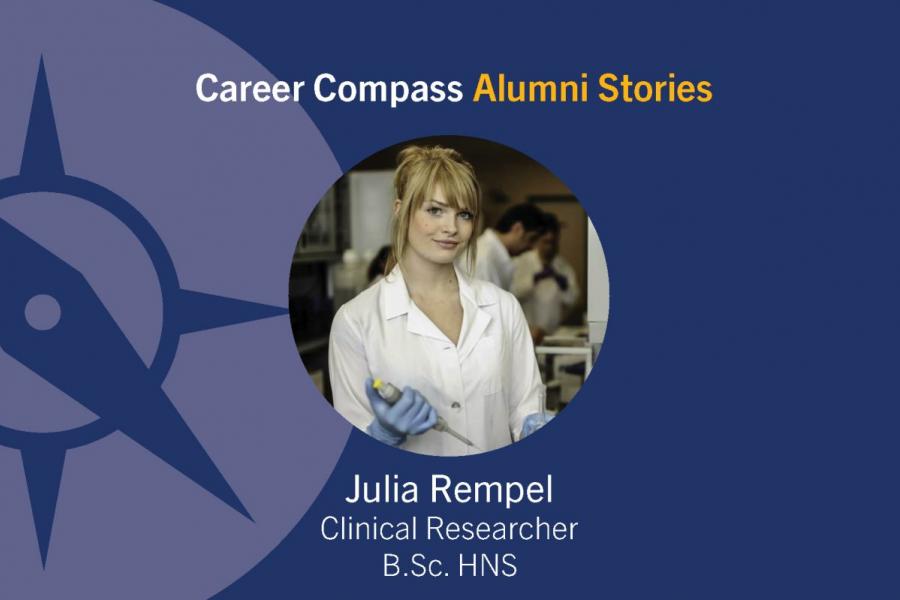
I’ve been working in clinical research for five years. My first four years were spent at the Richardson Centre for Functional Foods and Nutraceuticals (RCFFN) running clinical trials looking at certain foods and ingredients such as novel oils and their effect on cardiovascular disease risk factors, or on other chronic illnesses such as diabetes. I am now working at the University of Manitoba Bannatyne Campus in internal medicine. My current position entails coordinating a clinical study examining the effects of co-morbidities such as depression and anxiety on immune-inflammatory disorders which include multiple sclerosis, rheumatoid arthritis and inflammatory bowel disease. The purpose of this study is to better understand the health impacts of problems like anxiety and depression on the general health of people, the ability to work, quality of one’s life, stress, fatigue, etc. On top of organizing the administrative aspects of the trial with my coworkers, I run the two to two-and-a-half hour appointments with participants. These appointments include basic anthropometric measurements, cognitive tests, questionnaires and can include a psychiatric interview that I conduct with them.
The most rewarding aspect of my job is the psychiatric interviews. People open up and share their life stories with me, talk to me about personal and intimate details and sometimes break down and cry as we talk about issues and experiences they have had in their lifetime regarding depression and anxiety. At times, the participant will be very thankful for the opportunity to get to open up to me and hugs me after the appointment. It’s wonderful to be able to connect with people. My greatest challenges are working with certain participants who can be cognitively impaired, or impaired in their ability to walk or write. To be a coordinator for this trial, you have to be patient and caring. Furthermore, there is the challenge of both coordinating the study full time, and still having time to recruit and schedule participants as well as complete all administrative work on top of everything. The days are busy!
What experiences and activities helped you to map out your career pathway?
I acquired an interest in research after a fourth-year Functional Foods and Nutraceutical course. On top of acing the course due to my interest in the subject, I emailed the professors about any part-time work for students and was hired on full-time during the summer before my final year of university. Having these connections aided me to acquire a full-time position at the RCFFN after my graduation.
As a student, did you see yourself in your current career? What stayed the same and/or changed?
Definitely not. I honestly had no clue what I was going to do up until my fourth year of university as I did not want to go into dietetics. I was planning to do a master’s in food science and then choose my career path after. Things fell into place after I worked in a student position at the RCFFN. I decided not to pursue my master’s degree and I have no regrets about this decision.
What advice do you have for students who are interested in pursuing a degree in human nutritional sciences?
Apply for your internship early if you are interested in dietetics. Furthermore, be prepared to travel if you are looking for a full-time dietetics position. If you are interested in research, get as many volunteer or part-time work experiences in that field as you can and try to make connections. It really is true that sometimes it is all about who you know. If you are in research and plan on pursuing further education in nutrition or food science, be prepared to get your PhD as most academia/research associate positions require a PhD.
What job search advice do you have for students and recent graduates?
Start early and exhaust your options with where you apply and also use your connections to your advantage.
Tell us a fun fact about your career path.
Once I helped coordinate a study where I had to wake up certain days at 3:30 a.m. We traveled to Hutterite colonies for a 6 a.m. arrival to do our baseline and endpoint anthropometric measures and blood collection before their breakfast. They fed us such good food!
Briefly, tell us about your job. What do you find most rewarding? What are your greatest challenges within this profession?
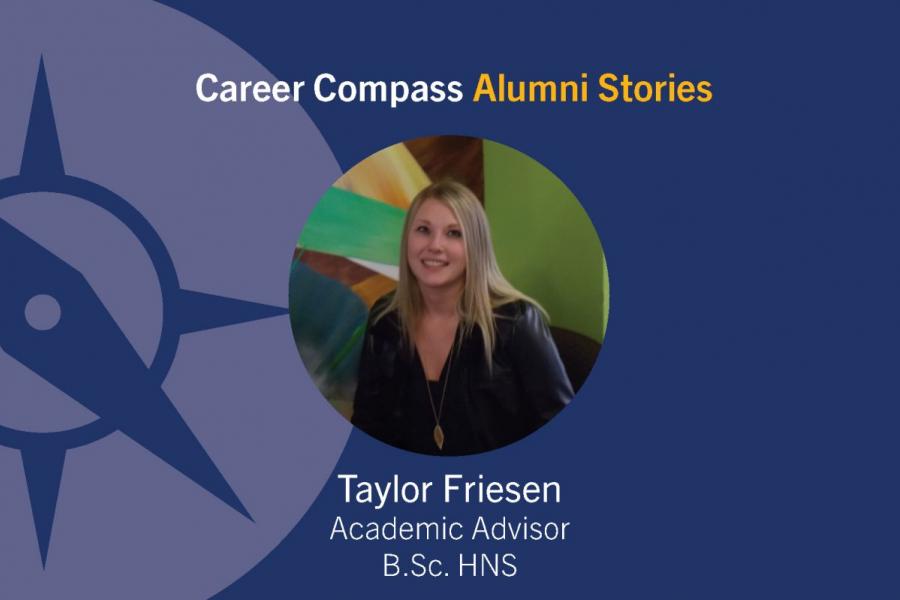
I work as an academic advisor in the Faculty of Agricultural and Food Sciences advising students in the human nutritional sciences and food science program. The most rewarding part of my job is helping students through the program and being able to apply the knowledge I gained as a student. Seeing students get excited about a program and field that I also share the same excitement for is amazing.
What experiences and activities helped you to map out your career pathway?
Volunteering and involvement with the faculty is what first landed me a summer job in the Advising Office. I really enjoyed the atmosphere at the university and when I got a call to come back I couldn’t say no!
As a student, did you see yourself in your current career? What stayed the same and/or changed?
I actually saw myself being a clinical Dietitian. I still have goals to work in the field of dietetics but I love my job and can’t imagine doing anything else at the moment.
What advice do you have for students who are interested in pursuing a degree in human nutritional sciences?
A lot of students go into this program with the goal of dietetics, which is awesome. However, I encourage students to keep in mind that field of nutrition is huge and if dietetics doesn’t work out there are many other opportunities out there such as research, government, teaching and more.
What job search advice do you have for students and recent graduates?
Use the campus resources that are available to you. Career Services is a great resource for career planning, job searching and resumé and cover letter writing. Apply for the jobs that are out there. Even if it’s not your ideal job, it helps build up your resumé and may even end up leading to your dream job.
Tell us a fun fact about your career path.
I actually started off taking business at the University of Manitoba and was two years into my degree when I discovered human nutritional sciences was an option. I immediately went to see an academic advisor and switched career paths there and then.
Meet with a career consultant for a confidential discussion about your career goals, job search, resumé/CV and interview preparation.
Contact Career Services at cs.receptionist@umanitoba.ca or call 204-474-9456 to make an appointment.
Talk to an academic advisor who will guide you to resources to help you make important decisions for your future. Advisors are specialized, often by program, faculty/school or unit.
Faculty of Agricultural and Food Sciences
256 Agriculture Building
66 Dafoe Road
University of Manitoba
Winnipeg, MB R3T 2N2 Canada
Career Services
Room 474 UMSU University Centre
65 Chancellor's Circle
University of Manitoba
Winnipeg, MB R3T 2N2 Canada