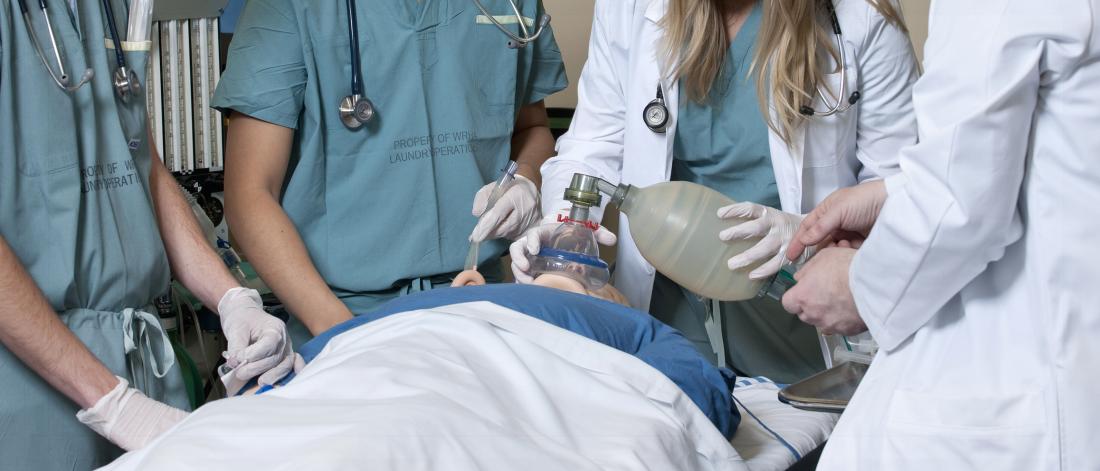
A simulation patient is being intubated.

Facilities

Clinical Learning and Simulation Facility (CLSF)

The CLSF is one of Canada’s most comprehensive simulation teaching facilities in a state-of-the-art facility covering more than 11,000 square feet.

About the CLSF

The Clinical Learning and Simulation Facility (CLSF) is one of Canada’s most comprehensive simulation teaching facilities in a state-of-the-art facility; covering more than 11,000 square feet.

Like a hospital, all of the CLSF’s 14 multipurpose examination rooms are equipped with a diagnostic headwall featuring blood pressure cuffs, otoscope, and thermometer. Medical gas columns, heart-rate monitors, intravenous carts and all other equipment required in the course of real clinical care is stocked and available.

Each room is also equipped with high-fidelity video cameras with real-time playback capability to facilitate evaluations and debriefing - central to the simulation teaching style.

The “patients,” – two adults, a birthing mother, an infant and a child – are all anatomically correct robotic manikins who can breathe, have pulses and reflexes. Our clinical education specialist and our simulation technicians are skilled and ready to assist instructors with design and setup to obtain the best possible results for their simulation-based teaching.

Contact clsf@umanitoba.ca to view the CLSP Governance Operations Manual.

About the skills lab

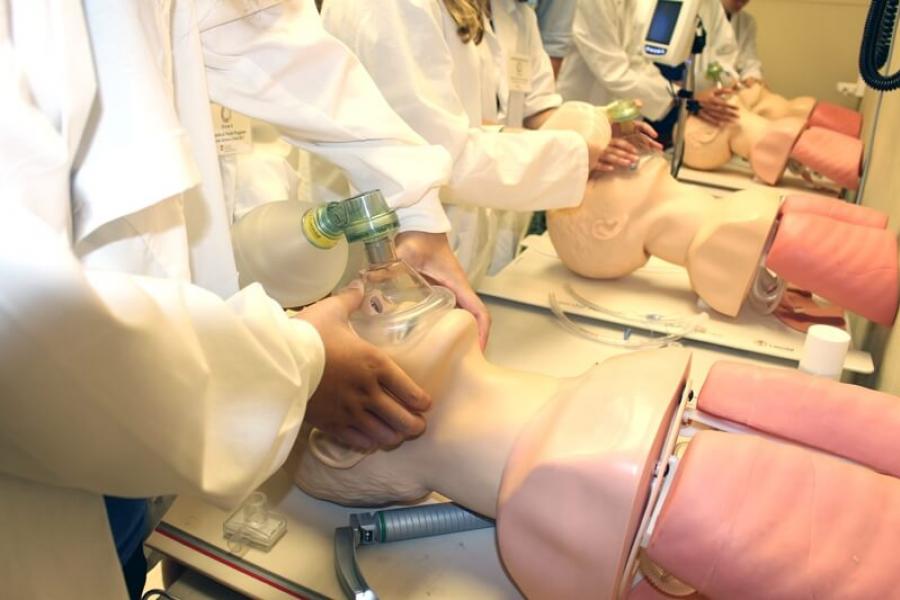
The skills lab is designed to train students in technical and procedural skills through the use of biological and synthetic models, ranging from simple task trainers to more advanced surgical stations.

Biosafety guidelines for the skills lab

The skills lab is classified by  workplace health and safety legislation as  a containment level 2 lab.

At all times, regardless of  the presence of biohazardous material, the following rules must be observed:

  • NO FOOD OR DRINK is allowed in the lab at any time
  • The door to the lab is to stay closed
  • No outer wear (coats, jackets, etc.), purses or bags allowed in the lab at any time 
  • Wash your hands upon exiting the lab

There are lockers that require a quarter (25 cents) outside the lab. The quarter is returned when the key is put back into the locker. Or, your bags and jackets can be placed on the table outside the lab.

When biohazardous material is present:

  • Closed toe shoes are to be worn
  • Long hair (shoulder length) must be tied back
  • Proper Personal Protective Equipment (PPE) will be supplied for your session if required (i.e. gowns, gloves, masks)
  • PPE must be removed before exiting the lab. Your own lab coats should be left outside the lab and used for clean wear

Equipment

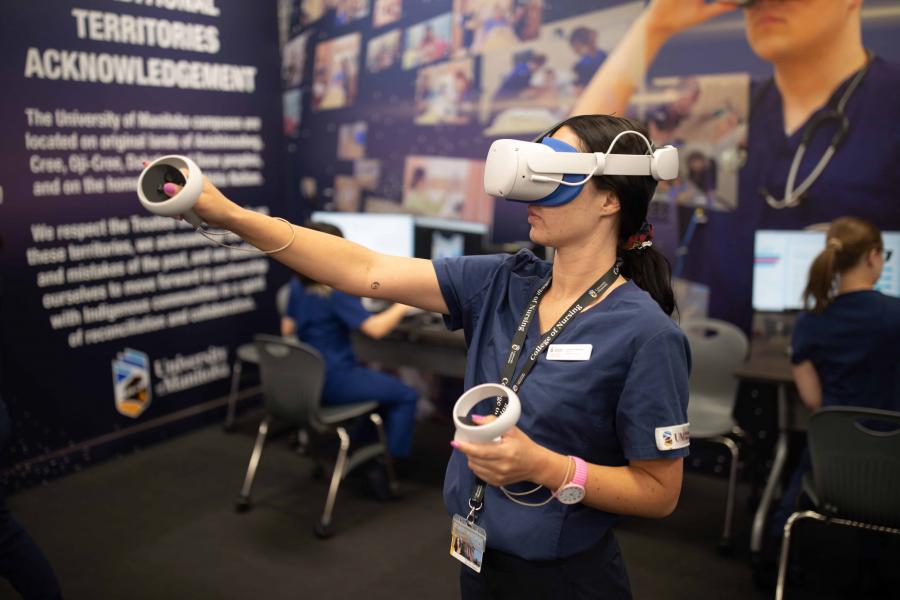
The Clinical Learning and Simulation Program (CLSP) provides a wide range of trainers, hospital supplies and other equipment to create a high-quality simulation-based education event.

When booking activities, please indicate specifically which resources you wish to have available. A full list of materials is available in our equipment catalogue.

View the equipment catalogue (PDF)

If you would like to recommend equipment to expand our current inventory, fill out the equipment purchase request form.

Equipment purchase request form

Documents are available in alternate formats on request.

Annual planning cycle for 2026-2027 academic year

The Clinical Learning Simulation Program is now accepting booking and resource requests for dates occurring after August 1, 2026.

To ensure all requests are treated and approved fairly, please follow the detailed schedule below. Bookings will then be prioritized, conflicts identified, resolved, and/or adjudicated and confirmations sent by email.

Deadlines:

For sessions between August 1, 2026 – July 31, 2027: 

  • Submit booking requests by: March 31, 2026
  • Confirmations sent out: May 2026

Important:

  • Session organizers may submit requests after the above deadline. However, requests submitted after March 31, 2026 may receive lower priority.
  • Late requests will be accommodated based on resource availability.

Available rooms

Room Capacity Equipment Room # Building
Exam rooms 6-7 Hi-lo treatment table (electric, with wheels), small table 1, 2 3, 4 Lower level, Brodie Centre
Exam rooms with obs/gyn exam table 6-7 Obs/gyn examination table (electric, stationary), small table 5, 6, 7, 8 Lower level, Brodie Centre
Hi-fidelity simulation room 12 Pediatric / obstetrical manikin 9 Lower level, Brodie Centre
Hi-fidelity simulation rooms 12 Adult manikin 10, 11 Lower level, Brodie Centre
Large rooms 16-18 Hospital bed, large table 12, 13, 14 Lower level, Brodie Centre
Small group learning rooms and Central learning area 6-12   205 A-H Second floor, Brodie Centre
Clinical and procedural skills lab
45 18 two-person tables inside a large wet lab 211 Basic Medical Sciences Building

Standardized patient program

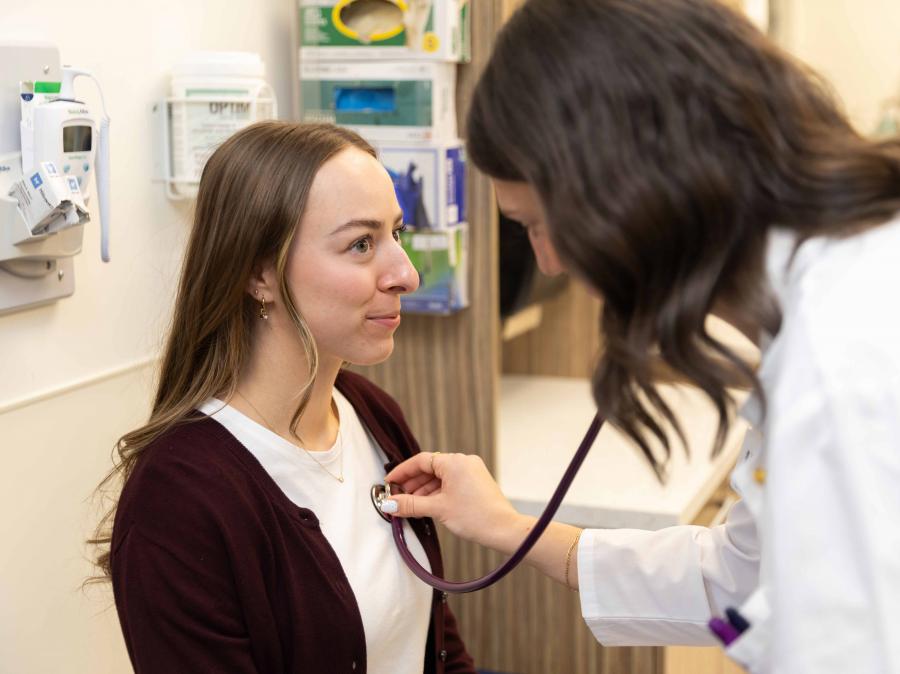
Standardized Patients (SPs) are real people from a mix of ages, backgrounds and life experiences who are trained to act like real patients. SPs accepted into our program learn how to describe symptoms, show physical signs, and react emotionally in a way that feels natural and believable. SPs make clinical training more realistic, giving students a chance to practice both their medical and communication skills in a safe, hands-on environment. They also play an important role in student evaluations, helping instructors see how future healthcare professionals connect with patients—not just clinically, but on a human level too.

Simulation education, research and programming

The Rady Faculty of Health Sciences has established a committee to act as the main operational and programming committee of the RFHS in relation to simulation activities within the Rady Faculty and the Clinical Learning and Simulation Program.

The Simulation Education, Research and Programming (SERP) Committee's mandate is to:

  • Oversee the implementation of simulation-based educational programs and research for the RFHS;
  • Oversee, and provide advice to the Director, CLSP, respecting the operational and programming activities of the CLSP.

To learn more, or if you're interested in attending a meeting/joining the team, visit the SERP website.

SERP website

Forms and guidelines

Guidelines on Biosafety guidelines for the skills lab can be viewed above under the facilities section.

Please see the Rady Faculty of Health Sciences policies page for related information.


Contact us

Clinical Learning and Simulation Program (CLSP)
Brodie Centre, 727 McDermot Avenue
University of Manitoba
Winnipeg, MB R3T 2N2 Canada

204-272-3070
Hours of operation are Mon-Fri, 8am to 4pm