
Elders and Traditional Peoples Gathering
The Elders and Traditional Peoples Gathering is an opportunity to learn from Indigenous Elders and share traditional knowledge and teachings with the UM campus and wider community.
Save the date! Join us March 4-5, 2027. More details coming this winter.

Registration and event details
The gathering welcomes students, faculty, staff, Elders, Knowledge Keepers and community members to come together in a shared space for learning, dialogue and connection.
Featuring keynote speakers, interactive sessions, cultural programming and opportunities for informal conversation, participants can deepen their understanding of Indigenous histories, cultures and ways of knowing while building meaningful relationships.
We look forward to welcoming you at this cultural learning event to renew spiritual, mental, emotional and physical wellness through stories, teachings and traditional knowledge.
Background
The University of Manitoba's annual Elders and Traditional Peoples Gathering began in 2002 with the Department of Native Studies (now Indigenous Studies). As it grew, a larger planning committee was formed and the gathering was hosted for many years by the Indigenous Student Centre. With support from the Indigenous campus community, the event is now hosted by Cultural Integration.
Sessions
Session details and schedule will be announced this winter.
Thursday, March 4, 2027
Time | Item | Speaker(s) | Location |
| 6:30 a.m. | Sacred fire | ||
| 7:30 a.m. | Registration opens | ||
| 8:00 a.m. | Opening Pipe and Water Ceremony | ||
| 9:00 a.m. | Break | ||
| 9:30 a.m. | Welcoming remarks and opening | ||
| 11:30 a.m. | Concurrent sessions | ||
| 12:30 p.m. | Lunch | ||
| 2:30 p.m. | Concurrent sessions | ||
| 4:00 p.m. | Closing day one |
Friday, March 5, 2027
Time | Item | Speaker(s) | Location |
| 9:00 a.m. | Registration opens | ||
| 9:30 a.m. | Opening remarks | ||
| 10:00 a.m. | Lighting the Qulliq | ||
| 10:30 a.m. | Concurrent sessions | ||
| 11:30 p.m. | Lunch | ||
| 12:30 p.m. | Concurrent sessions | ||
| 3:30 p.m. | Closing day one |
Elder and Presenter profiles
Elder and Presenter profiles are subject to change.
Select a name to expand and view the Elder and Presenter profiles.
Joanne Beauchamp Clowes
Coming soon.
Barbara Bruce
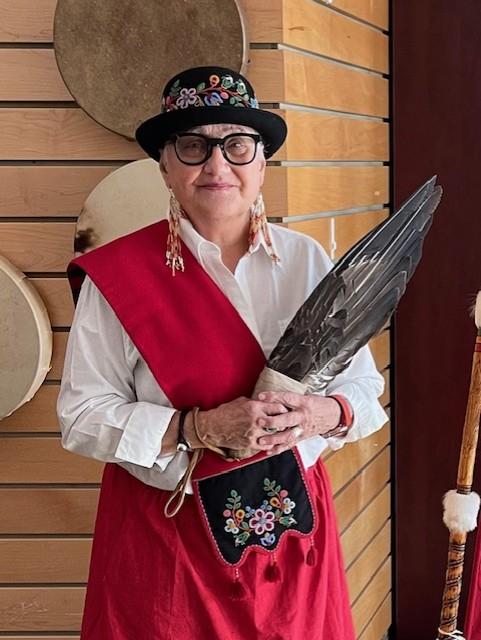
Kookum and Knowledge Keeper Barbara Bruce (Flies High Thunderbird, Truth Talker) is a Two Spirit citizen of the Red River Métis Nation– Michif aen Otipemisiwak. Her beliefs of Indigenous traditional teachings are reflected in all the work she takes on.
A Sundancer, Sweatlodge leader and Pipe Carrier, her dedication to advancing the rightful place, recognition and acknowledgment of the Two Spirit community, Indigenous women and children are an integral part of her life.
Barbara has been recognized and honoured for her work by the Human Rights Commission of Manitoba. In recognition of her lifetime of work, she was inducted into the Order of Manitoba in 2018. In 2020, she was acknowledged in the Manitoba Legislative Assembly in a Member’s Statement for her work and contribution as a Two Spirit Elder. In 2021, she received the Nellie McClung Manitoba 150 Women Trailblazer Award. She was awarded the Queen Elizabeth II Platinum Jubilee Medal of Manitoba in December 2022.
Levinia Brown
Coming soon.
Deb Chaboyer
Two-Eyed Seeing Red River Metis University of Manitoba Alumna and Hypnotherapist with a diverse career in Leadership, Adult Education, Student Services, Indigenous Social Services, and Counselling.
Deb’s life and work reflect a deep commitment to walking in two worlds: integrating Indigenous knowledge systems with academic and professional practice to promote wellness, understanding, empowerment, resilience, and cultural safety.

Karen Courchene (Ozhawskwa Bineshii Anakwud)
Karen Courchene, Ozhawskwa Bineshii Anakwud, is Anishinabe from Treaty One Territory; Sagkeeng/Peguis. She is the Grandmother-in-Residence at Migizi Agamik, the Indigenous Student Center at the University of Manitoba.
Prior to coming into this role, Karen was an educator for over thirty years, working in many areas of education. She is an alum of the University of Manitoba. Karen is a mother, grandmother, and great-grandmother. In her role as Grandmother-in-residence, Karen does her best to support the students in any way she can.

Tagaaq Evaluardjuk-Palmer
Tagaaq Evaluardjuk-Palmer is one of the last generation of Elders born and raised out on the traditional lands of the Inuit. During her youth, Tagaaq survived in a natural environment with her family before they were relocated to Frobisher Bay, Nunavut by the Government of Canada. This resulted in a culture shock as many families were removed from their traditional lifestyles and placed into a settled Canadian styled community.
As a child Tagaaq attended the Apex Federal Day School from 1960 to 1967, then attended Churchill Vocational School from 1967 to 1968 and went on to Keewatin Community College for Office Management. Tagaaq has sat on many boards such as the YMCA, the Mid-Wifery Training Program, the Manitoba Inuit Association Band, Inuit Health Research Committee, and the National Centre for Truth and Reconciliation's Survivors Circle.
Tagaaq is a grandmother and great-grandmother who enjoys being involved in community events and educational programming whenever she can.

Margaret Lavallee
Margaret Lavallee is an Anishinaabe Ikwe from Sagkeeng First Nation and an Elder in Residence at Ongomiizwin Education from the Indigenous Institute of Health and Healing at Rady Faculty of Health Sciences, University of Manitoba.
Margaret’s experience comes from over 40 years in varied Human Relations responsibilities within the health care field. Margaret holds a degree in Bachelor of General Studies from Brandon University. She was also honoured by the University of Manitoba, Rady Faculty of Health Sciences with an honorary doctorate degree for her lifelong work for the Indigenous community in the health care field. Margaret’s role as Elder in Residence for the last 17 years ensures Indigenous knowledge and world views are incorporated into all levels of student support at the University of Manitoba. Margaret assists with research, classroom presentations, and traditional cultural teachings for both staff and learners.

Laurie McDonald
Coming soon.
Norman Meade
Norman was born in Bissett, Manitoba, but grew up in the Metis settlement of Mangotagan. He went to the public school in Manigotagan, the Ojibway word for Bad Throat School. He finished Grade 9 in Manigotagan and then went to the San Antonio High School in Bissett.
In the early 1960's, Norman was hired at the gold mine in Bissett where he worked as a labourer and eventually became a full-fledged miner.
During this time, Norman met Thelma Barker of Hollow Water First Nation whom he married in 1967. They have two children and six grandchildren.
In his later years, Norman continues to be active in the community serving as an Elder and a Pastor. He serves on various boards in the city of Winnipeg. He is also an avid curler and is the founder of the Aboriginal Curling League of Winnipeg.

George Muswaggon
Traditional Knowledge Keeper George Muswaggon is from Pimicikamak in Treaty 5 territory. His home community is Cross Lake, which is one of several communities that encompass Pimicikamak. He is a strong advocate for preserving and up-lifting language and Indigenous cultural practices.
At a young age he took on leadership roles. First as an elected councilor in Pimicikamak, for four terms. Before becoming the First Grand Chief of Manitoba Keewatinowi Okimakanak. He has extensive knowledge and experience in various ceremonies and land-based teachings.
George is now a knowledge Keeper-in-residences with Ongomiizwin Education, where he supports Indigenous Learners in the Facility of Rady Health Sciences and offers cultural and spiritual guidance to the wider students, faculty and staff.

Charlotte Nolin
Elder Charlotte Nolin was born in the Red River settlement, what we know call Winnipeg, and is a Proud Red River Metis Citizen. Elder Charlotte is a survivor of the “Sixties Scoop” and a member of the 2Spirit community. Charlotte grew up in an era when homes were still heated with wood stoves and remembers the smell of lye soap being made every fall when the pigs were butchered. Charlotte’s journey took her across most of Canada from the city of Quebec all the way to Victoria BC.
Charlotte worked in the construction industry, and in the field of social work supporting families, youth, and children. Currently, she is an elder in residence at Ongomiizwin Educations, supports Indigenous Learners in the Facility of Rady Health Sciences and offers cultural and spiritual guidance to the wider students, faculty and staff.
Following the passing of her wife 13 years ago, Elder Nolin realized that life is short and it’s important to make a positive impact while we’re here. She is a strong advocate for 2SLGBTQQIA+ community in everything that she does, returning to our traditional ways of life and land conservation. In 2020, with her sister Barbara Bruce started the 2Spirit Sundance, the first of its kind.

Helen Settee
Coming soon.
Carl William Stone
Carl William Stone (BA) was born on the Brokenhead Ojibway Nation and raised by his Grandmother Eliza Stone. She was a respected Elder and of the Anishinabe Midaywin Society.
For the last 45 years, Mr. Stone has been active in the reclaiming of the Anishinabe Spiritual and Cultural ways of his people. In the mid nineteen seventies (1970’s), Carl was one of two young men of the Brokenhead Ojibway Nation who played a role in bringing back the Traditional Drum to Brokenhead Ojibway Nation. After 100 years of silence, the Brokenhead Drum sounded its voice once again.
Carl is currently retired but works as an Elder-in-Residence for the Indigenous Student Centre at the University of Manitoba two days a week. Carl also works in ceremonies such as the Sundance, Sweat lodge, and other ceremonies, he is an Elder’s helper, and guest lectures on traditional teachings and spirituality.

Fjola Hart Wasekeesikaw
Coming soon.
Indigenous Student Makers Market
This student market showcases and celebrates the diverse gifts and culture of First Nations, Métis and Inuit UM students.
Support Indigenous students by visiting the Indigenous Student Market! Throughout the gathering, current UM Indigenous students will be showcasing and selling their creations outside the Multi-Purpose Room in University Centre.
Indigenous Student Market hours:
Thursday, March 4: 9:30 a.m. - 4:00 p.m.
Friday, March 5: 9:00 a.m. - 3:00 p.m.
Plan your visit
Access information and resources to help you plan your visit.
Parking
We expect a large turnout and parking will be limited. Please carpool or use rideshare when possible.
Special-rate reserved parking (SD West Lot): Guests are encouraged to park in the SD West lot, where reserved parking has been arranged for the Elders Gathering. From SD West, take the campus shuttle to be dropped off closer to main campus. Parking in SD West requires payment. The full-day special-rate is $8.00.
Parking Payment options:
- HONK mobile app
- Scan the QR code posted in the lot
- Pay at the meter in the SD lot near the Soccer Complex
Other campus parking: Other campus parking options are available; however, availability and rates are not guaranteed. There is no free daytime parking on campus. From 7:30 a.m. to 4:30 p.m., paid visitor parking is available at meters, Park & Pay areas, and the University Parkade.
Accessibility
Learn more about getting around on our campuses, and the accessible services available on the Accessibility webpage.
Explore the Accessibility on our campuses section for maps of accessible building entrances on the Fort Garry Campus.
Eat on campus
There are a variety of convenient, healthy and affordable options for dining on campus, including several options in the food court on the 100-level of University Centre.
Explore dining options on the Dining Services webpage.
Contact us
Cultural Integration (Indigenous)
University of Manitoba
Winnipeg, MB R3T 2N2 Canada