
Shivangi Jindal
Advisor: Brian T. Rex
Architecture at a Threshold: Balancing Tourism and Vernacular Identity in the Himalayas
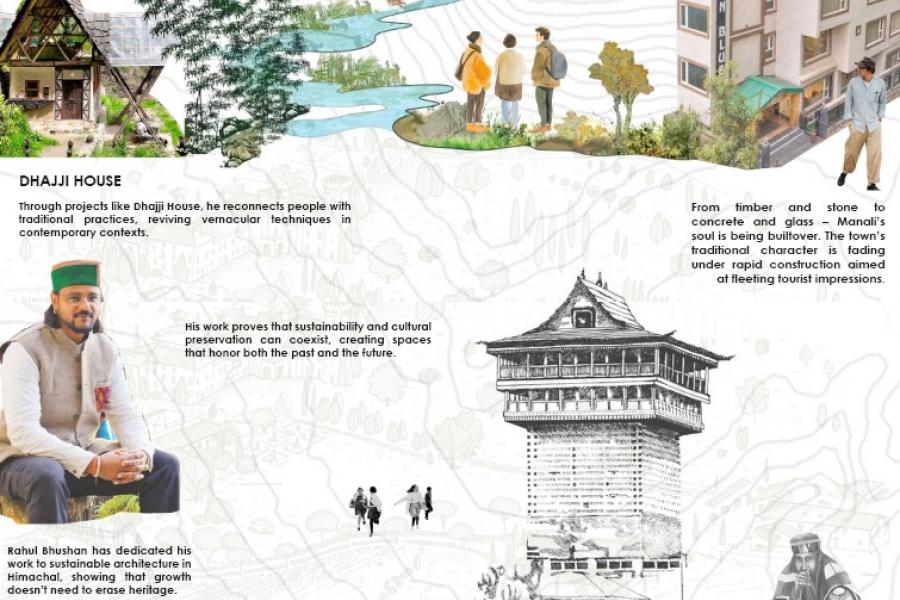
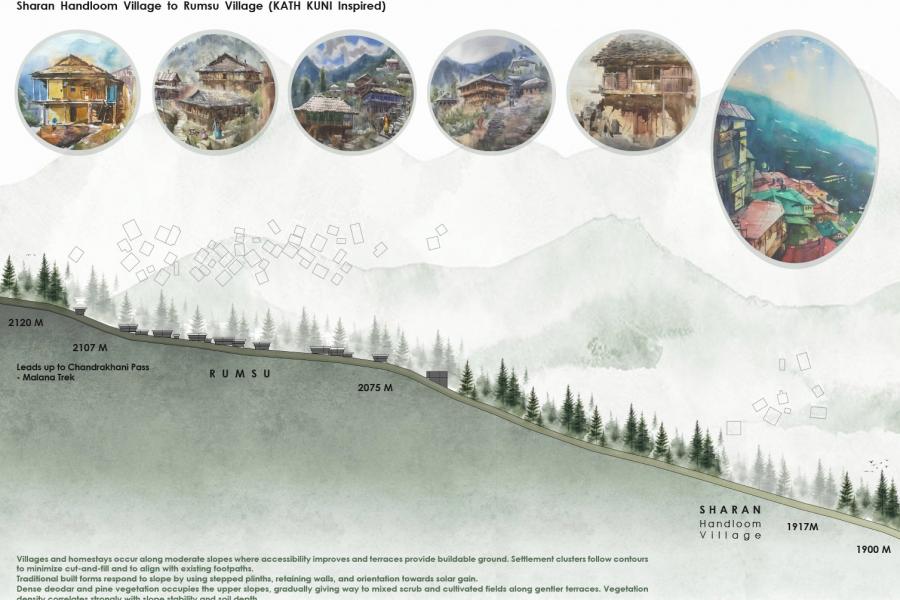
Tourism is slowly killing the heritage that tourists come for. In the Himalayas, the pace of change brought by tourism has begun to reshape local landscapes and the lives woven within them. What were once slow, self-sustaining environments are now responding to seasonal influxes, new economies, and unfamiliar forms of construction. The traditional rhythm of life, once guided by the land and its climate, is increasingly replaced by the quick demands of a visitor-driven economy. This transformation raises a question central to this thesis: how can architecture adapt to this change while safeguarding the values and identities rooted in place
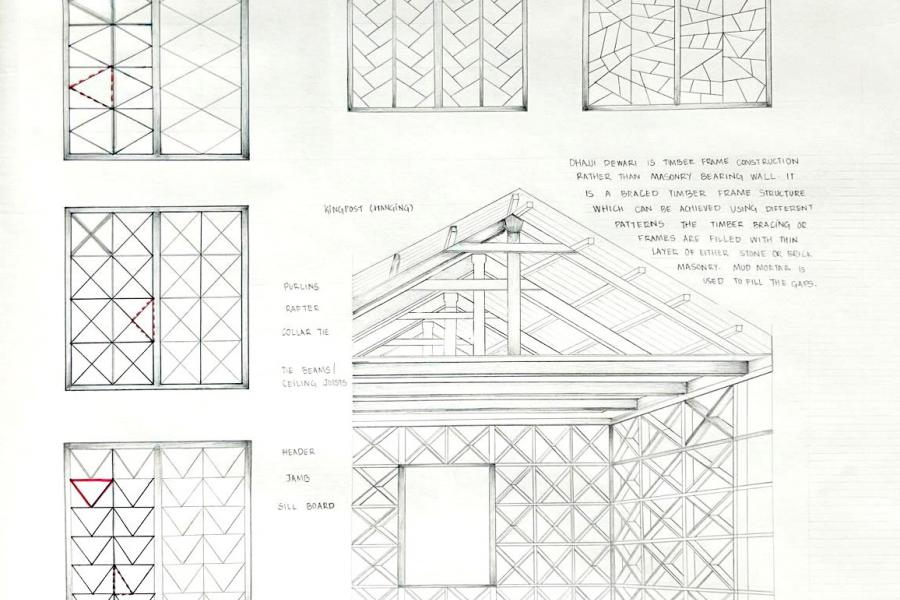
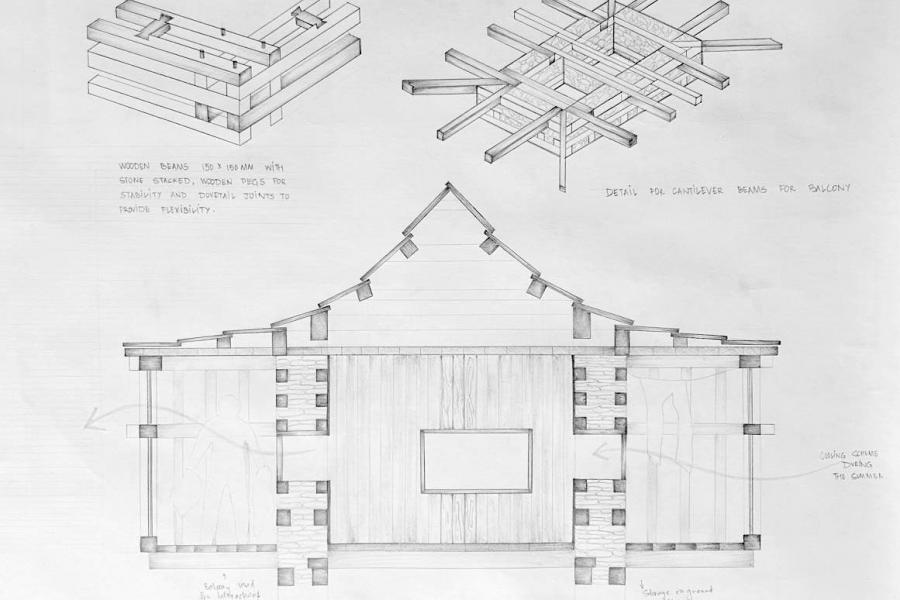
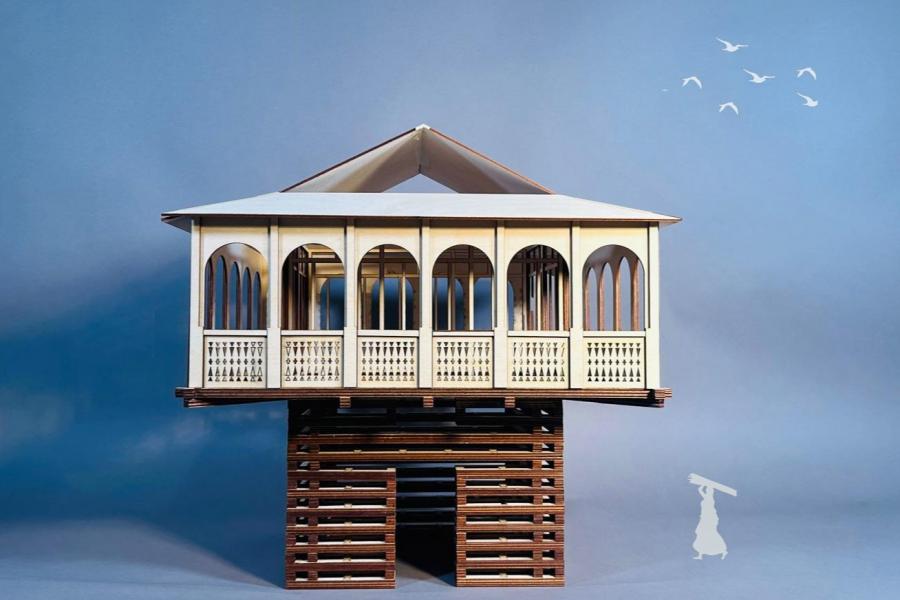
The vernacular, traditionally shaped by climate, material, and community, reflects a deep understanding of balance between need and resource, between life and nature. These traditions were not designed to impress but to endure, shaped by generations of practice, rituals, and collective intelligence. Yet, as modern development enters fragile Himalayan ecosystems, this balance is being lost. The influx of tourism-driven construction has altered the visual character of the landscape and disrupted both social and ecological harmony.
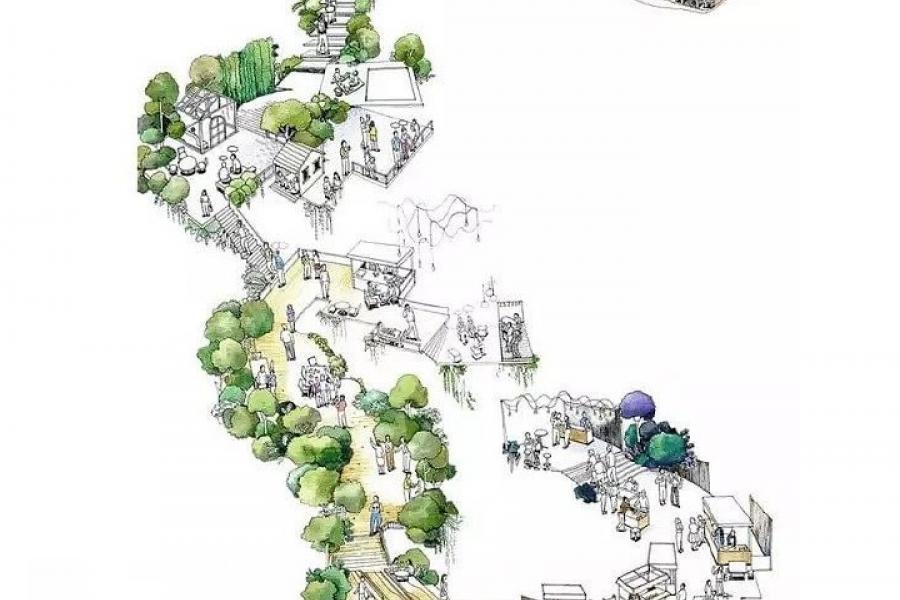
This thesis positions itself within this condition of tension and transition, taking the Himalayan village as a site of study and reflection. It explores how vernacular knowledge and spatial traditions can guide contemporary design strategies that respond to the pressures of tourism. Rather than treating vernacular architecture as a fixed heritage, the inquiry understands it as a living and evolving system, one capable of adaptation and renewal. The project aims to investigate how design can support communities in shaping a built environment that sustains both their cultural practices and the natural settings they depend on.
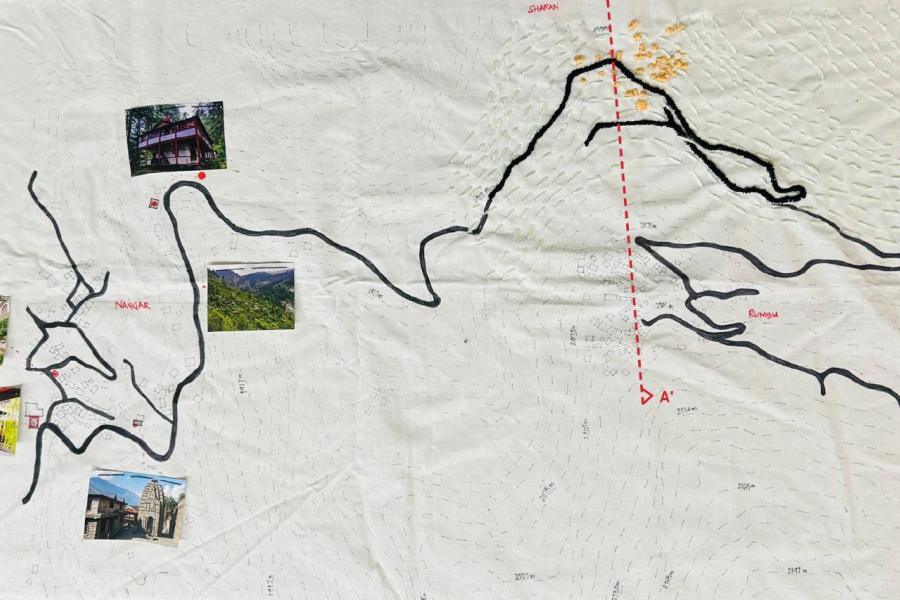
Through design research, mapping, and architectural exploration, this work seeks to reimagine the relationship between tourism and local life, not as competing forces, but as interdependent parts of the shared landscape that must learn to coexist. The goal is not preservation in isolation, but continuity: to explore how architecture can carry forward the essence of Himalayan life while allowing it to evolve, adapt, and remain resilient in the face of inevitable change.
Keywords: vernacular architecture, tourism, Himalayas, identity, landscape, continuity, adaptation, resilience