
Zairen Sultana Prema
Advisor: Mimi Locher
HOLDING SPACE
Architecture for Firefighters in Northern Manitoba
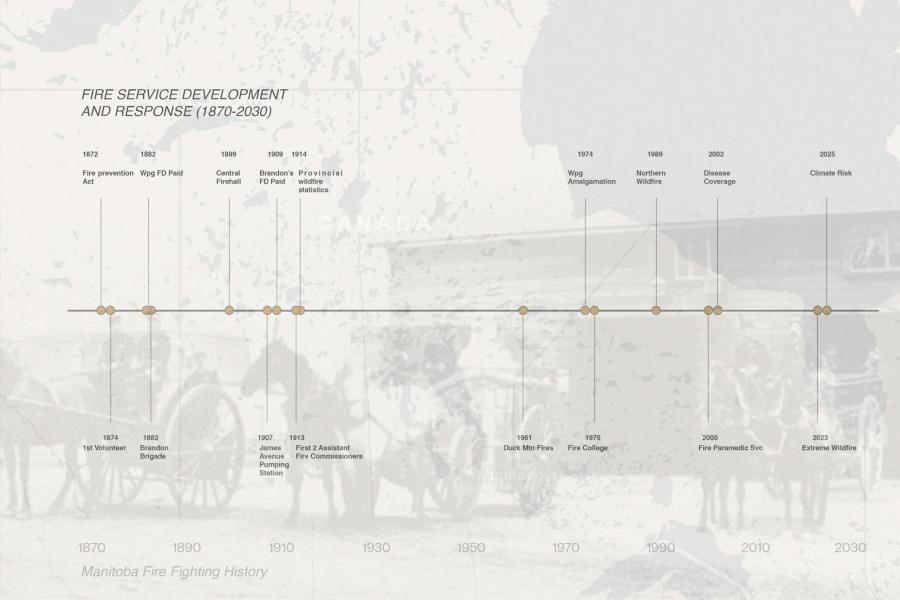
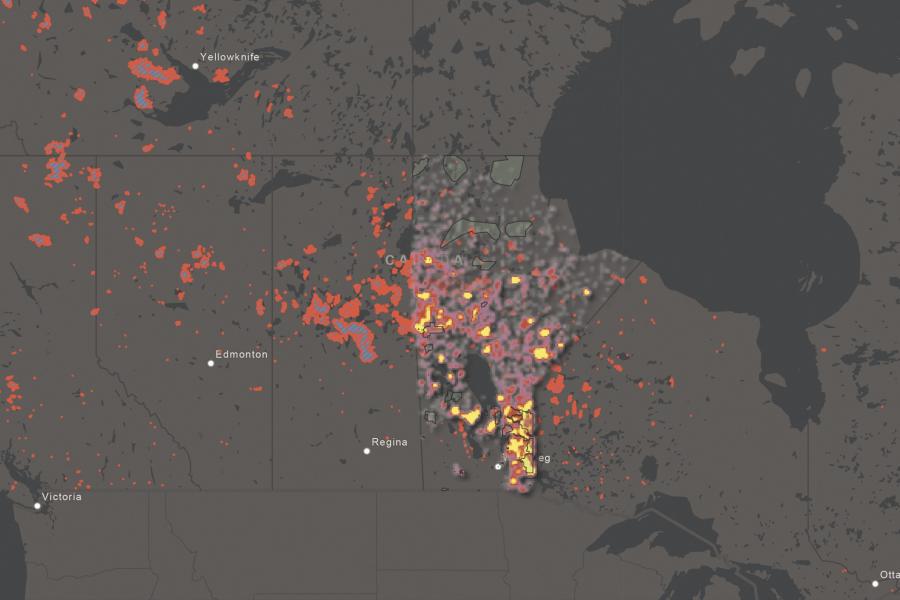
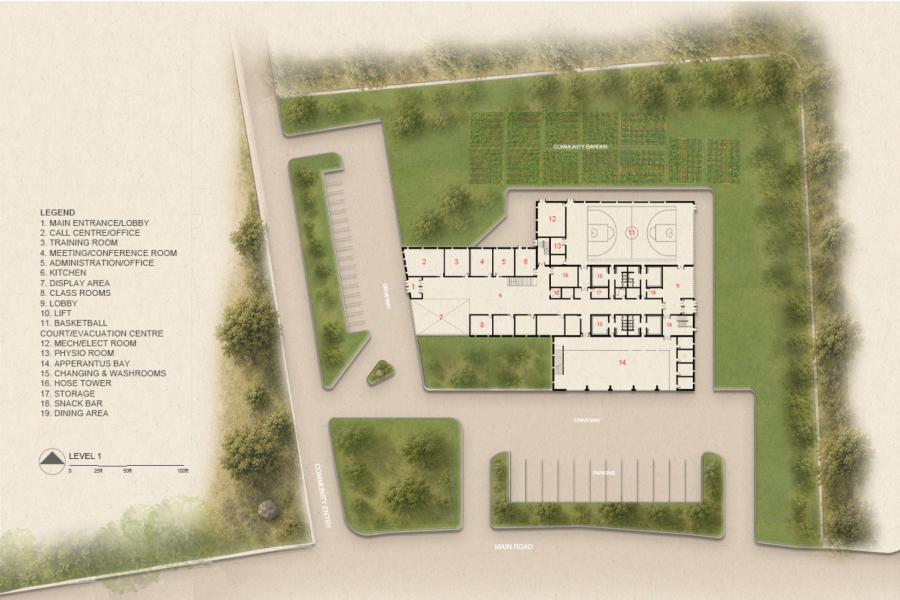
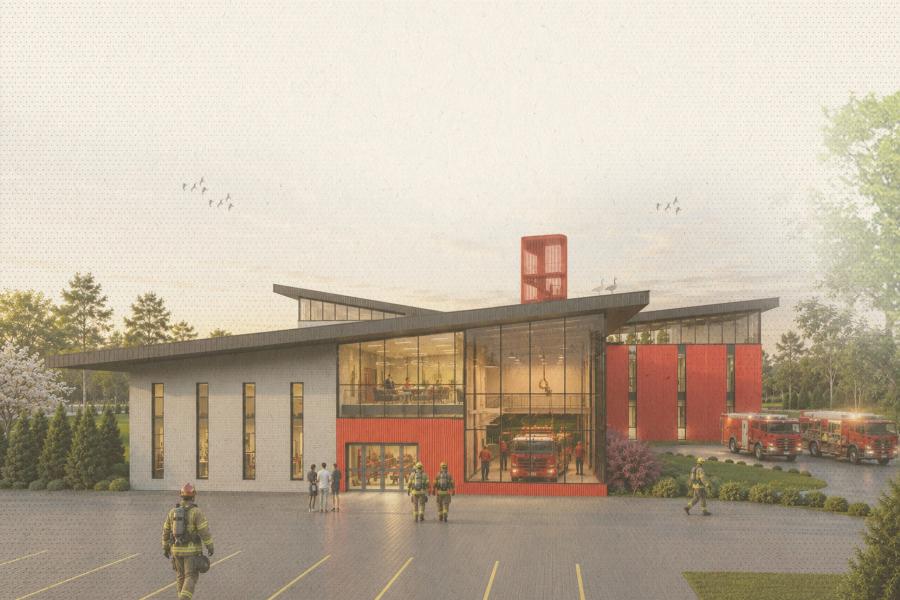
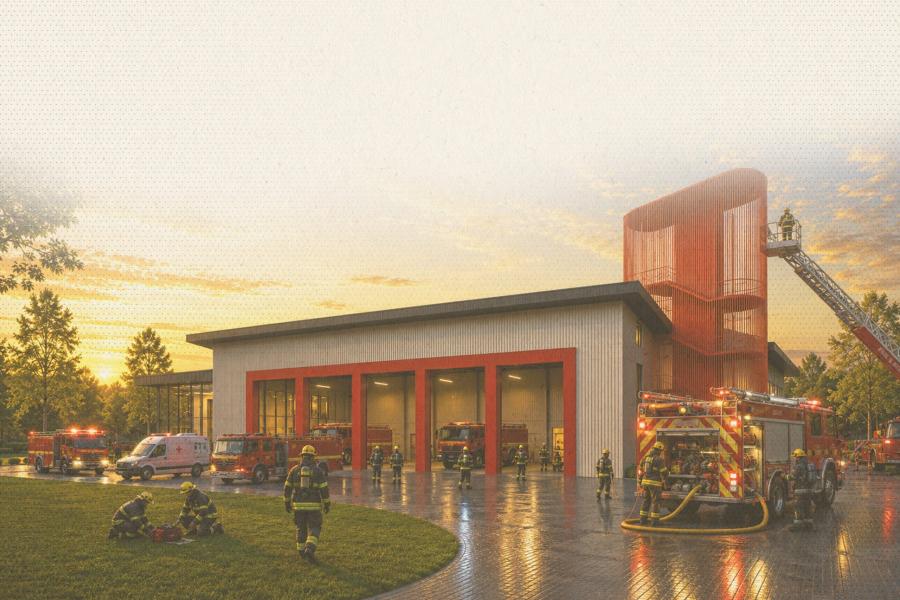
Holding Space: Architecture for Firefighters in Northern Manitoba examines how architecture can support wildfire preparedness, emergency response, and regional resilience in a landscape increasingly defined by climate-related fire risk. Northern Manitoba is experiencing more frequent and severe wildfire seasons, placing growing pressure on remote communities, emergency services, and the infrastructure that supports them.1 In this context, the thesis proposes a firefighter training and emergency response centre in Thompson as a strategic architectural intervention that responds to both immediate operational needs and long-term environmental realities.2
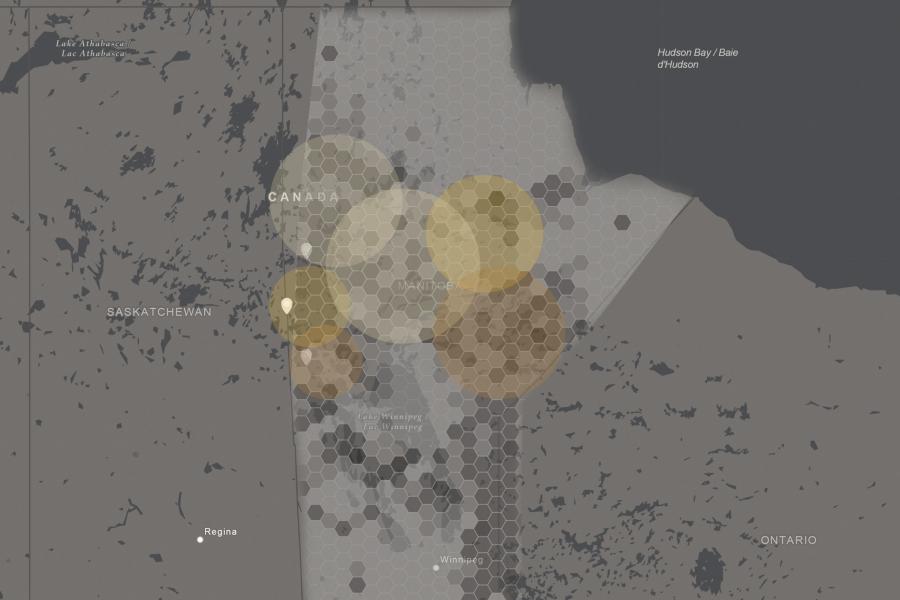
The project is informed by the changing nature of wildfire in Manitoba, where rising temperatures, prolonged drought, and shifting fire behaviour have intensified the scale and complexity of emergency response.3 Remote and northern communities are particularly vulnerable due to geographic isolation, limited access to resources, and limited response capacity.4 Existing emergency infrastructure has been tested by recent wildfire seasons, revealing the need for facilities that can serve not only as training environments but also as regional support hubs during wildfires.5
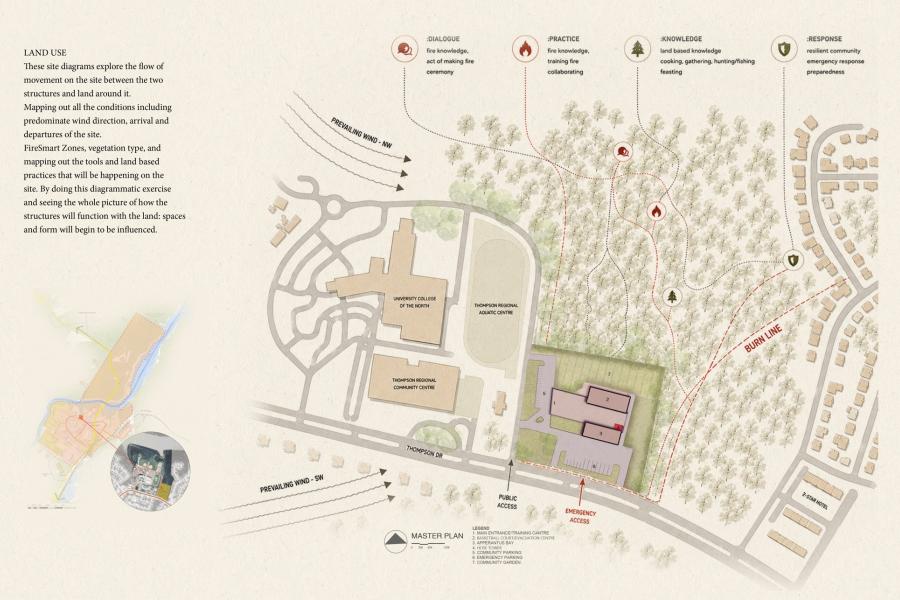
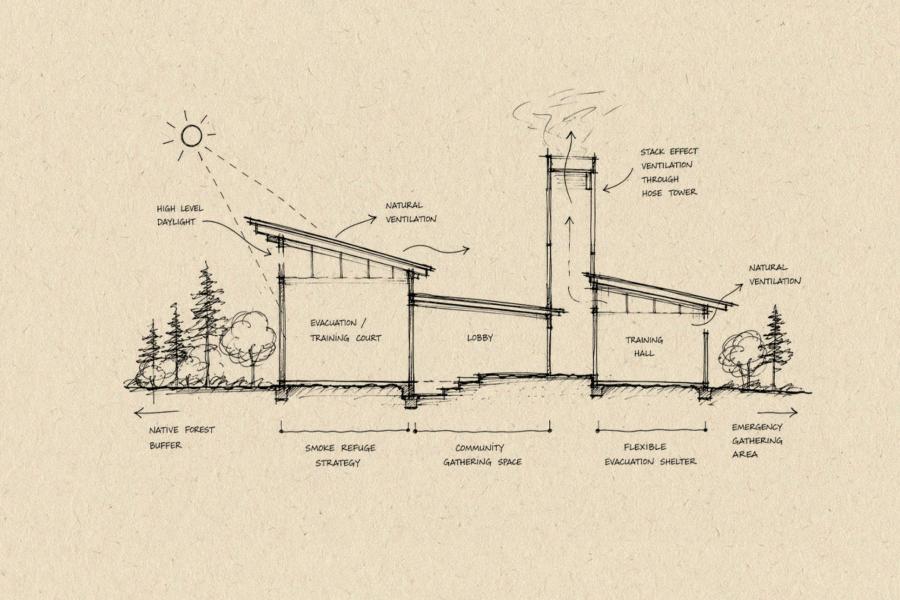
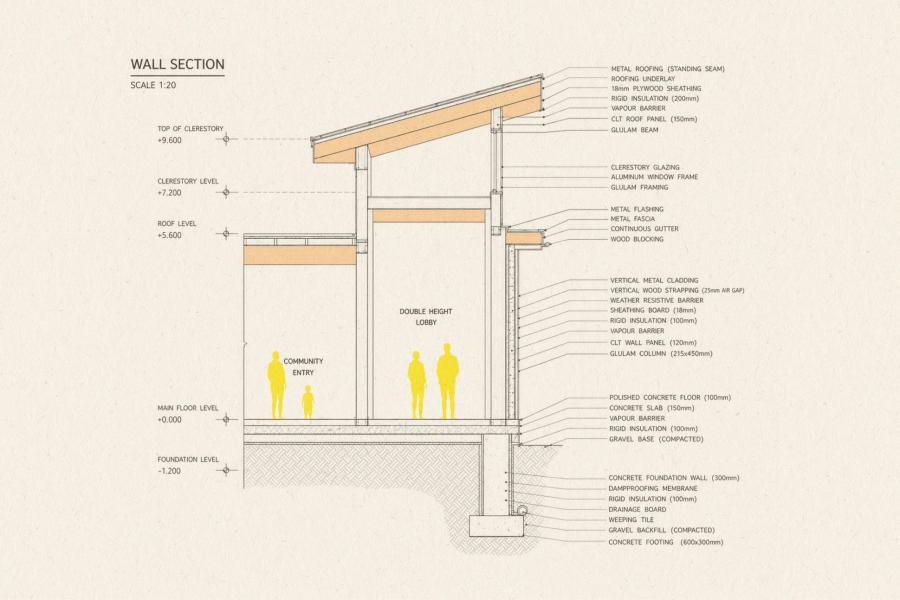
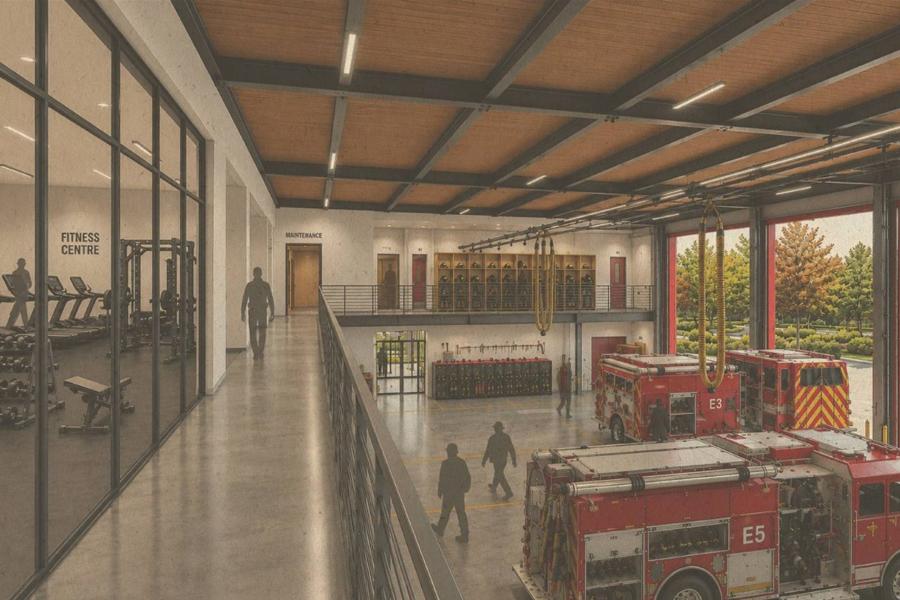
Architecturally, the thesis explores how a resilient and adaptable facility can combine training spaces, operational support, accommodation, equipment storage, and emergency coordination within a single integrated framework. The project is grounded in the understanding that architecture can play an active role in preparedness, response, and recovery by providing infrastructure that is responsive to climate, context, and community needs.6 Rather than treating wildfire as an isolated emergency, the thesis positions it as a recurring condition that must be addressed through design, planning, and long-term adaptation.7
Through this project, architecture becomes a tool for holding space: for firefighters, for emergency operations, and for the communities of Northern Manitoba that face increasing exposure to wildfire. The thesis ultimately argues that resilient design is not only about building for crisis but about creating infrastructure that strengthens readiness, adaptability, and long-term regional resilience.8
1 Natural Resources Canada, Climate Change and Wildland Fire, Government of Canada, accessed June 29, 2026, https://natural-resources.canada.ca/forests-forestry/wildland-fires/climate-change-wildland-fire; Manitoba Government, Wildfire Report April 2026 (Winnipeg: Manitoba.ca, April 29, 2026), https://manitoba.ca/asset_library/en/wildfire/wildfire-report-april-2026.pdf.
2 Mitchell Ringos, “Manitoba Releases Interim 2025 Wildfire After Action Review,” CityNews Winnipeg, April 20, 2026, https://winnipeg.citynews.ca/2026/04/21/manitoba-releases-interim-2025-wildfire-after-action-review/; Manitoba Government, Wildfire Report April 2026.
3 Natural Resources Canada, Climate Change and Wildland Fire; Manitoba Government, Wildfire Report April 2026.
4 Ringos, “Manitoba Releases Interim 2025 Wildfire After Action Review”; “Manitoba Declares State of Emergency; 17,000 People Ordered to Flee from North,” Winnipeg Free Press, May 27, 2025, https://www.winnipegfreepress.com/breakingnews/2025/05/28/nearly-200k-hectares-of-land-burned-in-wildfires-province-2.
5 Manitoba Government, “Fire Bulletin #48,” Province of Manitoba News Releases, July 9, 2025, https://news.gov.mb.ca/news/index.html?item=69798; Ringos, “Manitoba Releases Interim 2025 Wildfire After Action Review.”
6 Natural Resources Canada, Climate Change and Wildland Fire; Natural Resources Canada, Human-Caused Wildland Fires in Canada: Why Prevention Matters, Government of Canada, accessed June 29, 2026, https://natural-resources.canada.ca/sites/admin/files/documents/2026-06/Comp-item-3-Fire-prevention-EN-accessible.pdf.
7 Natural Resources Canada, Climate Change and Wildland Fire; Natural Resources Canada, Wildland Fire and Forest Carbon: Understanding Impacts of Climate Change, Government of Canada, December 7, 2022, https://natural-resources.canada.ca/forest-forestry/wildland-fires/wildland-fire-forest-carbon-understanding-impacts-climate-change.
8 Manitoba Government, Wildfire Report April 2026; Ringos, “Manitoba Releases Interim 2025 Wildfire After Action Review.”