Get the information you need for academic planning and connect with experiences to develop the knowledge, skills and attributes that employers are seeking.

This resource is meant as a guide to provide suggestions throughout your time at university (refer to the Academic Calendar for a complete list of program requirements). Develop a plan and timeline that suits you best. Make intentional choices for your courses and work experiences.

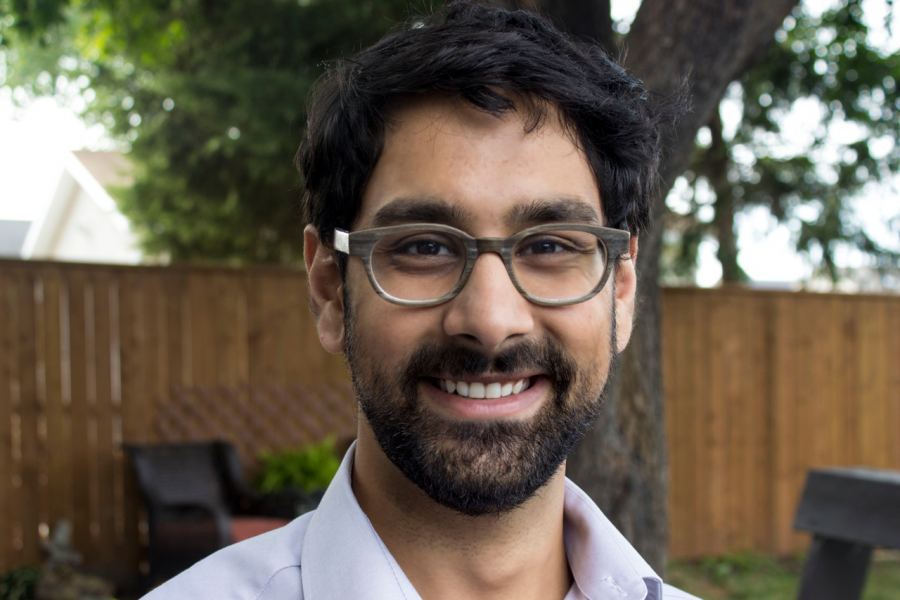
  • Photo of Harshvir Bali
  • Student spotlight

    “Keep an open mind with what you learn and discover. Talk to your professors about issues that are important to you. As you progress more into the field, you will be supplied with greater opportunities to discuss, understand and explore those issues you find important.”

    Harshvir Bali, anthropology student

Anthropology at UM

Anthropology is a science of humanity that addresses human issues both from a cultural and from a biological point of view. The narrowest concern of anthropology is the survival of humanity; its broadest is the conditions of continuity and change for all human life. While broadly educated, individual anthropologists generally specialize in a particular approach to this whole view of humanity. The Department of Anthropology has many opportunities for you to explore, with four sub-disciplines of study:

  1. Cultural Anthropology: Cultural Anthropology or Ethnology systematically compares diverse cultures and societies around the world, from small groups of Arctic hunters to complex industrial nations. The objective is to understand the complex conditions and consequences of environmental, social, economic, political and cultural changes rapidly altering our world.
  2. Archaeology: Archaeology deals with the reconstruction of past ways of human life through the recovery and analysis of artifacts and other material remains from past cultures. Archaeologists help us understand processes such as domestication, ancient urbanization, and long-distance trading. Archaeologists often require special training in zoology, botany, and/or history.
  3. Bio/Physical Anthropology: Biological or Physical Anthropology is concerned with the evolution of the human species, and the biological characteristics of past and present human populations. Today, there are new opportunities to bridge the division between the cultural and biological points of view, especially in the area of medical anthropology. Training in human biology as well as human social life and in a range of cultures both past and present uniquely equips anthropologists to research the human condition.
  4. Linguistic Anthropology: Anthropological Linguistics is the study of language as the primary mechanism of human communication. This sub-discipline is offered primarily through the Department of Linguistics.

Skills you will gain by studying ANTHROPOLOGY

  • An understanding of human behaviours and how they are affected by biological, ecological and cultural factors
  • The ability to describe, understand and predict human behaviours using quantitative and qualitative methods
  • The ability to analyze the root causes of social problems and work towards solutions with people from a variety of cultural backgrounds
  • The ability to communicate effectively verbally and in writing

Academic Success

Year 1 - 30 credit hours


Course requirements:
ANTH 1210 and ANTH 1220

To do this year:

  1. Know the requirements for your degree. Meet with an academic advisor to help you plan your program.
  2. If you need academic support, visit the Academic Learning Centre for workshops or to meet with a learning skills instructor.

Year 2 - 60 credit hours


Course requirements:
ANTH 2000ANTH 2100ANTH 2800 and ANTH 2020 or ANTH 2530

To do this year:

  1. Should you follow a 3-or 4-year plan? Meet with an academic advisor and career consultant to map out your options.
  2. Take ANTH 2370 as one of your elective courses.
  3. When choosing a minor, take courses that will open opportunities.

Year 3 - 90 credit hours


Course requirements:
General: 12 credit hours of ANTH at the 2000 level and above including at least 6 credit hours at 3000 or 4000 level

Honours or advanced: ANTH 3470 plus additional required courses

To do this year:

  1. Meet with anthropology advisor for honours program approval.
  2. Meet with your co-op advisor (if applicable).
  3. Confirm eligibility to graduate with an academic advisor and declare intent to graduate in Aurora (3-year option).

Year 4 - 120 credit hours


Course requirements:
ANTH 4850 plus additional required courses

To do this year:

  1. Meet with an anthropology advisor for honours program approval.
  2. Meet with your co-op advisor (if applicable).
  3. Confirm eligibility to graduate with an academic advisor and declare intent to graduate in Aurora.

Career Tips

Year 1 - 30 credit hours


Start planning your career:

  1. Meet with a career consultant to generate career ideas based on your interests, values, personality and skills.
  2. Research occupations that match your skills and interests.
  3. Set up a UM Connect account to view job postings and register for workshops and events.
  4. Set up your Experience Record, an official record of university-approved activities.

Year 2 - 60 credit hours


Make professional connections:

  1. Join the Career Mentor Program to learn from professionals.
  2. Attend career fairs to connect with employers.
  3. Become a Student Affiliate with associations such as the Canadian Anthropology Association and/or Manitoba Archaeological Society.
  4. Develop professional connections with professors by applying for an Undergraduate Research Award.

Market your skills: Develop your resumé and cover letter and refine your interview skills.

Year 3 - 90 credit hours


Investigate your career options:

  1. Look at sample job postings to ensure you have the qualifications upon graduation.
  2. Develop employability and essential skills sought by employers.
  3. Explore supports available to entrepreneurs for business planning including the Stu Clarke Centre for EntrepreneurshipWorld Trade Centre Winnipeg, and the Manitoba Government.
  4. Create a LinkedIn profile to network with professionals.

Consider continuing your studies: Check out the Faculty of Graduate StudiesExtended Education or other academic institutions.

Year 4 - 120 credit hours


Start job search 9 months in advance: Contact Career Services to refine your job search and self-marketing strategies. You can visit the office up to 6 months after graduation.

If you are continuing on to graduate school: Finalize your application materials and required tests. Use the awards database to search for funding and awards to help finance your continuing education. Contact your department to find out how their awards deadlines are advertised.

Volunteer & Work Experience

Year 1 - 30 credit hours


Link experiences to your career interests. Options include:

  1. Student groups including the University of Manitoba Anthropology Students’ Association and Arts Student Body Council.
  2. Volunteer for UM Orientation events to help welcome new students to campus while gaining experience or join the Student Leadership Development Program.
  3. Student work opportunities including Work-StudySTEP Services or Federal Student Work Experience Program.
  4. Experiential education opportunities such as Community Engaged Learning programs.

Year 2 - 60 credit hours


Explore student research opportunities: Apply for a research assistant position or Undergraduate Research Award.

Gain practical experience by volunteering: Check out the Manitoba Museum, and social service agencies.

Find opportunities to market yourself: Become a Faculty of Arts Student Ambassador.

Earn while you learn: Consider applying to the Arts Co-operative Education program once you have completed 48 credit hours.

Year 3 - 90 credit hours


Continue or start research: Participate in the Undergraduate Research Poster Competition.

Check out student job opportunities with: Canadian Border Services AgencyParks Canada, social service agencies and market research firms

Search for job opportunities online: Check out Job BankFind My JobIndeed or Canadian Heritage Information Network.

Use your networks and connections: Inquire about unadvertised job openings (the "hidden job market").

Year 4 - 120 credit hours


Ensure you have references in place: Ask your professor for a reference or a letter of recommendation if you're applying for graduate school.

Find opportunities to market yourself: Present your research at the Canadian Anthropology Society’s Annual Conference.

Assess your resumé: Identify any gaps in experience and fill them through volunteering, work placements or internships such as the Post-Secondary Recruitment Program.

Cultural Opportunities

Year 1 - 30 credit hours


Considering international opportunities? Visit the Language Centre and check out the International Centre website to learn more international opportunities for UM students.

Explore communities and cultures you want to work with: Visit Migizii Agamik, the International Centre for Students or learn about local agencies via 211 Manitoba.

Year 2 - 60 credit hours


Develop global career skills and expand intercultural learning: Consider an international student exchange, Tel Burna Excavation ProjectMy World Abroad or SWAP for a "working holiday".

Staying local? Check out the Archaeological Field School or WUSC Student Refugee Program. Consider learning a new language and culture through the Language Partner Volunteer Program.

Year 3 - 90 credit hours


Did you travel abroad? Become an exchange mentor for the International Student Mentorship Program, join the exchange student community at the University of Manitoba or write an article about your experience.

Participate in the multicultural opportunities on campus: Participate in the Intercultural Development and Leadership Program or take part in Graduation Pow Wow.

Year 4 - 120 credit hours


Prepare to work in a multicultural environment: Visit Canada's National Research Centre for Truth and Reconciliation on campus or explore Manitoba Start which offers events and free workshops for newcomers to assist their job search.

What do employers want?

Industries such as education, government, heritage and social services would value an anthropology major in combination with the employability skills that are highly sought after by employers. These include:*

  • Oral and written communication
  • Critical thinking
  • Problem solving
  • Teamwork
  • Numeracy and data use
  • Digital technology
  • Industry specific knowledge
  • Continuous learning

*Information has been adapted from Employability Skills 2000+ and Workplace Education Manitoba – Essential Skills.

Alumni Stories

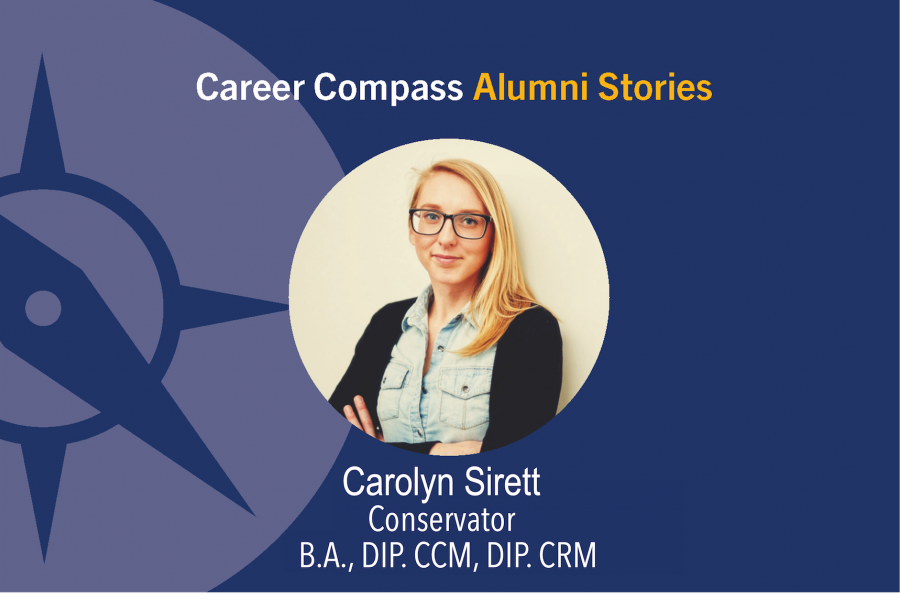
Career Compass Anthropology Alumni Story: Carolyn Sirett, Conservator, B.A., DIP. CCM, DIP. CRM

Carolyn Sirett, B.A., DIP.CCM, DIP.CRM

Carolyn Sirett is the conservator at the Manitoba Museum. Carolyn's role is to ensure the long-term preservation of 2.5 million artifacts and specimens that are in the Museum’s collection. As the conservator, Carolyn completes conservation treatments on artifacts in a lab where they are repaired, cleaned, and prepared to go on display to the general public.

Read more about Carolyn Sirett’s career path

Briefly, tell us about your job. What do you find most rewarding? What are your greatest challenges within this profession?

I am the conservator at the Manitoba Museum. My role is to ensure the long term preservation of 2.5 million artifacts and specimens that are in the Museum’s collection. As the conservator, I complete conservation treatments on artifacts in a lab where they are repaired, cleaned and prepared to go on display to the general public. My job also includes preventive conservation which entails monitoring environmental conditions in storage and displays, and creating mounts for exhibits. The most rewarding part of my career is being able to touch and handle some of the oldest, most unique historical artifacts.

I love when artifacts enter the lab in a very unstable condition, such as a shattered pot, and through various treatments, I am able to bring them back to their original form. I think that being in a career that has such a small professional population is a great challenge and makes networking with colleagues in other institutions such an important aspect of the job.

What experiences and activities helped you to map out your career pathway?

Once I graduated from the University of Manitoba with my degree in anthropology, I was a little unclear as to what direction I wanted to go. I knew that I loved arts and heritage but didn’t know how a career in that field could be accomplished without pursuing further education. The University of Victoria offers a diploma in cultural resource management through distance education and there was a course called “Caring for Collections” which made me really interested in the profession. This led me to volunteer at the Manitoba Museum in the Conservation Lab, where I was introduced to a conservator who mentored me. I eventually moved to Ontario to take the collections and conservation management program at Fleming College. Six years later, I now find myself in the exact job that I had dreamed of before I went back to post-graduate studies.

As a student, did you see yourself in your current career? What stayed the same and/or changed?

When I first went to university, I did not plan for career in conservation management. In fact, I had never even heard about it. I knew that I was interested in history and enjoyed archaeology but not necessarily being outside in the field. It wanted to be involved was after the artifacts were excavated and sent to the lab to be examined. In my current career, I would say that my cultural anthropology and archaeology courses have helped me immensely. Every day I am in contact with both human cultural objects as well as social science specimens. I have a better understanding of where the material comes from, how it was constructed and the thought process during those technological changes in history –a key component to conservation. I also work with a number of curator’s who are archaeologists and we are able to share common knowledge and experiences.

What advice do you have for students who are interested in pursuing a degree in anthropology?

Volunteer for as many opportunities related to the degree you are pursuing as possible. Volunteering for professors on research projects or even communities that are discussed in lectures can open the door to all the different career opportunities.

What job search advice do you have for students and recent graduates?

Again, I would have to stress the power of volunteering, especially in a career related to arts and heritage. If you invest in the time to volunteer, it gives you a great opportunity to network and meet different people in the profession. Many of my best learning experiences came from my time as a volunteer and now I am able to mentor others so that they are better prepared for their careers.

Tell us a fun fact about your career path.

Working in a museum sometimes sounds boring and people associate it with being in a place with old stuff, but when you get to handle Canada’s oldest hockey stick, it doesn’t sound that boring anymore.

Career Compass Environmental Design Alumni Story: Laura Kirbyson, Research Consultant, B.A., PLCGS

Laura Kirbyson, B.A., PLCGS

Laura Kirbyson is a research consultant providing historical and genealogical research, including managing related databases. Laura's time is generally spent developing research plans based on research goals, identifying likely locations for gathering relevant information, reviewing that information, and collecting anything applicable to the research goals.

Read more about Laura Kirbyson's career path

Briefly, tell us about your job. What do you find most rewarding? What are your greatest challenges within this profession?

I am a research consultant providing historical and genealogical research, including managing related databases. My time is generally spent developing research plans based on research goals, identifying likely locations for gathering relevant information, reviewing that information and collecting anything applicable to the research goals. I develop research reports that are anywhere from a couple of pages to a couple of hundred pages. Included in the process is managing the information about files identified, reviewed and items collected in a database with which the clients are comfortable.

It is very rewarding living in our country’s history and finding out about the people who contributed to its growth and development. I find it fascinating to discover over and over again that regular people had a significant impact on the lives of each other and ultimately on us. The greatest challenge I find in my work is access to records. While some organizations and repositories are forthcoming and make it easy to obtain copies of records, this is not consistent across the country. The changes to accessing records at Library and Archives Canada a couple of years ago is a prime example of how difficult it can be to access, from a distance, the records that I want to review.

What experiences and activities helped you to map out your career pathway?

When I was in my teens and my grandmother got me hooked on our family’s genealogy. I enjoyed studying people and the details of their lives and I have always loved history in general. I took a couple of anthropology courses at university and, well, the rest is history (pun intended).

As a student, did you see yourself in your current career? What stayed the same and/or changed?

Originally, I did not see myself starting a business, although entrepreneurship is the norm on both sides of my family. I honestly couldn’t see how to translate my hobbies and a degree in anthropology into a career. Enough people suggested that if I did what I love to do, something would show up. I did spend some time jotting down ideas about what kinds of things I enjoy doing, as well as places I thought I’d like to work. There were enough options that I decided to stick with anthropology.

What advice do you have for students who are interested in pursuing a degree in anthropology?

I would advise anyone interested in an anthropology degree to really consider the type of work you want to do – what you want to spend your days doing. I don’t think it’s enough to enjoy the topic; you have to want to do the work that contributes to your industry, as well.

What job search advice do you have for students and recent graduates?

Don’t wait until you graduate to start your career. Volunteer with organizations and get some ‘on the ground’ experience. It looks great on your resume, too! I’d also suggest exploring ways that your education can combine with your other passions. It is surprising to find out that seemingly unrelated paths can cross in serendipitous ways. When that happens, it’s like a dream come true! Of course you usually need to work to make those things happen. In my experience, the luckiest people are the ones who work their butts off to make things happen. They make their own luck.

Tell us a fun fact about your career path.

I learn more and more about people every single day. It turns out not much changes over the centuries.

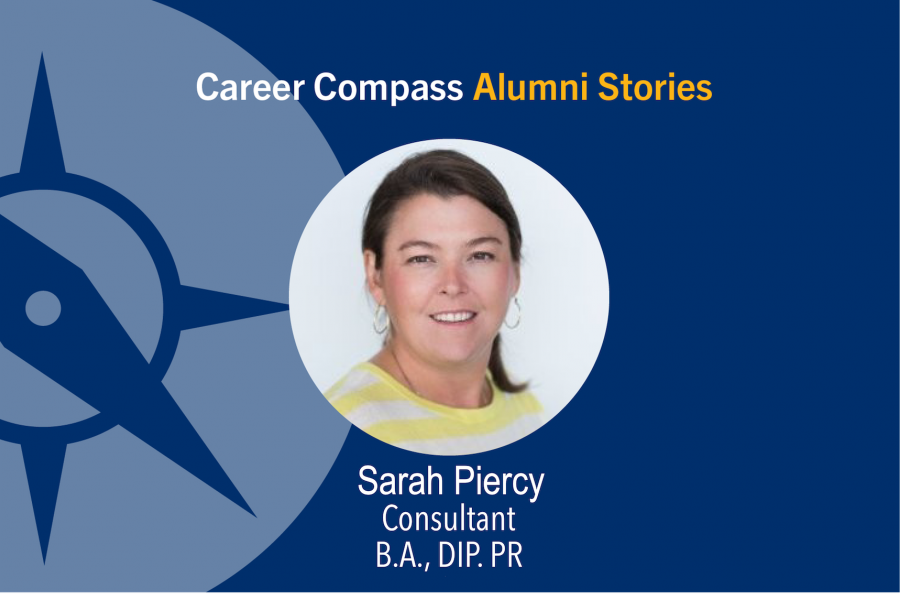
Career Compass Anthropology Alumni Story: Sarah Piercy, Consultant, B.A., DIP. PR

Sarah Piercy, B.A., DIP.PR

Sarah Piercy operates a boutique communications firm, Sarah Piercy Communications, that specializes in providing proactive and comprehensive communications services and products for companies, individuals, non-profit organizations and charities, associations, industry groups, and government.

Read more about Sarah Piercy's career path

Briefly, tell us about your job. What do you find most rewarding? What are your greatest challenges within this profession?

I operate a boutique communications firm, Sarah Piercy Communications, that specializes in providing proactive and comprehensive communications services and products for companies, individuals, non-profit organizations and charities, associations, industry groups and government.

The rewards of my career are many, including flexibility and being able to work with a broad variety of clients; at current, my greatest challenge relates to capacity, as I’m operating as a sole proprietor.

What experiences and activities helped you to map out your career pathway?

Attending The University of Manitoba and pursuing a degree in Anthropology offered me many unique experiences and activities that guided my career path. However, it was not until I left graduate school, choosing to work full time, that I really developed an appreciation and clearer understanding of what I enjoyed, and excelled at, when it came to work. While in school, I had the opportunity to travel as part of my academic program and also served in a voluntary board capacity with a non-profit association that was directly linked to my studies. Both experiences stand out for providing me with exposure to functional, real world application of my learnings. Upon graduation and entry into the workforce, I took advantage of every single opportunity shared with me; and now, running my own firm, I follow the same approach and relish the variety of experiences and activities that I have the opportunity to engage in.

As a student, did you see yourself in your current career? What stayed the same and/or changed?

As a student, working for myself as a consultant was on my radar but not as an immediate goal. After over 15 years working in my field, I decided to start my own company; work has come to me and I’m flattered to work on so many different projects with so many incredible clients. Over time, I’ve maintained a commitment to thoughtful and critically reviewed research and analysis, sound outputs and outcomes, evidence based decision making and ensuring quality relationship building and community engagement. As to what changed, it was life that changed! I chose to travel, move back and forth across the country and explore opportunities. Those good, early decisions have resulted in life changing experiences that have positively shaped my career and personal life. That said, the education I received, the experiences I participated in and the constructive counsel I heard as a student have greatly shaped how my career path unfolded. I remain grateful to The University of Manitoba and the department of anthropology.

What advice do you have for students who are interested in pursuing a degree in anthropology?

University, or any kind of post-secondary education, is full of teachable moments. Besides learning the applied technical and academic components of my degree, my Bachelor of Arts degree shaped my professional career. The broader learnings I gained included how to work with others, knowing how to work towards deadlines and within budget, understanding differing points of view, respecting governance and rules and knowing why they are applied, practicing critical thinking and reasoned arguments and balancing autonomy and personal responsibility. On the academic side, I was taught the merits of research, writing, editing, oral presentation and self-awareness. A degree in anthropology is highly adaptable; ultimately it is to you to make the most of your degree, no matter the discipline.

What job search advice do you have for students and recent graduates?

Do what you love and you’ll never work a day in your life. While it’s a certainty that workers will change jobs and/or careers many times, generally, we work for many years – so find a field you enjoy and you’ll never be bored. My job search advice for students and recent graduates is to:

  • Embrace the courage of your convictions.
  • Purchase the best quality technical tools you can afford; guard them closely.
  • Choose to be kind; make the time to volunteer, donate and or give back, in whatever manner works for you.
  • Aspire to be a life-long learner and be flexible.
  • Trust yourself, but don’t be afraid to admit when you may be wrong.
  • Praise others liberally, but don’t be too hard on yourself; the world will take care of that for you.
  • Don’t let the drama of others become your problem – it’s your life and your responsibility to manage your reactions; you cannot control how others respond. Working life is full of ups and downs, and it takes all kinds of people to make our world function.
  • Learn to appreciate the obvious and subtle differences in others and acknowledge that some will certainly know more than you.
  • And finally, know that education is an excellent investment and the dividends will appear over time, in varying forms; for some, the school and work path is linear, for others it’s scenic; appreciate the journey and you’ll reap the benefits. 

Tell us a fun fact about your career path.

All these years later, I’m still fascinated by Anthropology; I use all facets of my degree every single day, including my Minor in Art History! My career path has been fulfilling and rewarding; I’m looking forward to the future.

Campus resources and supports

Get one-on-one help

  • Meet with a career consultant

    Meet with a career consultant for a confidential discussion about your career goals, job search, resumé/CV and interview preparation.

    Contact Career Services at cs.receptionist@umanitoba.ca or call 204-474-9456 to make an appointment.

  • Talk to an academic advisor

    Talk to an academic advisor who will guide you to resources to help you make important decisions for your future. Advisors are specialized, often by program, faculty/school or unit.

    Find your advisor

Continue exploring

Select a Career Compass

Use Career Compass as a guide to develop a strong connection between your studies and your occupational choices. It will provide you with suggestions for academic and career planning specific to your program.

Advisors and Educators Guide

Contact us

Connect with the faculty

Department of Anthropology, Faculty of Arts
432 Fletcher Argue Building
15 Chancellors Circle
University of Manitoba (Fort Garry campus)
Winnipeg, MB R3T 2N2 Canada

204-474-9361

Connect with Career Services

Career Services
Room 474 UMSU University Centre
65 Chancellor's Circle
University of Manitoba
Winnipeg, MB R3T 2N2 Canada

204-474-9456
204-474-7516
Monday to Friday, 9:00 a.m. to 4:00 p.m.