Get the information you need for academic planning and connect with experiences to develop the knowledge, skills and attributes that employers are seeking.

This resource is meant as a guide to provide suggestions throughout your time at university (refer to the Academic Calendar for a complete list of program requirements). Develop a plan and timeline that suits you best. Make intentional choices for your courses and work experiences.

  • Photo of Van Bui
  • Student spotlight

    “Know your worth and don’t let anyone discourage you if you are passionate about being part of a helping profession. Seek the numerous amount of resources available on campus. There are career counsellors, professors, and fellow colleagues who would be happy to help, don’t be afraid to ask!”

    Van Bui, psychology student

Psychology at UM

As a psychology student in the Faculty of Arts or Science, you will learn about the scientific study of behaviour and mental processes. The department of psychology has many opportunities for you to explore, with two main areas of study:

  1. Social sciences: the study of human behaviour, society and social relationships, personality differences, knowledge of how to predict, explain and alter human behaviour and child development.
  2. Natural Sciences: the study of psychological biological processes, neuroscience and cognitive science, which explores areas such as sensation and perception, learning and memory, emotion and motivation and thinking and language.

Skills you will gain by studying PSYCHOLOGY

  • An understanding of human behaviours and mental processes and how they are affected by an individual's physical, mental or external environment
  • The ability to describe, understand, predict and modify behaviours using research and statistical methods
  • The ability to think critically and develop innovative solutions to many complex human problems
  • The ability to communicate effectively both verbally and in writing

Academic Success

Year 1 - 30 credit hours


Course requirementsPSYC 1200 or PSYC 1211 and PSYC 1221

To do this year:

  1. Arts or Science - what's right for you? An academic advisor in the Faculty of Arts or Science can help you decide.
  2. If you need academic support, visit the Academic Learning Centre for workshops or to meet with a learning skills instructor.

Year 2 - 60 credit hours


Course requirements: PSYC 2250 and PSYC 2260, plus 6 credit hours PSYC at the 2000/3000 level 

*Refer to the Academic Calendar for specific requirements related to categories of study required within the degree.

To do this year:

  1. Should you follow a 3-or-4 year plan? Meet with an academic advisor and career consultant to map out your options.
  2. Declare PSYC major to register for PSYC 2250 and PSYC 2260.
  3. When choosing a minor, take courses that will open opportunities.

Year 3 - 90 credit hours


Course requirements:
Honours: PSYC 3200PSYC 3340 and PSYC 3630,  plus all required courses for your BA Honours program

B.A. (3-or 4-year): 12 credit hours PSYC at the 2000/3000 level

B.Sc. (Major): 12 credit hours PSYC at the 2000/3000 level

*Refer to the Academic Calendar for specific requirements related to categories of study required within the degree.

To do this year:

  1. Meet with a psychology advisor for honours and B.Sc. major program approval.
  2. Confirm eligibility to graduate with an academic advisor and declare intent to graduate in Aurora (3-year option).

Year 4 - 120 credit hours


Course requirements:
Honours: PSYC 4520 (Thesis), plus all required courses for your BA Honours program

B.A. (4-year) or B.Sc. (Major): 18 credit hours PSYC at the 2000/3000 level

*Refer to the Academic Calendar for specific requirements related to categories of study required within the degree.

To do this year:

  1. Meet with a psychology advisor for honours and B.Sc. major program approval.
  2. Confirm eligibility to graduate with an academic advisor and declare intent to graduate in Aurora.

Career Tips

Year 1 - 30 credit hours


Start planning your career:

  1. Meet with a career consultant to generate career ideas based on your interests, values, personality and skills.
  2. Research occupations that match your skills and interests.
  3. Set up a UM Connect account to view job postings and register for workshops and events.
  4. Set up your Experience Record, an official record of university-approved activities.

Year 2 - 60 credit hours


Make professional connections:

  1. Join the Career Mentor Program to learn from professionals.
  2. Attend career fairs to connect with employers.
  3. Become a Student Affiliate with the Canadian or American Psychological Association.
  4. Develop professional connections with professors by applying for an Undergraduate Research Award.

Market your skills: Develop your resumé and cover letter and refine your interview skills.

Year 3 - 90 credit hours


Investigate your career options:

  1. Look at sample job postings to ensure you have the qualifications upon graduation.
  2. Develop employability and essential skills sought by employers.
  3. Explore supports available to entrepreneurs for business planning including the Stu Clarke Centre for EntrepreneurshipWorld Trade Centre Winnipeg, and the Manitoba Government.
  4. Create a LinkedIn profile to network with professionals.

Consider continuing your studies: Check out the Faculty of Graduate StudiesExtended Education or other academic institutions.

Year 4 - 120 credit hours


Start job search 9 months in advance: Contact Career Services to refine your job search and self-marketing strategies. You can visit the office up to 6 months after graduation.

If you are continuing on to graduate school: Finalize your application materials and required tests. Use the awards database to search for funding and awards to help finance your continuing education. Contact your department to find out how their awards deadlines are advertised.

Volunteer & Work Experience

Year 1 - 30 credit hours


Link experiences to your career interests. Options include:

  1. Student groups including Undergraduate Psychology Students' Association or Active Minds.
  2. Volunteer with Healthy U or join the Student Leadership Development Program.
  3. Student work opportunities including Work-StudySTEP Services or Federal Student Work Experience Program.
  4. Experiential education opportunities such as Community Engaged Learning programs.

Year 2 - 60 credit hours


Explore student research opportunities: Apply for a research assistant position, Undergraduate Research Award or NSERC grant.

Gain practical experience by volunteering: Check out Big Brothers Big Sisters, Klinic Community Health Centre or Let's Talk Science.

Obtain certificates employers may require, including: Nonviolent Crisis Intervention, Applied Suicide Intervention Skills Training, CPR/First Aid, ALLY, WHMIS and Mental Health First Aid.

Earn while you learn: Consider applying to the Arts Co-operative Education program once you have completed 48 credit hours, or the the Science Co-operative Education program once you have completed 60 credit hours.

Year 3 - 90 credit hours


Continue or start research: Participate in the Undergraduate Research Poster Competition and apply for a Psychology Undergraduate Research Experience Award.

Check out student job opportunities with: Career Trek, St. Amant or WISE Kid-Netic Energy.

Search for job opportunities online: Check out Job BankFind My JobIndeed or other search engines.

Use your networks and connections: Inquire about unadvertised job openings (the "hidden job market").

Year 4 - 120 credit hours


Ensure you have references in place: Ask your professor for a reference or a letter of recommendation if you're applying for graduate school.

Find opportunities to market yourself: Present your research at the Canadian Psychological Association Annual Convention.

Assess your resumé: Identify any gaps in experience and fill them through volunteering, work placements or internships such as the Post-Secondary Recruitment Program.

Cultural Opportunities

Year 1 - 30 credit hours


Considering international opportunities? Visit the International Centre to learn about international opportunities for UM students.

Explore communities and cultures you want to work with: Visit Migizii Agamik, the International Centre for Students or learn about local agencies via 211 Manitoba.

Year 2 - 60 credit hours


Develop global career skills and expand intercultural learning: Consider an international student exchange or Travel Study program, an international service-learning program, My World Abroad or SWAP for a "working holiday."

Staying local? Consider learning a new language and culture through the Language Partner Volunteer Program or check out Community Engaged Learning


Year 3 - 90 credit hours


Did you travel abroad? Become an exchange mentor for the International Student Mentorship Program, join the exchange student community at the University of Manitoba or write an article about your experience.

Participate in the multicultural opportunities on campus: Participate in the Intercultural Development and Leadership Program, volunteer for the Land and Water: Land-based Education or take part in Graduation Pow Wow.

Year 4 - 120 credit hours


Prepare to work in a multicultural environment: Visit Canada's National Research Centre for Truth and Reconciliation on campus or explore Manitoba Start, which offers events and free workshops for newcomers to assist their job search.

What do employers want?

Industries such as business, communications, education, government, health and justice would value a psychology major in combination with the employability skills that are highly sought after by employers. These include:*

  • Oral and written communication
  • Numeracy and data use
  • Critical thinking
  • Problem solving
  • Teamwork
  • Digital technology
  • Industry specific knowledge
  • Continuous learning

Attain skills through your classroom education by taking advantage of experiential education opportunities.

*Information has been adapted from Employability Skills 2000+ and Workplace Education Manitoba – Essential Skills.

Alumni Stories

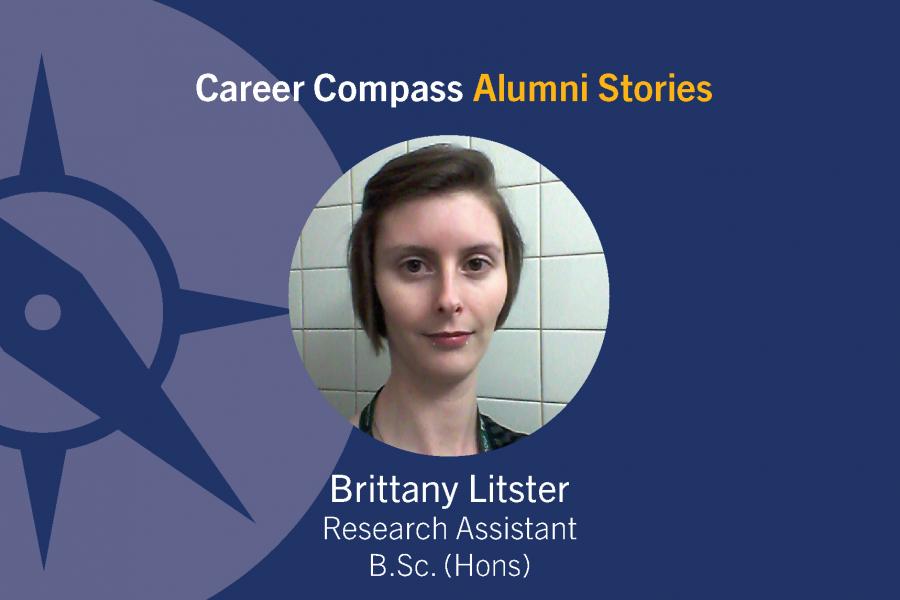
Career Compass Psychology Alumni Story: Brittany Litster, Research Assistant, B. Sc. (Hons)

Brittany Litster, B.Sc. (Hons)

As a research assistant at Health Sciences Centre, Brittany Litster works with a dedicated team that focuses on multiple sclerosis (MS). Most of the week, Brittany is in the neurology clinic collecting data, ensuring quality entries and interacting with patients.

Read more about Brittany Litster's career path

Briefly, tell us about your job. What do you find most rewarding? What are your greatest challenges within this profession?

As a research assistant at Health Sciences Centre, I work with a dedicated team that focuses on multiple sclerosis (MS). Most of the week, I’m in the neurology clinic collecting data, ensuring quality entries and interacting with patients. The rest of the time, I’m entering and scoring various questionnaires for a larger research project that involves participants with MS, rheumatoid arthritis, inflammatory bowel disease and psychiatric disorders. The most rewarding part of my job is the knowledge that the information I gather will help many patients in the future. That being said, the greatest challenge is that I don’t get to see the immediate results.

What experiences and activities helped you to map out your career pathway?

During my degree I only took courses I was truly interested in and volunteered in areas that I knew would be both rewarding and enjoyable. My interest in psychology led me to volunteer in the psychiatric wards at Health Sciences Centre. I also took Mental Health First Aid, which was offered through the Canadian Mental Health Association. This opened up doors to several possible positions related to crisis intervention or research in mental health. I’m still mapping out my career pathway as my next pursuit is to apply to medical school. This goal has guided me to find opportunities that provide exposure to the medical community which led me to do research with MS patients.

As a student, did you see yourself in your current career? What stayed the same and/or changed?

As a student I only had a vague idea of what I wanted to do once I graduated. I figured I would have a career in research, but the options were so vast that it was overwhelming to decide what to focus on. About halfway through my degree I changed my career direction toward medicine instead of psychology. I joined the Career Mentorship Program through Career Services which allowed me to shadow and interview professionals from both areas. This opportunity provided me with a better idea of what these careers actually entailed. I was then able to better focus my goals when it came to finding positions or volunteer opportunities that interested me. I continue to be interested in research, although now my focus is much clearer.

What advice do you have for students who are interested in pursuing a degree in psychology?

I would recommend starting to map out your career early in your degree. I regularly kept in contact with my academic advisor and took advantage of the Career Services office. They connected me with their Career Mentor Program to explore multiple careers and get first and second hand experience in those professions. The field of psychology is vast and unless you know exactly what you want to do with your career it’s a good idea to dip into the different areas of psychology. You can accomplish this through courses, volunteering, job shadowing or your honours thesis project. After exploring a bit you may be surprised what really catches your interest.

What job search advice do you have for students and recent graduates?

Never give up. Job searching can be disheartening when after handing out dozens of resumés you never receive any interviews. To increase your chances make sure your resumé is tailored to each specific position you’re applying to. In addition, match buzzwords from the job description to your resumé as most companies now use a computer algorithm to filter through resumés before human eyes even see them.

Tell us a fun fact about your career path.

The great thing about entering into research is that it opens doors to multiple areas within your chosen field. There are many possible topics to study with various jobs and responsibilities along the way. As well, the research you conduct can inspire other individuals to find their own passion to explore different topics based on your discoveries. During my work as a research assistant, I had the opportunity to collaborate with my coworkers to write a systematic review of previous research to help find where there are gaps of information that require further investigations. I hope that our findings will inspire other young researchers to fill these gaps and help them along their career path.

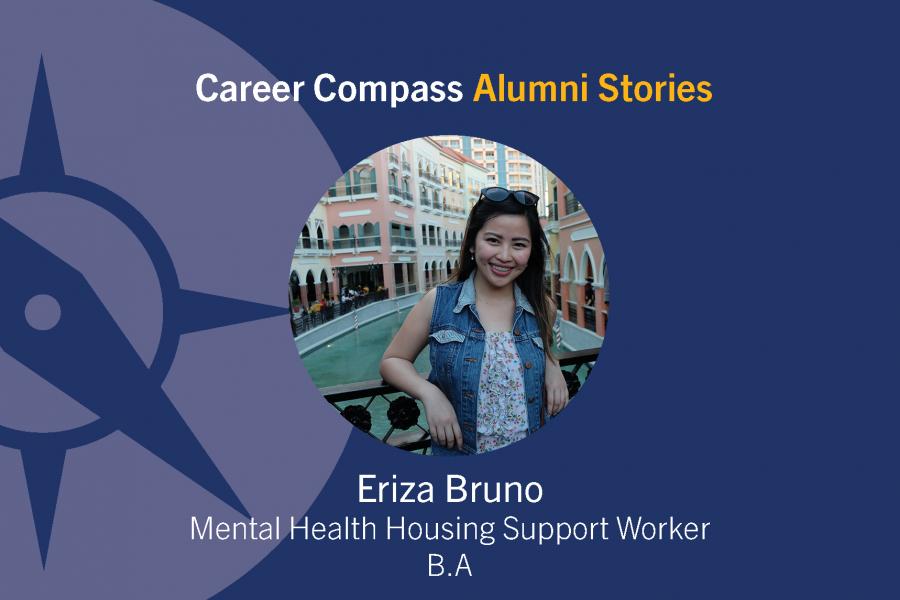
Career Compass Psychology Alumni Story: Eriza Bruno, Mental Health Housing Support Worker, B.A.

Eriza Bruno, B.A.

Eriza Bruno is currently employed as a mental health housing support worker with the Winnipeg Regional Health Authority. Eriza's role is to assist people who suffer with mental health issues secure, or maintain housing by helping with their housing search and acting as an advocate for them.

Read more about Eriza Bruno's career path

Briefly, tell us about your job. What do you find most rewarding? What are your greatest challenges within this profession?

I am currently employed as a mental health housing support worker with the Winnipeg Regional Health Authority. My role is to assist people who suffer with mental health issues secure, or maintain housing. I assist with their housing search and act as an advocate for them. I also assist with salvaging their tenancy if they are having issues with their landlord or the Residential Tenancy Branch.

What I find most rewarding about my career is the direct contribution I make to people’s well-being. There is nothing more rewarding than knowing I made a direct impact in someone’s life. I believe in the housing first initiative and that having a place to call home plays a major role in someone’s mental health recovery.

One of the biggest challenges I face in my position is fighting the stigma about mental health. Many people do not understand how difficult it is for people struggling with mental illness and some landlords are not impressed when they find out a tenant has a worker assigned to them. On top of the stigma, searching for housing in the city is very difficult with the low vacancy rate and stereotypes about mental health can make it difficult to secure housing.

What experiences and activities helped you to map out your career pathway?

Since I migrated to Canada I have worked in various support roles and I have always enjoyed being able to interact with people and helping make small differences in their lives. I have experience with community work, group homes and I briefly worked within the school system as well. I always knew that I wanted to be in public service, which is why I never drifted off the field.

As a student, did you see yourself in your current career? What stayed the same and/or changed?

Yes. I always enjoyed working with people, which is why I kept my job as a support worker while studying. I was always interested in human behavior, which is why I majored in psychology. I believe that I am exactly where I wanted to be.

What advice do you have for students who are interested in pursuing a degree in psychology?

Don’t be discouraged when people tell you that there are no opportunities for psychology graduates. People often say that psychology is too broad and that you need to pursue a Ph.D. to find a job. I think that the fact that psychology is a broad interest provides flexibility. With a psychology degree you are able to work in schools, family services, corrections, mental health and more. As long as you are genuinely interested in the field and are proactive in looking for opportunities, you are bound to have a fulfilling career with your degree.

What job search advice do you have for students and recent graduates?

Send out those resumés! As long as you are confident in your ability to do the job, then apply even if the description does not ask for a psychology degree. You have nothing to lose by applying.

Tell us a fun fact about your career path.

A few months before I was due to graduate, I had a phase of panic (which I’m sure most candidates for graduation get) so I sent out my resumé to almost every job that interested me, even when the description asked for a completed degree. Luckily, I was called for an interview for a housing worker at the Winnipeg Regional Health Authority. To my surprise, I was offered the job and I am about to spend my third year in this position. I have loved every single day since I started. As I mentioned, you have nothing to lose by sending out your resumé. Most students wait until they get their diploma to start their job search, but as long as you are genuine and passionate about what you do, the opportunities will be there waiting for you.

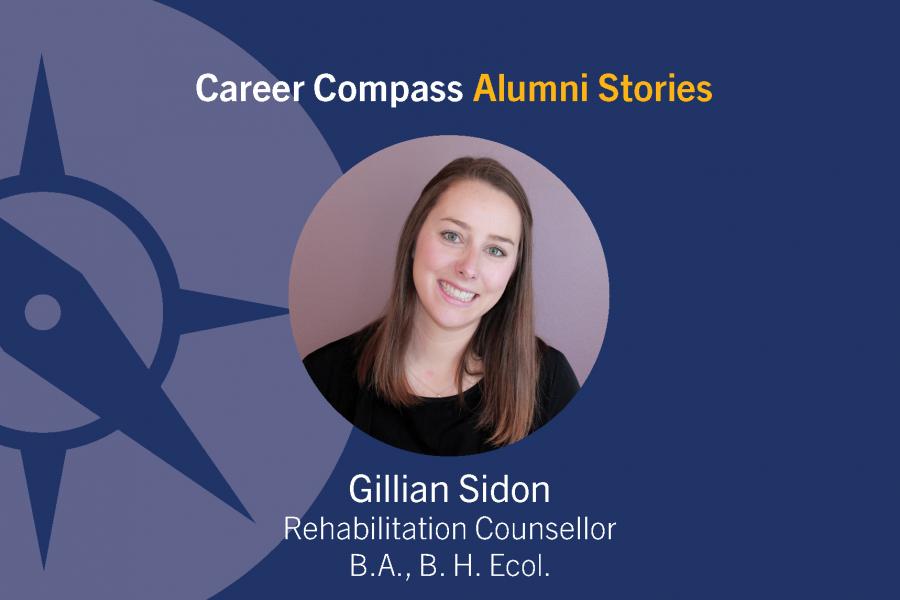
Career Compass Psychology Alumni Story: Gillian Sidon, Rehabilitation Counsellor, B.A., B.H. Ecol.

Gillian Sidon, B.A., B. H. Ecol.

Gillian Sidon currently works as a rehabilitation counsellor where she assesses clients prior to their involvement in treatment. What Gillian find most rewarding in her job is the continuous strength and resiliency she observes in every client.

Read more about Gillian Sidon's career path

Briefly, tell us about your job. What do you find most rewarding? What are your greatest challenges within this profession?

I currently work as a rehabilitation counsellor where I assess clients prior to their involvement in treatment. What I find most rewarding is the continuous strength and resiliency I observe in every client. There is always going to be obstacles in every work place and one lesson that I have learned is the ability to be mindful. It is important to be mindful of the self when you are in a profession such as counselling.

What experiences and activities helped you to map out your career pathway?

There have been many contributing factors that have brought me to where I am today. Firstly, I was a member of the University of Manitoba Bison soccer team for five years throughout my education which helped me to build “soft skills”. Secondly, I received an internship through World University Service of Canada where I went overseas to work at one of the local Universities in Vietnam. This experience provided me with a cultural component and diverse set of lenses. Additionally, I went through an intensive training program to volunteer as a Sexual Assault Crisis Counsellor for two years. This experience opened up many doors and allowed me to apply my formal education in a practical setting.

As a student, did you see yourself in your current career? What stayed the same and/or changed?

As a first year student, I never saw myself in my current career path. I initially wanted to study physical therapy; however, I really enjoyed my courses related to psychology. I got involved in extracurricular activities and volunteer opportunities where I realized that I had found my niche.

What advice do you have for students who are interested in pursuing a degree in psychology?

Ask yourself why you are interested in this line of work in the first place. Go out and seek opportunities through volunteering to get an idea of what it may look like for you in the future. Immerse yourself in as many experiences as possible because this is a profession of continuous development. There is so much to learn and explore, and if you have a real passion for this type of work you will excel.

What job search advice do you have for students and recent graduates?

Don’t be afraid to put yourself out there in the job market. Apply for jobs even if you don’t think you will get them. When going to interviews, use it as a way to gain exposure and a sense of what potential employers are looking for. Volunteering and working part-time while in school will definitely help you to advance after graduation. Additionally, in order to gain more responsibility and opportunity you might consider accepting a rural job position. Work experience is crucial post-graduation, so take advantage of any chance you get.

Tell us a fun fact about your career path.

I am a young individual in a position that most people wait their whole lives to obtain. If you put in the extra effort outside of your studies you will be rewarded.

Career Compass Psychology Alumni Story: Jennifer Thorsteinsson, Behaviour Analyst and Psychological Assessor, B. Sc., B.A. (Hons), M. Sc.

Jennifer Thorsteinsson, B.Sc., B.A. (Hons), M.Sc.

Jennifer Thorsteinsson is currently employed as a behaviour analyst and psychological assessor at St. Amant. Jennifer finds it very rewarding to be a part of the process to help connect young adults and adults with services that will support them throughout their lives.

Read more about Jennifer Thorsteinsson's career path

Briefly, tell us about your job. What do you find most rewarding? What are your greatest challenges within this profession?

I am currently employed as a behaviour analyst and psychological assessor at St. Amant. I find it very rewarding to be a part of the process to help connect young adults and adults with services that will support them throughout their lives. I also enjoy when families achieve the “aha” moment when they realize the effectiveness of the behavioral supports. The greatest challenge is with helping families get through an extinction burst so that they can get to a point where things get better.

What experiences and activities helped you to map out your career pathway?

As an undergraduate student I volunteered in a research laboratory that allowed me to apply what I was learning. This helped me to figure out what I did and did not want to do in my career.

As a student, did you see yourself in your current career? What stayed the same and/or changed?

This is what I expected to be doing and I am very happy with my job.

What advice do you have for students who are interested in pursuing a degree in psychology?

If you are interested in psychology, talk with to your professors and offer to volunteer in their labs. This will give you some hands-on experience and put you in touch with other students at both the undergraduate and graduate level. These students can help you understand what your experience will be like.

What job search advice do you have for students and recent graduates?

Start with your professors to see if they have a paid research position. Doing a practicum will put you in contact with prospective employers. Join different psychological associations such as Manitoba Psychological Society or Manitoba Association for Behaviour Analysis to access job postings on their website. When searching for jobs online, use broad categories rather than just specific diagnoses. Also, make use of social media sites such as LinkedIn.

Tell us a fun fact about your career path.

As a part of my job I organize different events to celebrate psychology month in February. This provides the general public an opportunity to learn what behaviour analysts do.

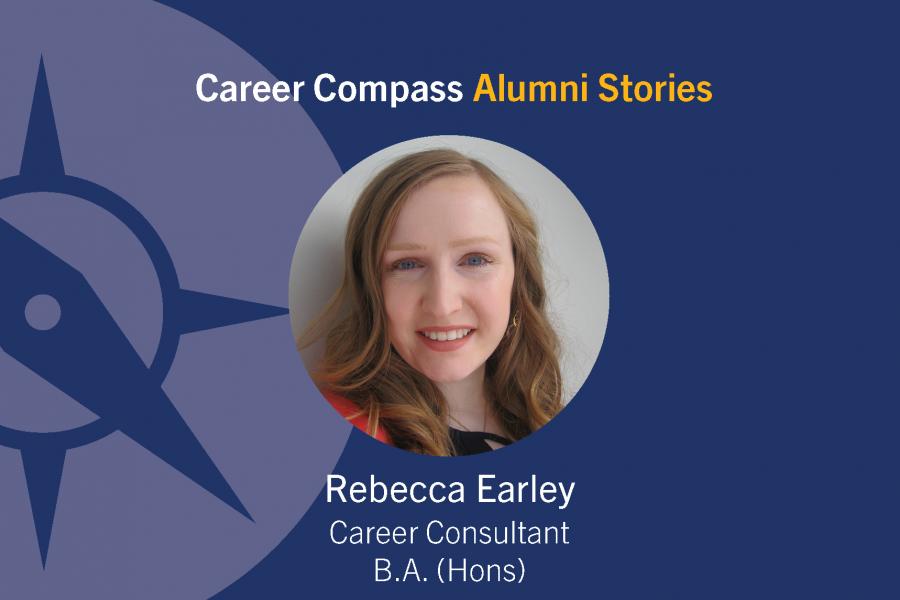
Career Compass Psychology Alumni Story: Rebecca Earley, Career Consultant, B.A. (Hons)

Rebecca Earley, B.A. (Hons)

Rebecca Earley is a career consultant at the University of Manitoba. Rebecca works with students to help them discover their dream career and help them to achieve their goals once a pathway is clear. Her job involves working with students one-on-one, delivering workshops to groups, planning events, and coming up with resources that can be used by students.

Read more about Rebecca Earley's career path

Briefly, tell us about your job. What do you find most rewarding? What are your greatest challenges within this profession?

I am a career consultant at the University of Manitoba. I work with students to help them discover their dream career and help them to achieve their goals once a pathway is clear. My job involves working with students one-on-one, delivering workshops to groups, planning events, and coming up with resources that can be used by students. The most challenging part of this position is staying current amongst constant changes and maintaining a strong knowledge of career information. I need to know about educational programs all over the world, new careers, local businesses, and the best techniques to allow someone to confide in me and to work towards uncovering a student’s passions. I love learning and reading, so this, while challenging, is also something I enjoy quite a bit. The most rewarding part of my job is getting to know a student very well – working closely with them, getting to know what is important to them and eventually seeing them succeed and reach their goals. There is nothing more rewarding than helping students discover their plans for their future. It always makes me happy to get an email from a student saying they got their dream job!

What experiences and activities helped you to map out your career pathway?

Throughout my degree, I got involved on campus and in the community. I knew that I wanted a career helping people, so I found volunteer and work positions that gave me experience working with others. Through these experiences, I was able to discover plenty of things about myself that helped to shape my career pathway. This gave me insight into the things I wanted to do and avoid in a career. I volunteered with Peers: Students Helping Students for three years, which showed me my passion for supporting students. It also helped me to get my work-study position at Career Services, where I began learning about career development and discovering that I loved everything about this profession.

As a student, did you see yourself in your current career? What stayed the same and/or changed?

I chose to do a psychology degree with the plan of becoming a clinical psychologist. At the time, I thought this was the only way I could help people the way I wanted to. The further I got in my degree, the more it reaffirmed my desire to work with people as well as my interest in social science. What changed, though, was that I slowly began to discover that there was a whole world of amazing careers helping others that I could take on with my undergraduate degree.

What advice do you have for students who are interested in pursuing a degree in psychology?

The most important advice I have is to seek out experience above and beyond your academics. My psychology degree helped me to strengthen my writing skills, develop my presentation abilities, and gave me a critical eye when evaluating research and psychometric tools. Since my goal was to work with people, I also made sure I supplemented my education with experience in the community. This gave me even more skills that I could put on my resumé and it also connected me with people who would eventually help me to get the job I have today.

What job search advice do you have for students and recent graduates?

Develop connections with people in the organizations you want to work with and take advantage of the network you’ve already made. Be aware of all of the amazing skills you have from your psychology degree and don’t be shy in showing them off in your application. Be creative in where you look for work and try to stay hopeful. It took me well over three months to find a job after I graduated –this is typical for anyone looking for work, with all kinds of backgrounds. It was a lot of work to find my first job, but after the countless hours of searching and applying it was the most amazing feeling in the world and made it worth it. Keep your chin up and start early!

Tell us a fun fact about your career path.

Before my current position, I spent a year working in the Royal Winnipeg Ballet Residence, which supports middle and high school students striving to be professional dancers. It was an amazing job where I got to have a lot of independence and responsibility. I was able to use so many of the skills I developed through my education and experiences as I supported students, managed staff and ensured the residence ran smoothly. My psychology degree was a huge help to me in this position. One of my major projects was to write a new discipline policy, which I diligently wrote in the same way I wrote countless papers in my undergrad, using academic research to back the policy I recommended.


Campus resources and supports

Get one-on-one help

  • Meet with a career consultant

    Meet with a career consultant for a confidential discussion about your career goals, job search, resumé/CV and interview preparation.

    Contact Career Services at cs.receptionist@umanitoba.ca or call 204-474-9456 to make an appointment.

  • Talk to an academic advisor

    Talk to an academic advisor who will guide you to resources to help you make important decisions for your future. Advisors are specialized, often by program, faculty/school or unit.

    Find your advisor

Continue exploring

Select a Career Compass

Use Career Compass as a guide to develop a strong connection between your studies and your occupational choices. It will provide you with suggestions for academic and career planning specific to your program.

Advisors and Educators Guide

Contact us

Connect with the faculty

Department of Psychology
Room P404 Duff Roblin Building
190 Dysart Road
University of Manitoba (Fort Garry campus)
Winnipeg, MB R3T 2N2 Canada

204-474-9338

Connect with Career Services

Career Services
Room 474 UMSU University Centre
65 Chancellor's Circle
University of Manitoba
Winnipeg, MB R3T 2N2 Canada

204-474-9456
204-474-7516
Monday to Friday, 9:00 a.m. to 4:00 p.m.