Indigenous initiatives
Truth and Reconciliation Commission Call to Action 28
We call upon law schools in Canada to require all law students to take a course in Aboriginal people and the law, which includes the history and legacy of residential schools, the United Nations Declaration on the Rights of Indigenous Peoples, Treaties and Aboriginal rights, Indigenous law, and Aboriginal–Crown relations. This will require skills-based training in intercultural competency, conflict resolution, human rights, and anti-racism.
Implementing Call to Action 28
The Faculty of Law at the University of Manitoba (UM Law) continues to meaningfully implement the Truth and Reconciliation Commission's Call to Action 28. With the hiring of an Indigenous Legal Studies Coordinator, in 2021, since promoted to Director of Indigenous Legal Learning and Services, the Faculty of Law has undertaken a thorough Indigenization of its Juris Doctor curriculum, implemented new courses, and introduced more Indigenous-centred clinical opportunities for law students. This page details ways in which UM Law's curriculum is educating law students, faculty and staff about Indigenous peoples, and how it is making the Faculty more welcoming to Indigenous applicants, students, faculty, and visitors.
Personnel
In 2021, the Dean’s Office formed a Truth and Reconciliation Action Team consisting of Indigenous members of the practicing bar, faculty, and students, and hired an Indigenous Legal Studies Coordinator with whom to consult and advise on implementation of CTA 28. This position, held by Faculty of Law alum Marc Kruse (JD/2015), has since evolved and expanded into the office of the Director of Indigenous Legal Learning and Services. Kruse also co-teaches the mandatory Indigenous Methodologies and Perspectives course, coaches the Kawaskimhon Moot, and supervises the Indigenous Law Clinic.
The Faculty also hired two new Indigenous Faculty members in 2023 with an objective of hiring more academics with backgrounds and research agendas focused in this area of law. These have included Dr. Leo Baskatawang and Daniel Diamond.
An endowed position named the Phil Fontaine Professorship in Indigenous Law and Economic Reconciliation came into effect July 1, 2026 and is held by Professor Brenda Gunn.
The Faculty has also engaged Elders-in-Residence to advise and support students – including welcoming back Elder Wendy Whitecloud, a respected former instructor and Indigenous support coordinator, to guide students and contribute traditional knowledge. Up to two Elders at a time, including leaders involved in Manitoba’s Aboriginal Justice Inquiry, have been retained to work with Robson Hall, lending wisdom and counsel to both students and faculty. This Elder presence ensures that decision-making and teaching are grounded in Indigenous worldviews and community priorities.
Curriculum review & implementation
Since 2021, UM Law’s Director of Indigenous Legal Learning and Services has conducted a comprehensive curriculum review and worked with faculty on integrating Indigenous content and learning outcomes across courses. Under this guidance, every required and elective course has been mapped for Indigenous content, and faculty have updated course outlines to include materials on Indigenous peoples, laws, and Treaties where relevant.
Indigenous-specific courses
Mandatory course on Indigenous Methodologies and Perspectives
A landmark achievement was the creation of a new mandatory course, Indigenous Methodologies and Perspectives, unanimously approved by Faculty Council in late 2021. This course, first offered in Fall 2023, is now required for all second-year JD students and directly fulfills the TRC Call to Action 28 by teaching the history and legacy of residential schools, Treaties and Aboriginal rights, Indigenous legal Orders, Aboriginal–Crown relations, and intercultural skills.
The course was developed in partnership with practicing Indigenous lawyers and professors. The course has been co-taught by Marc Kruse, Director of Indigenous Legal Learning and Services), Dr. Leo Baskatawang (Associate Professor), who holds a PhD in Indigenous studies with a research specialty in Treaties and Oral History, and Daniel Diamond (Assistant Professor), whose research focus includes Indigenous legal traditions, historic injustice and contemporary efforts at redress. This course is part of a broader effort to infuse Indigenous perspectives into legal education. In 2025, the class was co-taught by Professor Brenda Gunn, a Métis scholar currently serving a three-year term as Expert Member of the United Nations Permanent Forum on Indigenous Issues and who was recently appointed to the Phil Fontaine Professorship in Indigenous Economic Reconciliation. Professor Gunn returned to the Faculty of Law after serving a term as Academic and Research Director at the National Centre for Truth and Reconciliation.
Additional electives
In addition to this new requirement, several Indigenous-focused electives have been sustained or introduced. These include:
- Aboriginal Peoples and the Law
- Aboriginal Law: Criminal Justice and Family Law
- Indigenous Economic Development and the Law
- Oral History, Indigenous Traditions and the Law
- Kawaskimhon Moot course
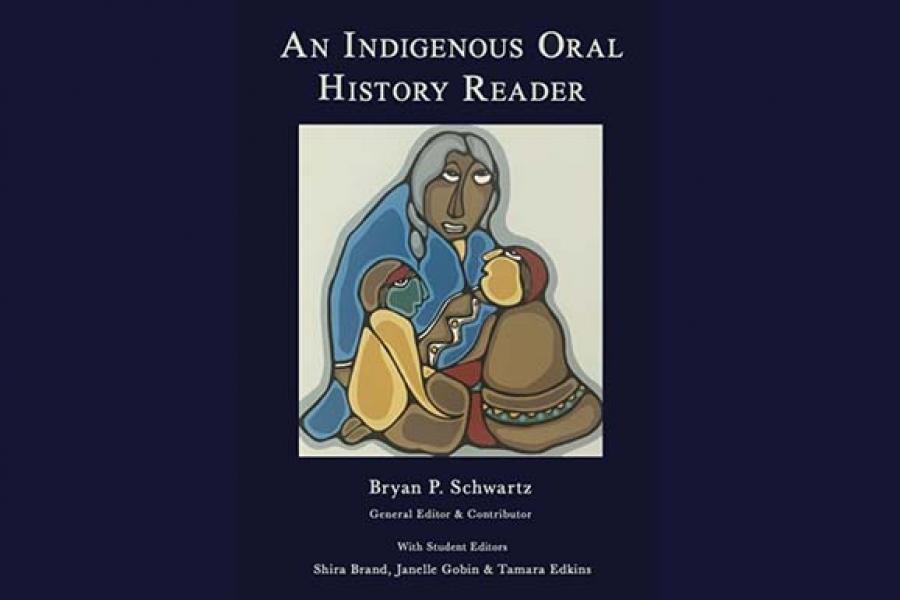
Notably, the Oral History course – which exposes students to Indigenous oral histories in legal contexts – was elevated to a permanent part of the curriculum in 2022, and a comprehensive Indigenous Oral History Reader was published as a resource for students and educators. Furthermore, many standard law courses now include significant Indigenous law units (for example, Criminal Law, Constitutional Law, Evidence, Property, and others have dedicated components examining Indigenous legal issues and perspectives).
Land-based learning and an introduction to Treaties
Another innovative curricular element is the incorporation of land-based learning and treaty education. Starting in 2023, land-based learning opportunities have been introduced for all law students as part of the curriculum. During each September’s Orientation week, all first-year law students are given an on-the-land teaching about Indigenous Legal Orders and visit the National Centre for Truth and Reconciliation. Please see the Orientation Week Schedule for more details.
Also, the mandatory first-year Legal Systems course now includes a curated educational program titled “You Are On Treaty Land,” developed in partnership with the Manitoba Museum. Through a series of modules set at museum exhibits – from Treaty No. 1 to Treaty No. 5 – students learn on-site about the spirit and intent of the Treaties, the role of First Nations leaders (such as the Roseau River elders and Treaty negotiators), and the historical and contemporary significance of treaty relationships. This experiential approach helps ground students in the foundational importance of Treaties and encourages reflection on the legal implications of Canada’s treaty obligations.
Furthering Indigenous research
In 2023, The Director of Indigenous Legal Learning and Services co-developed with Dr. Leo Baskatawang and Professor Daniel Diamond a new Indigenous law journal accompanied by an annual conference held annually in September in conjunction with the National Day for Truth and Reconciliation. The editorial team is partnering with the Manitoba Law Journal to publish the Interdisciplinary Journal of Indigenous Inaakonigewin. The journal will publish peer reviewed articles on Indigenous related legal issues, story, art, and non-peer reviewed reports. The journal has a focus on Indigenous Legal Orders in the Prairie region. The first issue is expected to be published during the 2026 academic year.
Indigenous student engagement and admissions
The Faculty of Law is committed to recruiting and supporting Indigenous law students, recognizing that a diverse student body is essential to reconciliation in the legal profession. The law school maintains a Canadian Indigenous Applicant Category in its admissions process, which provides a holistic evaluation and dedicated seats for Indigenous applicants. This process, in place for several years, is designed to acknowledge the unique experiences of Indigenous candidates and facilitate their access to legal education.
Since 2021, the Faculty’s Truth and Reconciliation Action Team has contributed recommendations to ensure fairness in Indigenous admissions and to strengthen pathways for Indigenous students entering law. For each incoming class, a subcommittee of the Action Team – including Indigenous lawyers and faculty – reviews Indigenous-category applications and advises on selections, reflecting the community’s voice in admissions decisions.
Extracurricular opportunities
MILSA - Manitoba Indigenous Law Students Association
Once Indigenous students are admitted to the Faculty of Law, robust supports and engagement opportunities are in place. The Manitoba Indigenous Law Students Association (MILSA) is an active student-led organization that the Faculty consults on major decisions and initiatives. The Dean and administration regularly confer with MILSA to ensure student perspectives inform the Faculty’s reconciliation efforts.
Financial support
Financial and institutional support for Indigenous students have expanded since 2021: for example, the Faculty provides funding for Indigenous students to participate in national workshops, moots, and conferences on Indigenous rights. In the 2022–23 academic year, a group of MILSA members was sponsored to attend the annual Indigenous Bar Association conference, where they networked with peers and professionals from across Canada. At that conference, Robson Hall student Shelby Sinclair was elected Vice-President (First Nations) of the National Indigenous Law Students Association, reflecting the leadership roles Indigenous students from Manitoba are taking on nationally. In 2024-25, nine Robson Hall students and Alumni were on the NILSA board. Melinda Moch, former MILSA Executive was elected to the board of the Indigenous Bar Association.
Annual student engagement events
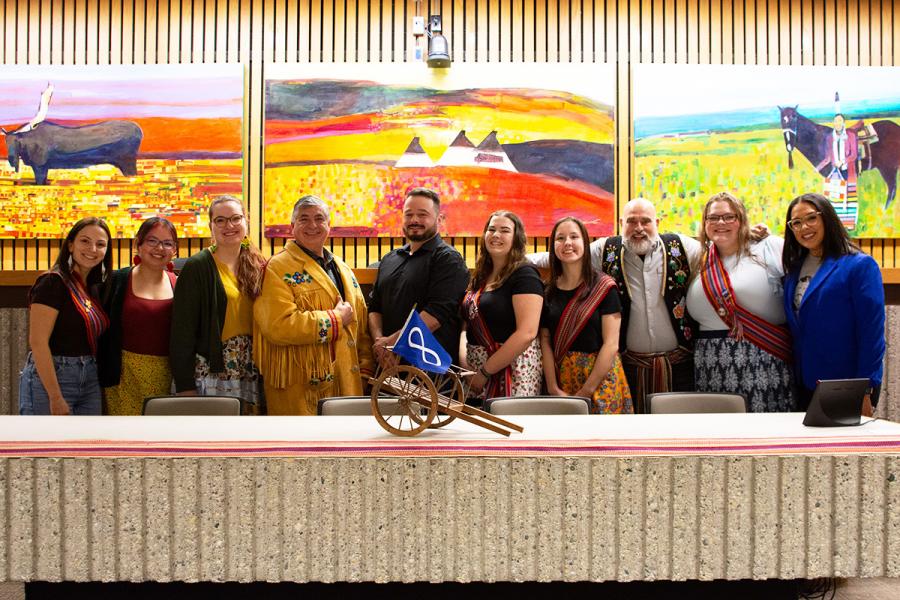
Student engagement also takes the form of Indigenous cultural and educational events organized by MILSA and supported by the Faculty. Each year, MILSA hosts a National Day for Truth and Reconciliation Lunch-and-Learn around September 30, creating a space for dialogue on the legacy of residential schools and the ongoing work of reconciliation. In 2024, MILSA received provincial funding to organize such an event, which featured speakers including elders, Indigenous alumni, and community leaders discussing the importance of education about residential schools. Similarly, MILSA hosts an annual Louis Riel Day Celebration each February at Robson Hall which is open to the faculty and community. This celebration features traditional food, music, occasionally Métis dance (a recently-graduated law student was also a nationally-recognized champion jigger), and often a panel of Métis leaders sharing their experiences of heritage and identity. These student-driven events, supported by faculty, not only enrich the law school community’s cultural life but also strengthen ties with Indigenous communities and alumni.
Support
The Faculty offers tailored programming for Indigenous students – ranging from academic workshops to mentoring circles. Thanks to these combined efforts in admissions and student engagement, Robson Hall has become an increasingly welcoming environment for Indigenous law students, as evidenced by growing Indigenous enrolment and active student participation in governance and events.
Marc Kruse is our Director of Indigenous Legal Learning and Services.
Wendy Whitecloud, who served for many years as the Faculty's Indigenous Support Coordinator, has returned as an Elder-in-Residence to work with law students.
Horizon is a Manitoba map of supports and resources for Indigenous students navigating post-secondary education.
Visit UM Indigenous for current news stories and programming for and about the Indigenous campus community.
Financial support
With over $450,000 annually in allocations, UM Law has a comprehensive needs-based financial aid and bursary program. The Faculty awards one-third of the tuition surcharge collected back to students in the form of needs-based bursaries. Since the inception of the Robson Hall Bursary in 2005, the Faculty of Law has awarded over $1,700,000. The allocations are based on financial need and are distributed in the fall. This helps to ensure that all eligible students are supported according to their needs. Students applying for the Bursary Program are expected to apply for government student loans.
We also offer Entrance Awards & Scholarships, some of which are specifically for Indigenous students.
Each student on the Faculty of Law Dean’s Honour List at the end of first and/or second year who continue their legal studies in the next academic year at UM Law becomes a Pitblado Scholar. These students are presented with a $5,000 scholarship at a formal reception in the fall. The scholarship is applied directly to tuition.
In 2025, the Manitoba Law Foundation established three transformational bursaries made possible through $4.5 million in grant funds to the University of Manitoba, Faculty of Law.
Beginning in Autumn 2025, the bursaries are available for eligible students
enrolled at the University of Manitoba, Faculty of Law.
The bursaries reflect the Foundation’s unwavering commitment to reconciliation, equity and fostering a legal profession that is representative of the
vibrant and diverse communities it serves.
The three bursaries include:
The Manitoba Law Foundation Truth & Reconciliation Bursary
The Manitoba Law Foundation Equity & Transformation Bursary
The Manitoba Law Foundation Northern, Remote & Rural Access to Justice Bursary
Indigenous community engagement and expanding Access to Justice
Sharing best practices to Indigenize legal education
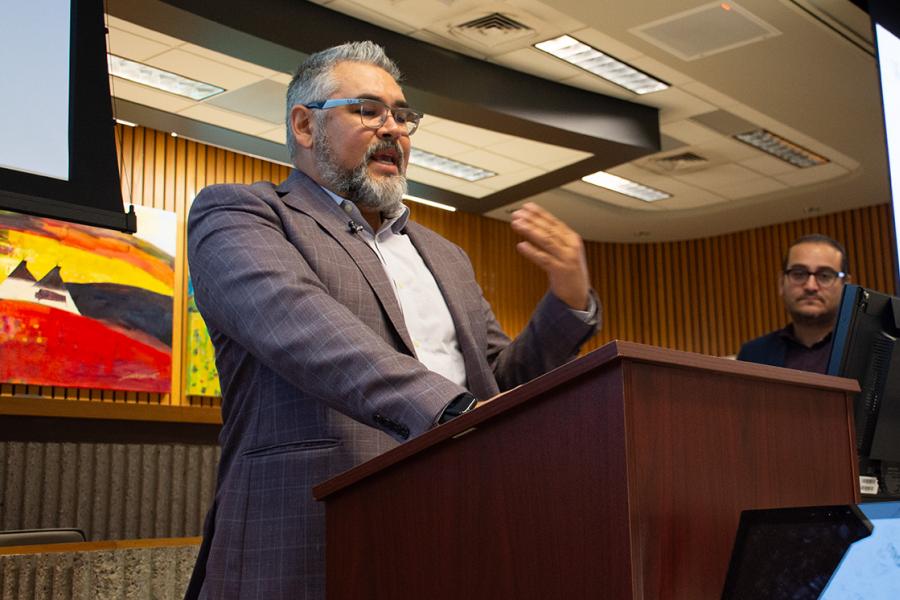
The Faculty of Law at UM also actively engages with the broader Indigenous legal community through conferences, symposia, and professional networks. In October 2023, a delegation of faculty and students from UM Law made a strong impression at the Indigenous Bar Association’s annual conference (hosted by Chippewas of Rama First Nation in Ontario). Faculty members (Assistant Professors Leo Baskatawang and Daniel Diamond) and Director Marc Kruse led a breakout session discussing the UM Faculty of Law’s implementation of TRC Call to Action 28 and shared best practices for indigenizing legal education. Their presentation emphasized a holistic approach to Indigenous content – not treating it as a mere “box-ticking exercise” but integrating it meaningfully throughout the law school curriculum. The ideas exchanged at this national forum positioned the UM Faculty of Law as a leader that other law schools have expressed interest in emulating on their own respective journeys toward reconciliation in legal education.
Collaborating with the Manitoba Bar Association and the Law Society of Manitoba
Since 2022 to the present, as part of Orange Shirt Day each September, education the faculty partners with the Director of Indigenous Legal Learning and Services, Manitoba Bar Association, and Manitoba Law Society, with support from the Law Foundation to provide CPD accredited education seminars on Indigenous legal issues and Orders. The first two events were held at the Law Society classroom over the noon hour. The project expanded in 2024 to coincide with a conference held at Robson Hall promoting the new Indigenous law journal.
Connecting with the Manitoba Indigenous Bar and bench
Locally, the Faculty has strengthened ties with Indigenous leaders and organizations in Manitoba. The Dean and the Truth and Reconciliation Action Team host regular meetings with members of the Indigenous Bar and community to listen to concerns and collaborate on solutions. Prominent Indigenous judges, lawyers, and Knowledge Keepers are frequently invited to Robson Hall: for instance, an Indigenous senator (a leader in the community and a survivor of the residential school system) delivers the keynote address at every first-year Orientation, underscoring the role of law in healing and justice.
The faculty also co-hosts events with the Manitoba Bar Association and Law Society of Manitoba on Indigenous topics. In September 2024, Robson Hall partnered with those professional bodies to present a major conference on “Engaging in Economic Reconciliation,” drawing Indigenous community leaders, jurists, and business experts to discuss economic development initiatives in First Nations and Métis communities. Such partnerships ensure that the law school’s academic efforts are in sync with community needs and that students gain exposure to Indigenous legal practitioners and real-world issues.
Engaging with Indigenous alumni
Finally, Indigenous alumni engagement is on the rise. Many Indigenous graduates serve as mentors and sessional instructors, bridging classroom learning with lived experience. Through the Action Team’s mandate of involving Indigenous lawyers in teaching roles, the Faculty has brought in local practitioners to co-teach courses and guest lecture on topics like Aboriginal law, restorative justice, and treaty rights. These collaborations with the Indigenous legal community enrich the educational environment and help to ground legal theory in cultural context.
Community outreach and public engagement
Beyond formal partnerships, Robson Hall has expanded its community outreach and public engagement activities related to Indigenous justice. A signature initiative in this area was the Indigenous People and the Criminal Justice System Seminar Series, an annual intensive workshop launched in collaboration with local Indigenous bar members. Held each fall, this seminar examines the interaction between Indigenous individuals and the criminal justice system at every stage – from arrest and bail to trial and sentencing – and critically analyzes systemic issues such as overrepresentation and cultural considerations in sentencing (e.g. Gladue reports). The series invites Indigenous lawyers, judges, and Knowledge Keepers to lead sessions, and practicing lawyers who attend can earn Continuing Professional Development credits, while law students attend free of charge. The open format of this seminar fosters a shared learning environment for students, legal professionals, and community members, and it has become a forum for discussing reforms to make the justice system more responsive to Indigenous people’s needs.
Public Legal Education
Public legal education and youth outreach are also central to Robson Hall’s community engagement. Clinic students and MILSA members have organized visits to schools and community centers to talk about legal rights and encourage Indigenous youth to consider legal careers. These outreach visits often incorporate cultural elements – for example, law students might open sessions with a Treaty acknowledgment or a teaching from an Elder, demonstrating how legal education and Indigenous identity can go hand in hand.
Acknowledging Days of Significance
The UM Faculty of Law visibly marks important commemorative days and ceremonies, inviting the public and university community to participate. Every September, the Faculty observes Orange Shirt Day / National Day for Truth and Reconciliation with ceremonies and talks (as noted, MILSA hosted a well-attended panel discussion in 2024 and continues to host an annual event to mark the day). The Faculty also partakes in Indigenous Veterans Day and Louis Riel Day events. The 2025 Louis Riel Day celebration, for example, was not only a cultural gathering with Métis music and bannock but also an educational forum, where Métis government representatives and lawmakers engaged in dialogue with students and attendees about Métis rights and history. By opening such annual events to a broader audience, the Faculty strengthens public understanding of Indigenous legal issues and demonstrates its commitment to reconciliation beyond the classroom.
Embracing cultural protocol
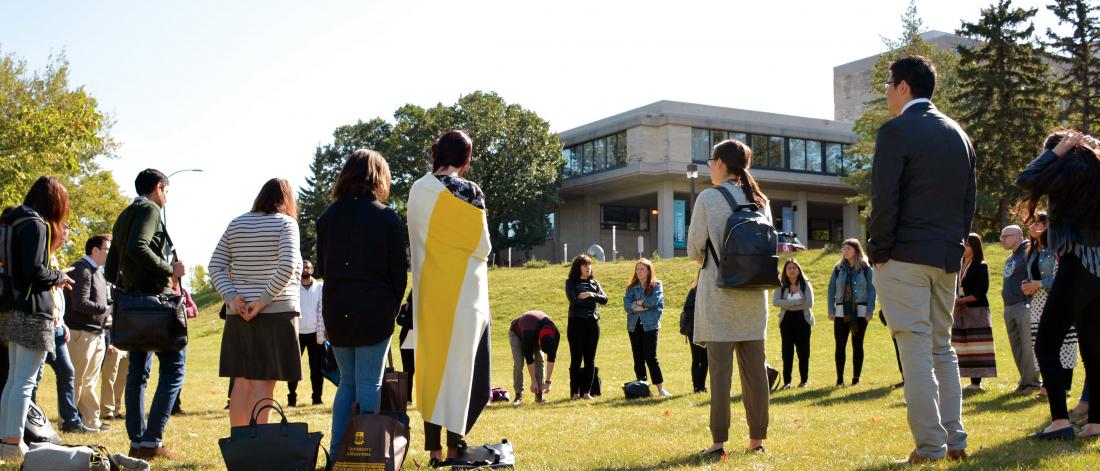
Cultural protocol is respected in all public engagements. Traditional ceremonies such as smudging, pipe ceremonies, and prayer are regularly conducted at Robson Hall and on its grounds, recognizing the spiritual dimension of law and community. For example, before major events or at the beginning of the academic year, Elders lead smudges in which students and staff can participate, cleansing the space and minds for the work ahead. At Orientation each fall, representatives from local First Nations offer a “Welcome from the Bar”address, formally welcoming new law students to Treaty territory and the legal profession with words in their languages and acknowledgement of the land. These practices have been woven into the fabric of the Faculty’s public presence, setting a tone of respect, reflection, and inclusion.
Experiential learning: Clinics, moots, and beyond
Experiential learning opportunities at the UM Faculty of Law have grown to include a strong Indigenous rights component, giving students practical training in Indigenous law and access to justice. The flagship of these efforts is the Indigenous Rights Clinic launched in Fall 2023. Through this clinic, students earn credit while working on real cases under the supervision of lawyers, tackling issues such as assisting Indigenous clients.
Students also participate in land-based educational activities through the clinic, which may involve learning on-site in Indigenous communities or engaging with Elders about traditional dispute resolution practices. This blend of clinical work and land-based learning immerses students in both the practical and cultural aspects of Indigenous legal issues.
The clinic’s creation marks the sixth experiential learning option in the Faculty’s roster and the first devoted specifically to Indigenous law, reflecting a significant expansion of hands-on learning in line with reconciliation goals.
Competitive opportunities like mooting have similarly been harnessed to promote Indigenous legal education. Robson Hall has committed resources to ensure students participate annually in the Kawaskimhon Moot, a national Indigenous rights moot known for its non-adversarial, consensus-based format. In this moot (Kawaskimhon means “speaking with knowledge” in Cree), law students from across Canada debate complex Aboriginal law issues in a roundtable negotiation style rather than the typical win/lose courtroom setting. Robson Hall’s moot teams have excelled in recent years; bringing home table awards and earning important recognition from peers. The Faculty views these moot experiences as critical training for future lawyers who will work with Indigenous communities and on Indigenous rights matters.
Other experiential programs, while not exclusively Indigenous-focused, incorporate Indigenous law components. The Master of Human Rights program housed at Robson Hall allows law students to take practicum placements with organizations that work on Indigenous issues (for instance, placements with the Assembly of Manitoba Chiefs or Indigenous rights research groups). Law students can also volunteer or earn credit through Pro Bono Students Canada projects that serve Indigenous communities, or through internships at institutions like the Public Interest Law Centre where Indigenous clients are often front and center. Each of these experiences helps students apply their classroom learning to real-world scenarios involving Indigenous peoples and fosters culturally competent legal skills.
Indigenized learning environment
Educational programming in cultural competence has likewise been enhanced. The law library and faculty offices display Indigenous art and materials (for instance, displaying the Grandfather Teachings artwork by Daphne Odjig, in the student Common Room, and commissioning a law student and mural artist, Jessica Canard, to create a large wall mural outside the MILSA offices).
The Faculty has also curated a collection of Indigenous law texts and elders’ teachings for student use. Workshops on intercultural competency, anti-racism, and Indigenous legal methodologies are offered to faculty, staff, and students, often led by Indigenous facilitators. One notable symposium in early 2025, co-organized by Robson Hall, focused on “Decolonizing the Academy & Shaping Legal Education in the Spirit of Reconciliation,” bringing together law deans, professors, and students from across Canada to share progress on Indigenizing legal education. These kinds of programs ensure that cultural learning is not confined to students alone but is embraced by the institution as a whole.