
Rumy Demir
Advisor: Mercedes Garcia Holguera
Cooperative Housing for Artists – Revitalizing Downtown Winnipeg
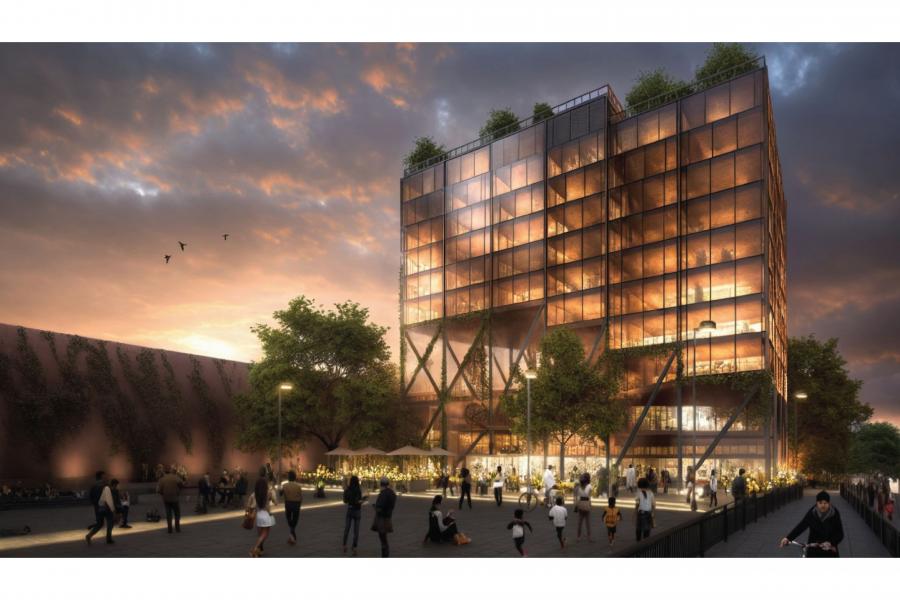
This thesis project explores cooperative housing as a hybrid architectural typology that integrates residential living with public and semi-public programs, positioning housing as an active participant in the urban and social fabric. The project addresses issues of social isolation, housing flexibility, and climate responsiveness through a vertically layered model that combines collective spaces, shared infrastructure, and private living units within a single architectural framework.
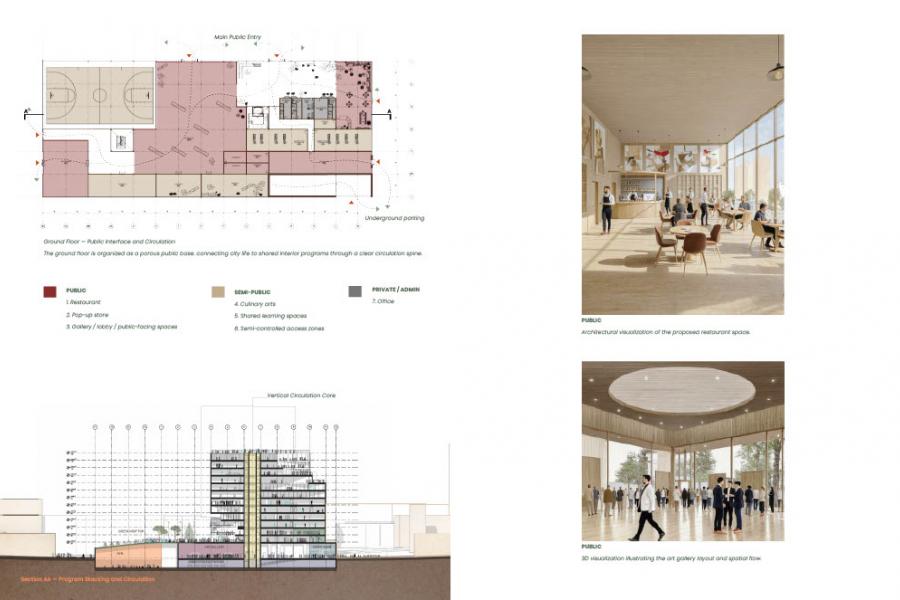
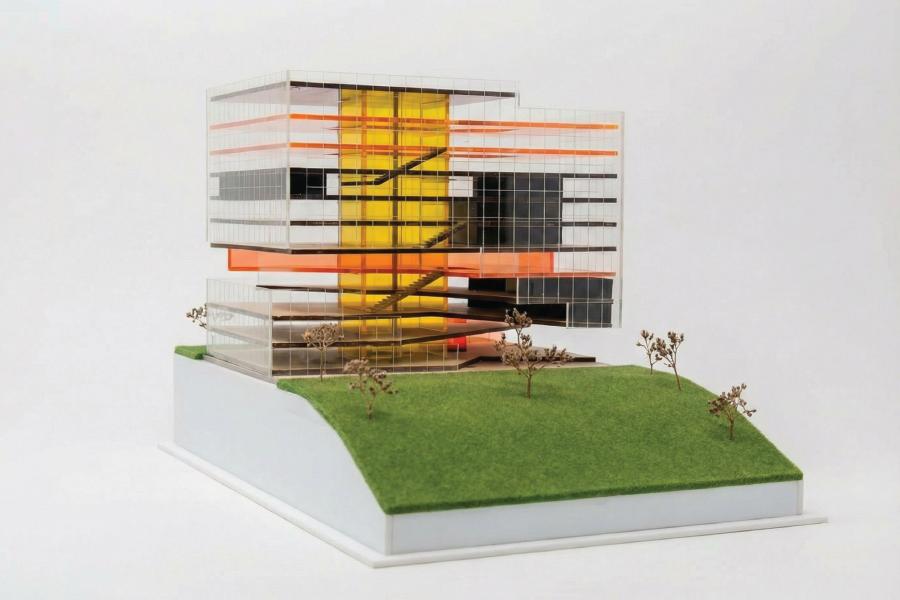
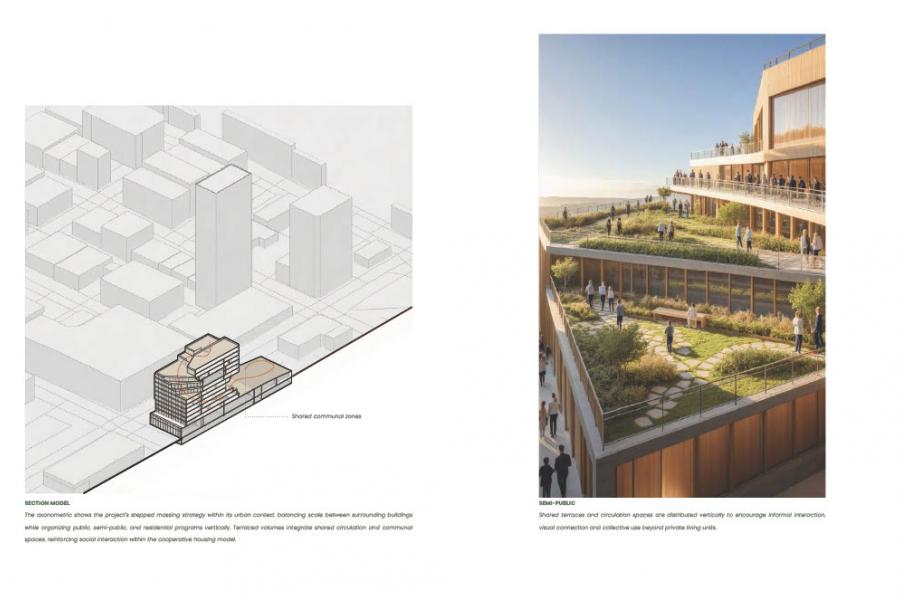
The design is structured around a clear programmatic gradient, beginning with a porous public ground floor that accommodates community-oriented uses such as a restaurant, gallery, pop-up spaces, and shared learning environments. These programs establish a strong interface between the building and the city, allowing public activity to extend into the interior and activate the project beyond its residential function. Semi-public programs and shared circulation spaces are distributed vertically, creating opportunities for informal interaction and visual connection among residents.
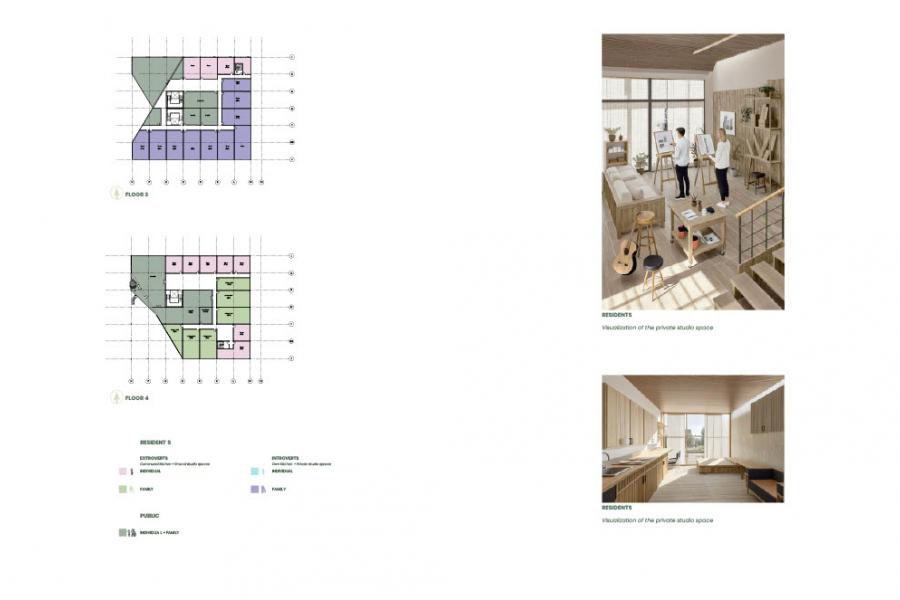
Residential units are organized to support diverse living arrangements, including individual studios and family units, while offering varying degrees of privacy. The project distinguishes between introverted and extroverted living typologies, allowing residents to choose between more communal or more private spatial configurations. Shared kitchens, studios, terraces, and circulation spaces function as social condensers, reinforcing everyday interaction without compromising individual autonomy.
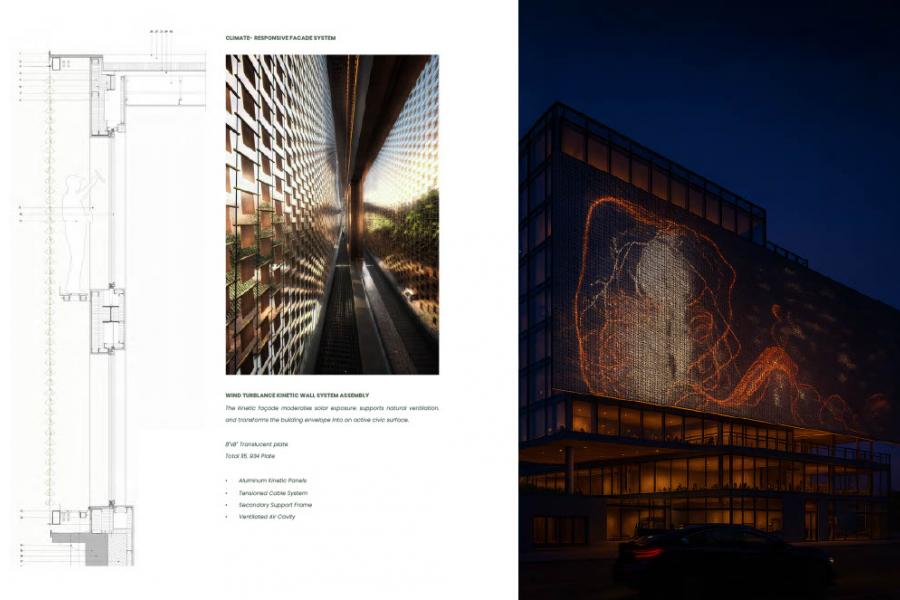
Climatic performance is a central design driver. A climate-responsive kinetic façade system moderates solar exposure, supports natural ventilation, and transforms the building envelope into an active environmental and civic surface. The façade’s layered assembly responds dynamically to environmental conditions while contributing to the project’s architectural identity. Stepped massing and terraced communal spaces further enhance environmental performance by improving daylight access, ventilation, and outdoor usability.
Through sectional studies, axonometric analysis, and spatial visualization, the thesis demonstrates how architecture can mediate between public and private realms while responding to environmental and social conditions. The project proposes cooperative housing not only as a residential solution, but as an adaptable urban system that integrates social infrastructure, climate-responsive design, and collective living.