
William Anderson
Advisor: Brian T. Rex
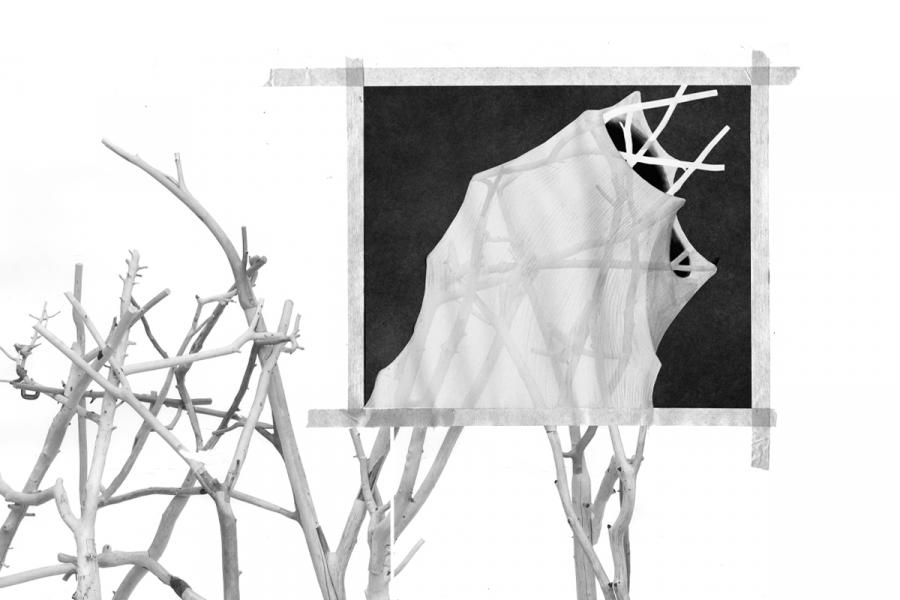
On Grane, continuing elsewhere
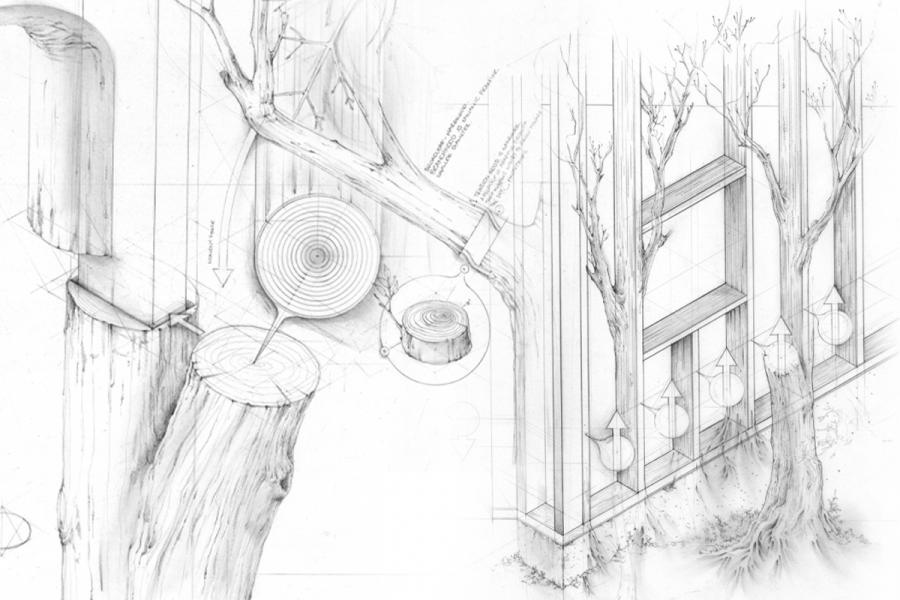
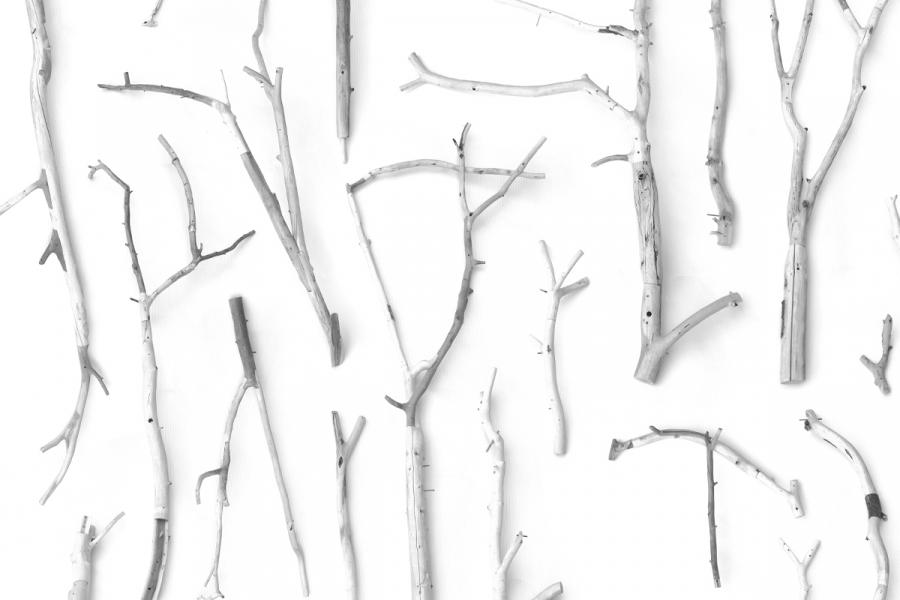
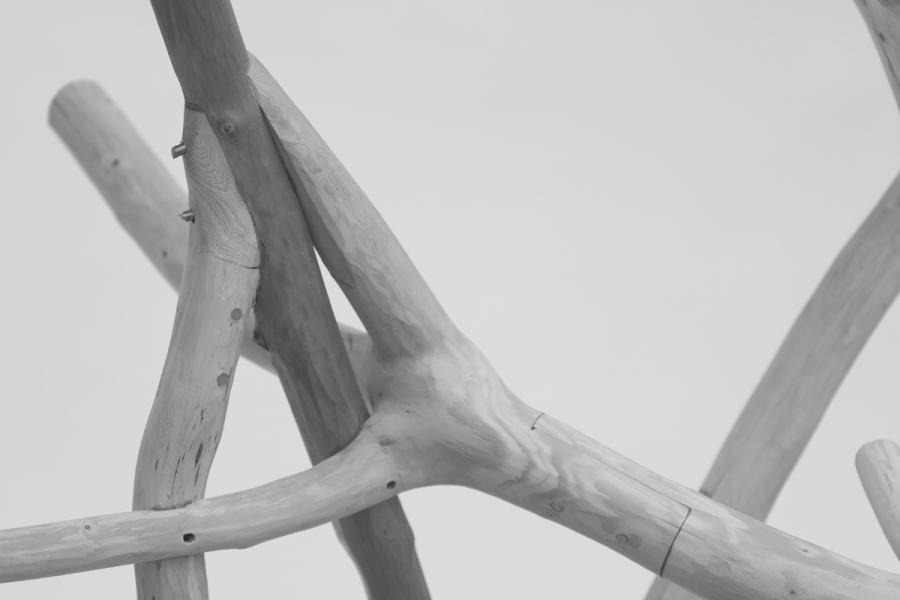
Conventions and specifications within the timber industry strip trees of their wildness, reducing animate beings to inert, standardized material. The processes of renaming and dimensioning trees into wood weaken the structural, temporal, and ontological characteristics that inform their architectural potential. Working in dialogue with non-linear tree forms creates opportunities for architectures that are co-authored by the tree’s material logic, their environmental governance, and the interpretative agency of the designer.
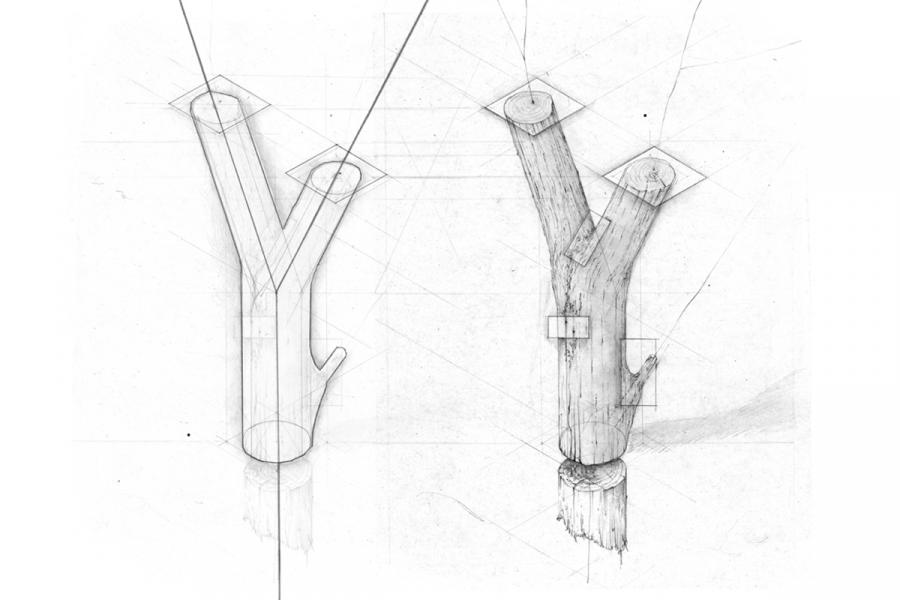
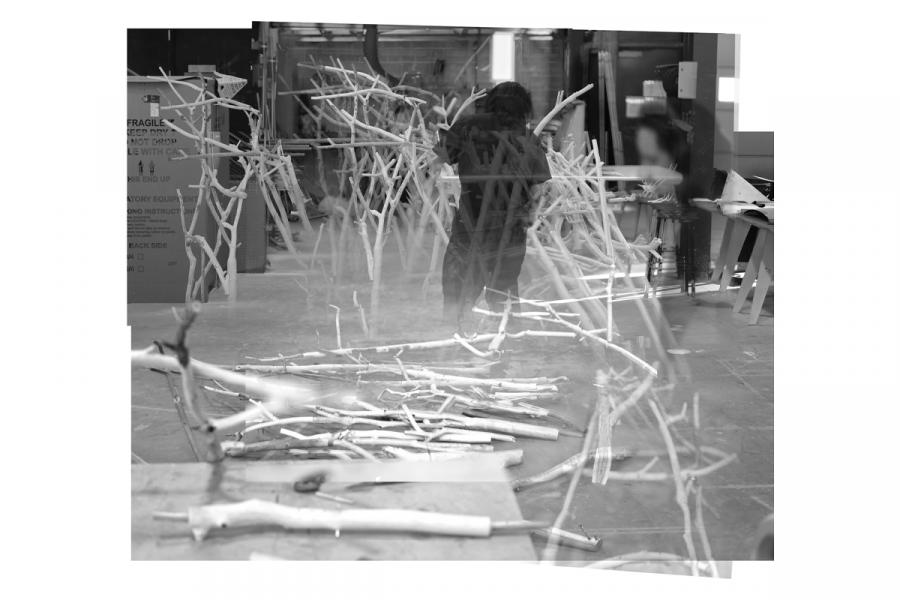
This thesis proposes a design methodology that operates within translational slippages between two-dimensional drawing and material reality, releasing authorial control to cultivate dialogue with material bodies. This methodology is framed by a triptych of critical writing, drawing, and making, where moments of resistance are traced as sites of serendipitous movement and inquiry—not flaw.
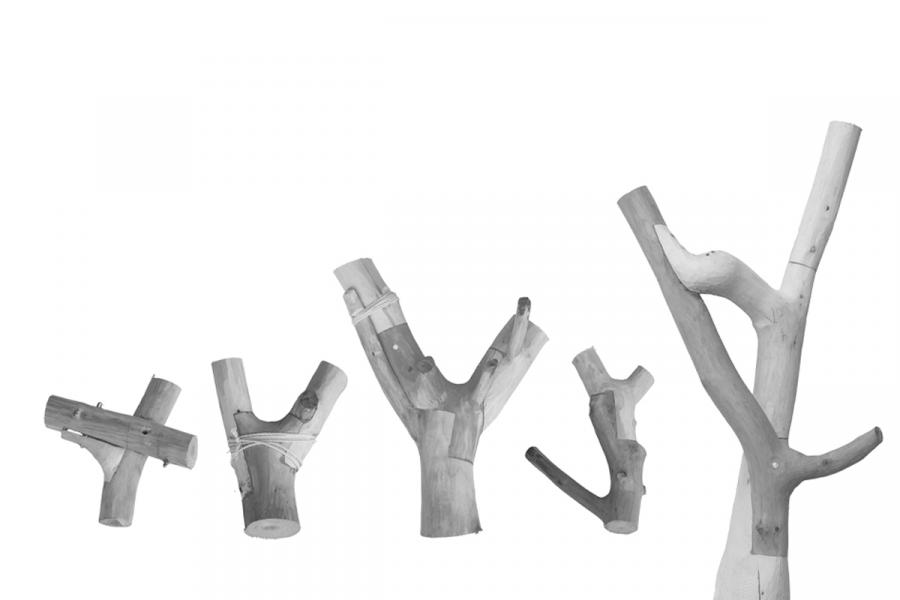
The relational grotesque of tree morphology can be speculatively read through rings, grain, growth bias, density, and decay. These patterns of adaptation act as temporal registers, through which the tree’s didactic form reciprocates dialogue and authorship.
Wildness as a condition of authorship is mediated through a critical examination of technology and tooling, considered as interfaces between human and tree. This dialogue negotiates care and efficiency, translating them into a holistic technological language that honours the eco-relational intelligence of trees, while questioning the necessity of prescriptive certainty. Ontological meaning forms the basis of craft value; whereas artful craft participates in the profundity of matter, it similarly situates the human as relationally valuable.
This methodology frames site as a condition of examination rather than a locus for intervention. Both urban and remote settings are mapped through comparative ecological, infrastructural, and spatial systems that govern the growth morphology of trees. Resisting architectural prescription, this thesis work is intentionally unsited, situating architectural value within the relational essence of trees. Inevitable collapse: within the reduced dimensionality of a book, this thesis positions process as architectural artifact. Contemplating numerous technological, environmental, and theoretical groundings situate the fragmenting framework of slippages that exist, like trees, within an entangled system of relation.