
Arooj Tauqeer Aslam
Advisor: Shawn Bailey
Deinstitutionalized Care: Reimagining Spaces for Dementia
This project begins with a simple yet radical question. How can architectural design make the transition into dementia care feel more familiar, dignified, and non institutional for residents. What if a place for dementia care felt less like a facility and more like a home.
At its core, this work is about remembering that people living with dementia are, first and foremost, people, each carrying a lifetime of routines, preferences, and memories. Too often, care environments are designed primarily for efficiency and safety, making them feel clinical and isolating. Rather than offering comfort, they can unintentionally deepen confusion and erode a person’s sense of self.
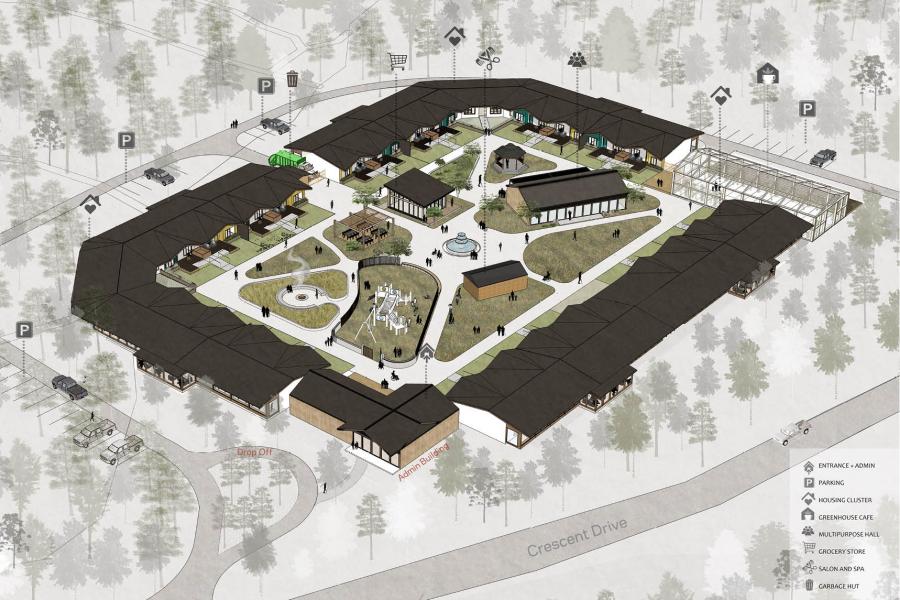
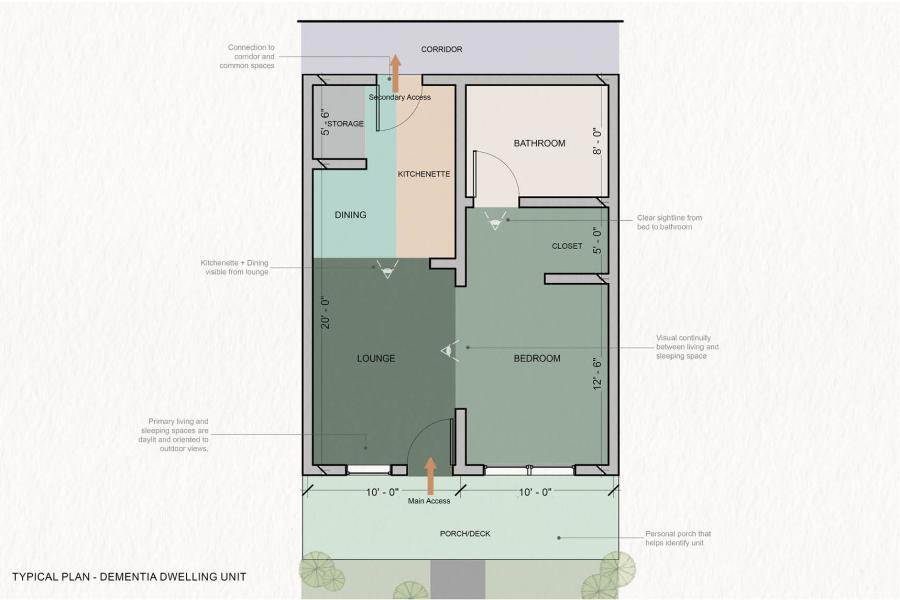
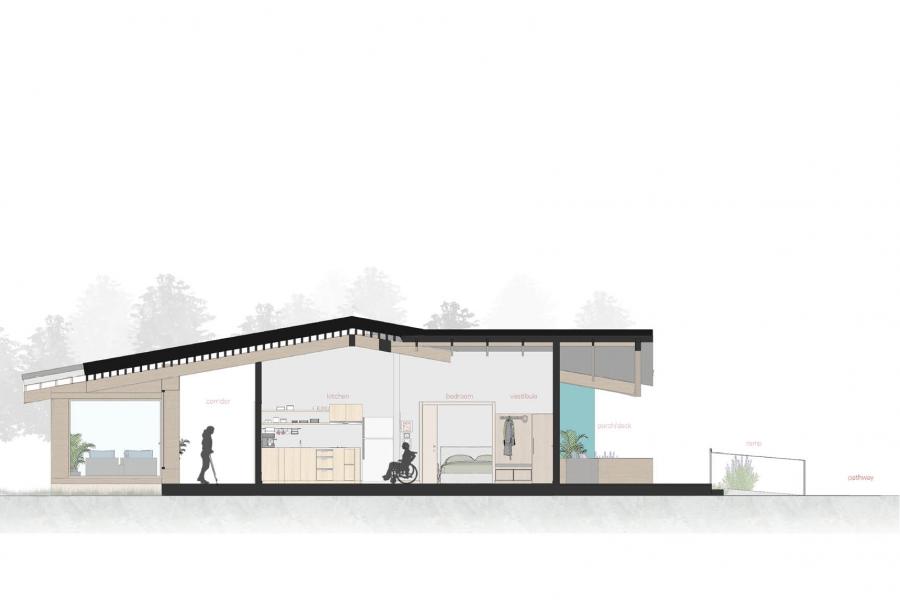
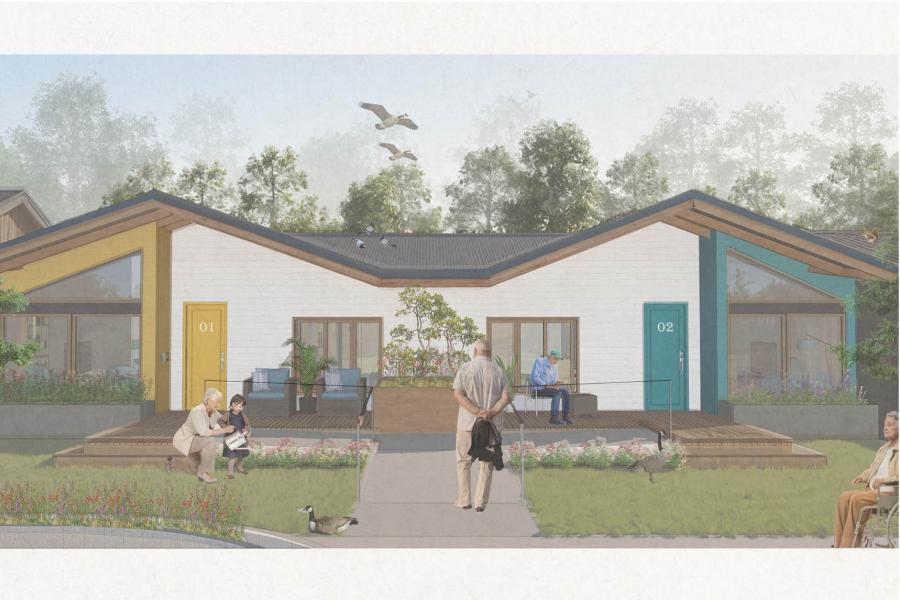
This thesis imagines something different. A village rather than an institution. A community where care is woven into the familiar fabric of everyday life. Instead of long, anonymous corridors, residents live in small, family scale houses, each with its own front door, welcoming porch, and distinct color identity. These simple architectural cues become anchors for memory and orientation. Saying “I live in the blue house” is not just a wayfinding tool, but a statement of belonging.
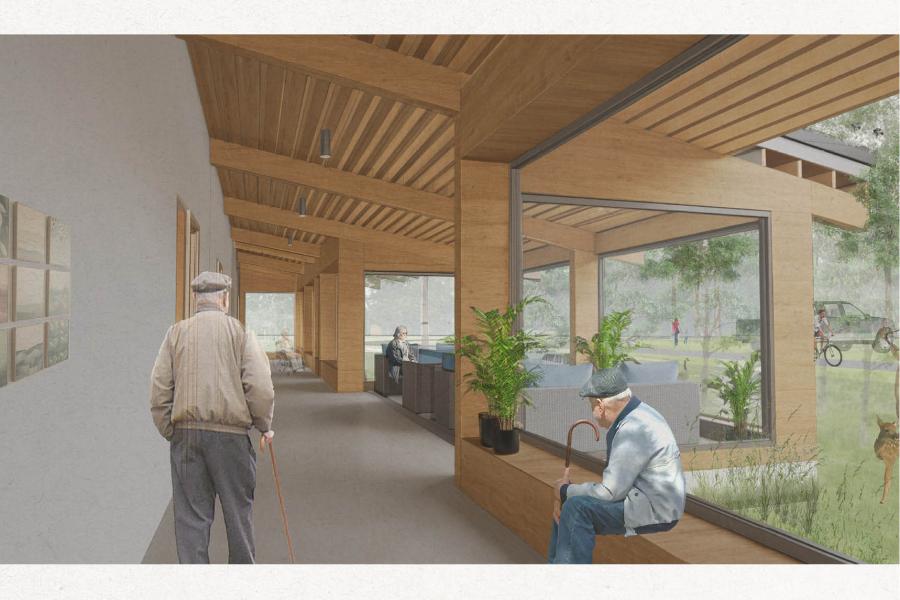
Inside, the units are connected to shared spaces, yet life remains ordinary rather than medical. Daily routines are shaped by the rhythms of home instead of staff schedules. The smell of food from a communal kitchen, a cup of coffee in a sunlit corner, or the quiet ritual of setting the table for friends become meaningful moments that ground residents in familiarity.
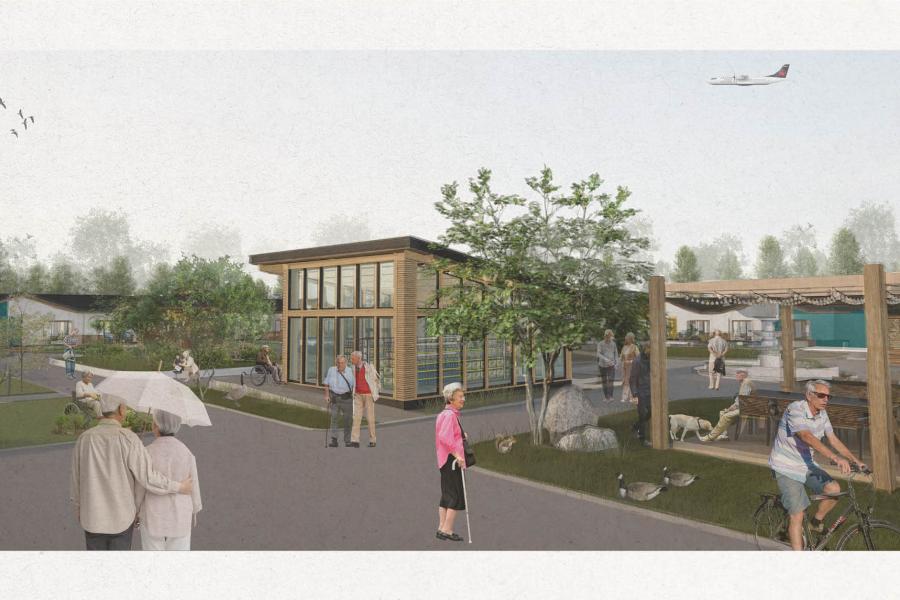
The village unfolds around a main street that includes a café, a small grocery store, a salon, and workshop spaces. These programs are not simply amenities, but invitations to participate. They invite residents to feel useful by tending plants, to feel connected through everyday interactions, and to experience joy in shared cultural spaces. Dignity is preserved through doing, not merely through being cared for. Outdoors, gentle paths move through gardens, allowing light, nature, and sensory details to support orientation, comfort, and well being.
This project is based on a belief that design should not manage decline, but support life. That safety exists not only in controlled environments, but in the comfort of a familiar chair by a window. This thesis envisions a world where a person living with dementia is not defined as a patient, but recognized as a neighbor, whose identity, autonomy, and humanity are gently upheld by the spaces they call home.