
Joanna Babadilla
Advisor: Terri Fuglem
The Silent Horns in the Vibrant City: Improvisation as an Architectural Method
This architectural thesis reimagines the historic Club Morocco building as a contemporary cultural and entertainment hub rooted in the spirit of jazz improvisation. Once one of Winnipeg’s most vibrant nightlife destinations, Club Morocco becomes the foundation for exploring the relationship between architecture and jazz: both disciplines operate within structures of order yet thrive through moments of disruption and improvisation. The project asks what the architectural equivalent of a jazz solo might be. How can architecture follow rules while bending them just enough to create tension, rhythm, atmosphere, and surprise?
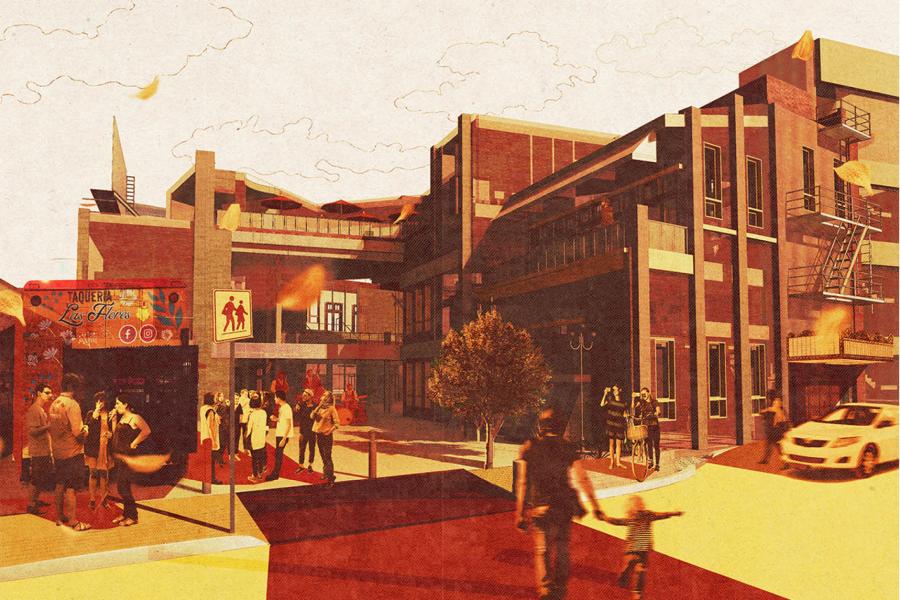
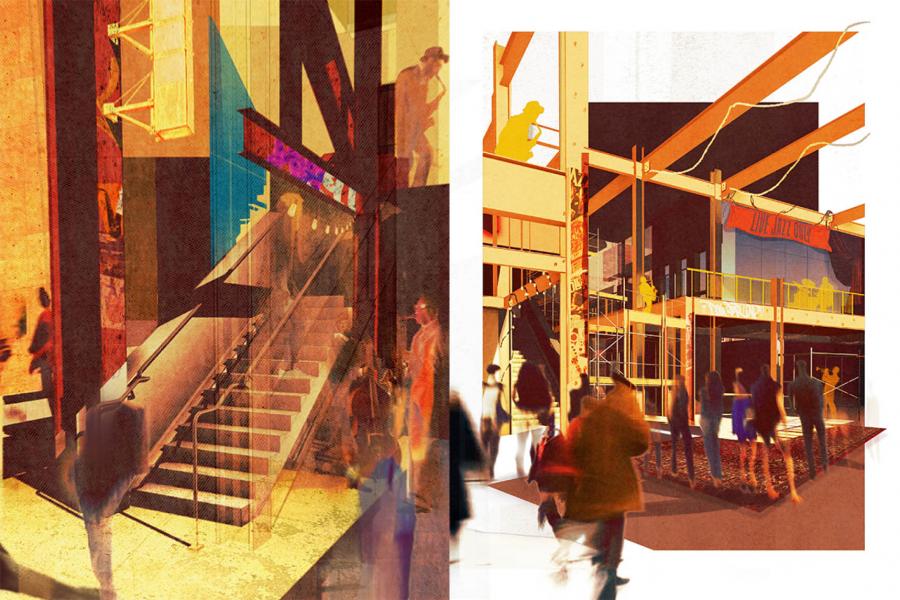
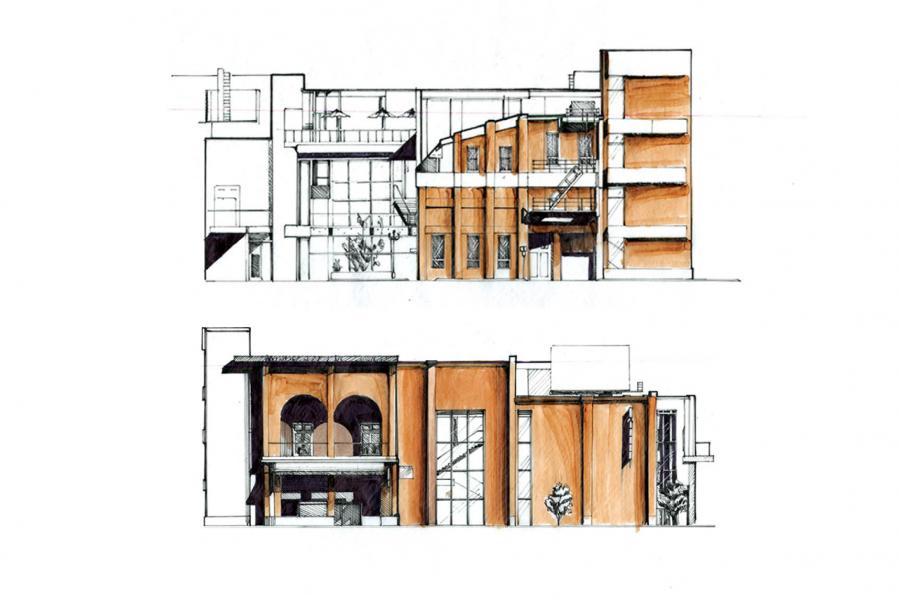
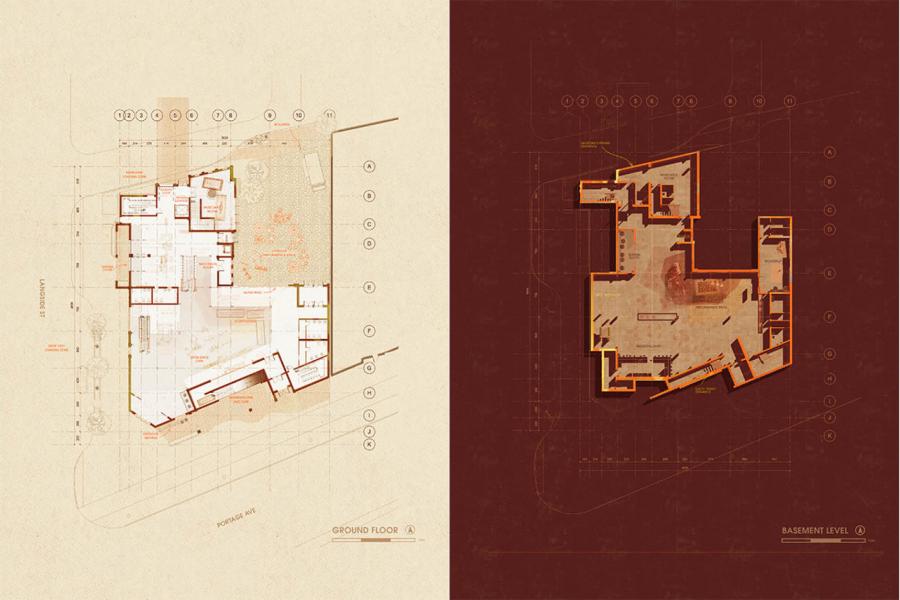
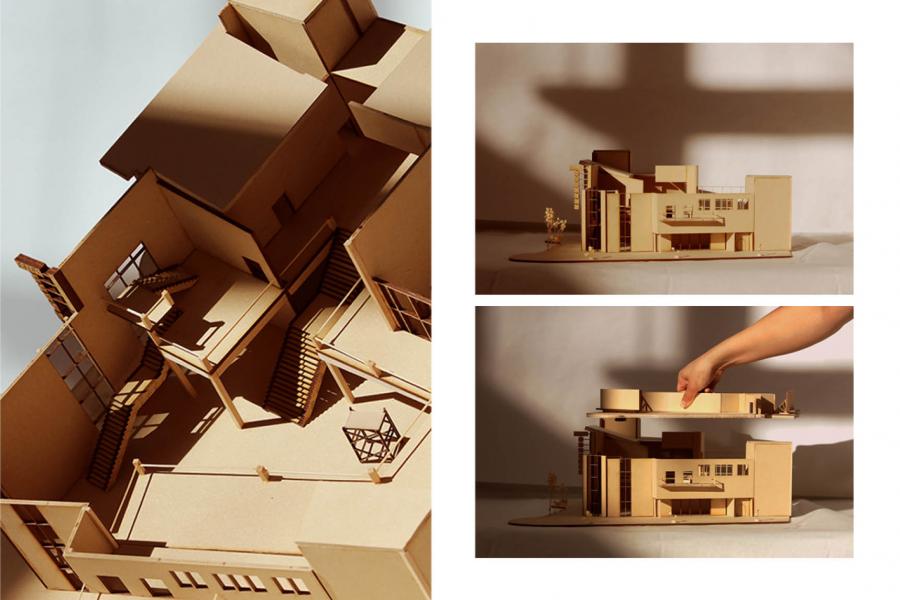
Positioned at the corner of Portage Avenue and Langside Street, the proposal introduces a layered public environment composed of boutiques, cafés, rooftop dining, workshop spaces, and a courtyard performance venue, all anchored by an underground jazz club hidden beneath the city. Twelve-metre-high steel columns rise through the project, dulled into deep ochers of reds, browns, and yellows, grounding the building in a heavy industrial rhythm reminiscent of Winnipeg’s warehouse district and the smoky ambiance of historic jazz venues. Scaffolding becomes an active architectural element throughout the performance spaces, allowing the architecture to feel unfinished alongside the life of the jazz club itself.
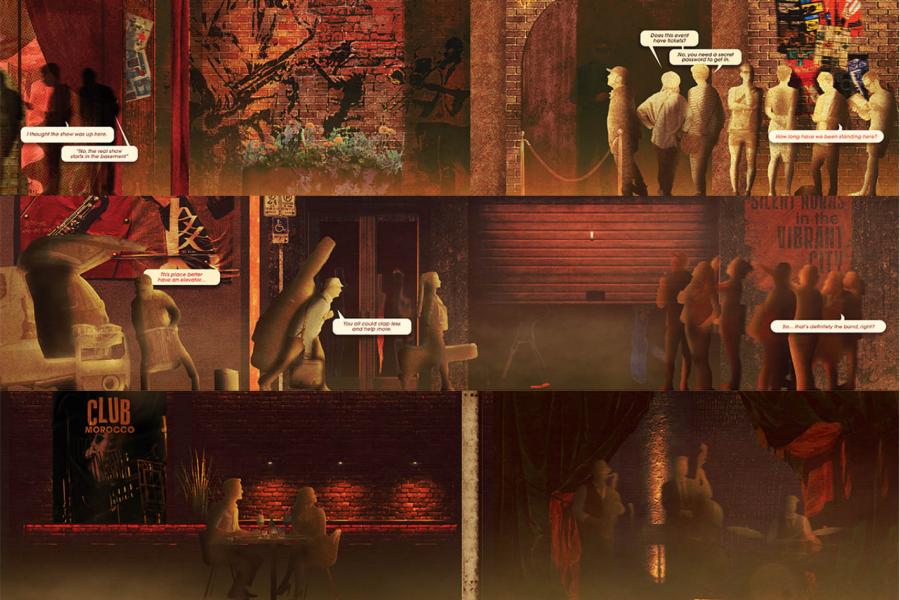
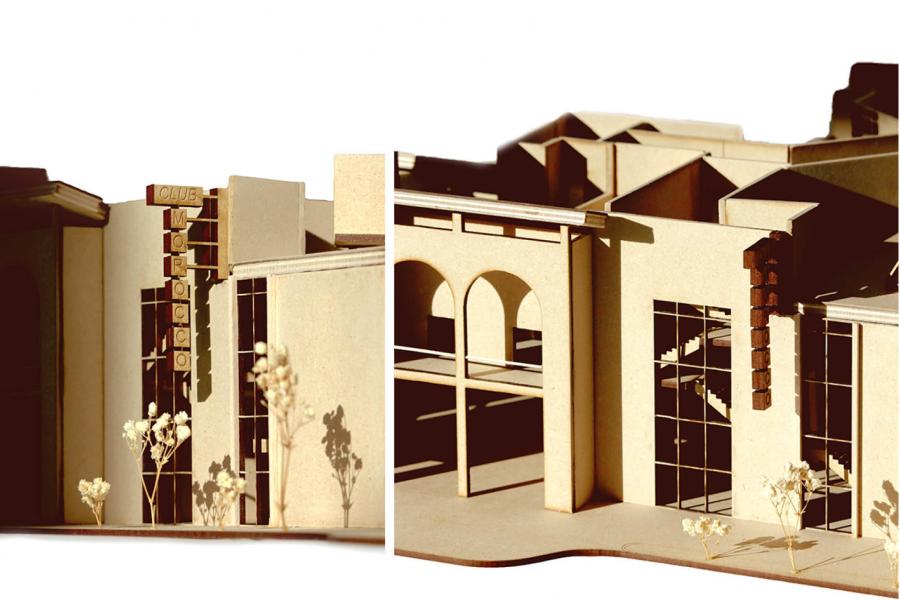
Marquee signs, blade signs, and billboard signage become central architectural devices throughout the project, recalling the visual language of jazz culture and the historic presence of Club Morocco. These illuminated elements activate the street edge. Along Portage Avenue, long lineups begin to form beneath the glowing signage, signaling the entrance to the underground jazz club below and reintroducing nightlife back into the urban fabric. More than a reconstruction, the proposal re-imagines a new civic condition for Winnipeg: a place where music, architecture, and public life intersect.