
Mariam Ghandi
Advisor: Carlos Rueda
Listening to the Ruin: Women-Centered Infill Architecture and Cultural Regeneration in Izadkhast
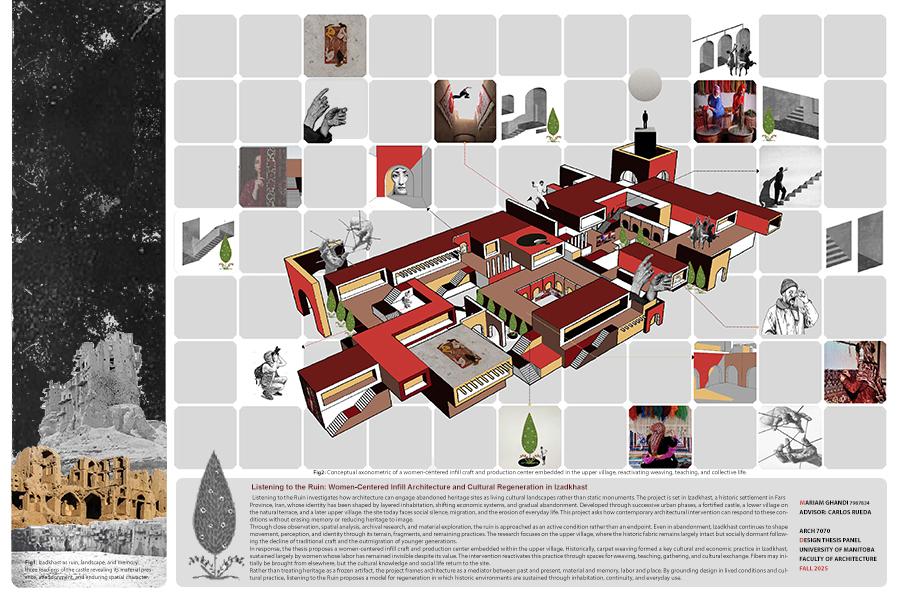
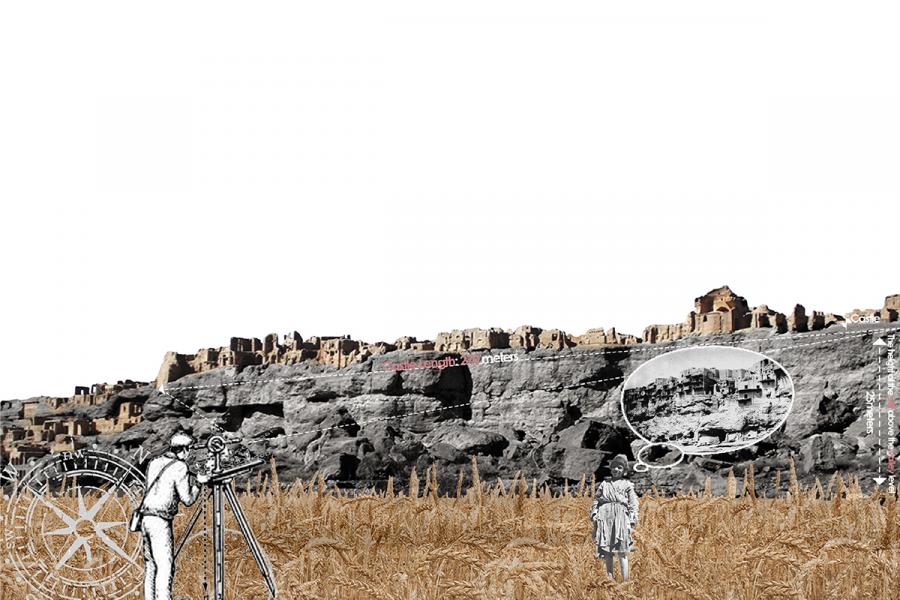
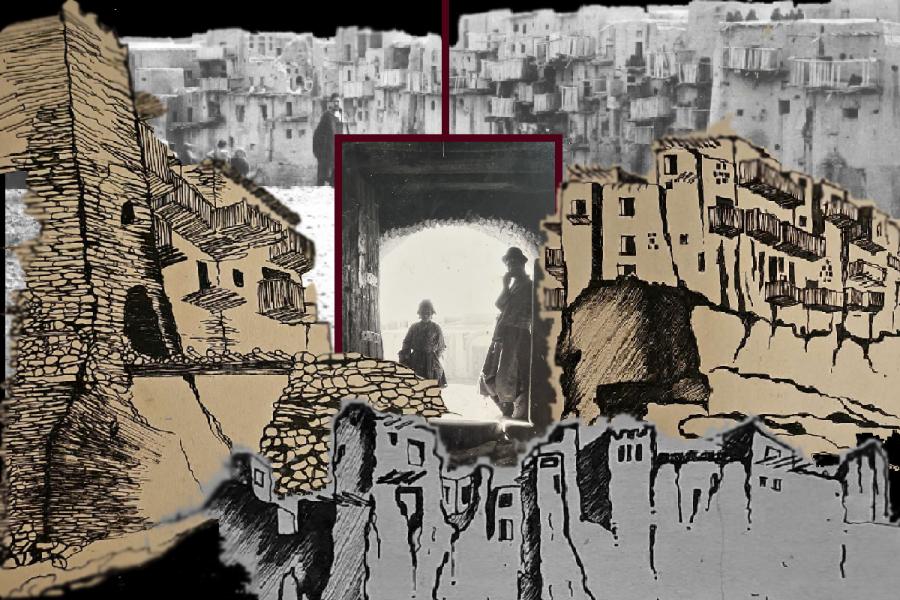
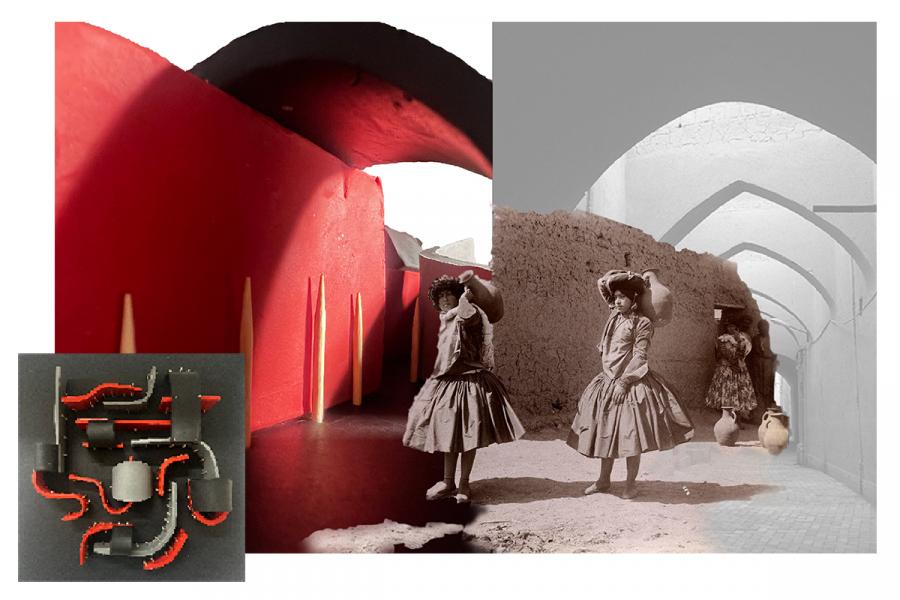
Listening to the Ruin investigates how architecture can engage abandoned heritage sites as living cultural landscapes rather than static monuments. The project is set in Izadkhast, a historic settlement in Fars Province, Iran, whose identity has been shaped by layered inhabitation, shifting economic systems, and gradual abandonment. Developed through successive urban phases, a fortified castle, a lower village on the natural terrace, and a later upper village. the site today faces social silence, migration, and the erosion of everyday life. This project asks how contemporary architectural intervention can respond to these conditions without erasing memory or reducing heritage to image.
Through close observation, spatial analysis, archival research, and material exploration, the ruin is approached as an active condition rather than an endpoint. Even in abandonment, Izadkhast continues to shape movement, perception, and identity through its terrain, fragments, and remaining practices. The research focuses on the upper village, where the historic fabric remains largely intact but socially dormant following the decline of traditional craft and the outmigration of younger generations.
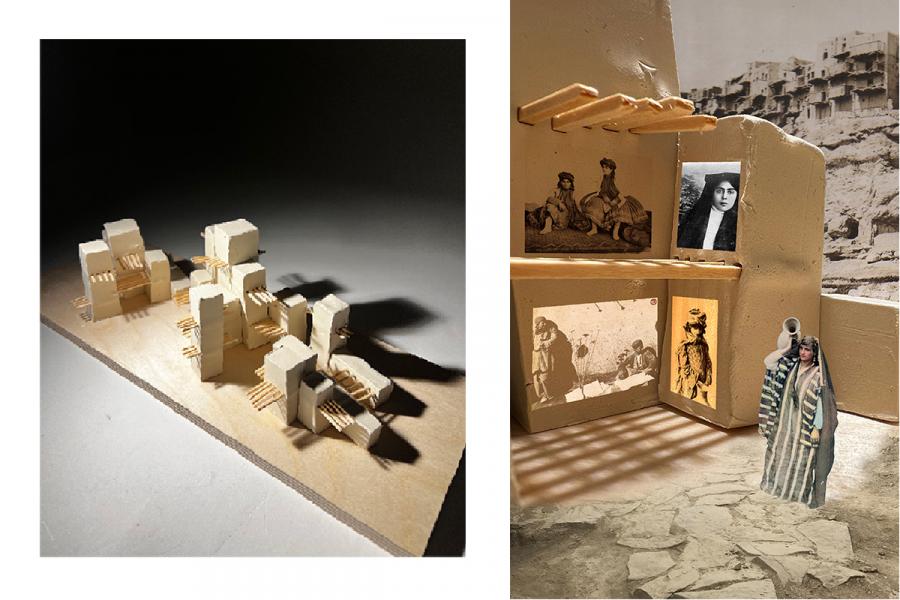
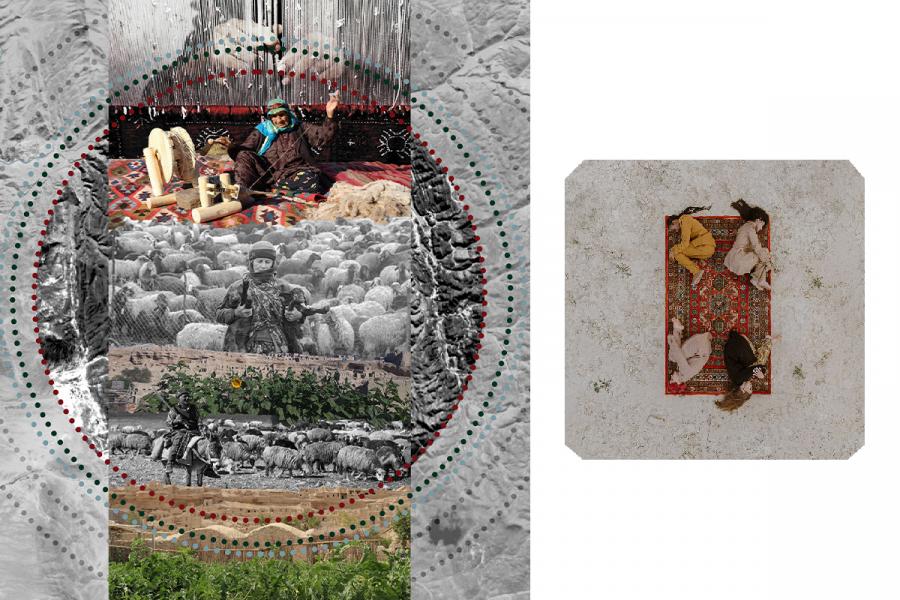
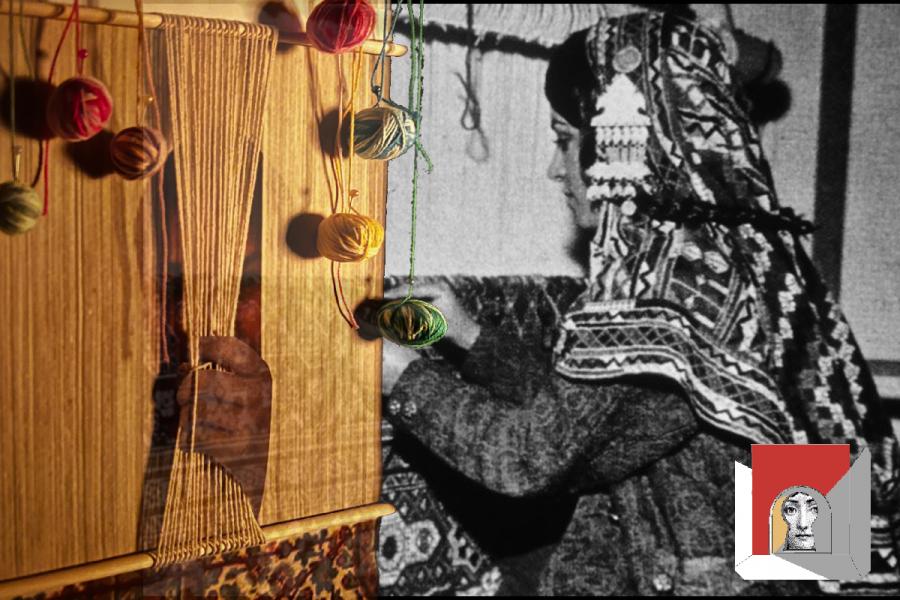
In response, the thesis proposes a women-centered infill craft and production center embedded within the upper village. Historically, carpet weaving formed a key cultural and economic practice in Izadkhast, sustained largely by women whose labor has remained invisible despite its value. The intervention reactivates this practice through spaces for weaving, teaching, gathering, and cultural exchange. Fibers may initially be brought from elsewhere, but the cultural knowledge and social life return to the site.
Rather than treating heritage as a frozen artifact, the project frames architecture as a mediator between past and present, material and memory, labor and place. By grounding design in lived conditions and cultural practice, listening to the Ruin proposes a model for regeneration in which historic environments are sustained through inhabitation, continuity, and everyday use.
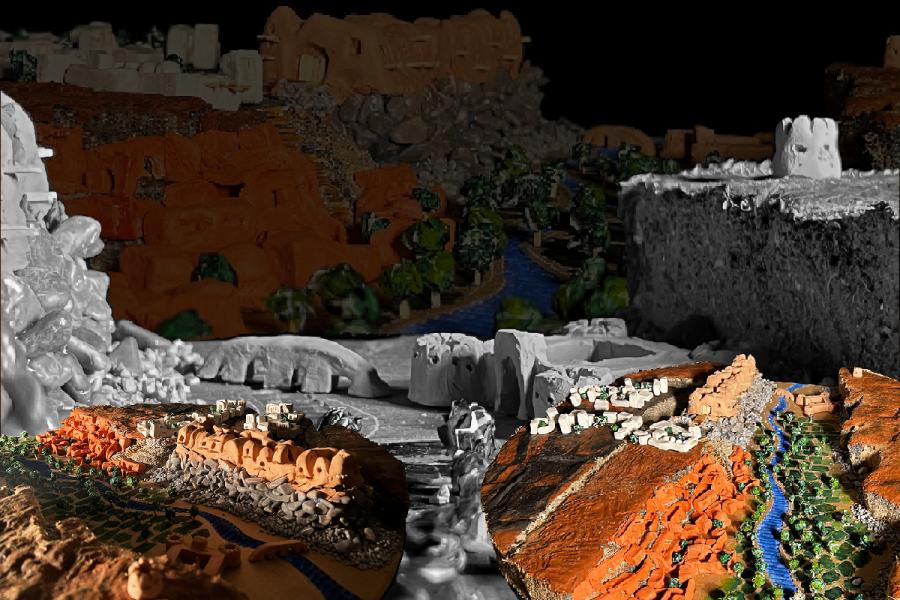
Figure 1. Izadkhast as ruin, landscape, and memory: three readings of the castle revealing its material presence, abandonment, and enduring spatial character.
Figure 2. Conceptual axonometric of a women-centered infill craft and production center embedded in the upper village, reactivating weaving, teaching, and collective life through continuity with the historic fabric.