
Nitheesh Johnrose Rema Devi
Advisor: Lancelot Coar
The City Beyond Flatland: Constructing the Dimensional Future
This thesis began with a personal question: why are there so few places to go in Winnipeg after 6 p.m. in winter? As someone who was used to wandering cities after work, I found myself moving only between school, work, and a few indoor spaces. This made me notice how limited the city feels, especially at night and during the colder months.
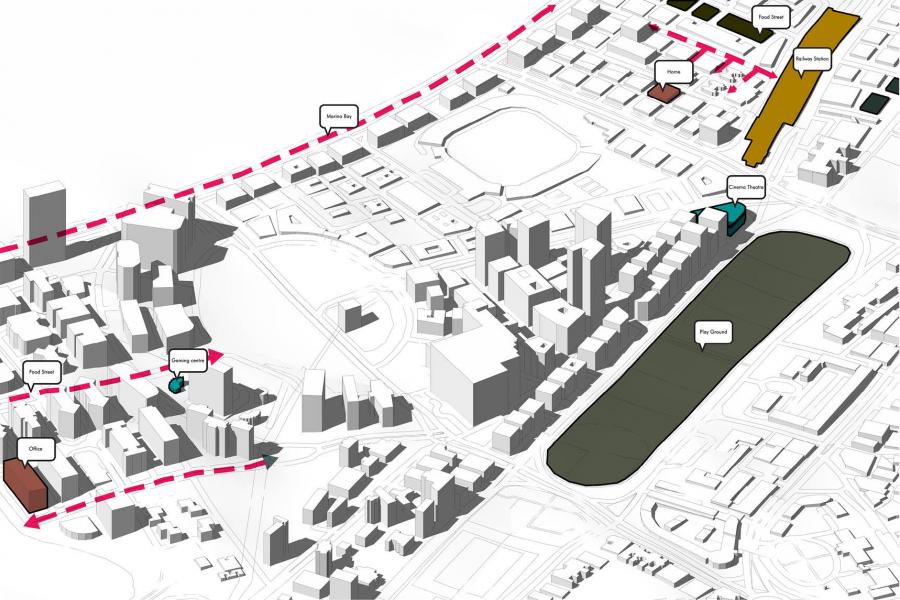
To understand this, I mapped my daily life in two cities. In India, streets, markets, cafes, and parks stayed active after work and into the night. In Winnipeg, many streets empty out after 6 p.m., and winter makes outdoor life even smaller. That difference led me to ask what creates a city that feels alive all the time, and why some cities do not.
This led me to Flatland by Edwin A. Abbott and Invisible Cities by Italo Calvino. Flatland helped me understand Winnipeg as a city where life often feels trapped in one pattern, while Invisible Cities showed me that a city is not only made of buildings and streets, but also of memory, desire, imagination, and feeling. Together, these books gave language to what I was already sensing.
I use the word Flatland to describe Winnipeg’s downtown as socially, visually, politically, and experientially flat. Downtown often feels empty after office hours, and public life is broken into short time blocks instead of being continuous. Many spaces feel controlled, repetitive, and conditional. Graham Avenue shows this clearly: it has long functioned as a transit corridor, and even the recent public activity there still feels temporary and partial.
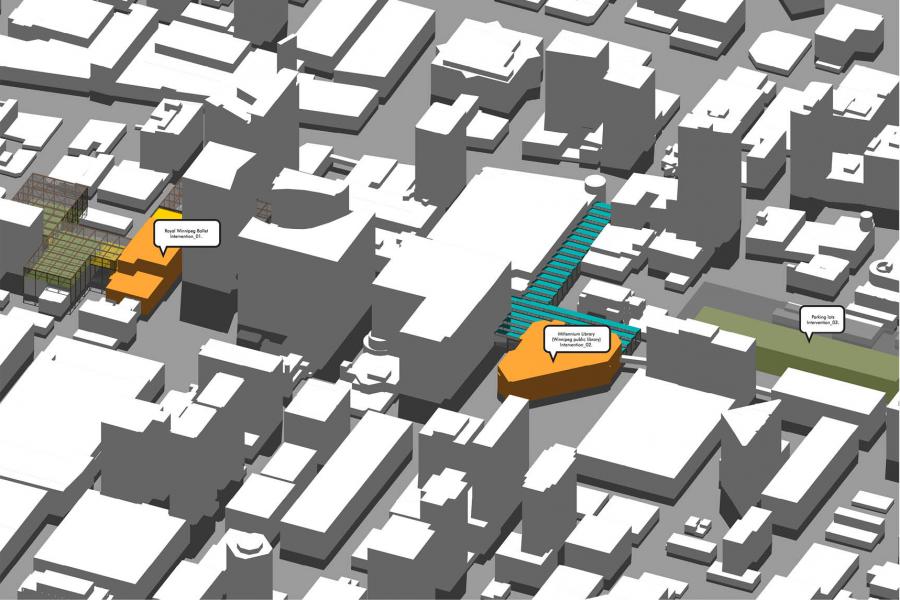
This thesis reinterprets speculative architectural ideas from the 1960s and 1970s through the present-day realities of Winnipeg. Drawing from Archi gram, Cedric Price, and the Situationist International, the project explores how flexible, adaptive, and user-driven urban systems can respond to a city shaped by winter, fragmentation, and underused public space. Centered on Graham Avenue, it responds to existing infrastructure, transit routes, adjacent buildings, event culture, and the city’s everyday constraints.
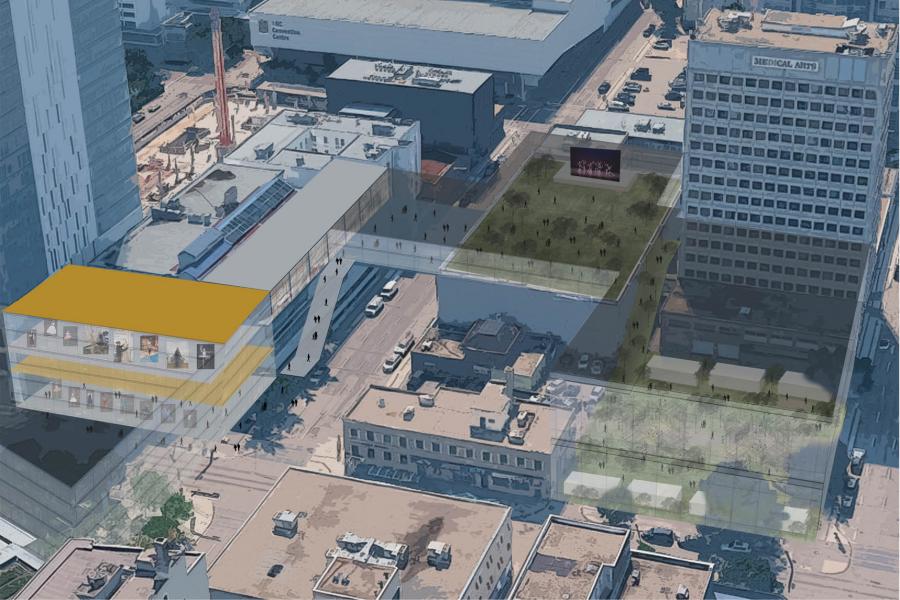
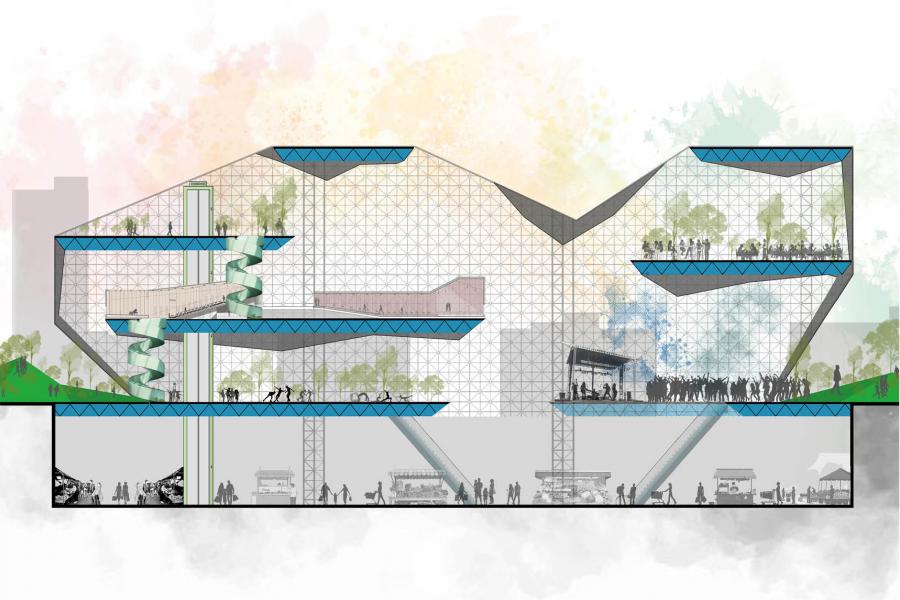
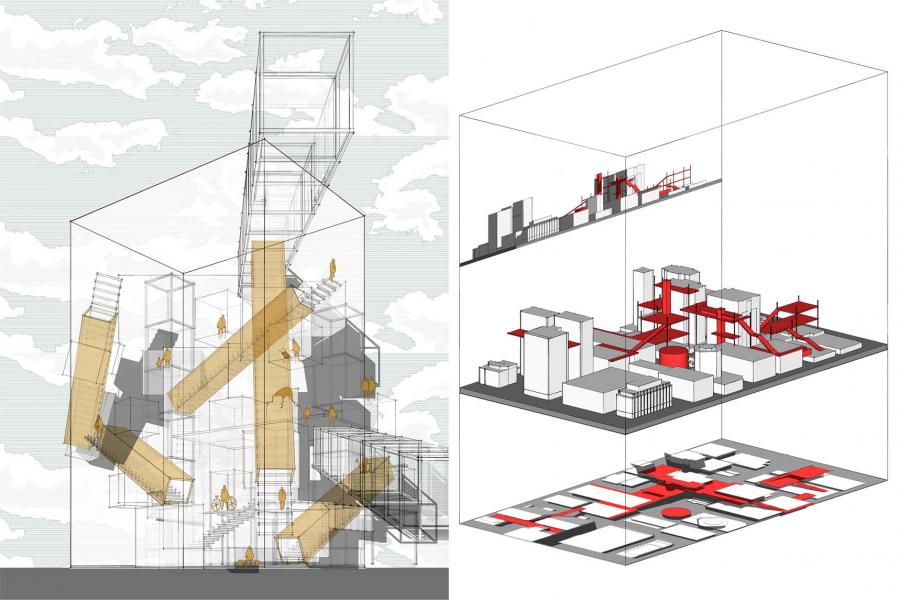
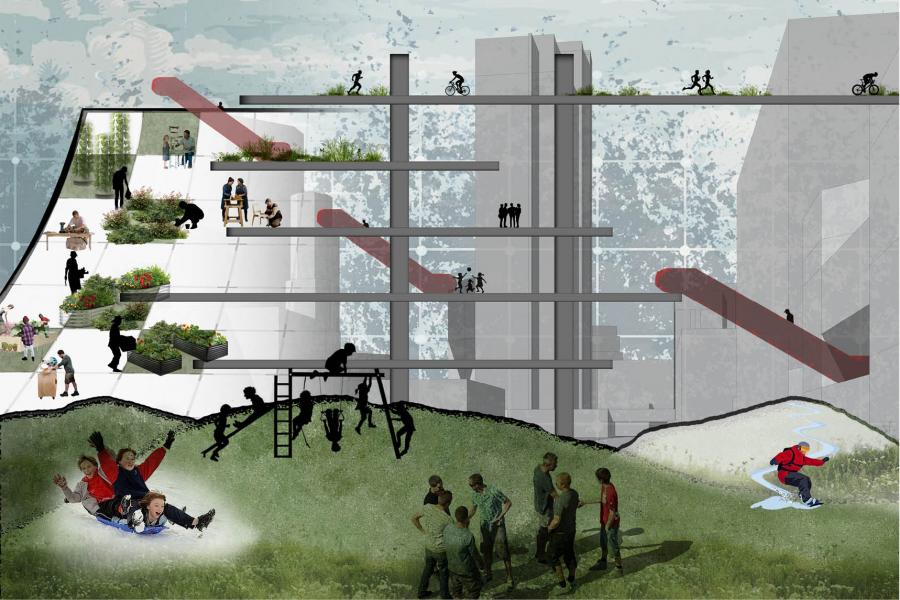
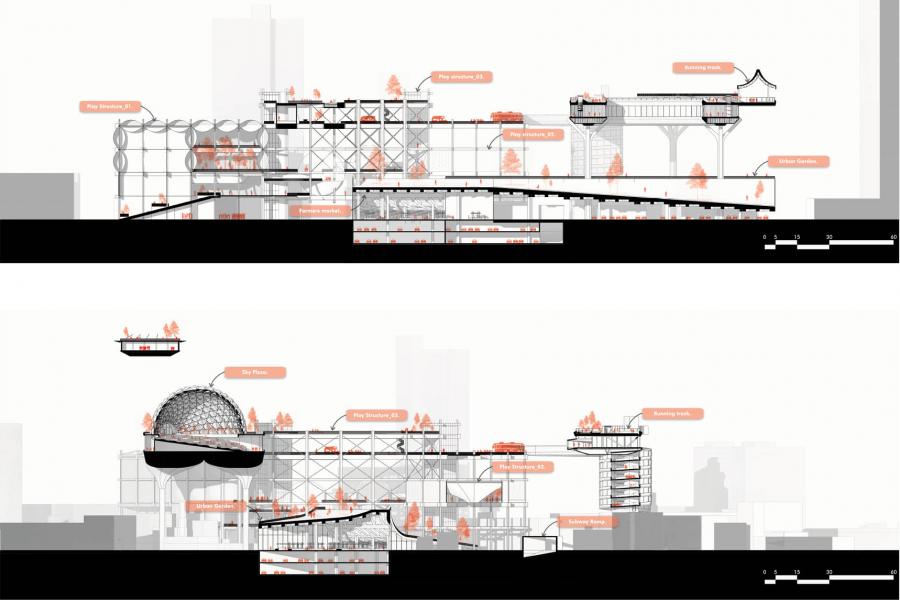
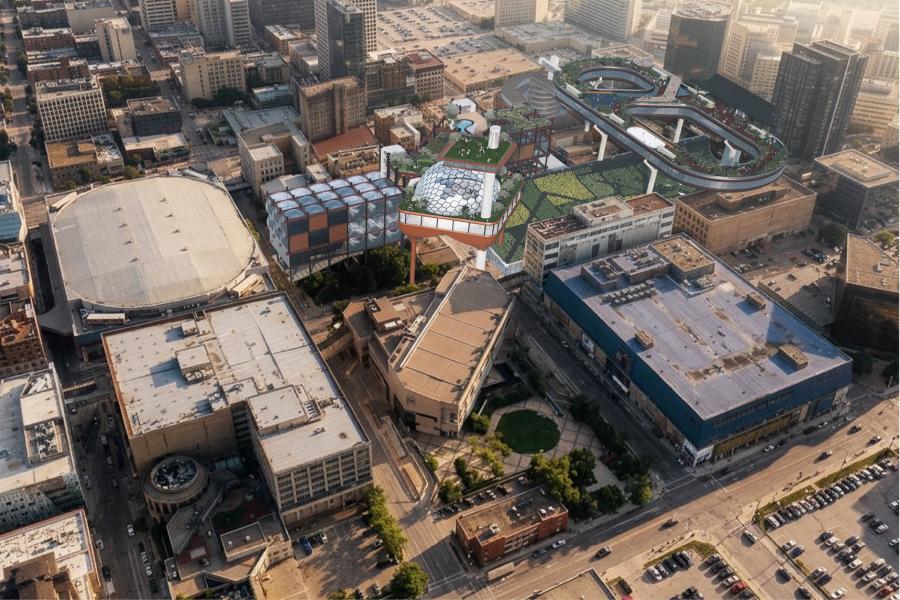
In response, the project proposes an elevated, layered urban framework that thickens the city’s surface rather than replacing it. It separates long-life structure from short-life programs, allowing the base to remain permanent while the uses above and within it change over time. Inspired by New Babylon, Plug-in City, and Fun Palace, the project turns Graham Avenue into a multi-dimensional public common for movement, gathering, play, food production, and culture.
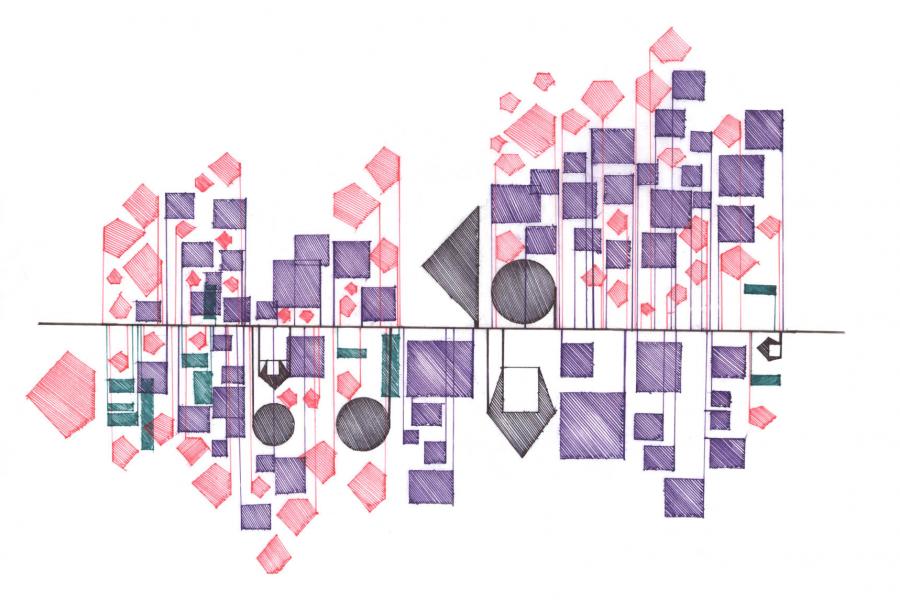
At its core, the thesis asks what happens when Winnipeg is understood not as a flat surface, but as a multi-dimensional city made of time, memory, movement, and shared life. Rather than treating flatness as a limitation, the project reframes it as an opportunity to build a more active, resilient, and continuously inhabited urban life.