
Kayla Manalo
Advisor: Terri Fuglem
RELEARNING THE HOUSE:
MEMORY, DISTORTION, AND SPATIAL HABIT
Is there beauty in feeling lost or disoriented? Architecture is fundamentally a system of trained behaviors, shaped by the repeated spatial patterns of the suburban domestic environment. We navigate the house through habits, assuming the domestic environment is a stable, neutral backdrop to our lives. This thesis investigates what happens when habit fails, and the rules of a space shift just enough to turn a sanctuary into an uncanny landscape.
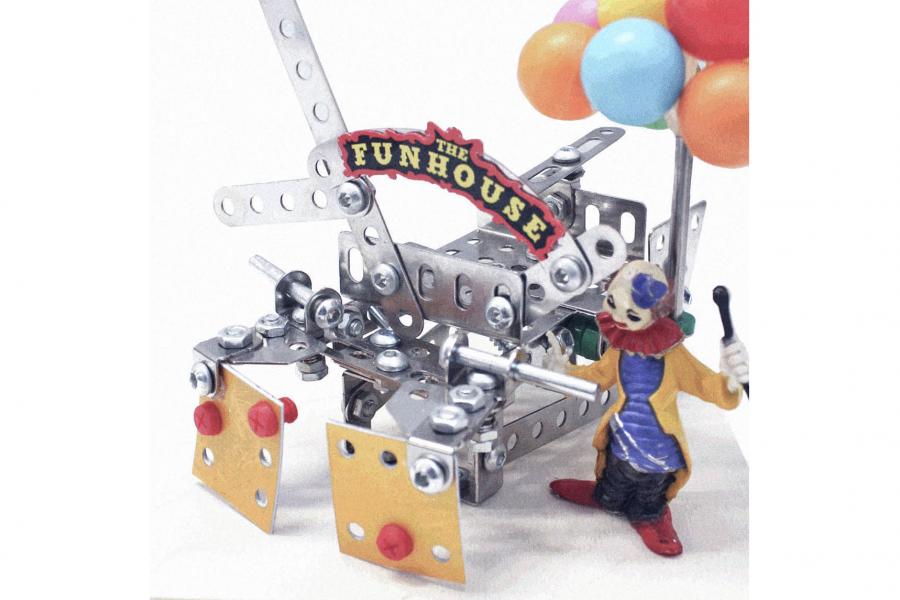
The project operates on the idea that architectural comfort is not a neutral state, but a conditioned response built on repetition and habit. By examining amusement as a framework for spatial control, the work explores how environments can deliberately manufacture belief through emotional choreography and hidden infrastructure. In this context, nostalgia is tested as an unstable feeling that becomes unsettling when space is reconstructed through the fragments of memory.
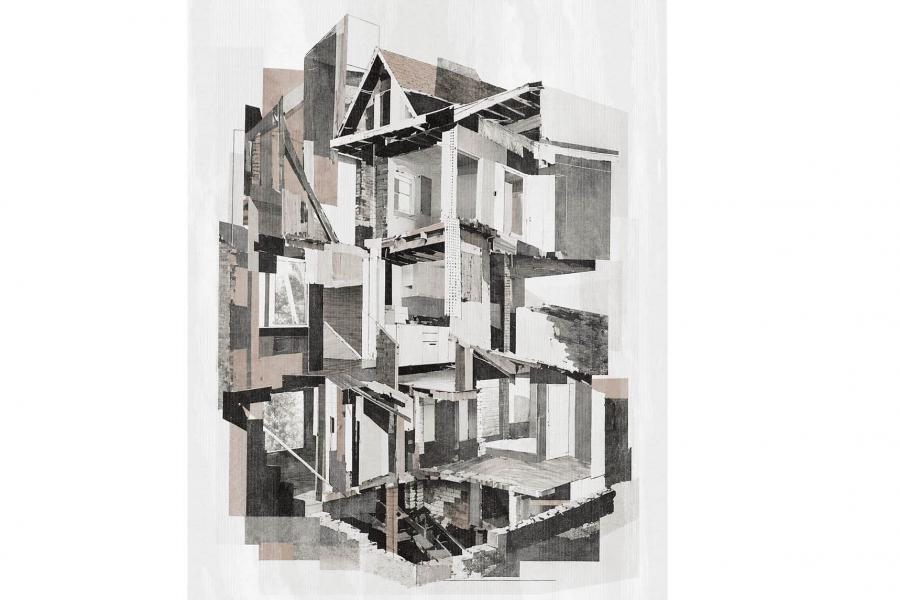
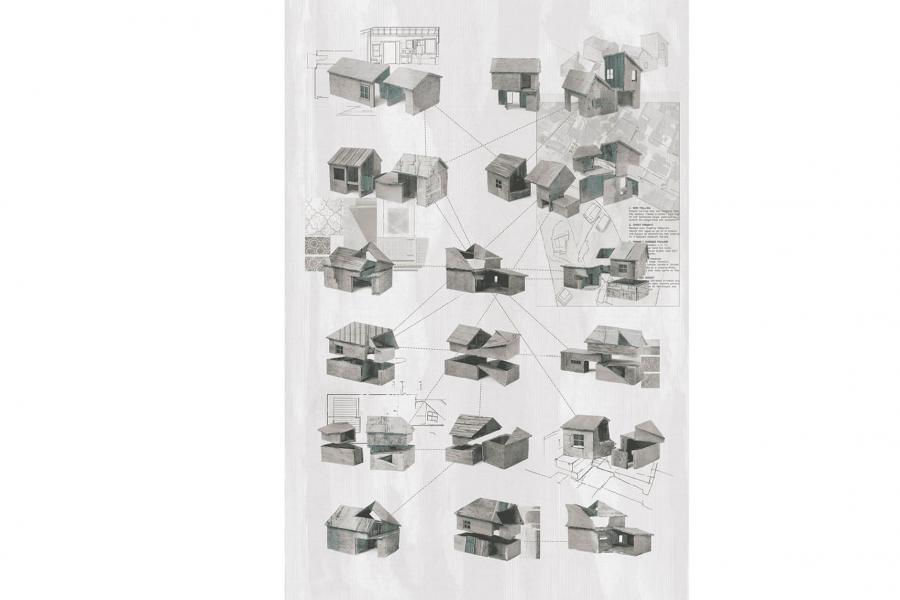
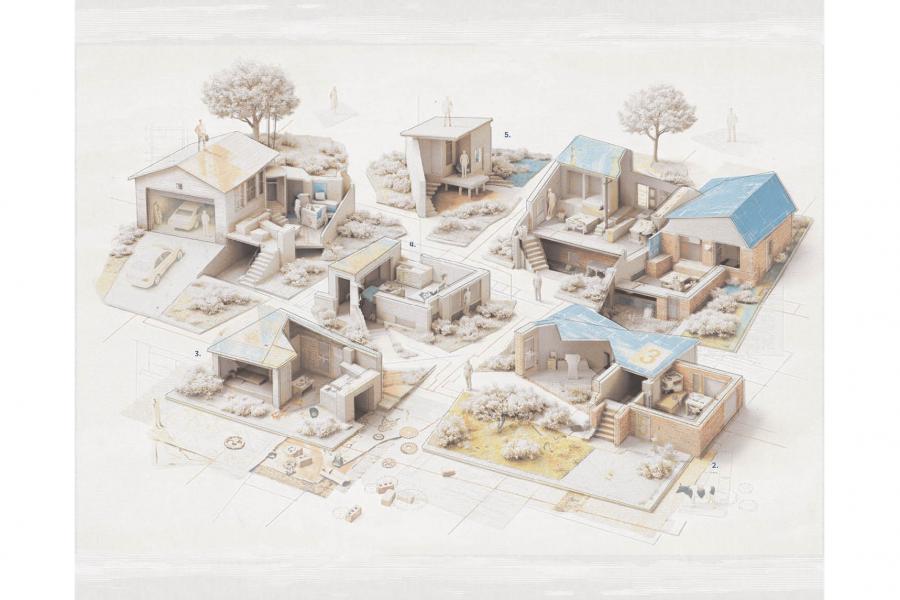
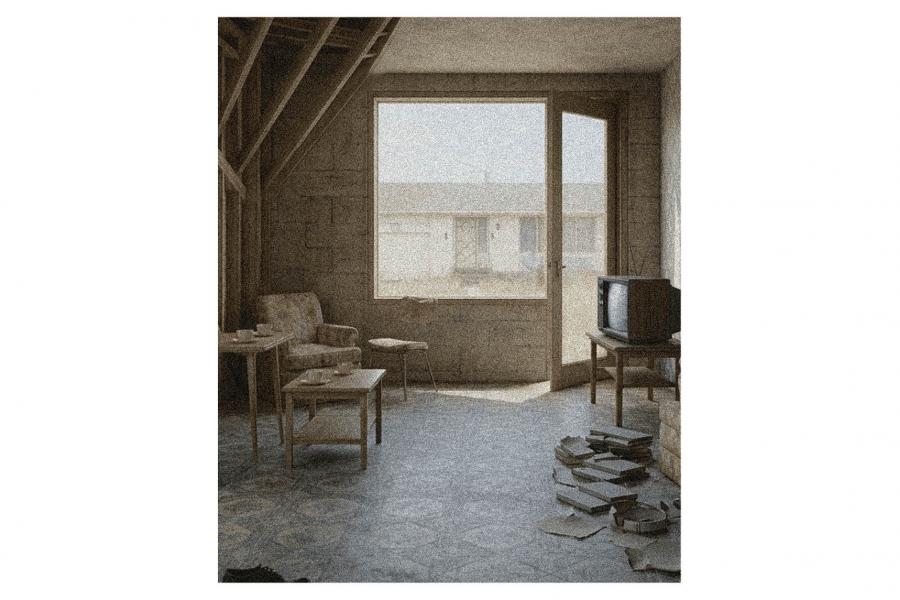
These concepts are physically tested through a series of pavilions in the childhood park, where the domestic house is intentionally broken apart into fragments. These structures remain legible and appear normal from the outside, yet they do not behave as the body expects. Within the primary pavilion, the scene feels inhabited yet frozen in time. It utilizes shifts in floor levels and offset thresholds to force a constant recalibration of movement.
This thesis argues that the uncanny is most potent when it emerges directly from the mundane. By introducing friction and delay into everyday interactions, the project reveals that intuitive space is actually something we have learned. It challenges the observer to become disoriented within the spaces they think they understand, reframing the house as a site where memory, distortion, and spatial habits converge.