
Brigette Pacholok
Advisor: Carlos Rueda
IN THE FLESH: EMBODIED MAKING IN THE EXCHANGE
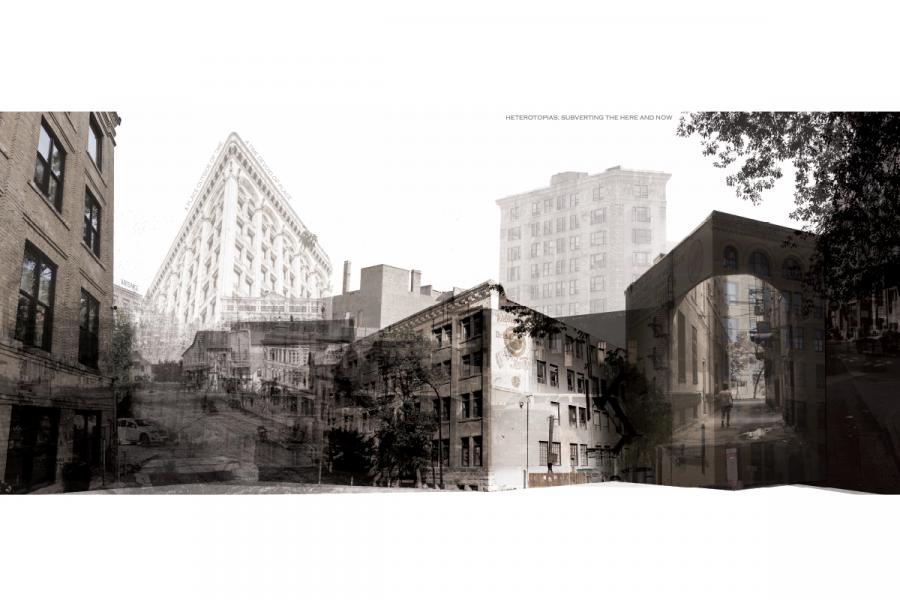
Architecture is intertwined with our very being. The spaces we inhabit become an indivisible part of us, just as we become part of them. This thesis positions the external world as inextricably bound with our internal existence; it claims that trying to separate the two is an unachievable feat, an abstraction. In The Visible and the Invisible, Maurice Merleau-Ponty states, “My body is made of the same flesh as the world; and this flesh of my body is shared by the world.”1 Essentially, we do not stand apart from reality; we are not merely an audience watching the world go by, we are made of it, just as it is made of us. Based on this notion, the thesis positions architecture as a morphing and malleable body composed of flesh and bone. It understands the built world as a porous cavity that holds memory, influences emotion, and filters and mediates experience, much like we do.
With this theoretical foundation in mind, the thesis asks: what allows certain spaces to draw us into states of intimacy and enmeshment while others leave us feeling profoundly distant and alienated? This question naturally leads to the senses, which serve as the primary thread between self and world. Precisely, it is through the act of sensing that we bring our environments into ourselves. We refract and distort external images, sounds, and feelings through the interiorities of our sensing bodies, essentially allowing the external to become internal. Similarly, it is also through the senses that we blur into other individuals. This simple but destabilizing idea is explored through the concept of intersubjectivity, which focuses on experience that is collectively formed, rather than shaped in isolation.
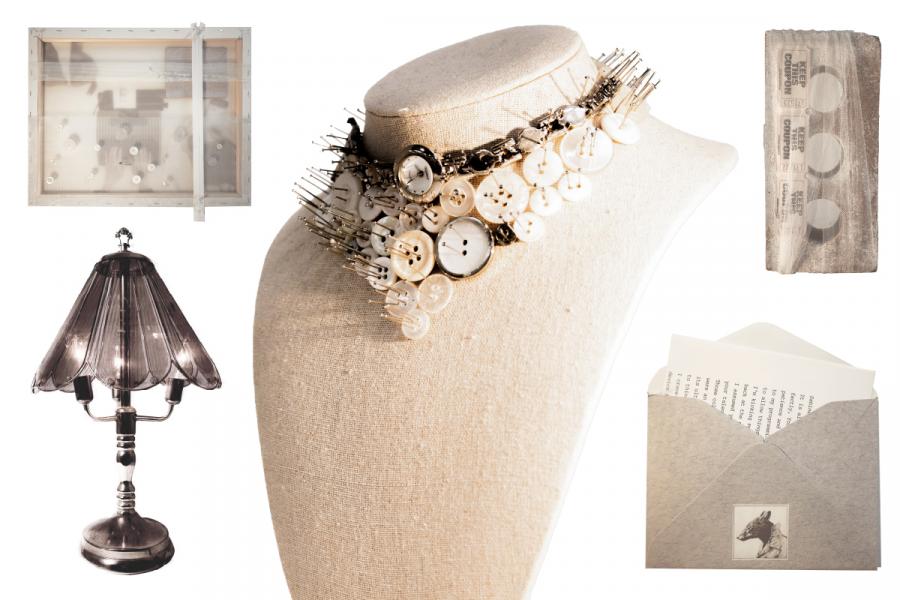
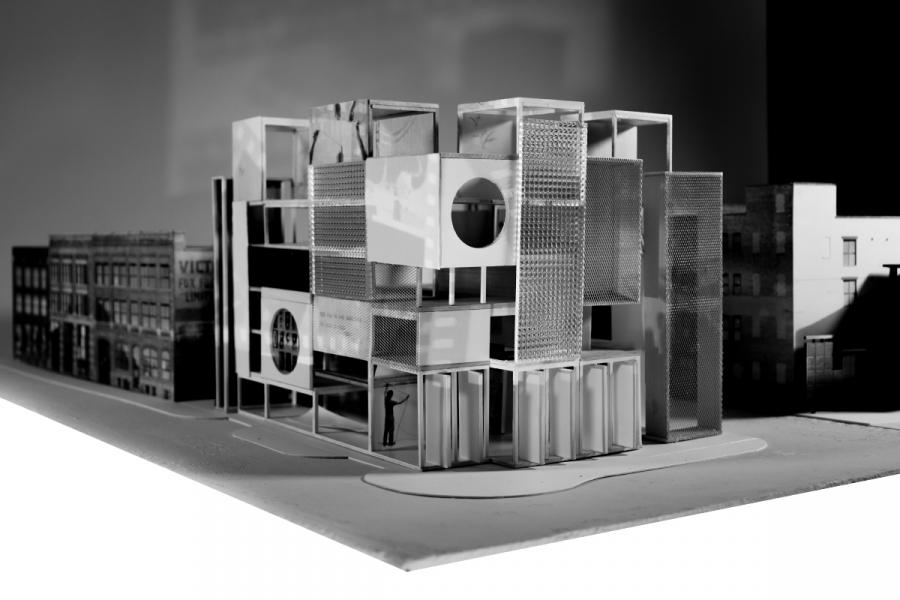
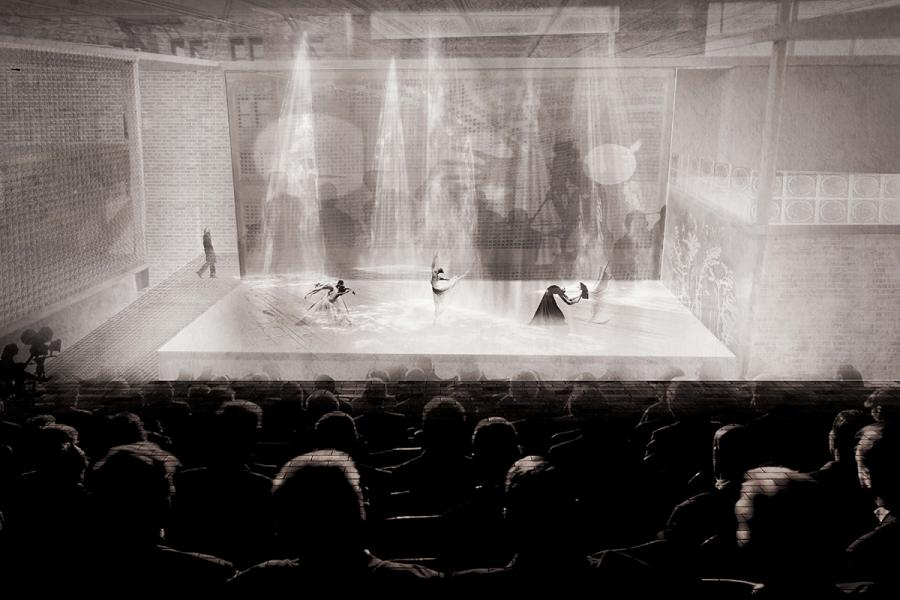
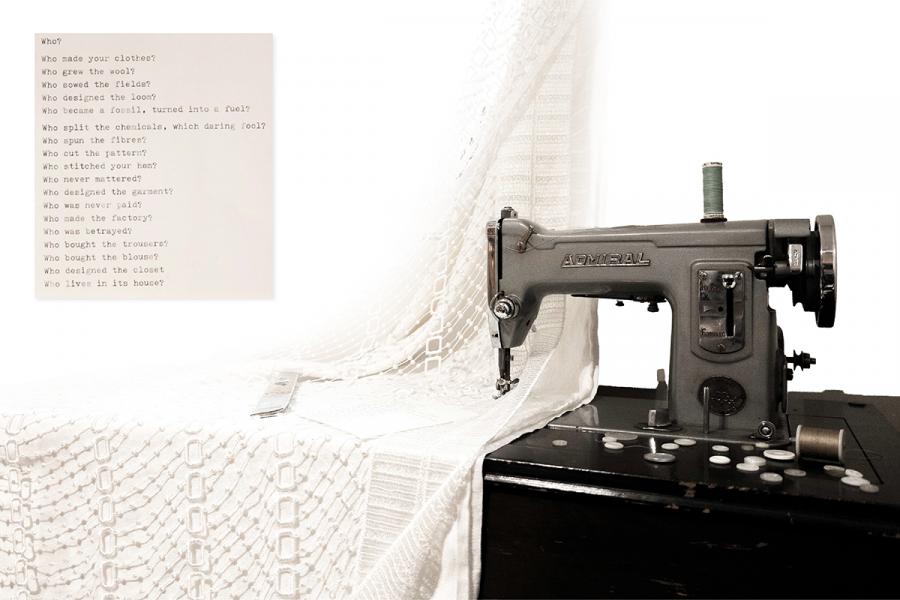
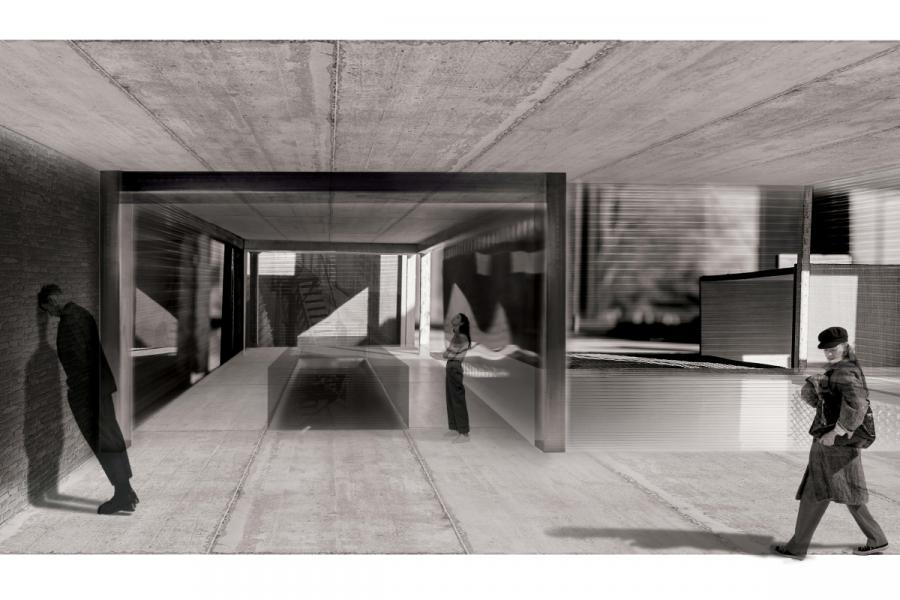
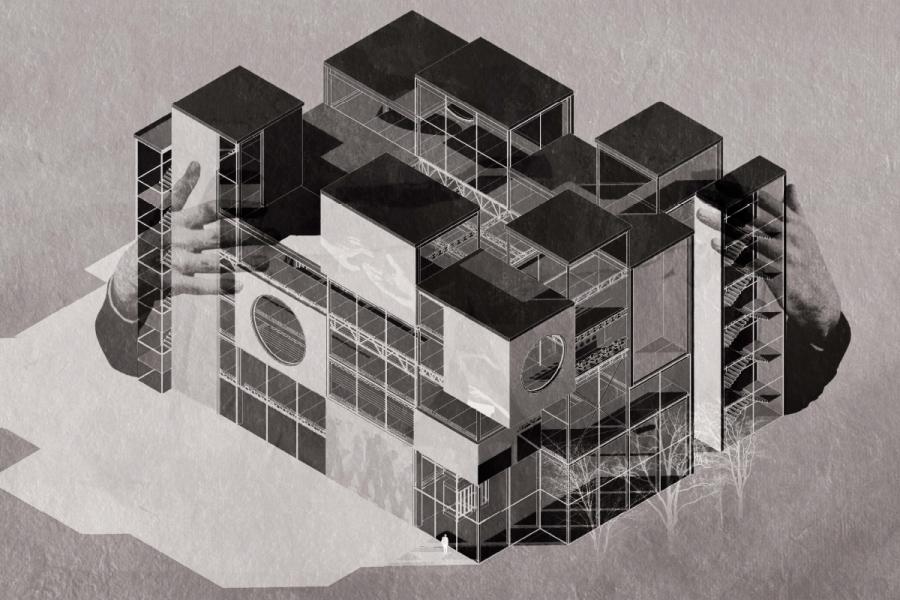
In response to the idea of intersubjectivity, the project proposes a hybrid interdisciplinary arts institution centered on collective making, artistic translation, and shared sensory experience. It houses textiles, photography, film, literature, visual art, woodworking, metalworking, and performance. Intentionally, these modes of making are placed in relation to one another so they can overlap, influence each other, and be experienced reciprocally. In this way, the project uses art to reveal how people are shaped by their environments and by one another simultaneously, making their interrelation perceptible through shared sensory and emotional experience.
1 Maurice Merleau-Ponty, The Visible and the Invisible, ed. Claude Lefort, trans. Alphonso Lingis (Evanston, IL: Northwestern University Press, 1968).
Bibliography
Merleau-Ponty, Maurice. The Visible and the Invisible. Edited by Claude Lefort. Translated by Alphonso Lingis. Evanston, IL: Northwestern University Press, 1968.