
Alieha Pascua
Advisor: Eduardo Aquino
BAYANIHAN: Reclaiming Filipino Identity through Educational Spaces
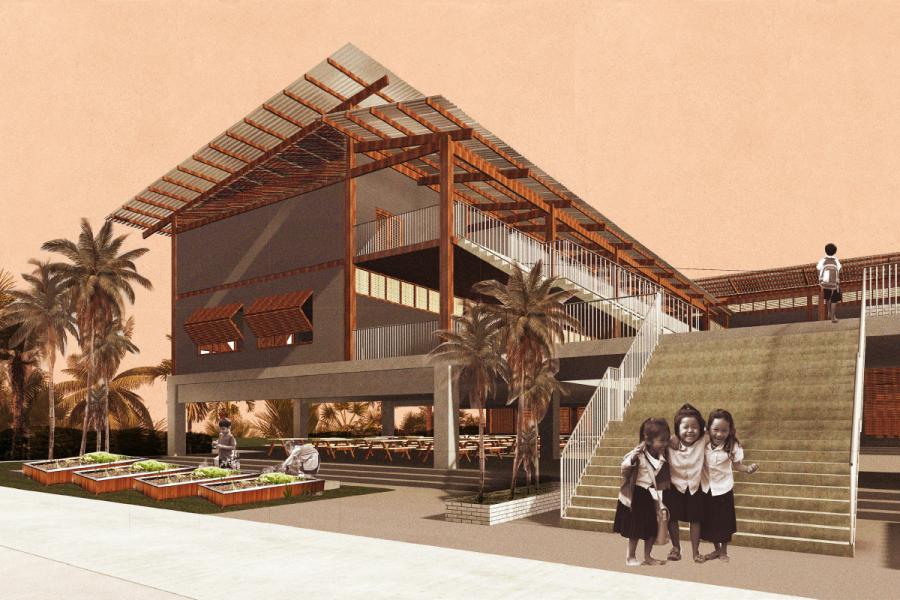
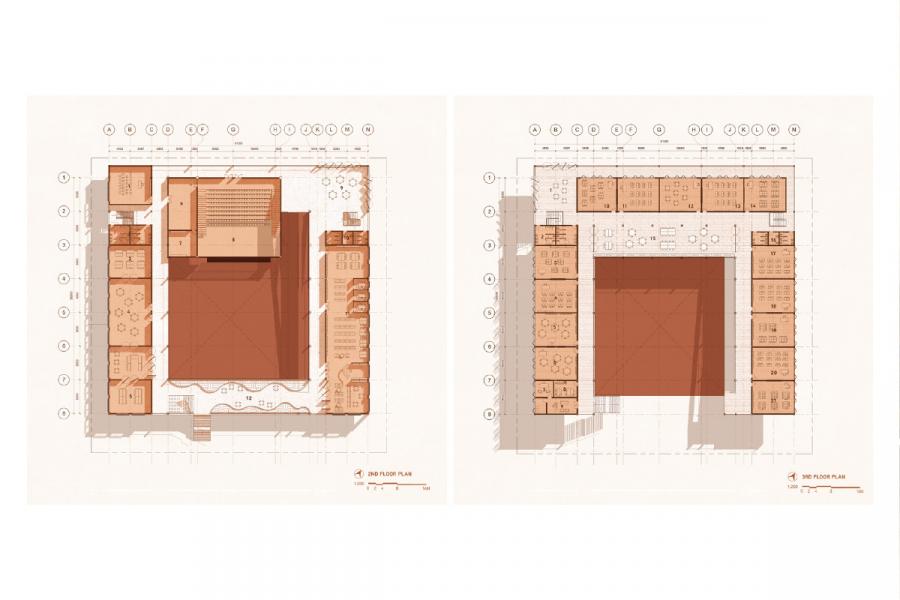
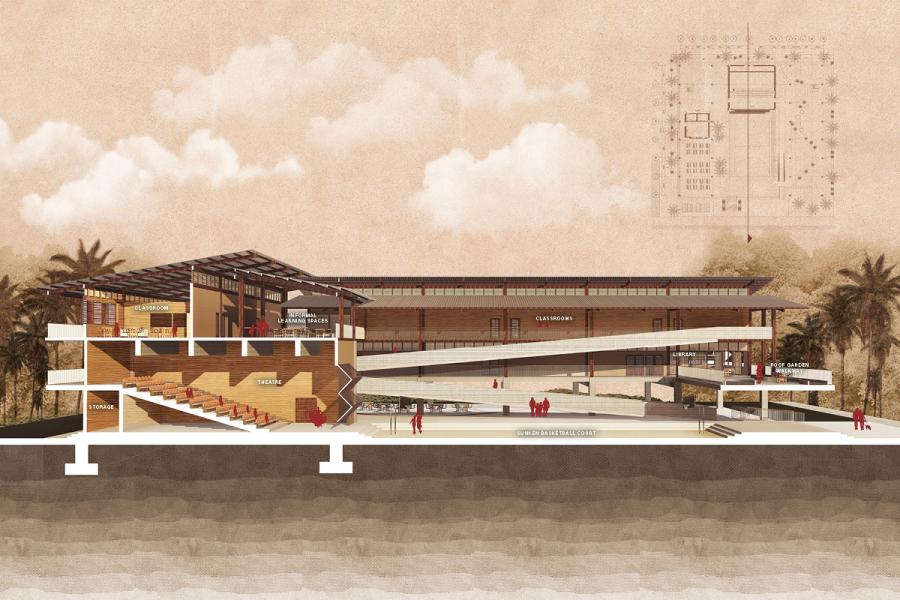
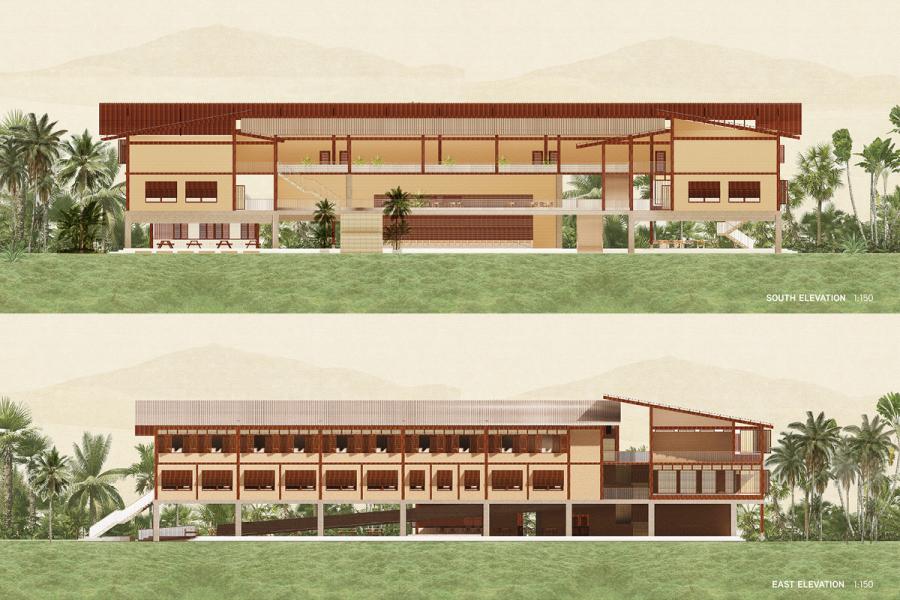
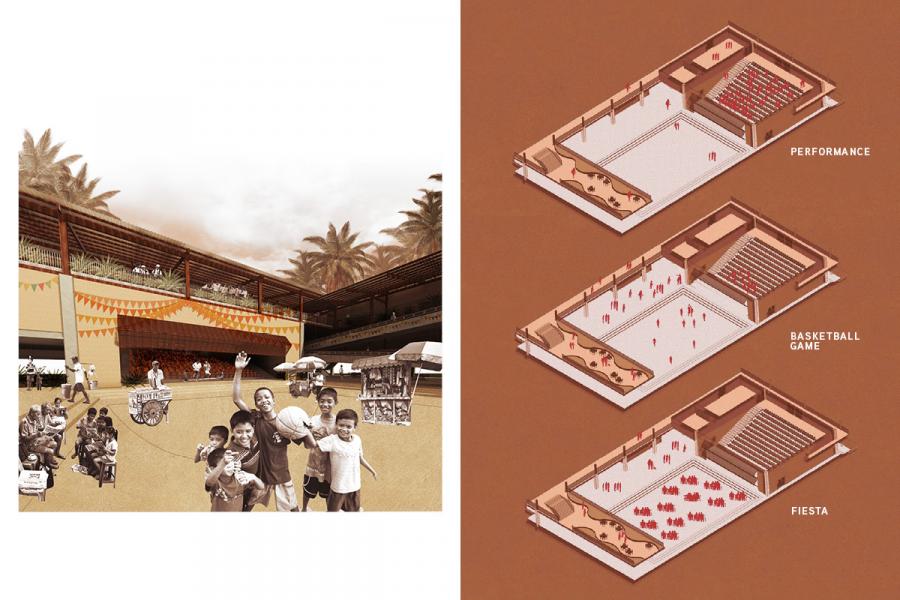
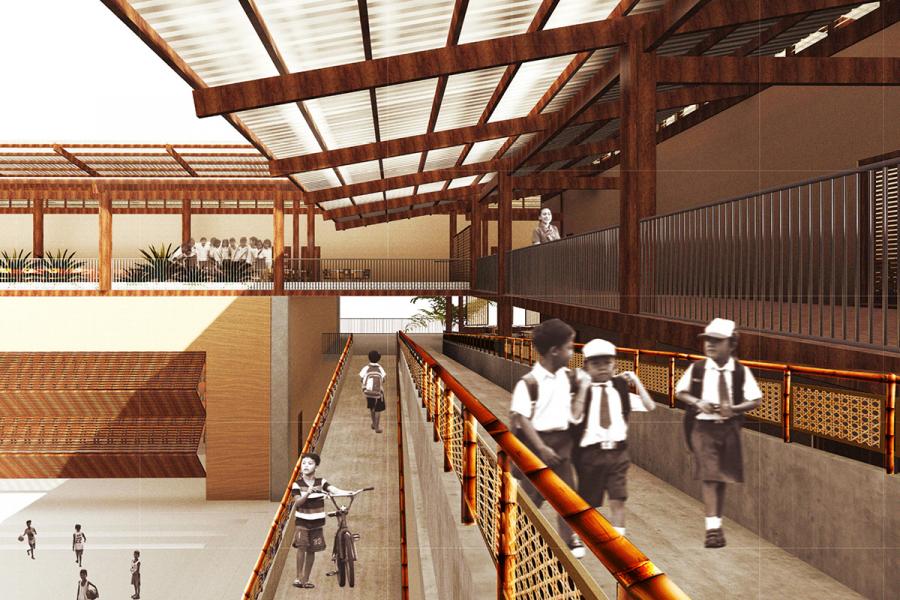
Education is essential to a better future. But what if a learning environment becomes a hindrance to a student’s education? A lack of equal access to education in the Philippines raises questions about how architecture can be a tool in providing educational spaces for marginalized communities, particularly in flood-prone areas. Guided by the knowledge found in traditional and vernacular architecture, this thesis aims to discover the roots of the bahay kubo, or nipa hut, and its potential to redefine contemporary architecture. Though seemingly simple, the values of community, adaptability, and sustainability stand the test of time in this indigenous structure, leading to a progressive prototype of a school.
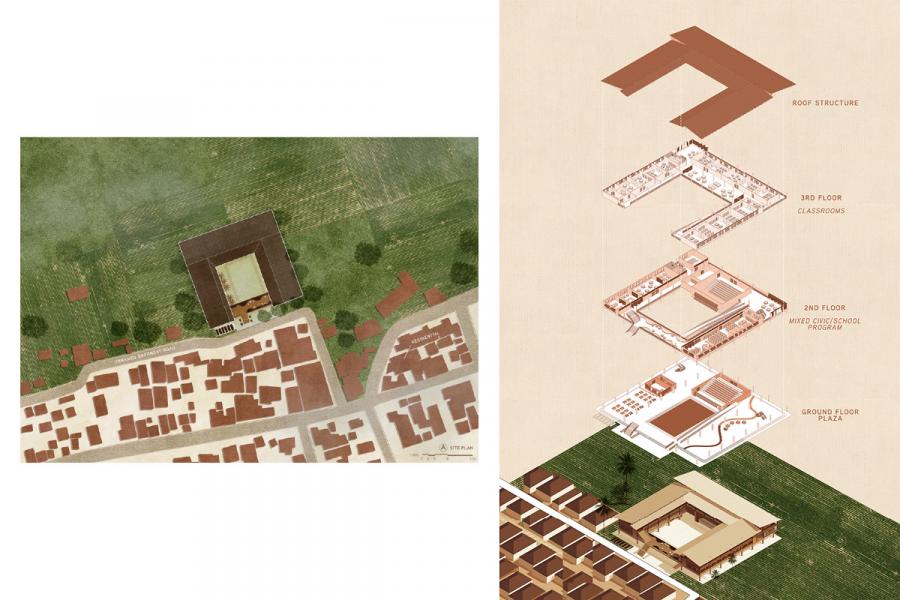
Acknowledging the long-standing neglect of school infrastructures in the Philippines and the severity of climate conditions, lead to an urgency to rethink how these structures are built. Proposing a redesign of Frances Elementary School in Calumpit, Bulacan, addresses the distraught caused by recent flooding where many classrooms were submerged and ceilings had collapsed.1 This vulnerability becomes the catalyst of this project to implement traditional vernacular design principles and sustainable methods of construction, as a demonstration of resilience.
Further analyzing the history of the Philippines and its socio-cultural context, informs the design process and how the influence of colonization continues to affect its architecture today. Exploring the use of local materials and carefully noticing the regional differences of form and craftsmanship embodied in the bahay kubo, identifies significant narratives that re-examine what is genuinely Filipino to reclaim the identity of its buildings.
Often looking ahead, we seldom consider the past when envisioning the future. What can our ancestors teach us? Is there value in traditional knowledge? With these interests, this project aims to explore issues regarding educational inequality, environmental matters, and reclaiming Filipino identity through architecture. Driven by the desire to discover my ancestral roots, this thesis delves into the deeper appreciation of the people that came before, through the building of an educational space. Providing a place to educate future generations, carrying the resilience of our ancestors, reflected in the environment they are taught in. Honoring the stories of the past from its humble beginnings, can we then begin a future dedicated to the reclamation of Filipino identity.
1 GMA Integrated News. “Floods, Lack of Equipment in Some Schools Ahead of Balik Eskwela 2025.” GMA News Online, June 15, 2025. https://www.gmanetwork.com/news/topstories/nation/949483/floods-lack-of-equipment-in-some-schools-ahead-of-balik-eskwela-2025/story/.