
Dharanidharan Subramaniam
Advisor: Shawn Bailey
BEYOND THE SCREEN: Where Filmmaking meets people
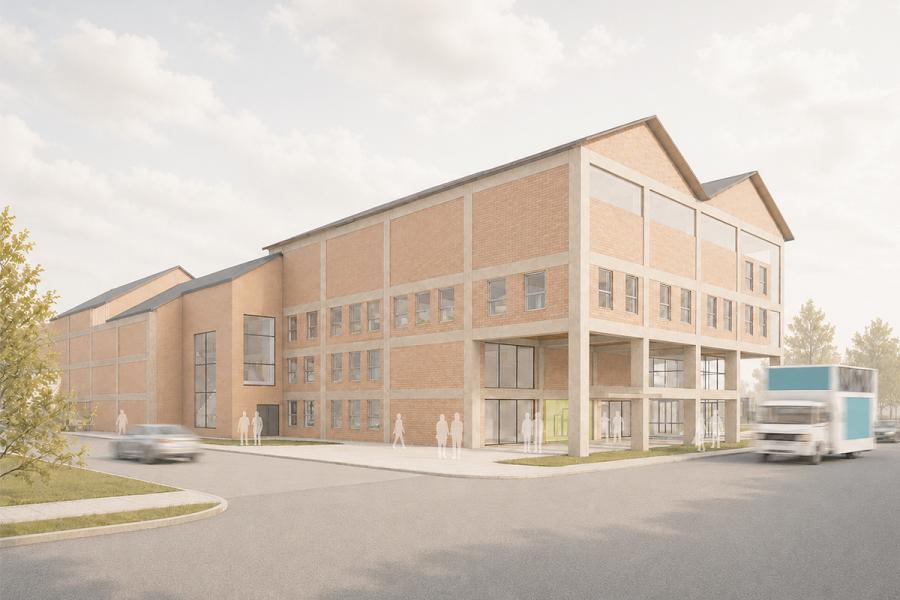
Beyond the Screen: Where Filmmaking Meets People explores how the cinematic technique of breaking the fourth wall can be translated into architecture to create a stronger relationship between the public, city and the process of filmmaking. Located at 5 Sutherland Avenue in Winnipeg’s North Point Douglas neighbourhood, the thesis reimagines a former industrial timber mill as a film school that opens selected moments of film production, learning, screening, and discussion to the public.
The project began from a fascination with cinema and its ability to shape perception, memory, movement, and emotion. Through studies of framing, sequencing, colour, atmosphere, montage, and direct audience address, the thesis investigates how cinematic ideas can inform spatial experience. Rather than understanding architecture as a static object, the project approaches the building as a sequence of scenes that unfold through movement, time, and encounter.
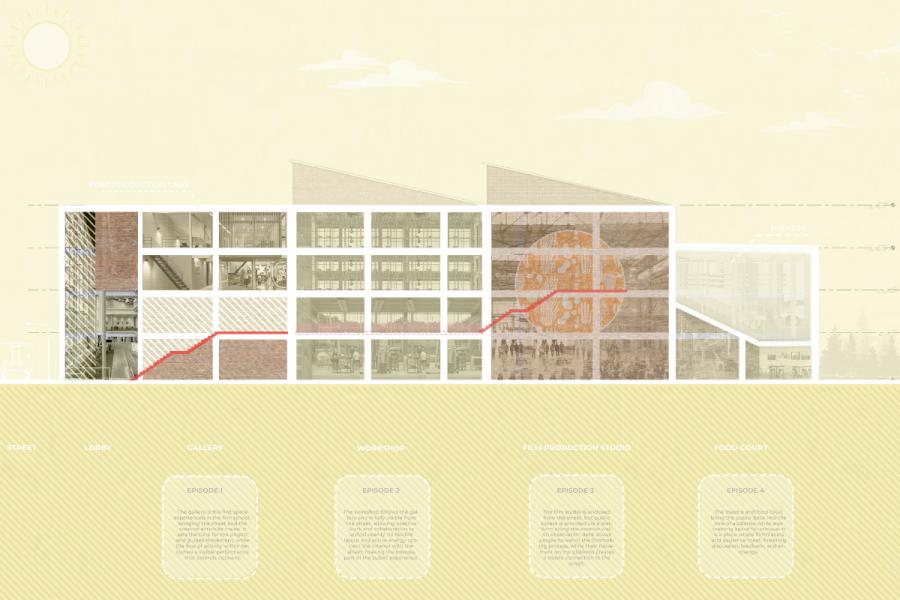
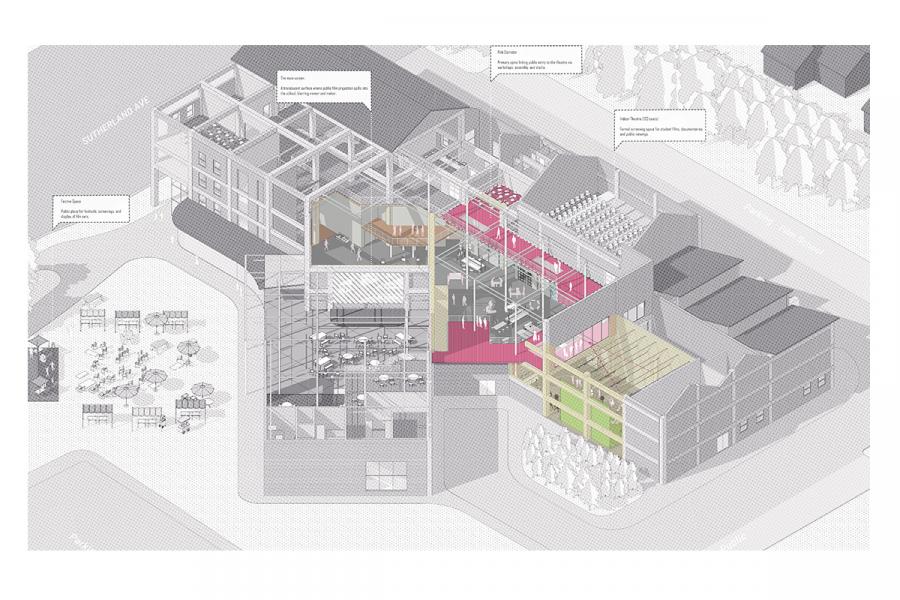
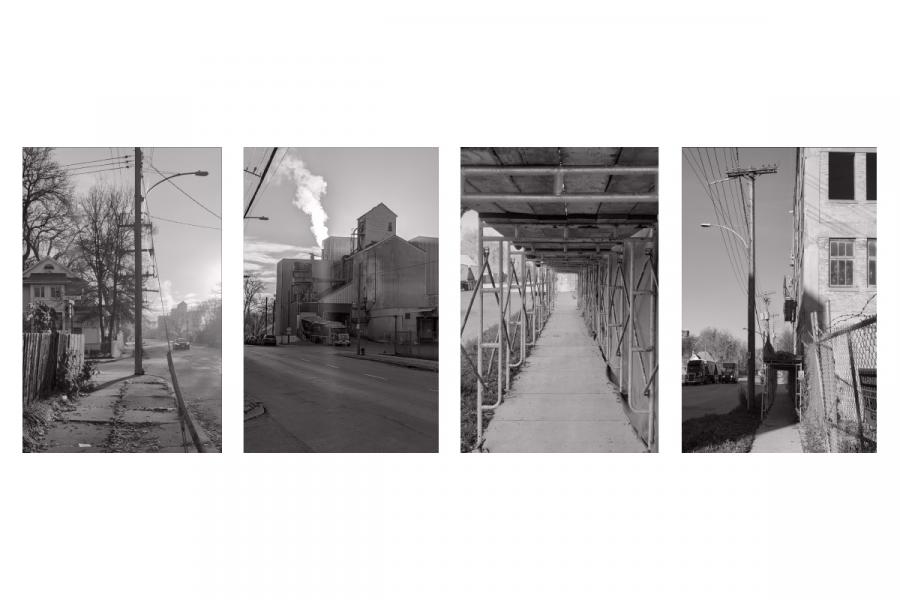
The existing site presented a condition of disconnection. Although positioned near the Red River, residential neighbourhoods, industrial zones, and recreational landscapes, the building’s edge felt closed and difficult to access from the sidewalk. This urban condition became central to the thesis. The design responds by extending public movement into the site, transforming the boundary between street and building into a more open and inviting threshold.
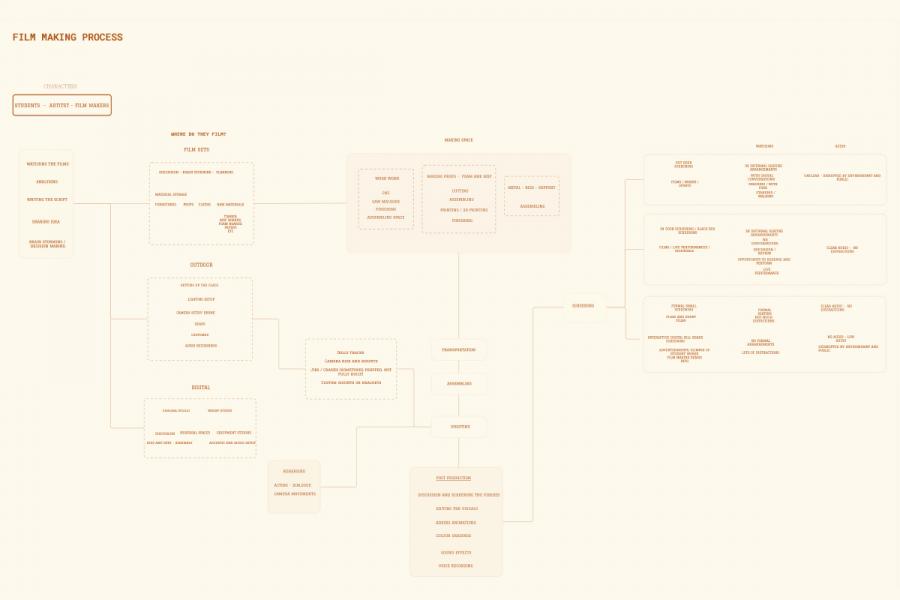
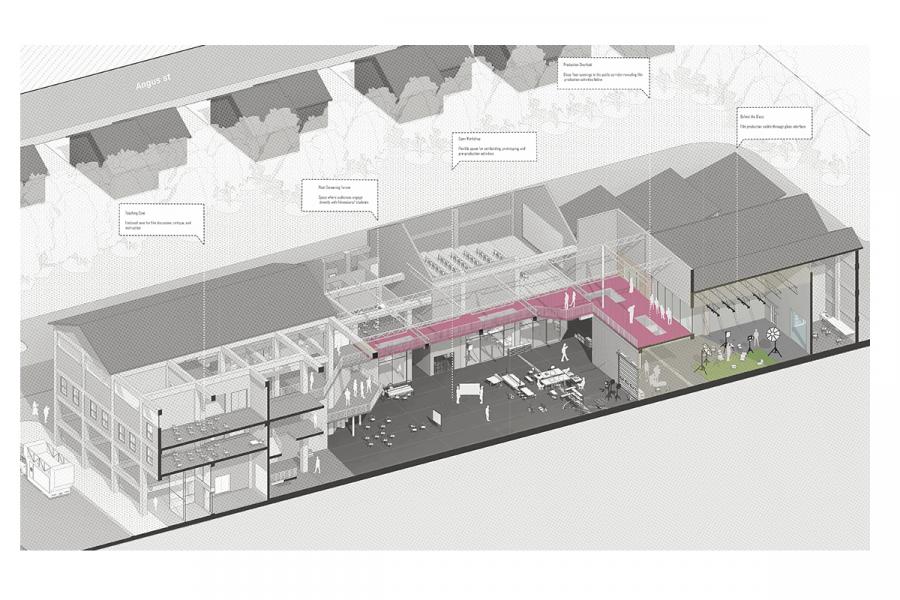
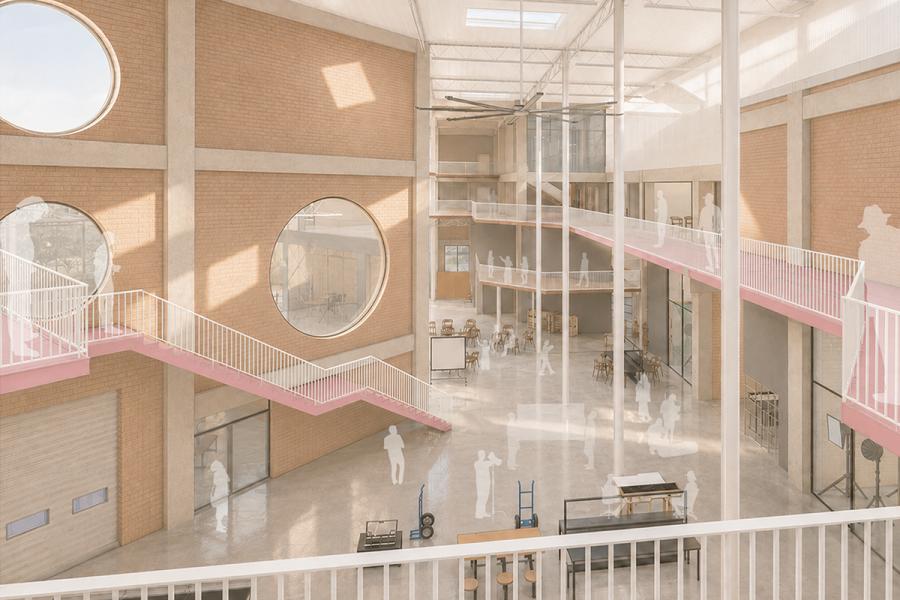
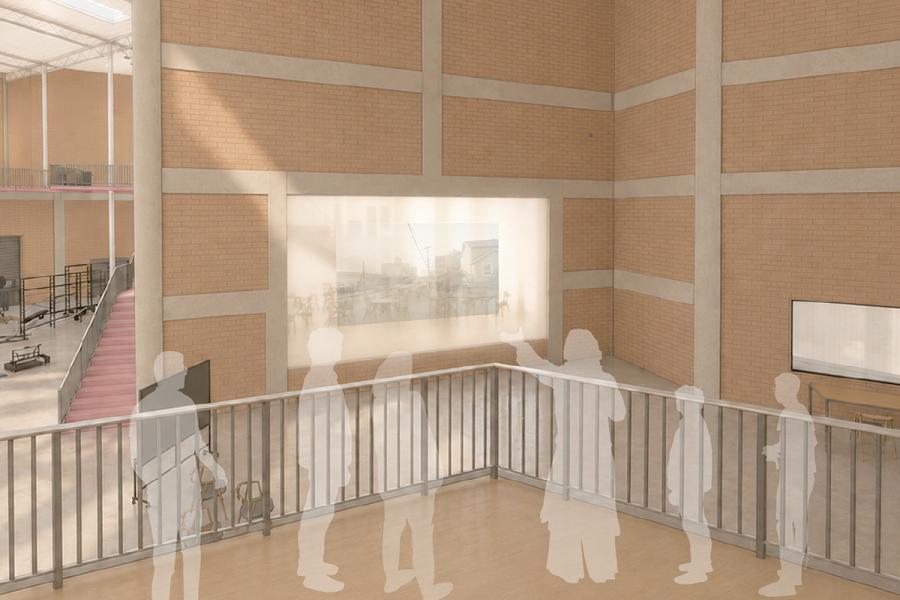
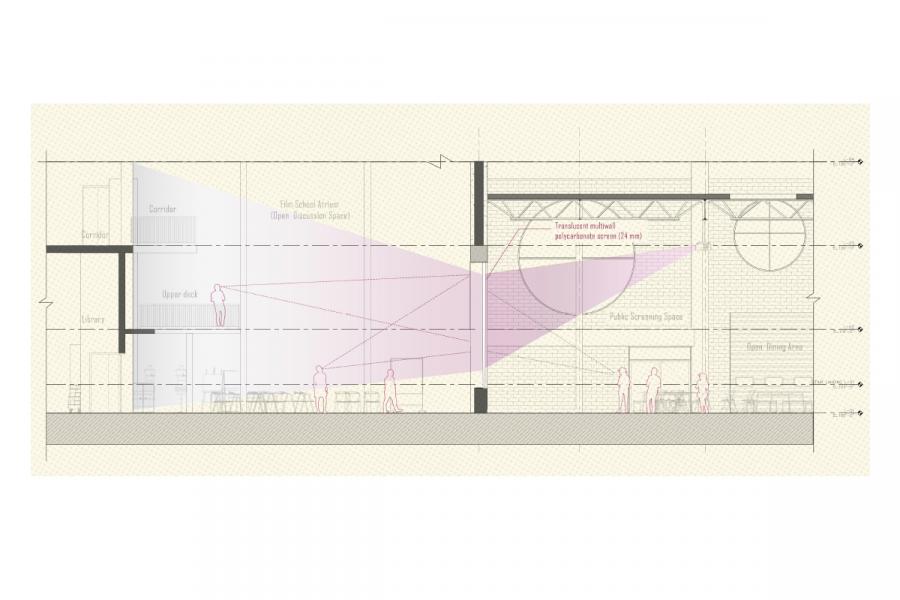
Within the film school, the idea of breaking the fourth wall is not translated as complete transparency. Instead, the project uses partial visibility, framed views, translucent surfaces, public routes, observation decks, screening spaces, and shared gathering areas to create moments of curiosity and awareness. The public does not see everything at once; rather, they encounter fragments of filmmaking as they move through the project. Workshops, pre-production spaces, informal screenings, discussion areas, and observation points allow visitors to sense the life of the building without interrupting the privacy and control required for production.
The project positions filmmaking as both an educational process and a public cultural activity. Screening becomes a civic threshold, the atrium becomes a shared production space, and the former industrial shell becomes a container for creative transformation. By shifting the site from material production to cultural production, the thesis explores how architecture can reveal hidden processes, invite participation, and create moments where observer and performer, public and institution, city and cinema begin to overlap.