
Niloofar Taheri
Advisor: Lancelot Coar
Biomes of Belonging: Cultivating Community Through Rituals Shaped by Climate
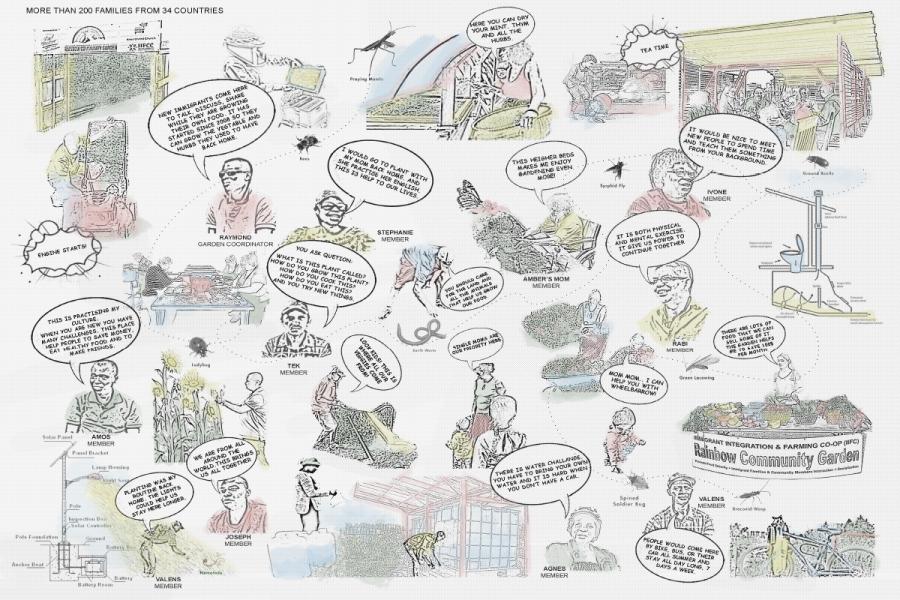
This thesis begins with a question from Robin Wall Kimmerer: how can one belong to a land one’s ancestors were not born to?1 It reframes architecture as a practice of belonging, care, and attentive listening to the land, emphasizing relationships between people, climate, culture, and place. For many newly arrived immigrants, belonging does not occur immediately; it develops gradually through engagement with language, climate, ritual, memory, food, gathering, and everyday encounters with land and community. Drawing from Indigenous teachings such as the Lakota concept of Woniya Wakan—the holy air—as well as phenomenological thinkers like Maurice Merleau-Ponty and Juhani Pallasmaa, the body is understood as the primary site through which environment and architecture are perceived.2 Within this framework, architecture becomes a means of welcome and orientation for those entering unfamiliar contexts, offering pathways toward comfort and connection. Through shared environmental experiences, belonging is imagined as an ongoing relationship between people and land. Comfort, therefore, is not a fixed indoor condition, but a continuous exchange between body, building, and environment.
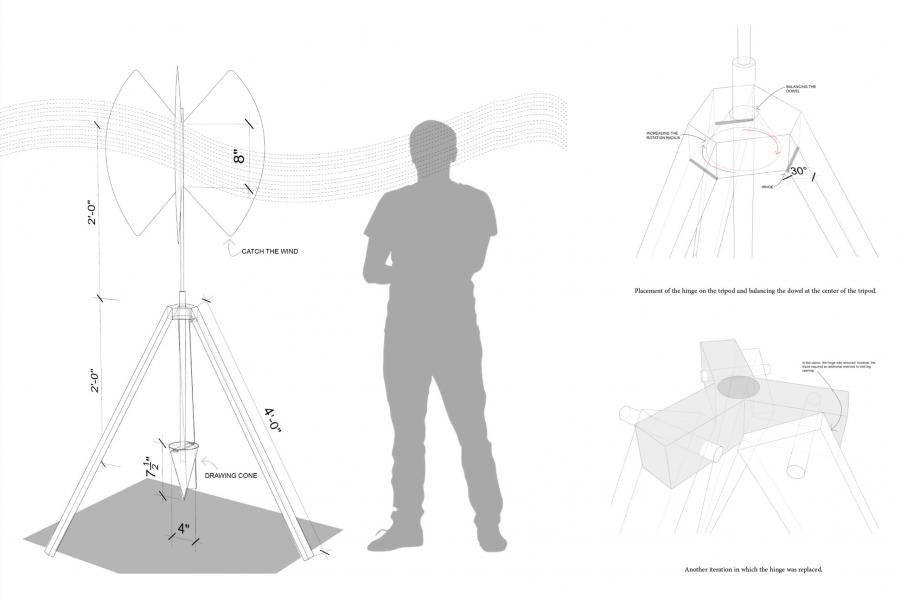
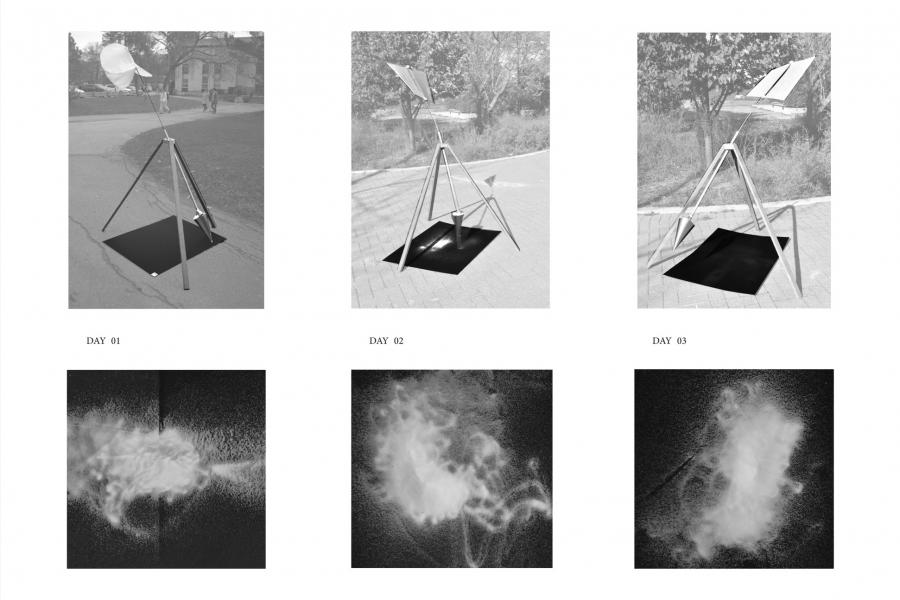
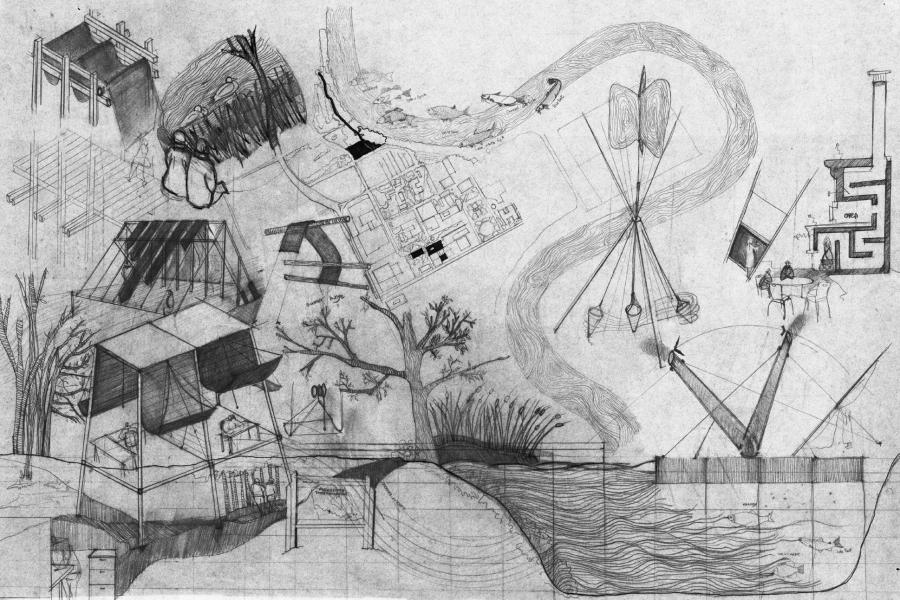
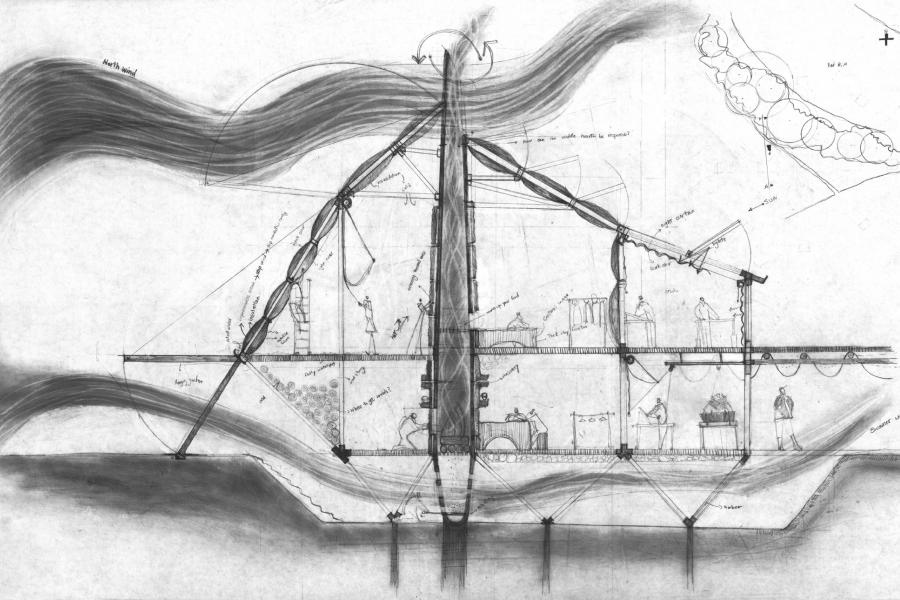
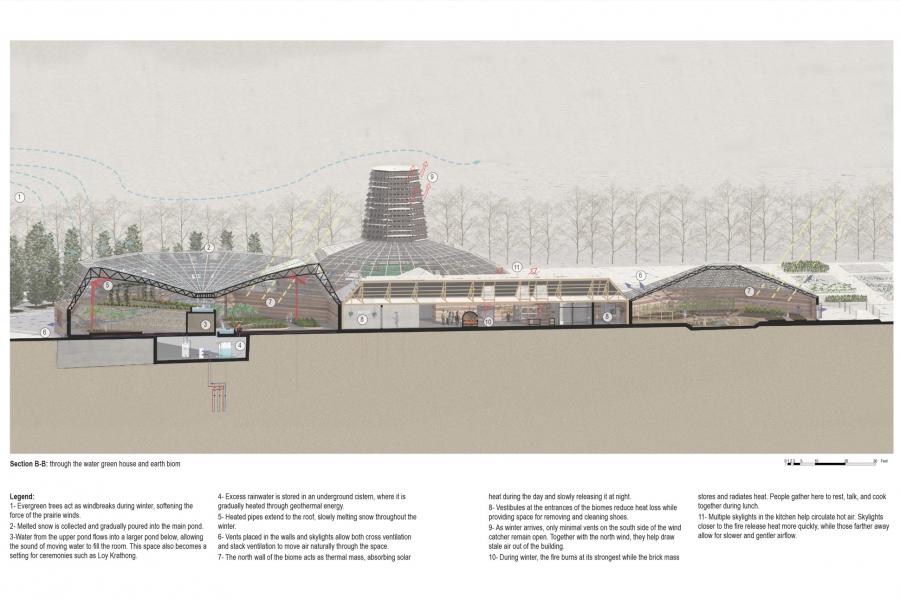
Winnipeg is a city shaped by migration, Indigenous presence, and diverse cultural traditions, where many communities carry different relationships to climate, gathering, food, ceremony, and everyday life.3 Yet despite this diversity, most contemporary indoor environments remain uniform and disconnected from seasonal and cultural variation. In response to the highly controlled indoor environments of modern architecture, the project reintroduces climate as something to engage through ritual and daily life. Drawing from environmental and cultural practices from different parts of the world, such as the wind catcher and the tipi, it understands environmental response as both spatial and cultural. The thesis proposes a four-season learning, growing, and gathering space at the Fort Garry campus, to welcome newly landed immigrants who are searching for ways to connect to this new land they find themselves in.
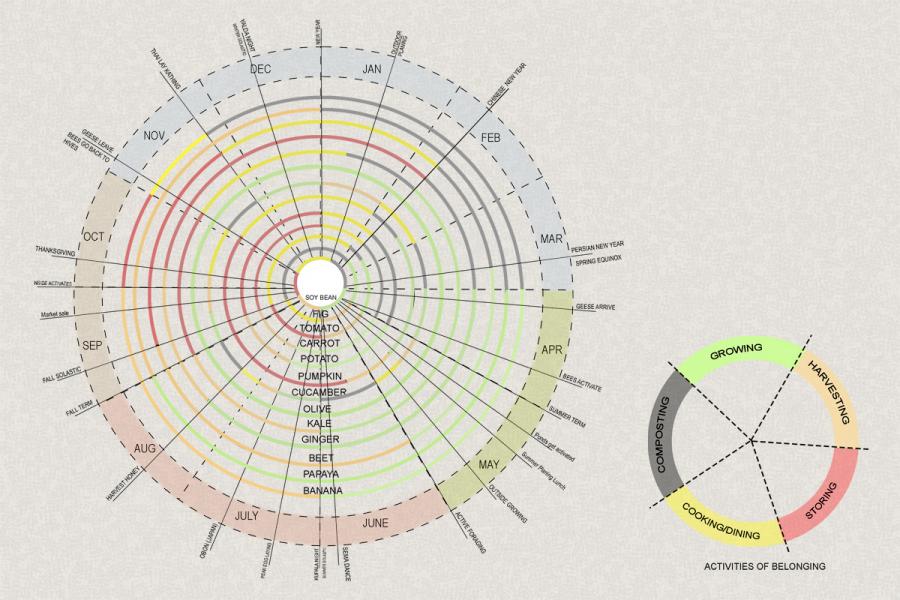
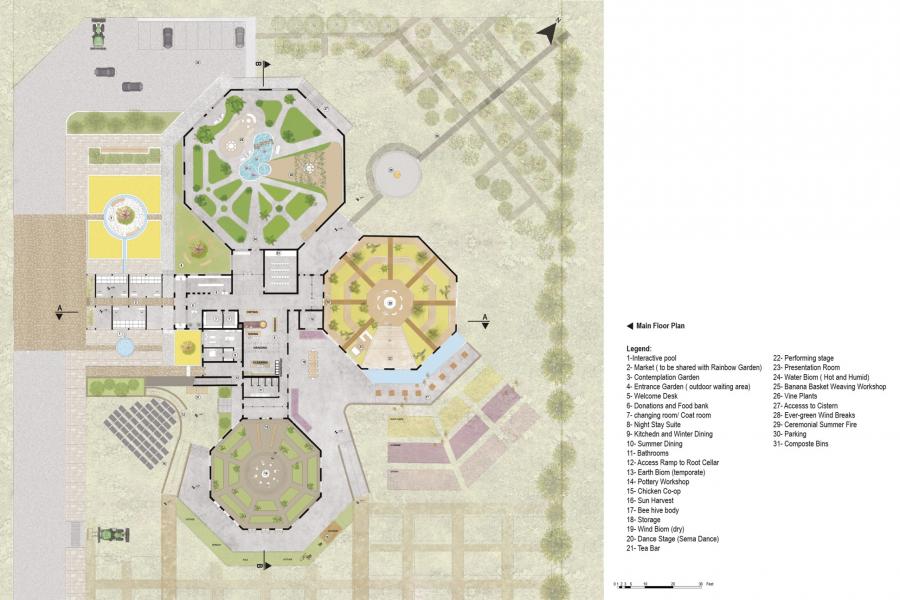
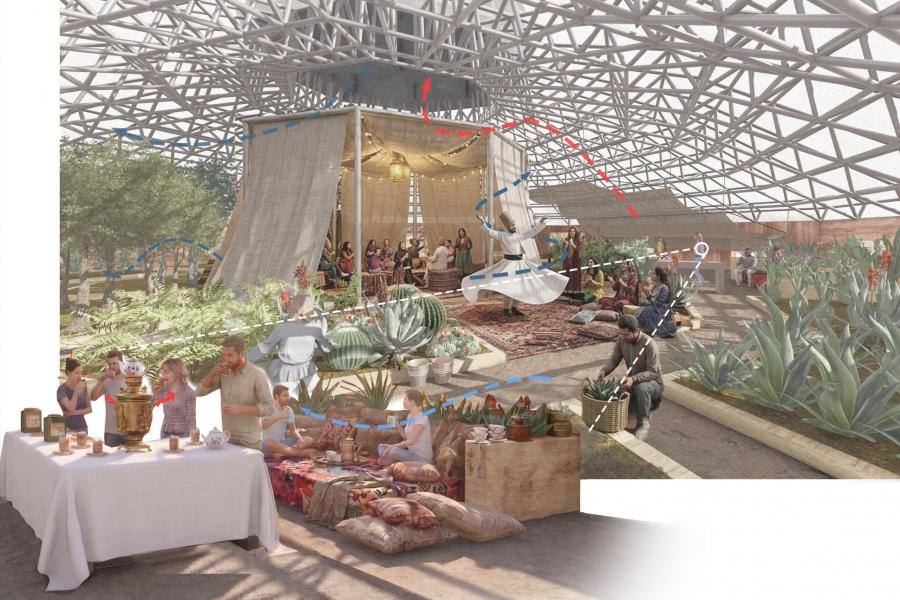
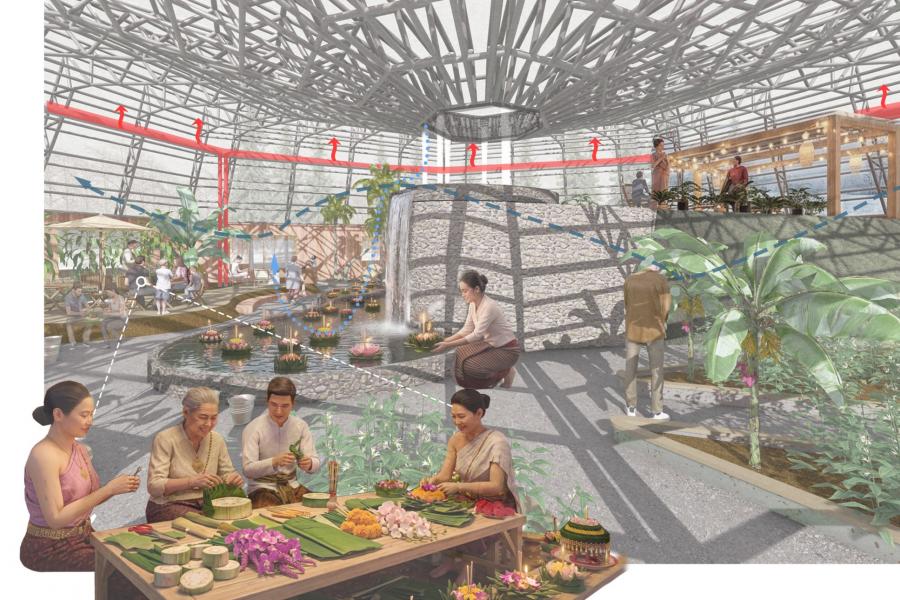
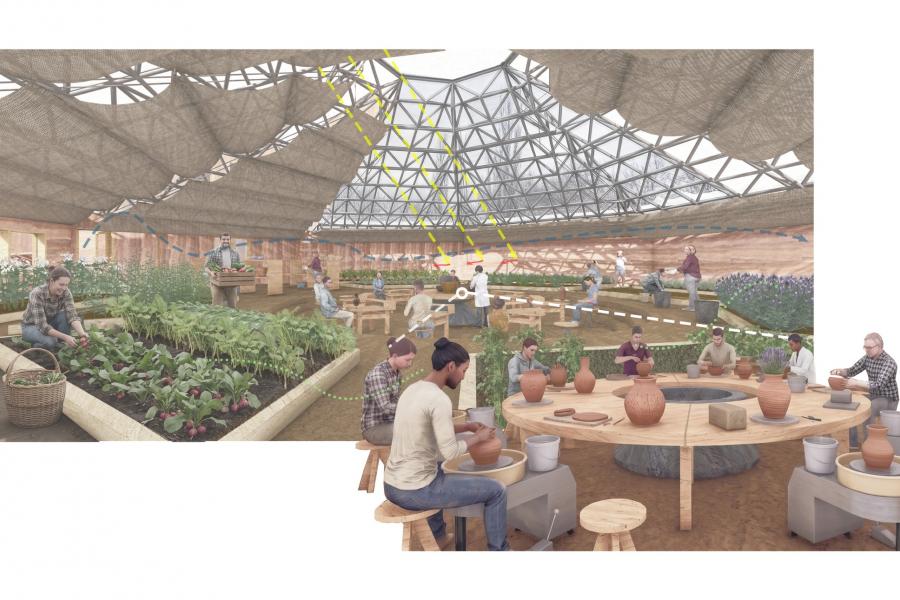
Organized through a series of biomes and microclimates, the building creates diverse thermal and sensory conditions for cultivation, cooking, gathering, and exchange, functioning as a home away from home. Windy biomes, fireplaces, humid biomes, shaded gathering spaces, and layered thresholds create gradients of temperature and airflow rather than a single uniform indoor climate. The project fosters connection, learning, and shared rituals through participation and adaptation rather than separation from climate.
1 Gavin Van Horn, Robin Wall Kimmerer, and John Hausdoerffer, Kinship: Belonging in a World of Relations (Libertyville, IL: Center for Humans and Nature Press, 2021).
2 Juhani Pallasmaa, The Eyes of the Skin: Architecture and the Senses (Hoboken, NJ: Wiley, 2024).
3 “Winnipeg’s History,” City of Winnipeg, accessed May 7, 2026, https://www.winnipeg.ca/people-culture/winnipegs-history.