Get the information you need for academic planning and connect with experiences to develop the knowledge, skills and attributes that employers are seeking.

This resource is meant as a guide to provide suggestions throughout your time at university (refer to the Academic Calendar for a complete list of program requirements). Develop a plan and timeline that suits you best. Make intentional choices for your courses and work experiences.

  • Justin-Huang-picture
  • Student spotlight

    “Environmental Design is an intensive program, and I was hesitant because I did not know how to draw, nor was I anywhere near being a designer. I feared failing, but they teach you everything you need to know and you should not take the feedback personally [...] your health should always come first. Everyone finds their way and develops their style, pursing what I love has allowed me to make impacts that fulfil me in ways I would have never expected.”

    Justin Huang, environmental design student

Environmental Design at UM

In the environmental design program in the Faculty of Architecture, students explore the basic knowledge, language and foundational material shared by all environmental design disciplines in year one and two. In years three and four, students focus on disciplinary specific design theories and practices. The options below prepare students for graduate studies and eventual professional designation:

  1. Architecture Option: focuses on transforming the lessons of history, technology, culture, the environment and regional and social aspirations into a program for architecture.
  2. Interior Environments Option: emphasizes the design of interior spaces within the context of architecture and the design of objects that respond to the human body and to interior spaces.
  3. Landscape + Urbanism Option: is suited to students with a broad interest in understanding and shaping human settlement and habitat.

Students with a pre-existing degree can apply to the environmental design Architecture Masters Preparation (ED AMP) option.

Skills students will gain by studying ENVIRONMENTAL DESIGN

  • The ability to interpret, analyze and design the built environment
  • The ability to critically examine the impact of cultural, environmental and natural processes and systems
  • A knowledge of the principles and applications associated with construction materials and assemblies with an emphasis on resource impact
  • The ability to share information using a range of communication methods

Academic Success


Year 1 - 30 credit hours

Course requirementsEVDS 1600, EVDS 1602 and EVDS 1680, a mathematics and a written English, plus 15 credit hours of electives. EVDS 1660 and EVDS 1670 are strongly recommended in the first 30 credits to avoid delaying progression in the program.  Please note, EVDS 1660 and EVDS 1670 are offered in the summer term and should be taken then if not completed within the first 30 credit hours.

To do this year:

  1. Meet with an academic advisor in the First Year Centre to ensure you meet admission requirements for the environmental design program.
  2. Visit the Academic Learning Centre for workshops or to meet with a learning skills instructor.
  3. Apply to the environmental design program by the admissions deadline.
  4. Attend Year End Exhibition held at the end of the winter term.

Year 2 - 60 Credit Hours

Course requirements: Refer to the environmental design website for course availability and the Academic Calendar for requirements in your honours or major program

To do this year:

  1. Meet with an academic advisor and career consultant to map out your options.
  2. Attend, in-person, mandatory pre-term orientation and Urban Media Lab (EVDS 2100) two weeks prior to the start of Fall term.
  3. Upon completion of environmental design 2, submit your ranked options, portfolio and statement of intent.
  4. Consider applying for an international exchange.
  5. Review Faculty of Architecture Awards Database.

Year 3 - 90 Credit Hours

Course requirements: Refer to the Academic Calendar and environmental design website for course requirements and annual availability within your option

For students in the ED AMP 1 option: EVAR 3012 (pre-term requirement)

To do this year:

  1. For students in the Landscape + Urbanism option, prepare for the EVLU 3006 pre-term field trip.
  2. Contact the undergraduate student advisor to ensure that you have met all the third year requirements.
  3. Review the Faculty of Architecture Awards Database.
  4. Consider applying to the co-op program.
  5. Consider applying for an international exchange.

Year 4 - 120 Credit Hours

Course requirements: Refer to the Academic Calendar and environmental design website for course requirements and annual availability within your option

To do this year:

  1. Confirm eligibility to graduate with an academic advisor and declare intent to graduate in Aurora in January.
  2. Consider applying to the co-op program.
  3. Plan to apply to professional programs by end of first term.
  4. Attend Year End Exhibition held at the end of the winter term.

Career Tips


Year 1 - 30 credit hours

Start planning your career:

  1. Meet with a career consultant to generate career ideas based on your interests, values, personality and skills.
  2. Gather information about occupations that match your skills and interests.
  3. Set up a UM Connect profile for job and career information.
  4. Register for the Experience Record, an official record of university-approved activities.

Year 2 - 60 Credit Hours

Make professional connections:

  1. Join the Career Mentor Program to learn from professionals.
  2. Attend career fairs to connect with employers.
  3. Join the faculty’s Facebook page for event and competition promotions and employment opportunities.

Market your skills: Attend Juries and Presentations and join the Student Ambassador program. Develop your resumé and cover letter and refine your interview skills.


Year 3 - 90 Credit Hours

Investigate your career options:

  1. Look at sample job postings to ensure you have the qualifications upon graduation.
  2. Develop employability and essential skills sought by employers.
  3. Create a LinkedIn profile to network with professionals.
  4. Join professional associations as a student member in your area of focus.

Consider continuing your studies: Check out the Faculty of Graduate StudiesExtended Education or other academic institutions.


Year 4 - 120 Credit Hours

Start job search 9 months in advance: Contact Career Services to refine your job search and self-marketing strategies. You can visit the office up to 6 months after graduation.

If you are continuing on to a professional program or graduate school: Finalize your application materials and required tests. Use the awards database to search for funding and awards to help finance your continuing education. Review the Faculty of Architecture Awards Database for financial opportunities and application deadlines.

Volunteer & Work Experience


Year 1 - 30 credit hours

Link experiences to your career interests. Options include:

  1. Get involved in community opportunities at UMGreen Team, City of Winnipeg Parks or use 211 Manitoba to learn about local agencies.
  2. Student work opportunities including Work-StudySTEP Services or Federal Student Work Experience Program.
  3. Experiential education opportunities such as Community Engaged Learning and the Student Leadership Development Program.

Year 2 - 60 Credit Hours

Explore student involvement opportunities:

  1. Student groups including the Students’ Architectural Society and UMSU.
  2. Volunteer opportunities such as Habitat for Humanity and the Architecture + Design Film Festival.

Gain practical experience by volunteering: Get involved in design events such as the Winnipeg Design Festival and Storefront Manitoba activities. Submit your work to the Warehouse Journal.


Year 3 - 90 Credit Hours

Build your portfolio: Participate in Warming Huts and other design competitions throughout your degree.

Check out volunteer opportunities: Seek opportunities to volunteer within professional design organizations and companies.

Search for job opportunities online: Search design related businesses and firms. Go to the Faculty’s volunteer and employment opportunities website for an up-to-date listing.

Use your networks and connections: Inquire about unadvertised job openings (the "hidden job market").


Year 4 - 120 Credit Hours

Ensure you have references in place: Ask your professor for a reference or a letter of recommendation if you're applying for graduate school.

Assess your portfolio: “Grow you portfolio” with additional technical courses. Identify any gaps in experience and fill them through volunteering, work placements or internships.

Cultural Opportunities

Cultural experiences offer valuable exposure and learning opportunities that help us engage with and appreciate the diversity in our communities and future workplaces. Learn more about Indigenous and International communities at the University of Manitoba.


Year 1 - 30 credit hours

Engage in intercultural experiences: Visit the International Centre website to learn more about volunteer opportunities for UM students. Engage in Indigenous cultural learning by attending Indigenous events on campus.

Indigenous Student Programming: If you’re an Indigenous Student, explore supports and programs at the Indigenous Student Centre.  

Interested in studying abroad to gain intercultural experiences and skills employers want? Visit the student exchange programs website and book an appointment with the student mobility coordinator to learn more. Also learn about a full year abroad experience through McCall MacBain International Fellowships.


Year 2 - 60 credit hours

Applying for an international exchange program?  Students apply almost one year in advance of their exchange. Book an appointment with the student mobility coordinator on the exchange programs website to start the process.

Participate in cultural learning opportunities on campus: Participate in Indigenous learning opportunities such as Fireside Chats, Tea with Auntie, Indigenous Studies Colloquium, and other events within your faculty. Your active and respectful participation is welcome at Indigenous ceremonies on campus. Please note that some ceremonies are confidential spaces; feel free to ask about cultural protocols. 

Join a student community: There are many student groups at UM, including those that represent a wide variety of cultures and communities - the UM Indigenous Students’ Association (UMISA), UM International Students' Organization, and many more!  

Looking to learn a language? Visit the Language Centre for a variety of resources and join the Language Exchange program or Language Partner Volunteer Program.


Year 3 - 90 credit hours

Develop global career skills and expand intercultural learning: Participate in the Intercultural Leaders program to enhance cultural awareness and develop intercultural skills for a variety of settings, both in and out of the classroom. Participate in 8 sessions with topics on leadership, self-awareness, intercultural competency, communication, conflict resolution and more.  

Volunteer at the International Centre’s Welcome Mentors program and/or Graduation Pow Wow.

Engage locally: Learn more about the Treaty Relations Commission of Manitoba and your responsibility as a Treaty partner. Enroll in Community Engaged Learning programs; Indigenous students may wish to explore programs such as Land and Water: Land-Based Education. 


Year 4 - 120 credit hours

Expand your knowledge on Indigenous culture and protocols, including developing your own Territory Acknowledgement. Explore resources provided by Canada's National Research Centre for Truth and Reconciliation and take part in the educational programming offered during Truth and Reconciliation Week!

What do employers want?

Industries such as construction, design, film and theatre, government, retail and service would value an environmental design degree in combination with the employability skills that are highly sought after by employers. These include:*

  • Critical thinking
  • Teamwork
  • Adaptability
  • Oral, written and visual communication
  • Personal management
  • Digital technology
  • Industry specific knowledge
  • Continuous learning

Attain skills through your classroom education and take advantage of experiential education opportunities.

*Information has been adapted from Employability Skills 2000+ and Workplace Education Manitoba – Essential Skills.

Alumni Stories

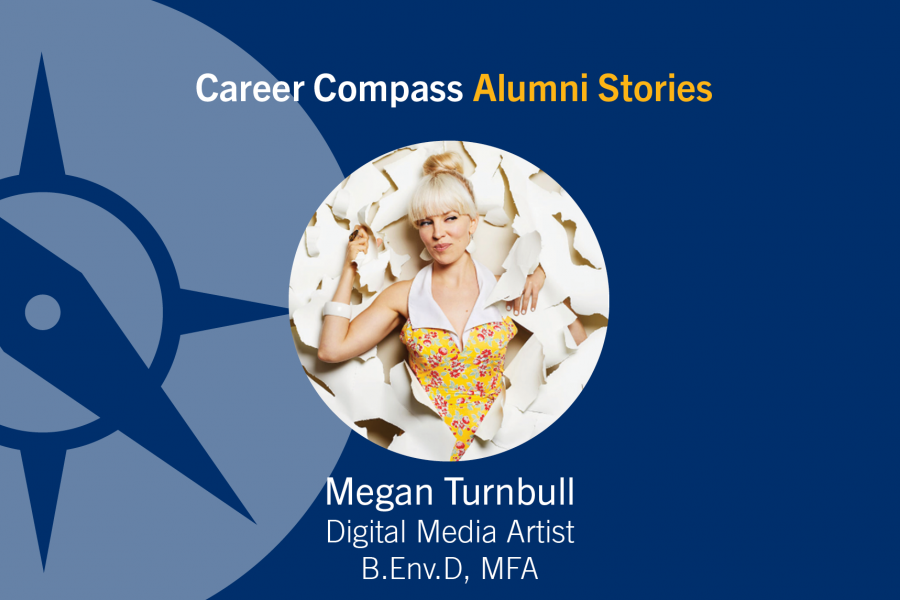
Read more about Megan Turnbull's career path

Briefly, tell us about your job. What do you find most rewarding? What are your greatest challenges within this profession?

My career has led me to work as a freelance multidisciplinary digital media artist and filmmaker to a wide variety of clients and projects. I work as director, editor, animator and writer, depending on the project and team. I have completed projects for DAVID’s Tea, Banfield Marketing and Communications Agency, the National Film Board of Canada, Place d’Orleans Mall, the National Arts Centre of Canada, the Canadian embassy in Vienna and various musicians. I really enjoy the challenge of telling people’s stories and relaying their message in a visually compelling manner.

I am currently working at the Canadian embassy in Vienna in a marketing and communications position. The rest of my week I dedicate to client work and artistic endeavours. I find it is challenging finding work here as my German is not at a very high level yet.

What experiences and activities helped you to map out your career pathway?

After completing the environmental design program,I worked on residential projects in Winnipeg and the Whiteshell, but I wanted an adventure so I applied for landscape designer positions in Hong Kong and moved there in 2007 to work for Urbis International. While in Hong Kong, I worked predominantly on a project in Dubai, which I found to be disenchanting in its disregard for sustainable design. I did, however, discover that I enjoyed presentation methods and conveying design stories to clients, so I decided to return to school to study digital multimedia technology, with a focus on video and animation. After completing my studies, I moved to Ottawa and worked with Banfield Marketing and Communications Agency, while also working on my own films and other client work. This was a very rewarding and busy time. So busy, in fact, that I had to choose whether to focus on commercial or artistic projects. I decided to focus on my artistic filmmaking and take a hiatus from commercial work, so I returned to school once again to take the Master in Fine Arts program at Concordia University. While there, I was able to work as a sessional instructor while pursuing my studies. After completing my course work, I moved to Vienna to work on my thesis.

As far as activities that helped me to map out my career path, I would have to admit that many of my opportunities arose out of applying for things and waiting to see what I would get. Being friendly, enthusiastic and resourceful is also quite important if you move around as much as I have, because it helps build a community and support structure that is important if you predominantly work for yourself. And of course, saying “yes” to projects and opportunities, even when they seemed daunting or intimidating, has really shaped my career.

As a student, did you see yourself in your current career? What stayed the same and/or changed?

As a student I did see myself in a similar career to my current position. I always knew I wanted to do something studio based and working directly with clients. The medium seems to have changed many times, from landscape architecture, to advertising, motion graphics and short films, but the work dynamic and creative environment has remained the same.

What advice do you have for students who are interested in pursuing a degree in environmental design?

Go for it. Be prepared to work your butt off!

What job search advice do you have for students and recent graduates?

Apply for jobs you may not even think you have a chance at getting. The more you apply for, the more opportunities you will have and the more experience you will gain, which allows you to be more selective about the work you do.
Don’t believe everything you hear about “finding your calling” or “having your dream job.” In the end, you are paid to do a job because it is a job, not a dream. All you can do is your best and try to do work that you’re proud of so that it leads to similar opportunities.
Be nice to people.

Tell us a fun fact about your career path.

My career path wasn’t direct or straight. I envied the people who knew what they want to be right out of high school. My own path was much more meandering, which has provided me with a lot of interesting experiences. Sometimes not having a clear path can be a good thing because you try so many things along the way.


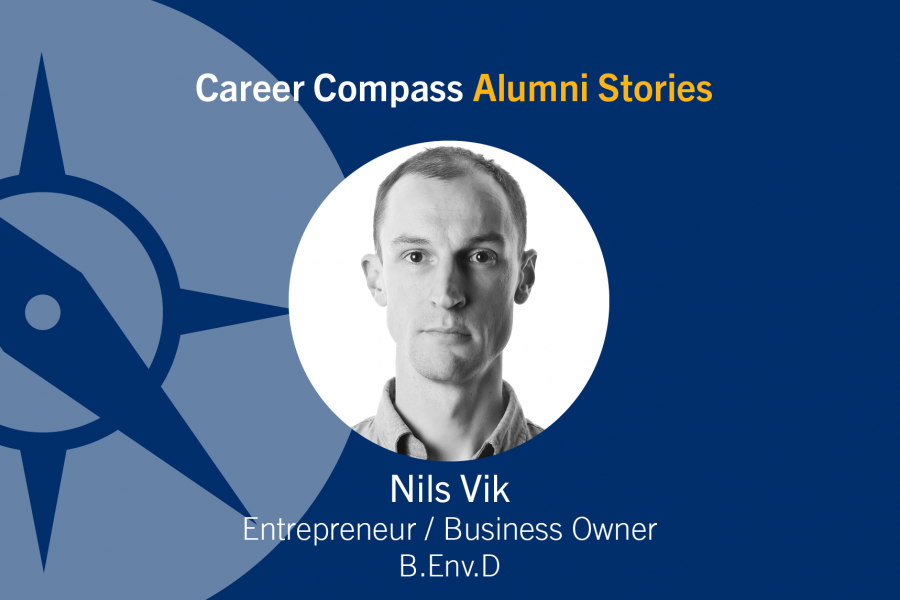
Career Compass Environmental Design Alumni Story: Nils Vik, Entrepreneur / Business Owner, B. Env.D

Nils Vik, B.Env.D

Nils Vik is the owner of a specialty coffee shop in the heart of Winnipeg’s historic Exchange District which opened in 2011. Fast forward 5 years and Nils has extended the insights and experiences he learned through operating Parlour Coffee to help open a second café, Little Sister Coffee Maker, and begin operating a wholesale roasting operation called Dogwood Coffee Canada Ltd.

Read more about Nils Vik's career path

Briefly, tell us about your job. What do you find most rewarding? What are your greatest challenges within this profession?

I am the owner of a specialty coffee shop in the heart of Winnipeg’s historic Exchange District which opened in 2011. Fast forward 5 years-I extended the insights and experiences I learned through operating Parlour Coffee to help open a second café, Little Sister Coffee Maker, and begin operating a wholesale roasting operation called Dogwood Coffee Canada Ltd. I am in charge of general oversight of these businesses and take on special projects to push them forward but also to help carve a unique niche.

The most rewarding experience of operating my own business is creating and fostering new relationships. The greatest challenge within this profession is maintaining a particular level of quality and attention to detail that I am personally proud of whilst meeting the needs and expectations of clients.

What experiences and activities helped you to map out your career pathway?

The experience that introduced me to the idea of opening a café with a particular sense of identity was a studio trip in the final year of my undergraduate studies. I believe that the environmental design program helped foster a passion for thoughtful details and practices. Through this lens, I was able to re-approach my entrepreneurial habits.

As a student, did you see yourself in your current career? What stayed the same and/or changed?

I definitely did not see myself being in the coffee business while I was a student–I didn’t even drink coffee until my final year. I thing that changed for me was that I wanted to see my ideas and plans realized rather immediately versus sitting on paper for some time. One thing that didn’t change was my enjoyment of planning and executing minor details.

What advice do you have for students who are interested in pursuing a degree in Environmental Design?

I would suggest throwing yourself completely into your studies and being open to the outcome. I was never set on having a particular career, but I was interested in soaking in as much information and experience as possible. Also, I would highly discourage ever pulling an “all-nighter”. I always slept, at least a few hours, every night and my studies never suffered.

What job search advice do you have for students and recent graduates?

If you don’t see the job you want, make your own work. Self starters always win.

Tell us a fun fact about your career path.

I got Samuel L Jackson’s autograph. Other than that, I basically changed careers a few months after receiving the Rado Design Award for the Best New Protoype at IDS11 in Toronto while working for EQ3.

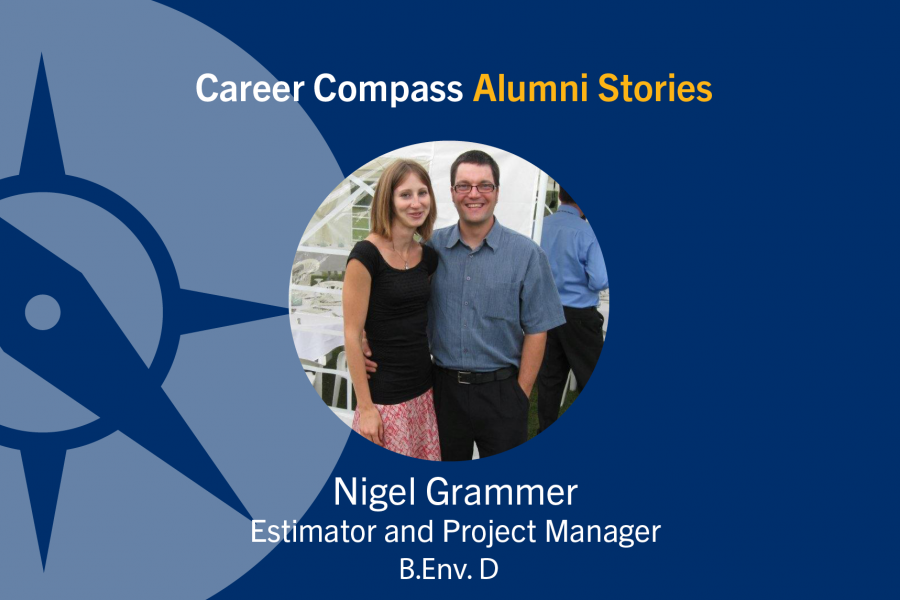
Career Compass Environmental Design Alumni Story: Nigel Grammer, Estimator and Project Manager, B.Env.D

Nigel Grammer, B.Env.D

Nigel Grammer works as an estimator and project manager for a general contractor in Kenora. He works on a wide variety of projects ranging from houses and elaborate cottages on the lake to post-secondary education facilities. He takes drawing sets provided by designers (architects, landscape architects, interior designers, etc.) and calculates what the cost to build the project would be.

Read more about Nigel Grammer's career path

Briefly, tell us about your job. What do you find most rewarding? What are your greatest challenges within this profession?

I work as an estimator and project manager for a general contractor in Kenora. We work on a wide variety of projects ranging from houses and elaborate cottages on the lake to post-secondary education facilities. I take drawing sets provided by designers (architects, landscape architects, interior designers, etc.) and calculate what the cost to build the project would be. This is often done in a competitive bid environment where multiple companies submit an estimated cost for each project and the lowest bid tends to be awarded the contract. Once awarded a job, my role moves into a project management position where I oversee all aspects of the project with the intention of finishing the project within budget and on time.

The most rewarding part of my job is helping the build team take the various materials and work together to create what had previously only existed as ink on paper.

The biggest challenges with this position are dealing with any unforeseen hurdles that can crop up during the course of a project, or dealing with vague or inaccurate drawings that cause the initial estimating process to be less reliable than it should be.

What experiences and activities helped you to map out your career pathway?

I’ve always enjoyed working with my hands and pursued an apprenticeship in carpentry after graduation with the intention of finding a way to build my own designs. While working as a carpenter, my familiarity with plans led to opportunities in the office during times of bad weather doing estimating work for upcoming projects. This experience led to work with other firms estimating projects in a competitive bid environment. Successful bids lead to projects requiring office support which is where the project management side of my career began.

As a student, did you see yourself in your current career? What stayed the same and/or changed?

Not at first. In the beginning I was enamored with the design process, and in many ways, I still am. But as time passed I became increasingly aware that my preferences and skill set were more in line with a practical and tangible role in the physical creation of a structure.

What advice do you have for students who are interested in pursuing a degree in environmental design?

Realize that being an architect, city planner or interior designer is not the only possible outcome from this degree. The built environment is acted upon in many ways at many scales and the understanding gained in this program can be beneficial for a remarkably diverse array of employment opportunities.

What job search advice do you have for students and recent graduates?

Know your strengths and work towards a role you will find fulfilling. Don’t be too proud to take entry level positions- Hard work and demonstrated ability will lead to opportunities.

Tell us a fun fact about your career path.

I actually intended to avoid architecture as a profession entirely after graduating from the program. However, the interest that led me into the program in the first place, and the knowledge and skills gained through its completion eventually led me to where I am today – which involves near daily interactions with architects and designers.

Campus resources and supports

Get one-on-one help

  • Meet with a career consultant

    Meet with a career consultant for a confidential discussion about your career goals, job search, resumé/CV and interview preparation.

    Contact Career Services at cs.receptionist@umanitoba.ca or call 204-474-9456 to make an appointment.

  • Talk to an academic advisor

    Talk to an academic advisor who will guide you to resources to help you make important decisions for your future. Advisors are specialized, often by program, faculty/school or unit.

    Find your advisor

Continue exploring

Select a Career Compass

Use Career Compass as a guide to develop a strong connection between your studies and your occupational choices. It will provide you with suggestions for academic and career planning specific to your program.

Advisors and Educators Guide

Contact us

Connect with the faculty

Environmental Design Program
Faculty of Architecture
201 John A. Russell Building
84 Curry Place
University of Manitoba (Fort Garry campus)
Winnipeg, MB R3T 2M6 Canada

204-474-8769
204-474-7532

Connect with Career Services

Career Services
Room 474 UMSU University Centre
65 Chancellor's Circle
University of Manitoba
Winnipeg, MB R3T 2N2 Canada

204-474-9456
204-474-7516
Monday to Friday, 9:00 a.m. to 4:00 p.m.