Get the information you need for academic planning and connect with experiences to develop the knowledge, skills and attributes that employers are seeking.

This resource is meant as a guide to provide suggestions throughout your time at university (refer to the Academic Calendar for a complete list of program requirements). Develop a plan and timeline that suits you best. Make intentional choices for your courses and work experiences.

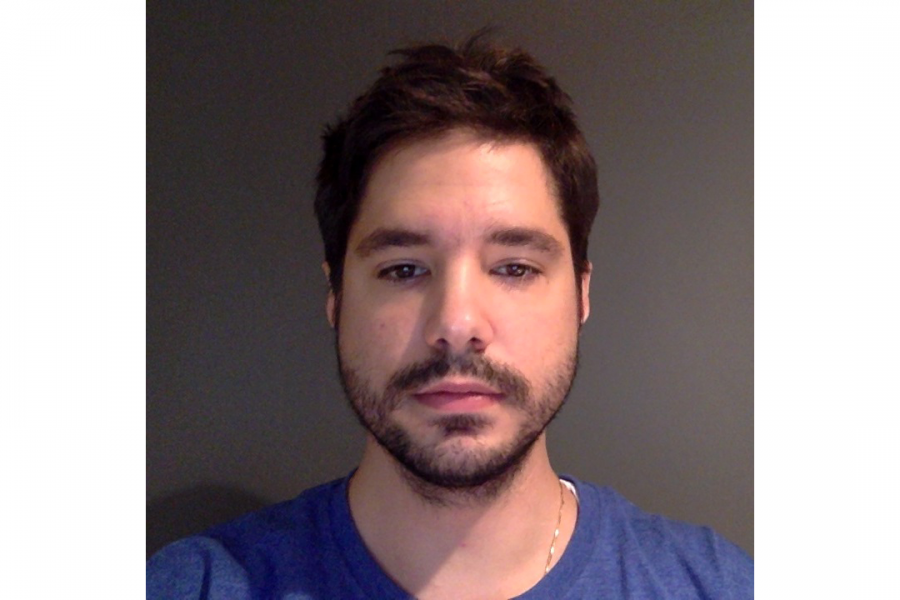
  • Photo of Jean-François Matte
  • Student spotlight

    “Whether you are a native speaker, an immersion student or have had zero exposure to French in the past, the French program at the University of Manitoba offers courses for everyone. The key to learning any language is participation.”

    Jean-François Matte, French student

French at UM

As a French student in the Faculty of Arts, you will learn about the French language and the rich variety of literature and culture. The Department of French, Spanish and Italian has many opportunities for you to explore, with three main areas of study in French:

  1. French Language: the study of the vocabulary, grammar, and syntax of the French Language.
  2. French Literature: the study of poetry, prose and drama from various historical periods, with a particular emphasis on French Canadian literature.
  3. French Civilization: the study of the development of French and French Canadian civilization and culture.

Skills you will gain by studying FRENCH

  • A comprehensive knowledge of the French language (writing, speaking, reading, listening and translation)
  • An understanding of the relationship between language and culture
  • The ability to critically evaluate text, media and other cultural forms and independently research new areas of information
  • The ability to communicate effectively in French and apply language skills in the workplace

Academic Success

Year 1 - 30 credit hours


Course requirements: FREN 1192 and FREN 1194 or FREN 1202 and FREN 1204

To do this year:

  1. Know the requirements for your degree. Meet with an academic advisor academic advisor to help you plan your program
  2. If you need academic support, visit the Academic Learning Centre for workshops or to meet with a learning skills instructor.

Year 2 - 60 credit hours


Course requirements:
Honours: 24 credit hours in FREN courses at or above the 2000 Level.*

Double Honours: 24 credit hours in FREN courses at or above the 2000 Level.*

Advanced: 18 credit hours of FREN at or above the 2000 level.*

Double Advanced: 15 credit hours of FREN at or above the 2000 level.*

General: 12 credit hours of FREN at or above the 2000 level.*

*Refer to the Academic Calendar for specific course areas to be completed.

To do this year:

  1. Should you follow a 3-or-4 year plan? Meet with an academic advisor and career consultant to map out your options.
  2. When choosing a minor, take courses that will open opportunities.
  3. Check in the Academic Calendar to make sure you satisfy the French language and French literature requirements.

Year 3 - 90 credit hours


Course requirements:
Honours: 21 credit hours of FREN at or above the 3000 level.*

Double Honours: 6 credit hours of FREN at or above the 3000 level.*

Advanced: 24 credit hours of FREN at or above the 3000 level.*

Double Advanced: 21 credit hours of FREN at or above the 3000 level.*

General: 12 credit hours of FREN at or above the 3000 level.*

*Refer to the Academic Calendar for specific course areas to be completed.

To do this year:

  1. Meet with a department advisor for honours program approval.
  2. Confirm eligibility to graduate with an academic advisor and declare intent to graduate in Aurora (3-year option).

Year 4 - 120 credit hours


Course requirements:
Honours: FREN 4426, 6 credit hours of FREN at the 4000 level.*

Double Honours: FREN 4426, 3 credit hours of FREN at the 4000 level.*

Advanced and Double Advanced: See Year 3*

*Refer to the Academic Calendar for specific course areas to be completed.

To do this year:

  1. Meet with a department advisor for honours program approval.
  2. Confirm eligibility to graduate with an academic advisor and declare intent to graduate in Aurora.

Career Tips

Year 1 - 30 credit hours


Start planning your career:

  1. Meet with a career consultant to generate career ideas based on your interests, values, personality and skills.
  2. Research occupations that match your skills and interests.
  3. Set up a UM Connect account to view job postings and register for workshops and events.
  4. Set up your Experience Record, an official record of university-approved activities.

Year 2 - 60 credit hours


Make professional connections:

  1. Join the Career Mentor Program to learn from professionals.
  2. Attend career fairs to connect with employers.
  3. Develop professional connections with professors by applying for an Undergraduate Research Award.

Market your skills: Develop your resumé and cover letter and refine your interview skills.

Year 3 - 90 credit hours


Investigate your career options:

  1. Look at sample job postings to ensure you have the qualifications upon graduation.
  2. Develop employability and essential skills sought by employers.
  3. Explore supports available to entrepreneurs for business planning including the Stu Clarke Centre for EntrepreneurshipWorld Trade Centre Winnipeg, and the Manitoba Government.
  4. Create a LinkedIn profile to network with professionals.

Consider continuing your studies: Check out the Faculty of Graduate StudiesExtended Education or other academic institutions.

Year 4 - 120 credit hours


Start job search 9 months in advance: Contact Career Services to refine your job search and self-marketing strategies. You can visit the office up to 6 months after graduation.

If you are continuing on to graduate school: Finalize your application materials and required tests. Use the awards database to search for funding and awards to help finance your continuing education. Contact your department to find out how their awards deadlines are advertised.

Volunteer & Work Experience

Year 1 - 30 credit hours


Link experiences to your career interests. Options include:

  1. Student groups from various ethnocultural backgrounds or Arts Student Body Council.
  2. Volunteer for UM Orientation events to help welcome new students to campus while gaining experience.
  3. Student work opportunities including Work-StudySTEP Services or Federal Student Work Experience Program.
  4. Experiential education opportunities such as Community Engaged Learning programs.

Year 2 - 60 credit hours


Explore student research opportunities: Apply for a research assistant position or Undergraduate Research Award.

Gain practical experience by volunteering: Check out Festival du Voyageur, Folklorama, or St. Boniface Hospital.

Find opportunities to market yourself: Become a Faculty of Arts Student Ambassador or join the Student Leadership Development Program.

Year 3 - 90 credit hours


Continue or start research: Participate in the Undergraduate Research Poster Competition.

Check out student job opportunities with: Languages at Work, Manitoba Legislative AssemblyWinnipeg Public Library and Young Canada Works.

Search for job opportunities online: Check out Job BankFind My JobIndeed or other search engines.

Use your networks and connections: Inquire about unadvertised job openings (the "hidden job market").

Year 4 - 120 credit hours


Ensure you have references in place: Ask your professor for a reference or a letter of recommendation if you're applying for graduate school.

Assess your resumé: Identify any gaps in experience and fill them through volunteering, work placements or internships such as the Official Languages Program.

Cultural Opportunities

Year 1 - 30 credit hours


Considering international opportunities? Visit the Language Centre and check out the International Centre website to learn more international opportunities for UM students.

Explore communities and cultures you want to work with: Visit the International Centre, the Centre Culturel Franco-Manitobain, Louis Riel Institute or learn about local agencies via 211 Manitoba.

Year 2 - 60 credit hours


Develop global career skills and expand intercultural learning: Consider the Study in France student exchange, Explore Program, Student Guide Program in France or travel to France for a “working holiday.”

Staying local? Check out the Language Partner Program or Reading Buddies. Practice your conversational French through the Language Exchange Program.

Year 3 - 90 credit hours


Did you travel abroad? Become an exchange mentor for the International Student Mentorship Program, join the exchange student community at the University of Manitoba or write an article about your experience.

Participate in the multicultural opportunities on campus: Participate in the Intercultural Development and Leadership Program, volunteer for the International Student Mentorship Program or take part in Graduation Pow Wow.

Year 4 - 120 credit hours


Prepare to work in a bilingual environment: Consider taking French Second Language for Civil Servants at Université de Saint-Boniface.

What do employers want?

Industries such as business, communications, education, government and justice would value a French major in combination with the employability skills that are highly sought after by employers. These include:*

  • Oral and written communication
  • Critical thinking
  • Problem solving
  • Teamwork
  • Cultural Competency
  • Digital technology
  • Continuous learning

*Information has been adapted from Employability Skills 2000+ and Workplace Education Manitoba – Essential Skills.

Alumni Stories

Career Compass French Alumni Story: Joan Padgett, Editor and Instructional Designer, B.A., M.A., CACE

Joan Padgett, B.A., M.A. CACE

Joan Padgett has worked as an editor and instructional designer for various companies for over 15 years. As an editor of art museum publications, she edits scholarly essays written by curators and art historians for books that accompany exhibitions at galleries across Canada.

Read more about Joan Padgett's career path

Briefly, tell us about your job. What do you find most rewarding? What are your greatest challenges within this profession?

I’ve worked as an editor and instructional designer for various companies for over 15 years. As an editor of art museum publications I edit scholarly essays written by curators and art historians for books that accompany exhibitions at galleries across Canada. As an instructional designer, I design and write training curriculum to teach adult learners specific skills and specialize in e-learning delivery: online self-study, webinars and virtual classroom.

What I find rewarding about editing is playing a part in shaping a writer’s work to enhance the author’s voice and make the content clear, accurate, engaging and meaningful to the reader. With instructional design I enjoy the dual aspects of analysis and creativity: I have to analyze both employer and learner needs; I have to write content that meets those needs and make it engaging and interesting; and I have to use graphic design skills to make the content visually appealing and to make abstract ideas more concrete.

The greatest challenges with both jobs usually revolve around deadlines. Content may get to me days or weeks after I’m expecting to receive it, but printing deadlines or overall project deadlines usually stay the same. I need to be able to work well under pressure and to not expect that any given day or week will flow the way I want or expect it to.

What experiences and activities helped you to map out your career pathway?

The tips below helped me to map out my career path, but they are general in nature and will be useful regardless of your career choice:

  1. Be willing to try new things and take on new challenges, even if they seem daunting at first and you’re not sure you can do it. Of course you can do it! And if you get stuck, ask for help.
  2. Take responsibility for your actions: admit to mistakes, show up for work on time and meet deadlines to build trust and respect.
  3. Take time to self-reflect and acknowledge your strengths and your weaknesses. Work at building on the former and minimizing the attitudes and behaviours that may be holding you back in your career.
  4. Remember that no one owes you a job and that few of us are in positions so specialized that we can’t be replaced. To be successful in your career, arrogance and complacency are not your friends.
  5. Be a lifelong learner. After you graduate, your education doesn’t stop. Take workshops, seminars, or certificate programs. The workplace is constantly evolving and if you don’t evolve with it and keep up with new technologies and methodologies, not only will your career options be more limited, you could lose your job and find it difficult to land a new one.
  6. Be a team player and an employee others like to work with. It’s far more likely that co-workers and employers will make an effort to help you further your career goals and give you good references if you make their jobs easier because you don’t create workplace conflict.
  7. Build a network of contacts within your profession. Those contacts will tell you about job openings and will expose you to new people who may be able to help you later in your career.
  8. Be true to yourself and your needs. It was important to me to work part-time when our son was younger because we wanted to have a work-life balance at home. I was working part-time when I applied for the technical editor position with the software company and it was advertised as full-time. During my second interview I said that I wanted to work part-time, and they still hired me, which leads me to the next point, below.
  9. Work hard and honour the trust your employer has placed in you. As my manager said to me at my six-month review, “Joan, you do in three days what a lot of the staff here does in five.” Few things help your career more than doing excellent work consistently.

As a student, did you see yourself in your current career? What stayed the same and/or changed?

No, when I was in school I didn’t see myself being an editor or an instructional designer. I thought that I’d become an academic and teach at a university, so I had to do my Master of Arts degree first, then a PhD. Working on my masters made me realize that I didn’t want to spend my life researching and writing papers and books on a narrow field (literary criticism) that would be of interest and value to so few people. So my plan to become an academic changed, but what stayed the same was my understanding that my career would revolve around my analytical and language and writing abilities.

What advice do you have for students who are interested in pursuing a degree in French?

Like completing a degree in English, completing a degree in French literature is a gateway to career opportunities in communications and education fields. A French degree doesn’t mean you have to work solely in that language, or train later to become a teacher or translator. I find that those who learn another language have a far better understanding of grammar and syntax than those who speak only one language. My study of French literature definitely helped shape the skills I use now as an editor and writer of English content, from correcting grammar errors to reorganizing text to make content more logical and easier to understand.

What job search advice do you have for students and recent graduates?

It’s rare for people to find an ideal job upon graduation, especially in the arts and humanities, so my advice is to avoid thinking that certain jobs are beneath you. Every job is a growth opportunity because you’ll learn what you do like to do and don’t like to do and what you’re good at and not good at.

If you’re in a job that doesn’t make use of all your talents and abilities, take control and create opportunities that can make use of other skills you want to develop. For example, in one of my first jobs after getting my masters degree, I asked if I could revamp the design of a newsletter and write all the content, and my employer said yes. My motto is, “If you don’t ask, you won’t get.” The worst that can happen is someone tells you no and then you move on.

Tell us a fun fact about your career path.

After my first year in my masters program, I applied for a program where I could teach English in a French high school. I got to teach in the city of Nantes in the Brittany/Loire region and in addition to travelling in that area, I also made several trips to Paris, as well as trips to the south of France and Spain. I lived in an apartment with two Germans and an Australian and met lots of great people. It was a fantastic experience, although it did confirm for me that I didn’t want to be a school teacher!

Campus resources and supports

Get one-on-one help

  • Meet with a career consultant

    Meet with a career consultant for a confidential discussion about your career goals, job search, resumé/CV and interview preparation.

    Contact Career Services at cs.receptionist@umanitoba.ca or call 204-474-9456 to make an appointment.

  • Talk to an academic advisor

    Talk to an academic advisor who will guide you to resources to help you make important decisions for your future. Advisors are specialized, often by program, faculty/school or unit.

    Find your advisor

Continue exploring

Select a Career Compass

Use Career Compass as a guide to develop a strong connection between your studies and your occupational choices. It will provide you with suggestions for academic and career planning specific to your program.

Advisors and Educators Guide

Contact us

Connect with the faculty

Department of French, Spanish and Italian, Faculty of Arts
430 Fletcher Argue Building
15 Chancellors Circle
University of Manitoba (Fort Garry campus)
Winnipeg, MB R3T 5V5 Canada

204-474-9313

Connect with Career Services

Career Services
Room 474 UMSU University Centre
65 Chancellor's Circle
University of Manitoba
Winnipeg, MB R3T 2N2 Canada

204-474-9456
204-474-7516
Monday to Friday, 9:00 a.m. to 4:00 p.m.