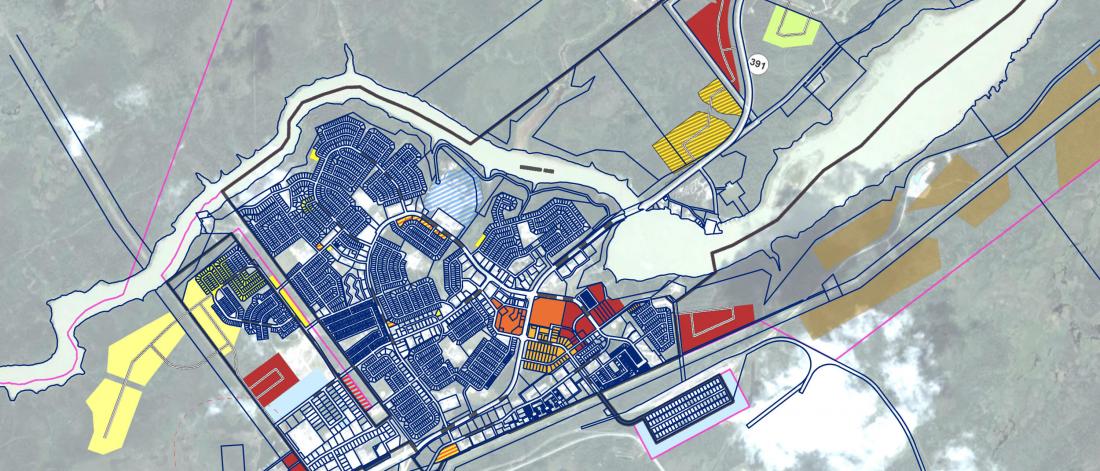
City plan map for Thompson, Manitoba, proposed in student project.

Theoretical clarity, clear research questions, solid reviews of the literature, empirical work and creative analysis are hallmarks of their exploratory work. Ultimately, our graduate students contribute new knowledge to the planning field, give back to the communities with whom they engage, and help to push the boundaries of planning practice and theorizing.

Capstone projects

2024 - 2025

  • Akakpo, Ebenezer MCP
    The Role of Community Gardening in Promoting a Sense of Place and Supporting Immigrant Integration in Winnipeg
    Advisor: Sarah Cooper
    External Advisor: Brody Osadick, Director of Economic Development, M Richard & Associates Ltd.
    Poster     Report

    Asaim, Jennifer MCP
    Bridging the Gaps: Policy Barriers in Housing for Recent Immigrants 
    Advisor: Raphael Ayambire
    External Advisor: Elijah Osei-Yeboah, Manager, Evaluation and Shared Measurement at End Homelessness Winnipeg
    Poster     Report

    Baanbil, John MCP
    Assessing the Disability Friendliness of Winter Sidewalks in Winnipeg, Manitoba
    Advisor: Orly Linovski
    External Advisor: Sarah Manteuffel, Community Planner, Urban Systems Ltd.
    Poster     Report

    Barairo, Alandra MCP
    Old Connections & New Directions: The Government of Manitoba’s Role in Rural Age Friendly Planning
    Advisor: Richard Milgrom
    External Advisor: Jim Hamilton, Consultant re. healthy aging and developing age-friendly communities; former Associate Director (Community Engagement), Centre on Aging, University of Manitoba
    Poster     Report

    Ferguson, Evan MCP
    Paying for Growth: Development Charges at the Crossroads of Housing Affordability and Fiscal Pressures in Mid-Sized Canadian Cities
    Advisor: Sarah Cooper
    External Advisor: Carolyn Whitzman, Senior Housing Researcher and Adjunct Professor, School of Cities at the University of Toronto
    Poster     Report

    Gavas, Jaclyn MCP
    Regulations Reimagined: Implementing Culturally Appropriate Housing for Indigenous People Living in Winnipeg, Edmonton, and Saskatoon
    Advisor: Sarah Cooper
    External Advisor: Lauren Lange, Senior Planner, WSP
    Poster     Report

    Klassen, Sawyer MCP
    Naturalized Boulevards in Canadian Prairie Cities
    Advisor: Rae St. Clair Bridgman
    Internal Second Reader:  Raphael Ayambire
    External Advisor: Kaili Brown, Associate and Landscape Architect, HTFC
    Poster     Report 

  • Kolody, Gillian MCP
    Designing Urban Public Parks for Teenage Girls: Lessons from Sweden
    Advisor: Rae St. Clair Bridgman
    Internal Second Reader:  Sarah Cooper
    External Advisor: Desiree Theriault, Partner and Senior Landscape Designer, Narratives Inc.
    Poster     Report

    Miranda, Jessica MCP
    Retrofitting History: Exploring Implications of Urban Design Guidance for Heritage Districts in Canada
    Advisor: Richard Milgrom
    External Advisor: Ryan Segal Alexander, Owner & Consultant, Assembly Studio
    Poster     Report

    Neustaedter, Max MCP
    Photo Mapping Winter Cyclists’ Experiences to Improve Winnipeg’s Bikeable Infrastructure
    Advisor: Orly Linovski
    External Advisor: Anders Swanson, Executive Director, Winnipeg Trails; Secretary, International Winter Cycling Federation
    Poster     Report

    Nsoh, Rudolph MCP
    Nature-Based Solutions for Human Wellbeing: A Case Study of The Forks in Winnipeg, Manitoba
    Advisor: Raphael Ayambire
    External Advisor: Kristina Hunt, Founder, Kristina Hunter Flourishing
    Poster     Report

    Penney, Noah MCP
    On the Right Track? Assessing Land Use Change Along Transit Lines Using Existing Rail Corridors
    Advisor: Orly Linovski
    External Advisor: Reanne Ridsdale, PhD Candidate at Toronto Metropolitan University Board, Member of Canadian Brownfields Institute
    Poster     Report

    Prakash, Neha MCP
    Assessing Climate Change Adaptation Readiness of Small Municipalities: A Case Study of Land Use Planning in Selkirk, Manitoba
    Advisor: Raphael Ayambire
    External Advisor: Elaine Fox, Manager, Climate Adaptation for Climate Action and Energy Innovation Division, Government of Manitoba
    Poster     Report

    Sones, Christopher MCP
    Windows of Opportunity: Creative and Innovative Uses for Storefronts in Downtown Winnipeg, Manitoba
    Advisor: Richard Milgrom
    External Advisor: Jason Syvixay, Vice-President, Strategy & Operations, BILD Edmonton Metro
    Poster     Report

2023 - 2024

Dyck, Ian MCP
From the Ground Up: Addressing Equity in Winnipeg’s Urban Forest
Advisor: Richard Milgrom
External Advisor: Erin Whittingham, Nature Canada
Poster     Report

Kratsberg-Azarov, Sabrina MCP
Greening Downtown Winnipeg: Green Infrastructure Approaches to Mitigate Urban Challenges
Advisor: Raphael Ayambire
External Advisor: Stephanie Whitehouse MCP RPP MCIP, Senior Urban Designer, City of Winnipeg
Poster     Report

Loutsik, Julian MCP
Density Bonusing for Affordable Housing: A Transit Corridor Perspective
Advisor: Orly Linovski
External Advisor: James Stiver RPP MCIP, Regional Land Use Policy Division Manager, Metro Vancouver
Poster     Report

Omonaiye, Oluwasegun Isaac MCP
From Crisis to Opportunities: Exploring Land Use and Wildfire Relationship in Manitoba’s Agricultural Landscapes  
Advisor: Raphael Ayambire
External Advisor: Michelle Erb, Agricultural Planning Specialist, Province of Manitoba
Poster     Report

Schon, Madeline MCP
Riverfronts for All? Understanding Canadian Riverfront Plans and Their Responses to Critical Issue
Advisor: Orly Linovski
External Advisor: Shannon Baker, Project Director, Parks and Public Realm at Waterfront Toronto
Poster     Report

Sheedy, Lauren MCP
Rethinking Ruins: Exploring Canadian Approaches to the Conservation and Management of Urban Heritage Ruins
Advisor: Rae St. Clair-Bridgman
External Advisor: Carlos Rueda PhD, Department of Architecture
Poster     Report

Stonehouse, Isaiah MCP
Planning for Residential Urban Reserves: Evaluating First Nation-Municipal Relationships and Opportunities for Reconciliation
Advisor: Sarah Cooper
External Advisor: David Marsh RPP MCIP, Canada Lands Corporation
Poster     Report

Yip, Ka Wai (Skylar) MCP
Home Away from Home:  Understanding Retention of Hong Kong Immigrants in Edmonton and Winnipeg
Advisor: Sarah Cooper
External Advisor: Bonnie Ma
Poster     Report

Yong, Jennifer MCP
Reimagining Streets: A Case Study of Temporary Street Interventions in Canadian Cities
Advisor: Richard Milgrom
External Advisor: Karin Kliewer, MCP RPP MCIP, Planner, City of Winnipeg
Poster     Report

2022 - 2023

Agominab, Romeo MCP
Towards Building Compact Cities: Measuring the Outcomes of Winnipeg’s Development Plans    
Advisor: Richard Milgrom    
External Advisor: Michael Pyl RPP MCIP, City of Winnipeg 
Poster     Report

Antonyshyn, Julia MCP   
Human Heat Vulnerability and Strategies for Coping with Heat in Winnipeg, Manitoba    
Advisor: Raphael Ayambire    
External Advisor: Dr. Durdana Islam, Manitoba's Climate Action Team 
Poster     Report

Bajelan, Hadiseh MCP 
Evaluating Public Open Space: Three Winnipeg Cases
Advisor: Richard Milgrom    
External Advisor: Honoure Black, University of Manitoba
Poster     Report

Keogh, Hayden MCP  
The Revival of Vacant Office Space: Examining Office to Residential Conversion Projects in Calgary’s Downtown    
Advisor: Orly Linovski    
External Advisor: Roger Lam MCP RPP MCIP, CMHC
Poster     Report

Klassen, Jonathan MCP   
Towards a Green Network Plan: Recommended Strategies and Policy Direction for the City of Winnipeg
Advisor: Raphael Ayambire    
External Advisor: Stephanie Whitehouse MCP RPP MCIP, City of Winnipeg
Poster     Report

Maddock, Colt MCP  
Scoots and the City: An Analysis of E-scooter Operations in Canadian Cities
Advisor: Orly Linovski    
External Advisor: Dr. Jeffery Cottes, Province of Manitoba
Poster     Report

McKinnon, Anna MCP   
"Exploring the Impacts of the Sport, Hospitality, and Entertainment District (SHED): Winnipeg’s First Tax Increment Financing District"    
Advisor: Rae Bridgman    
External Advisor: Jason Svixay MCP RPP MCIP, UDI-Edmonton
Poster     Report

McLaren, Abigail MCP    
Immigrant Settlement and Transit Planning: Implications for Transit Equity in Three Canadian Prairie Cities    
Advisor: Orly Linovski    
External Advisor: Dr. Ehab Diab, University of Saskatchewan
Poster     Report

Mitchell, Sahla MCP 
Exploring the Impact of the National Housing Strategy on the Not-For-Profit Housing Sector in British Columbia, New Brunswick, and Manitoba    
Advisor: Sarah Cooper    
External Advisor: Lissie Rappaport MCP RPP MCIP, City of Winnipeg
Poster     Report

Patton, Hannah MCP   
Exploring the Effects of COVID-19 on Cohousing Communities in Canada: A Social Impact Analysis    
Advisor: Sarah Cooper    
External Advisor: Laura Rempel MCP RPP MCIP, City of Winnipeg
Poster     Report

Paull, Joshua MCP   
"Celebrating Winter in the Public Realm: A case study of four winter design interventions in Canadian cities"    
Advisor: Richard Milgrom    
External Advisor: Lawrence Bird RPP MCIP, Consultant
Poster     Report

Ratcliffe, Gabriela MCP
Population and Economic Change in Remote British Columbian Resource Communities    
Advisor: Richard Milgrom    
External Advisor: Dr. Greg Halseth, University of Northern British Columbia
Poster     Report

2021 - 2022

Bouchard, Alyssa MCP
Integrating Urban Agriculture into Winnipeg’s Climate Adaptation Strategies through Online Public Engagement: A pilot project
Advisor: Dr. David van Vliet
External Advisor: Jeremy Sewell, City of Winnipeg
Extended summary    Report

Flaminiano, Jack MCP
Tambayan [“a place for hanging out”]: Public spaces in suburbia from Filipino-Canadian perspectives
Advisor: Dr. Orly Linovski
External Advisor: Benjamin Bongolan MES Pl
Poster    Report

Gowdar, Matt MCP
The Once and Future City: Conflict over Heritage Designation in Winnipeg’s Crescentwood Neighbourhood  
Advisor: Dr. Sarah Cooper
External Advisor: Dr. Ronald Sawatsky
Poster    Report

Hampson-Curtis, Christopher MCP
The Burning Question: What wildfire adaptation planning lessons can British Columbia, Canada learn from other jurisdictions?
Advisor: Dr. David van Vliet
External Advisor: Hank Venema, Strategic Systems Engineering Inc.
Extended summary    Report

Herrera Garza, Carolina MCP
Integrating Biophilic Strategies into the City of Winnipeg’s Intensification Framework
Advisor: Dr. David van Vliet
External Advisor: Jason Syvixay, City of Edmonton
Extended summary    Report

Kathuria, Anuj MCP
A Pondful of Possibilities…. Reimagining Winnipeg’s residential stormwater retention ponds as urban agricultural assets
Advisor: Dr. David van Vliet
External Advisor: Tim Hogan RPP MCIP, HTFC Planning and Design
Extended summary    Report

Lee, Katie MCP
Winnipeg, Manitoba’s Abandoned Rail bridges: A study of repurposing for community use
Advisor: Dr. Richard Milgrom
External Advisor: Diane Emerson MCP RPP MCIP, WSP Winnipeg
Poster    Report

Manteuffell, Sarah MCP
“Cripping”: the Codes: Making a more universally accessible Canada through updating planning codes of conduct 
Advisor: Dr. Rae Bridgman
External Advisor: Susanne Dewey Povoledo, City of Winnipeg
Extended summary    Report

Nuttall, Steven MCP
Crafting a Winnipeg Winter Planning Strategy with Lessons from Other Cities
Advisor: Dr. Richard Milgrom
External Advisor: Simon O’Byrne MCP RPP MCIP, Stantec, Edmonton
Extended summary    Report

Ordoñez, Pauline MCP
Utilitarian Walkability: Differences between neighbourhoods in small US towns with and without form-based codes
Advisor: Dr. Orly Linovski
External Advisor: Hazel Borys, Placemakers LLC
Poster    Report

Sleem, Bassel MCP
Street of Resilience: Reviving Broadway in Winnipeg, Manitoba through placemaking and urban design
Advisor: Dr. Richard Milgrom
External Advisor: City of Winnipeg, City of Winnipeg
Poster    Report

2020 - 2021

Beattie, Hillary MCP
Planning for Cycling in Small Cities in Western Canada
Advisor: Dr. Richard Milgrom
External Advisor: Shonie Madden, Urban Systems
Extended summary

Camps, Dominique MCP
Public accountability in smart city projects: Analysing proposals for Canada’s Smart City Challenge
Advisor: Dr. Sarah Cooper
External Advisor: Laura Rempel, City of Winnipeg
Extended summary

Chyz-Lund, Dylan MCP
Residential densification: An examination of initiatives to up-zone established neighbourhoods in Canadian cities
Advisor: Dr. Richard Milgrom
External Advisor: Richard Mahe, City of Winnipeg

Cooper, Callan MCP
Planning for Urban Water Sensitivity: Nature-Based Stormwater Management In Canada’s Coastal Cities
Advisor: Dr. David van Vliet
External Advisor: Chris Osborne, City of Campbell River

Courchene, Maegan MCP
Addressing Historically Traumatic Sites: Exploring the Contemporary Use of Former Indian Residential Schools and Sites
Advisor: Dr. Sarah Cooper
External Advisor: Heather Dorries, University of Toronto
Poster

Friesen-Hughes, Nikolas MCP
Prairie City: Challenges, best practices, and opportunities for tallgrass prairie development in Winnipeg
Advisor: Dr. David van Vliet
External Advisor: Dietmar Straub, Landsape Architecture, U of M
Extended summary

Grift, Justin MCP
Rapid supportive housing strategies: Lessons learned from Calgary and Toronto during COVID-19
Advisor: Dr. Rae Bridgman
External Advisor: Lissie Rappaport, End Homelessness Winnipeg
Extended summary

Grover, Michelle MCP
Placemaking in the pasture: Strategies for growing agritourism in the Winnipeg Metropolitan Region
Advisor: Dr. David van Vliet
External Advisor: Wayne Caldwell, University of Guelph
Extended summary

Haj Ahmad, Yasmine MCP
Infill housing: Increasing residential density and assessing design in context
Advisor: Dr. Richard Milgrom
External Advisor: Erik Backstrom, City of Edmonton 
Extended summary

Koop, Jayden MCP
Canadian urban cemeteries: Exploring uses for the living in spaces for the dead
Advisor: Dr. Rae Bridgman
External Advisor: Brett Shenback, City of Winnipeg (CentreVenture)
Extended summary

Sarbandi, Gisele MCP
Examining transportation accessibility of recent immigrants in Winnipeg
Advisor: Dr. Orly Linovski
External Advisor: Talatu Shokpeka, IRCOM 
Poster

Shogolev, Mishel MCP
The Gatekeepers of Perception: How Newsprint Media Reports on Urban Issues
Advisor: Dr. Sarah Cooper
External Advisor: Geoffrey Smith, Environment and Geography, UM

Snider, Aaron MCP
Politics, car culture and the status quo: Planning for cycling equity in Winnipeg, MB
Advisor:  Dr. Orly Linovski
External Advisor: Derek Yau, Translink 
Poster

Turim, Anders MCP
Urban bike tourism in Canada: A trend in motion
Advisor: Dr. Orly Linovski
External Advisor: Jamie Hilland, Urban Systems 
Extended summary

2019 - 2020

Akhtar Khavari, Rayan MCP
Housing Syrian Refugees in Winnipeg, Manitoba
Advisor: Dr. Rae Bridgman
Committee: Dr. Sarah Cooper; Susan Radstrom MCP
Poster        Report

Fox, Ryan MCP
Place Authenticity: A study of the transformation of New York City’s East Village from 1960-2010
Advisor: Dr. Orly Linovski
Committee: Dr. Sarah Cooper; Dr. Carlos Rueda (Department of Architecture)
Poster

Gibson, Christopher MCP
Breaking down Barriers: Affordable LGBT2SQ housing development opportunities for seniors in Winnipeg, Manitoba
Advisor: Dr. Sarah Cooper
Committee: Dr. Rae Bridgman; Josh Brandon (Social Planning Council of Manitoba)
Poster  

Ho, Choi MCP
River City revealed: Wayfinding to the Red, Assiniboine and Seine Rivers in Winnipeg Manitoba
Advisor: Dr. Rae Bridgman
Committee: Dr. Sarah Cooper;) Stéphane Dorge (City of Winnipeg)
Poster        Report

Iskierski, Dan MCP
Why a Typology is Needed for Urban Planning: Recommendations for how urban planning tools can be adjusted to enable indoor farming in Winnipeg.
Advisor: Dr. David van Vliet
Committee: Dr. Sarah Cooper; Karin Kliewer MCP RPP MCIP (City of Winnipeg)
Poster   

Johnson, Brennan MCP
Two-Ways to Revitalize Downtown: One-way to Two-way Street Conversion and its Potential Implications for Downtown Winnipeg’s South Portage Neighbourhood
Advisor: Dr. Richard Milgrom
Committee: Dr. Sarah Cooper; David Patman (City of Winnipeg)
Poster        Report

Laapah, Isaac MCP
Household Energy Billing Through an Equity and Fairness Lens: A Winnipeg Perspective
Advisor: Dr. Orly Linovski
Committee: Dr. Sarah Cooper; Kerniel Aasland (University of Winnipeg)
Poster        Report

Lacoste, Simon MCP
Financing Mixed-use Developments in Winnipeg
Advisor: Dr. Orly Linovski
Committee: Dr. Sarah Cooper; Jeff Palmer MCP RPP MCIP (Urban Systems)
Poster 

Messier, Mélanie MCP
Financing Revitalization: How Calgary’s Downtown East Village applied the Community Revitalization Levy
Advisor: Dr. Sarah Cooper
Committee: Dr. Aaron Moore; Johanna Chabluk MCP (CentreVenture)
Poster    

Mojica, Angie MCP
(Re)Visioning Winnipeg’s Chinatown: A critical analysis of settler-colonial revitalization
Advisor: Dr. Sarah Copper
Committee: Dr. Rae Bridgman; Christina Maes Nino MCP (Manitoba Non-profit housing Association)
Poster        Report

Osadick, Brody MCP
Garden-keeping in the City: Incentives and opportunities for greenspace transformation in Winnipeg’s inner city
Advisor: Dr. Richard Milgrom
Committee: Dr. Sarah Cooper; Karin Kliewer MCP RPP MCIP (City of Winnipeg)
Poster        Report

Pretty, Kahla MCP
A Full Plate: The Ingredients for Indigenous Food Sovereignty. Addressing Food Sovereignty in Four Comprehensive Community Plans
Advisor:  Dr. Sarah Cooper
Committee: Dr. Rae Bridgman; Byron Beardy (Four Arrows Health Authority)
Poster       

Singh, Santandeep MCP
Non-residential Waste Diversion in a Historic Neighbourhood: A case study of the Exchange District in Winnipeg Manitoba
Advisor: Dr. Rae Brisgman
Committee: Dr. Sarah Cooper; Becky Raddatz MCP RPP MCIP (City of Winnipeg)
Poster  

2018 - 2019

Blatz, Samantha MCP
Age-Friendly Canada: Are Our Development Plans Working for Seniors?
Advisor: Dr. Richard Milgrom
Committee: Dr. Orly Linovski; Dr. Verena Menec (Community Health Science)
Poster        Report

Broderick, Daniel MCP
Power Dynamics in Negotiating Multifamily Residential Developments in Suburban Municipalities
Advisor: Dr. Orly Linovski
Committee: Dr. Sarah Cooper; Gaeten Royer (City State Consulting, Port Moody BC)
Poster        Report

Caporale, Alexandra MCP
Planning for Healthy Communibees: Evaluating Prevalence and Quality of Municipal Support for Native Pollinator Habitat
Advisor: Dr. Richard Milgrom
Committee: Dr. Orly Linovski; Dr. Kyle Bobiwash (Faculty of Agriculture)
Poster       
 
Hallbom, Alex MCP
New Urban Reserves and Indigenous-Municipal Intergovernmental Relations
Advisor: Dr. Sarah Cooper
Committee: Dr. Orly Linovski; Merrell-Ann Phare (Phare Law Corporation)
Poster        Report

Menjivar, Alexander MCP
Environmental Sustainability Through Residential Development: Canadian Experiences on Implementation at the Municipal Level
Advisor: Dr. David van Vliet
Committee: Dr. Orly Linovski; Alan Diduck (Environmental Studies, University of Winnipeg)
Poster        Report

Metalnikov, Anton MCP
Sustainable Street Patterns in the Suburbs
Advisor: Dr. Orly Linovski
Committee: Dr. Sarah Cooper; Donovan Toews MCP RPP MCIP (Landmark Consulting)
Poster        Report

Michalczuk, Olivia MCP
Arts-Based Youth Programming: Exploring the Potential for Engaging in Community Development Projects in Winnipeg
Advisor: Dr. Rae Bridgman
Committee: Dr. Orly Linovski; tamara rae biebrich (Winipeg Arts Council)
Poster   

Mirriahi, Leila MCP
Downtown Revitalization in Small and Mid-Sized Cities: Lessons from Canadian Cities
Advisor: Dr. Richard Milgrom
Committee: Dr. Orly Linvoski; Martin Sandhurst MCP RPP MCIP (SPAR Planning Services)
Poster   

Mogollón, Felipe MCP
The Relationship between Property Taxes and Built Form: Mapping the City of Winnipeg
Advisor: Dr. Sarah Cooper
Committee: Dr. Orly Linvoski; Michael Robinson RPP MCIP (City of Winnipeg)
Poster        Report

Ndhlovu, Butho MCP
Investigating Solid Waste Management for Environmental Welfare in the Red River Planning District, Winnipeg Capital Region
Advisor: Dr. David Van Vliet
Committee: Dr. Orly Linovski; Stephen Walker MCP RPP MCIP (Community Planning Office, Province of Manitoba)
Poster   

Penner, Daniel MCP
Approaches to Creating Vibrant Corridors: An Investigation of South Henderson
Advisor: Dr. Richard Milgrom
Committee: Dr. Orly Linovski; Marc Brown MCP RPP MCIP (Genstar Developments)
Poster   

Rostosky, Zachary MCP
Park-and-Ride Best Practices: Evaluating Recommendations for Winnipeg, Manitoba
Advisor:  Dr. Orly Linovski
Committee: Dr. Sarah Cooper; Bjorn Radstrom (Winnipeg Transit)
Poster       

Sedigh, Salma MCP
How Complete Are Winnipeg Neighbourhoods? An Evaluation Based on Complete Communities Secondary Plan
Advisor: Dr. Richard Milgrom
Committee: Dr. Orly Linovski; Michelle Richard MCP RPP MCIP (Richard Wintrup & Associates)
Poster   

Treger, Andrew MCP
Advancing Municipal Natural Asset Management: A Manitoban Perspective
Advisor: Dr. David van Vliet
Committee: Dr. Orly Linovski; Hank Venema (IISD, Strategic Community Consulting)
Poster        Report

Studio projects

Case-in-Point projects

The Case-in-Points archived here are the products of collaborative case study research, by each student and a professional practitioner, conducted within the context of the capstone Professional Planning Practice course. Especially notable Case-in-Point projects are recognized through a Manitoba Professional Planners Institute (MPPI) Awards Program.

2025 case-in-point projects

2024 case-in-point projects

2023 case-in-point projects

2022 case-in-point projects

2021 case-in-point projects


2020 case-in-point projects


Thesis and practicum projects

2021-2022 thesis and practicum projects

Halldorson, Emily MCP

Community-based supportive housing for criminalized Indigenous women in Winnipeg, Ottawa and Greater Vancouver

Advisor: Dr. Sarah Cooper
Committee: Dr. Richard Milgrom, Dr. Judith Harris, Dr. Bronwyn Dobchuk-Land (Criminal Justice, University of Winnipeg)

This thesis examines supportive housing facilities serving criminalized Indigenous women in Winnipeg, Ottawa and Greater Vancouver. Inspired by her own experiences working for the Elizabeth Fry Society of Manitoba and concern about the mass imprisonment of Indigenous women, the author draws attention to community-based supportive housing as an alternative to imprisonment and a re-entry tool. She investigates housing facilities and programs offered by three local Elizabeth Fry Societies, considering the purposes they serve within the criminal justice system, within communities and in the lives of criminalized Indigenous women. Connections are made between the aims of these facilities and programs, the aims of socially-just urban planning and the goals of reconciliation outlined by the Truth and Reconciliation Commission of Canada’s Calls to Action (2015). As a practitioner-researcher, the author is action-oriented and seeks to highlight organizations that, while operating with limited funding and within the confines of a restrictive and punitive system, try their best to provide meaningful opportunities for women.

Read more

Keywords: transitional housing, supportive housing, criminalization, imprisonment, incarceration, re-entry, reintegration, reconciliation


Mann, Cheryl MCP

Stopping the wrecking ball: addressing demolition by neglect in Winnipeg, Manitoba

Advisor: Dr. Richard Milgrom
Committee: Dr. Rae Bridgman, Giles Bugailliskis (retired Heritage Planner, City of Winnipeg)

Winnipeg’s built heritage is suffering from demolition by neglect, the lack of maintenance on designated heritage buildings which results in their demolition, often in the name of public safety. Although built heritage is a valuable community asset and the issue of demolition by neglect has been discussed for over two decades, little research has taken place to find solutions. This thesis explores the methods used for addressing demolition by neglect in Hamilton, Ontario; Ottawa, Ontario, and Edmonton, Alberta and seeks to understand if these methods would be effective in addressing the issue in Winnipeg, Manitoba. A document analysis and semi-structured interviews were used to uncover the methods for addressing demolition by neglect in the three cities while a focus group considered the applicability of the methods to Winnipeg. The result was a typology of strategies suggesting three recommendations for addressing demolition by neglect in Winnipeg, effective communication, supporting redevelopment and increased political will. When addressing a wicked problem like demolition by neglect, planners, policy makers, researchers and community groups need to take a customised, flexible approach that evaluates the individual context of each heritage building and work together to find solutions that will not only stop the neglect but support a vibrant and sustainable community.
 

Read more

2019-2020 thesis and practicum projects

Ervick-Knote, Holly MCP  

Planning for a local food system: Assessing the potential for small-scale agriculture in Winnipeg, Manitoba's peri-urban areas

Advisor: Dr. David van Vliet  
Committee: James Platt MCP RPP MCIP (City Planning); Sheri Grift (Manitoba Agriculture)  

Farm consolidation is a continuing trend across Canada and within Manitoba. At the same time, there is a growing movement toward supporting local food production and consumption in Manitoba and across Canada. This major degree practicum project uses document analysis, mapping analysis, and semi-structured interviews to examine how the City of Winnipeg could better support small-scale food production, as well as to identify areas of Winnipeg’s peri-urban space that could benefit from creation of a regulatory framework establishing small-scale food production. This research found that strong leadership is needed to ensure preservation of high quality agricultural lands near urban areas, policies that establish and permit a greater variety of agriculture forms and scales help to better support agriculture in cities, and there is significant opportunity for agricultural development within Winnipeg’s peri-urban space. Five recommendations for action are provided including provincially mandating farmland preservation, incorporating small-scale food production and other related uses into the City of Winnipeg’s zoning by-law, and creating an advocacy body for local producers.  

Read more  

Keywords: urban agriculture, small-scale food production, small-scale agriculture, peri-urban agriculture, regional planning, farmland preservation, Winnipeg  


Lagassé, Natalie MCP  

Enhancing ecological connectivity: providing climate change resilience to the Rural Municipality of Ritchot

Advisor: Dr. David van Vliet  
Committee: Dr. Iain Davidson Hunt RPP MCIP; Jim Thomas RPP MCIP (HTFC)  

Over the last century land conversion has led to natural land loss and fragmentation in the Rural Municipality of Ritchot. This loss has changed the composition and configuration of biological elements in the landscape altering biodiversity and contributing to a degradation of ecosystem services. Climate change is expected to increase the potential for flooding, drought, heat stress, fire, and pest problems, and alter terrestrial and aquatic ecosystem. This threatens to further alter biodiversity and ecosystem services by reconfiguring ecosystems and their associated functions as they respond to anticipated effects. Building resilience into the landscape requires a balance between land use pressure. The ecological network planning approach balances these priorities by connecting fragmented ecosystems to support biodiversity and ecological function within a human land use context. Using the Sustainable Land Planning Framework and GIS spatial analysis, the research quantified landscape ecosystem composition and configuration of a sample site in the Rural Municipality of Ritchot. The research determined that natural lands consisted of forest, grassland, wetland, and riparian ecosystems, were fragmented, and occupied substantially less area than their historical range. These natural lands are found within an agriculture dominant landscape with clustered settlement. The ecological network was developed to reflect natural land clusters, and ecosystem patches were prioritized for protection and restoration according to size and proximity criteria. Prioritized sites have greater potential to support biodiversity and ecosystem services and their conservation and restoration may help build landscape resilience into the municipality. Further application requires greater understanding of species and genetic level biodiversity and abiotic biophysical characteristic that shape the landscape to confirm and quantify ecosystem services. Also, application would require a greater focus on agricultural lands to identify how productive lands can contribute positively to the ecological network and support biodiversity and ecosystem services.  

Read more

Keywords: Biodiversity, Ecological Network Planning, Climate Change, Policy, Natural Land Loss, Fragmentation, Landscape Composition, Landscape Configuration  


Macaulay, Andrew MCP

Reclaiming the Winter City: Activating public space through playful design in Winnipeg, Manitoba

Advisor: Dr.  Rae Bridgman
Committee: Dr. Richard Milgrom (City Planning), Hazel Borys (Placemakers)

Winter presents a number of barriers that discourage urban residents from spending time outdoors, with detrimental implications for physical and mental health. This research explores the potential for playful, or ludic, design interventions to activate public space in winter cities as a means to encourage outdoor physical and social recreation. Using Winnipeg's Red River Mutual Trail as a case study, and the design interventions known locally as “Warming Huts,” this practicum identifies playful design elements and examines their success at inspiring playful behaviour and generating pedestrian activity. First-hand data collected through naturalistic observation techniques and secondary academic and contextual data inform this study. Synthesis of these materials includes a review of the relevant academic literature; investigation of local demographics, land use, and planning context; statistical analysis of pedestrian count trends and weather data; tracing and behavioural mapping analysis using a framework of activation metrics; and the application of a ludic design typology. Finally, lessons drawn from the analysis of the Red River Mutual Trail are used to create a set of recommendations and strategies for winter cities to help guide planning and implementation of public space initiatives in the future or improve upon existing ones.

Read More

Keywords: Activation, Design strategies, Ludic, Ludic cities, Pedestrian activation, Play, Playful design, Public art, Public space, Urban design, Urban intervention, Winter, Winter cities


Russell-Edmonds, Jessica MCP  

Supportive cycling environments for women

Advisor: Dr. David van Vliet  
Committee: Dr. Rae Bridgman; Michael Dudley MCP (University of Winnipeg)  

Cycling is recognized as an important mode of transportation. It is affordable, produces no greenhouse gases, provides a form of exercise, and requires infrastructure that is cheaper to build and maintain compared to personal vehicles. However, in low-cycling countries like Canada, women comprise a disproportionate share of total cyclists, between 20-30%, which has implications for equity, and the health of the population and environment. The academic literature offers few, and only theoretical, solutions to improve the gender disparity, all of which are theoretical. This practicum fills a portion of this gap by identifying real world interventions that assist women to cycle and asking how these could be implemented in Winnipeg. A precedent review returned ten interventions including women-specific cycling courses, events, rides, and mentorship programs. Key informant interviews with Winnipeg cycling advocates provided a better understanding of Winnipeg’s cycling environment, and how the interventions could be implemented in the city. Some were considered feasible to implement while other interventions were too context specific. Two barriers hindering efforts to adopt interventions supportive of women who cycle or wish to, are the continued emphasis on physical bicycle infrastructure and the belief that programming targeted to the general population is sufficient. The findings provide several opportunities for further research including: completing the precedent review in additional languages and conducting a focus group with municipal transportation planners and bicycle advocates to better understanding the barriers identified in this practicum and determine the next steps for reducing the gender disparity in Winnipeg.  

Read more

Keywords: gender, women, cycling, mobility, precedents, Winnipeg  


So, Calvin MCP  

Transit network analysis: providing an optimal transit network strategy for mid-size transit systems

Advisor: Dr. David van Vliet  
Committee: Dr. Babak Menhan (Civil Engineering); Alex Regiec MCP (Public Works, City of Winnipeg)  

Transit network analysis is an emerging field in transportation planning. This practicum addresses the issue of declining transit ridership in many North American regions and the trend towards rethinking transit networks to improve ridership and transit modal share. While there is existing research reporting on large cities such as Houston and Seattle, the focus of this practicum is on transit agencies in mid-sized regions having a population serving area between 100,000 and 1,000,000 residents, with two case studies in Columbus and Kansas City. Redesigning a transit network requires transit planners to carefully consider current land use patterns, ridership/coverage ratio, and most importantly the political environment. The process typically will take years to accomplish. Columbus took four years to successfully roll out their redesigned network to positive results, while Kansas City is in its first full year of planning for a network redesign strategy and are encountering numerous obstacles unique to the region. In addition to examining how to redesign transit networks for better efficiency, this practicum identifies other innovative strategies transit planners are considering in improving ridership and modal share, such as microtransit, universal transit passes, and low-income transit passes. While most of the research focuses on transit agencies in Columbus and Kansas City, several elements can be applied to other transit agencies that are considering a redesign of their transit network. A questionnaire was developed that was sent to all North American transit agencies in mid-sized regions, and five planners were interviewed in Columbus and Kansas City to learn more about the process of transit network restructuring. Findings and recommendations include determining the optimal balance between providing ridership and coverage service in the transit network, realizing that transit network restructuring is a long-term process, and remembering there are other tools that can be used to attract riders such as rider incentives and microtransit. Future research opportunities can include a focus on Canadian transit agencies, winter cities, how transit agencies balance providing frequent bus service in major corridors and coverage service elsewhere, and revisiting Kansas City after they complete their transit network restructuring process.  

Read more

Keywords: Transit planning, transit network, transportation, Columbus, Kansas City  


Wakley, Michael MCP  

Urbanizing the academy: The University of British Columbia's planning, development and sustainability story

Advisor: Dr. David van Vliet  
Committee: Dr. Richard Milgrom; Jonathan Hildebrand MCP RPP MCIP (City of Winnipeg)  

Universities are traditionally focused on education and research, yet in a shift toward more entrepreneurial activities, some universities are using their large physical institutions and land base for land development projects and to demonstrate sustainability initiatives. While a move to market-based activities has been criticized for straying too far from the academic mission at the core of a university, supporters point to the new revenue stream from land development as a means to contribute to the University’s academic mission. As a politically autonomous institution from neighbouring municipalities and the regional government, and with its land use and permitting authority, UBC is ambitiously undertaking major urban development projects on its land. To understand how UBC arrived at its current context, this case study focuses on the key features, figures and processes of property development, land use planning and sustainable development undertaken at the University. Using document analysis and semi-structured interviews, this practicum includes a background study and provides insights specific to UBC’s experience as well as highlights relevant lessons for other universities seeking to engage in property development and integrate sustainable development initiatives into their design and operations.  

Read more

Keywords: land develop, property development, land use planning, sustainability, sustainable development, entrepreneurialism, growth coalition  

2018-2019 thesis and practicum projects

Bergen, Krystyl MCP

Planning and designing accessible public spaces in Canadian universities: A case study of the University of Manitoba

Advisor: Dr. Rae Bridgman
Committee: Dr. Richard Milgrom; Judy Redmond (retired Accessibility Coordinator, City of Winnipeg)

This practicum focuses on the design of public spaces at the University of Manitoba in Winnipeg, Manitoba and the use of universal design standards as a catalyst for a more accessible campus. The research contributes to current thinking about accessible, universal and inclusive planning and design in Canada. This practicum reviews planning documents and the recently enacted Accessibility for Manitobans Act, complemented by design ethnography using moving interviews, and photo mapping, to build grounded insights that lead to new ideas about accessibility planning and accessible campus design in Winnipeg and other cities in Canada. Urban marginalization affects the lives of many residents in Winnipeg with disabilities; in fact, one in six Manitobans have some form of disability. This marginalization often leads to deprivation of basic human rights and inhibits access to goods and services. When basic human rights are violated, independence and urban engagement can potentially be limited.

Read more  

Keywords: Accessibility, Barrier-Free, Civil Right, Design Exclusion, Design for All, Disability Matters, Disability Planning, Inclusive Design, Inclusive Environments, Universal Design, User Friendly


Blatz, Michael MCP

Predicting Policy Performance: Downtown Revitalization Strategies in Small Canadian Cities

Advisor: Dr. Richard Milgrom
Committee: Dr. Rae Bridgman (City Planning); Tom Janzen RPP MCIP (Scatliff+Miller+Murray)

The production of urban space is increasingly influenced by concepts, techniques, and practices circulating between cities. While this phenomenon has been criticized for its potential to disregard local context, it has also been commended for its potential to introduce tried and tested concepts. In examining the process of producing True North Square, a mixed-use development in downtown Winnipeg, this case study explores how knowledge was mobilized from other cities and, in turn, re-assembled in a new context. Using document analysis, semi-structured interviews, and a context study as the primary research methods, this thesis recommends that actors mobilizing knowledge between locations should put more emphasis on processual factors – including principles behind decisions, contextual influences, and responses of local users – as opposed to the physical outputs. In doing so, the study also outlines relevant lessons for producing flexible and contextually appropriate privately-owned public spaces, as well as approaches for their subsequent management.

Read more  

Keywords: Accessibility, Barrier-Free, Civil Right, Design Exclusion, Design for All, Disability Matters, Disability Planning, Inclusive Design, Inclusive Environments, Universal Design, User Friendly


Erlanger, Michael MCP

Converting abandoned railways to active transportation routes: creating a framework for the city of Winnipeg, Manitoba

Advisor: Dr. Rae Bridgman
Committee: Dr. Richard Milgrom; Doug Corbett (Corbett Architecture)

The proposed research explored the conversion of existing abandoned railway corridors to Active Transportation (AT) routes. This project was inspired by the work of the “Rails to Trails” movement in North America (Ackelson, 1996). A maximum of three precedents (two international and one domestic) were studied. Each of the example projects were in cities that have characteristics similar to Winnipeg, Manitoba. These characteristics included size, climate, density, growth and topography. The research aimed to help create a potential framework for the cycling and pedestrian community in Winnipeg. This framework led to improved transportation solutions throughout the city, thus enabling citizens to experience the efficiency, health benefits, and added economic benefits, as well as a greater sense of neighbourhood appreciation – all while using the renewable resource of the abandoned railway. The majority of the research proposed for this project was drawn from precedents beyond Manitoba. However, the information gathered provided lessons learned for the conversion of abandoned railway corridors to AT routes in Winnipeg itself. Winnipeg could benefit greatly from understanding how other cities have capitalized on these under-utilized resources and taken advantage of existing transportation networks. The precedent research focused on cyclists and pedestrians, who were commuting to and from work, as well as recreational users. Research explored what these cities have experienced in the development of their specific projects. It examined how stakeholders achieved favourable outcomes as well as addressed unforeseen challenges during the process. Factors that were considered in the precedent studies included railway company participation, environmental concerns, route connectivity and accessibility, economic development, project costs, community engagement, funding opportunities, and operations and maintenance. Social and health benefits were other key considerations in the development of this type of infrastructure. As well, how these AT corridors perform in winter cities, where climate and seasonal differences are key considerations, may aid Winnipeg in developing this type of infrastructure. The study compared each city’s characteristics and looked at the different strategies used to gain consensus on how their projects came to fruition. Lessons learned were a key outcome from the research.

Read more  

Keywords: Accessibility, Barrier-Free, Civil Right, Design Exclusion, Design for All, Disability Matters, Disability Planning, Inclusive Design, Inclusive Environments, Universal Design, User Friendly


Hoogstraten, Kalika MCP

Growing a rooftop revolution: repurposing urban roofs for increased food production in Montreal, QC

Advisor: Dr. Richard Milgrom
Committee: Dr. Orly Linovski, Dr. Anita Brule-Babel (Faculty of Agricultural and Food Sciences)

In the past few decades, environmental and social realities have led to a heightened interest in how food is grown, processed, distributed, and accessed. Rooftop gardens may offer a sustainable solution for underutilized urban space, and supplement access to healthy and affordable food. Montreal, QC served as a case study comparing three buildings with rooftop agriculture; however, this research was also structured to provide lessons and insights on rooftop food production that could be applied more broadly. An in-depth look at types and scales of rooftop agriculture, the barriers to developing a rooftop garden in Montreal, climate conditions, and policy context will be presented and synthesized to help inform similar efforts in other locations. In doing so, this thesis will begin to develop a framework for rooftop urban agriculture that can lead to more food secure and productive cities.

Read more  

Keywords: Rooftop, Urban Agriculture, Food Security


Jack, Breanne MCP  

Active transportation: Children's perceptions of the walking school bus program in a rural Manitoba community

Advisor: Dr. Rae Bridgman
Committee: Dr. Richard Milgrom; Dr. Joanna Black (Faculty of Education)

A Walking School Bus (WSB) is a group of children walking to school with a supervisor. Providing safe and active routes to school for children to participate in allows them to be physically active while getting to school on time. The WSB Program allows children to be picked up at a designated location, to socialize, be active and to learn more about their community. This practicum explores the perceptions of children participating in the program in a rural community in Manitoba. The researcher found for the most part, students enjoy walking to and from school with the WSB. Most students enjoy it because they get to spend time with their friends and be outside. The program gives students independence, a safe way to get to and from school, and allows parents the freedom to not need to take their child to school.

Read more  

Keywords: children, health, active transportation, city planning, Walking School Bus


King Cranston, Levan MCP

A study of the protocol agreement between the Osoyoos Indian Band and the Regional District of the Okanagan-Similkameen

Advisor: Dr. Sarah Cooper
Committee: Dr. Janice Barry (City Planning); James Moore MCP RPP MCIP (City of Kelowna, British Columbia)

Protocol Agreements have been used successfully as an intergovernmental relationship-building tool between Indigenous and non-Indigenous governments in Canada during the last twenty years. In British Columbia, the Regional District of the Okanagan-Similkameen (RDOS) and neighbouring First Nations governments created a Protocol Agreement that was signed in 2013. The Protocol Agreement has brought governments together where previously a relationship did not exist. The methods used in this research included a document analysis, and interviews with participants from the Osoyoos Indian Band (OIB) and RDOS. This case study research found that a number of successes have been achieved between the OIB and RDOS, although there are still numerous challenges in the intergovernmental relationship. The research concludes that for regional coexistence of cultures to occur successfully, both parties must have the political will to communicate, collaborate, and engage with their regional partners. All people in the region must sit together for their common good.

Read more  

Keywords: City Planning, Indigenous Planning, Intergovernmental Agreements 

2017-2018 thesis and practicum projects

Cook, James MCP

Barriers to Transit-Oriented Development in Mature Communities: An assessment of South Point Douglas, Winnipeg

Advisor: Dr. Orly Linovski
Committee: James Platt MCP MCIP RPP (City Planning), Justin Rebello RPP (City of Calgary)

This practicum investigates the opportunities and challenges for Transit-Oriented Development (TOD) in mature communities, urban built out areas around the City core, and along the Eastern Bus Rapid Transit Corridor in Winnipeg. The focus will be on the South Point Douglas Neighbourhood (SPD), an economically disadvantaged, mature community and an important area for the City’s development. TOD is a type of development adjacent to rapid transit stations with the goal of promoting a certain level of density and mixed-uses such as residential, retail, and recreation. TOD, which is heavily influenced by the principles of new urbanism, has been gaining traction in North America for several years. It is a form of development that can reduce urban sprawl and reliance on the automobile. Winnipeg has also chosen a newer form of rapid transit, Bus Rapid Transit (BRT). Research on its effects is increasing, but it lacks relevant North American examples. To investigate this issue, I conducted interviews with private developers, real estate professionals and public officials to determine the perceived and actual barriers the development community faces, and to propose strategies to overcome those barriers. I also conducted a site analysis of SPD to determine the feasibility of TOD and how much capacity it can sustain. An analysis of my findings showed that four factors were identified as potential areas of focus that could affect development in SPD: (1) Multiple zoning bylaws in the area, (2) Inconsistency in execution on the City’s vision of TOD, (3) Councillors ability to oppose projects; and (4) Past success of developer incentives. The strategies and recommendations have been tailored for SPD, however, this information will be useful to other municipalities attempting to encourage TOD in their innermost areas.

Read more  

Keywords: Bus rapid transit, Eastern Rapid Transit Corridor, South Point Douglas, station area planning, transit-oriented development


Curtis, Brittany MCP

Walkability Audits in Winter Cities: Planning for a Healthier Canada

Advisor: Dr. Rae Bridgman
Committee: Dr. Orly Linovski (City Planning), Colleen Plumton (Kinesiology and Recreation Management)

As connections are drawn between physical activity and the built environment, various elements have emerged as key contributors to the viability of walking as a form of transportation, including land-use patterns, architecture and landscape, and the transportation system. The resulting concept of walkability is strongly correlated with transportation physical activity. Developing efficient measures of the built environment is essential to the advancement of further research in this area. This project envisions enhancing walkability as an urban intervention to support community health. The research assesses qualities of the urban street environment that may improve the walkability of Winnipeg, identifying climatic gaps that exist in current walkability auditing tools. This research is based on literature review of the health benefits surrounding walkability, unobtrusive observation of three neighbourhoods, and a systematic review of seven walkability audits. The result is a set of research, planning and design recommendations for how to better design audits to reflect the reality of winter, in order to more fittingly assess and improve upon the walkability needs of winter cities in Canada.

Read more  

Keywords: Walkability, walkability audits, walking, physical activity, active transportation, community health


Enns Ellen MCP

Exploring the relationship between commuting and the exurban community: a case study of Niverville, Manitoba

Advisor: Dr. Orly Linovski
Committee: William Ashton RPP (City Planning), Jessie Klassen (Office for Sustainability)

Traditional methods of studying commute patterns consist of calculating the distance between residential and work locations and the duration of travel. Recent methods however, have shifted to include information regarding the choices people make for their daily commute and what influences them to make these decisions. Analyzing the commute itself is not sufficient anymore, as individual preferences for a particular community, or lifestyle, largely influences a persons’ commute. This research is a case study of Niverville Manitoba – a small town that can be characterized as an exurban community. Niverville represents a growing preference for a particular lifestyle that is perceived as inducing longer commuting distances for its residents. As populations’ increase in exurban communities, it raises questions as to why people desire to live there and if their commutes are as long as perceived

Read more  

Keywords: Exurban, Exurbanite, Community, Commuting, Niverville


Fiss, Adam MCP

First Nation-Local Government Agreements: A Pathway Toward Reconciliation

Advisor: Dr. Janice Barry
Committee: James Platt MCP MCIP RPP (City Planning), Dr. Ryan Walker RPP (University of Saskatchewan)

Across Canada, Indigenous leaders and organizations are working with mayors and councils to establish and maintain respectful relationships. This research considers how intergovernmental agreements between First Nations and local governments present opportunities to expand and improve upon the national effort to pursue truth and reconciliation at the local level. Semi-structured interviews were conducted with practitioners and policy-makers to identify characteristics of successful relationship-building and determine how they align, or misalign, with the theory and practice of reconciliation. Protocol and service agreements, guiding documents, policies, and regulatory texts were analyzed to consider which of these characteristics are put into action and which are left out. Findings suggest that there is a pressing need for guidance on how First Nations and local governments can improve policy and practice to enhance and sustain relationships consistent with reconciliation. Recommendations are presented that address these fundamental limitations, which constrain the capacity for both parties take part in equitable planning practices that build relationships. Despite reconciliation efforts generally pursued by the Crown, this research suggests that there is a broadening potential for these intergovernmental agreements at the local level to support the spirit of reconciliation.

Read more  

Keywords: reconciliation, Indigenous, First Nation, agreements, protocol, urban reserve, services


Hanson, Jeffrey MCP

Collaborate, participate, and skate

Advisor: Dr. Janice Barry
Committee: Gerry Couture FCIP RPP (City Planning), Bob Somers (Scatliff Miller Murray)

Skateboarding is a global phenomenon that makes alternative use of the urban built form but is often met with opposition from the public and governing authorities. In Calgary, the skateboarding community has formed representative organizations that have collaborated with Council and Administration to address issues surrounding skateboarding. This research examines the process of the development of skateboarding amenities in Calgary and how the perspective of the sport changed from a degenerative activity to a healthy lifestyle choice. Collaborative planning and tactical urbanism provide the framework for the analysis. This research finds that the skateboarding community organizations and the City of Calgary have exercised a combination of collaborative planning and tactical urbanism to increase institutional capacity and positively change both the social and physical landscape of the city. The research concludes that communities need representation to effectively communicate with local government, formal and informal relationships between community and government strengthen process and results, and, once an objective has been identified, short-term action can provide a temporary solution during a period of planning for a long-term permanent solution.

Read more  

Keywords: Collaborative planning, mobile infrastructure, pilot project, amenities, tactical urbanism, community organization, temporary intervention


Kostyniuk, Ashley MCP

Parking management strategies in small, low growth cities - the case of Portage la Prairie, MB

Advisor: Dr. Orly Linovski
Committee: Dr. Richard Milgrom (City Planning), Richard Tebinka (WSP)

A lack of empirical data regarding trends in municipal public parking located in small and low growth city downtowns contributes to municipalities enforcing parking regulations in the absence of local context. There is an opportunity for planners and policy makers to provide current data for decisions regarding future parking in small and low growth cities. Efforts to understand the issues of parking as they relate to their local context can result in better informed municipal public parking management strategies, contributing to downtown vibrancy. This practicum examines municipal public parking in downtown Portage la Prairie, MB. It provides replicable tools for municipalities with similar circumstances to collect data about parking in their downtowns, and examples of relevant parking management strategies. The findings reveal that parking is a complex planning issue, with parking perceptions, preferences, and behaviours that may at times contradict themselves.

Read more  

Keywords: Public parking, on-street parking, off-street parking, parking meters, parking management strategies, small cities, low growth, Portage la Prairie


Kroeker, Adam MCP

Finding their new land: site selection and conceptual design for an urban farm for newcomers in Winnipeg's inner city

Advisor: Dr. David van Vliet
Committee:  Dr. Orly Linovski (City Planning), Dietmar Straub (Landscape Architecture)

This project examines the potential for urban agriculture to address different barriers to settlement for newcomers (recent immigrants and refugees) living in Winnipeg's inner city. This project utilizes a geographical information systems (GIS) mapping analysis to identify under-utilized parcels of land in Winnipeg's inner city that could be developed into suitable urban agriculture sites. A focus group has provided recommendations for site selection and the elements needed on the site. This information is incorporated into a conceptual site plan for one of the recommended sites, which addresses questions of how such a site could be implemented in a Canadian context. The practicum concludes with reflections on the project and directions for future research.

Read more  

Keywords: Urban agriculture, Winnipeg, newcomer, refugee, farming, nutrition, food security, GIS, mapping, land use


Lofchick, Courtney MCP

Planning tools for private affordable housing: considerations for Winnipeg

Advisor: Dr. Richard Milgrom    
Committee:  Dr. Jino Distasio (City Planning), Lisa Holowchuk RPP (Province of Manitoba)

Winnipeg has experienced low vacancy rates for many years. In 2016, its average vacancy rate was 2.8%. The lack of rental units can partially be attributed to an increase in population growth. Between 2008 and 2018, 20,000 immigrants are expected to have arrived in Winnipeg. In addition, the average family size has decreased over the last decade; more units are now being occupied by single people and couples rather than families with children. With one-third of Winnipeggers as renters and housing prices becoming less affordable, the city is in a housing crunch. This practicum explores strategies that may be used to increase affordable rental housing stock supplied by the private sector in Winnipeg. It examines strategies used by other Canadian cities that may be applicable to Winnipeg.

Read more  

Keywords: Affordable housing, inclusionary zoning, density bonusing, linkage fees


Mikulec, Philip MCP

Urban agriculture, informality and land-rights: A study of urban agriculture projects in Winnipeg and Brandon

Advisor: Dr. Janice Barry
Committee:  Dr. Richard Milgrom (City Planning), Dr. Alan Diduck (Natural Resources Institute)

Typically, the cultivation of land for the production of food is a rural activity. There is an emerging interest in urban agriculture and a growing body of research that examines its relationship to community renewal, health and well-being, sustainability and environmental justice. Some research has applied a critical theory lens to guerrilla gardening, the most radical form of urban agriculture, and has drawn on the literature of right to the city and urban informality. This research examines how critical concepts relate to both less and more radical forms of urban agriculture. This thesis attempts to offer academic knowledge on urban agriculture and its relationship to the planning system, and to better understand this relationship through the framework of informality, property rights, and Lefebvre's writings on right to the city. The comparative analysis found that there are many commonalities between urban agriculture participants, while there are some contextual differences. Participants in Winnipeg tended to emphasize more radical ideals than others. Findings further indicate that while urban agriculture participants may not be aware of right to the city they are implicitly using concepts developed by Lefebvre. Preliminary findings also show that informality both benefits and harms urban agriculture practices. There are several implications of this research. Stronger connections to right to the city literature and the broader urban agriculture community have been established. The City of Winnipeg could also take steps to improve its relationship with informal activities such as urban agriculture on a structural level. These implications are mainly applicable to the Winnipeg context. More research is necessary in other communities to ascertain if similar findings arise elsewhere.  

Read more  

Keywords: urban agriculture, informality, community gardening, right to the city, green space.


Robinson, Matthew MCP

Tactical urbanism in Winnipeg, Manitoba: a case study at The Forks

Advisor: Dr. Rae Bridgman
Committee: Dr. Richard Milgrom (City Planning); Martin Sandhurst MCP MCIP RPP (SPAR Planning Services)

In the summer of 2016, The Forks North Portage Partnership created a shared-use road using unique pavement markings and traffic calming infrastructure at The Forks on Fort Gibraltar Trail. This intervention was intended to provide cyclists equal right to the road and connect segments of The Forks’ cycle track. The design and implementation processes of the shared-use road contravened conventional planning practices, and were inspired by tactical urbanism – a relatively new approach to city-making emphasizing small-scale interventions. This practicum uses a case study approach to investigate The Forks’ shared-use road and explore tactical urbanism as a planning tool. Key informants and practitioners from Winnipeg’s planning community provide diverse perspectives on how to effectively incorporate tactical urbanism practices. The findings add to the growing library of tactical urbanism literature and provide lessons for future project proponents in the design and implementation of their own tactical interventions in Winnipeg.

Read more  

Keywords: Tactical urbanism, small-scale, shared-use road, intervention


Sidhu, Jasreen MCP

Station Area Planning in Winnipeg: Bus rapid transit as a catalyst for changing policies to accommodate Transit-Oriented Development along the Eastern Rapid Transit Corridor

Advisor: Dr. David van Vliet
Committee:  Dr. Orly Linovski (City Planning), Ross Mitchell MCIP RPP (Sison Blackburn Consulting Inc.)

Transit-oriented development (TOD) is new to Winnipeg, Manitoba, and has not yet been implemented. The next phase of bus rapid transit service in Winnipeg will be the Eastern Rapid Transit Corridor (ERTC), which will provide an opportunity for TOD at station areas. This research examines plans and policies that support transit-oriented development, the impact of collaborative participation on outcomes of TOD planning and implementation efforts, and the opportunities for TOD at three Major Redevelopment sites (MRS). Two precedent cities were reviewed: Edmonton, AB being a city having similar TOD efforts to Winnipeg, and Arlington, VA, having had exemplar consultation processes that support rapid transit and TOD planning and implementation, that Winnipeg can learn from. Three high-level government employees were interviewed to provide insight into the successes, challenges, and lessons in municipal processes, which determine outcomes of TOD project planning and implementation. Additionally, a documentary analysis was conducted to examine policies and development plans for three Major Redevelopment Sites, which incorporate TOD principles, to inform an understanding of the potential for TOD in Winnipeg. The research findings indicate that the proposed developments at the three MRS cannot be defined as a true TOD as they are currently presented. Therefore, detailed secondary plans need to be developed to increase chances of TOD implementation. The findings further suggest that funding support from high level government is essential to BRT implementation. An alternative public engagement strategy was developed, to solicit meaningful feedback and garner support for TOD

Read more  

Keywords:  BRT, TOD, public consultation, smart growth

2016-2017 thesis and practicum projects

Blumenschein, Larissa MCP

Planning for complete communities: An analysis of food access in downtown Winnipeg

Advisor: Dr. Orly Linovski
Committee: Dr. Richard Milgrom (City Planning), Stefan Epp-Coop (Food Matters Manitoba)

Many North American cities are struggling with a phenomenon called a “food desert”, known as a particular area of a city that fails to provide its residents with access to nutritious food. Due to recent closures of grocery stores, this title of a ‘Food Desert’ is often applied to parts of Downtown Winnipeg. In light of current efforts to further develop Winnipeg’s downtown core, planners and developers are taking a closer look at the issues behind food access for urban residents. Much of the current literature on food access in urban settings focuses primarily on the challenges for low-income households. However, poor food access is also an issue for non-low income residents, who may not be dependent on convenience stores, but must drive long distances in order to purchase groceries, causing unsustainable shopping habits as well as a loss in local consumer dollars. This research focuses on the issues of food access from the perspective of a diverse urban community with a range of incomes. The research aims to address the gaps in food desert literature by providing a better understanding of the challenges behind food access for different types of residents in urban areas, as well as how improved food access can in turn contribute to a complete community.

Read more  

Keywords: Food desert, Winnipeg, Access, Downtown, Urban, Community


Chandran, Deepa MCP

Transportation inclusion and community wellbeing: exploring public transit accessibility of Winnipeg's North End neighbourhoods

Advisor: Dr. Janice Barry
Committee: Dr. Orly Linovski (City Planning), Susanne Dewey Povoledo MCP MCIP (City of Winnipeg)

Analyzing public transit accessibility to marginalized communities is critical to exploring the link between transportation inclusion and wellbeing in automobile-centered cultures. This study is an attempt to examine public transit accessibility to Indigenous residents in Winnipeg's North End. Apart from analyzing the current level of transit accessibility, the study explores barriers that hinder the use of public transit in the North End and examines strategies to improving transit accessibility to its residents. This study adopts a holistic approach to understanding 'accessibility' and recognizes the importance of socio-economic, perceptional, and demographic factors in shaping the demand for transit facilities in an area. Findings of the study illustrate the need to include transportation inclusion as an essential component of the urban Indigenous welfare policies in the country. The lessons learned will also provide an initial framework to understand the link between community wellbeing and transportation inclusion of other socio-economically vulnerable communities.

Read more  

Keywords: Indigenous communities, Transit accessibility, Transportation equity, North End


Geen, Jillian MCP

The development corporation model’s impact on municipal planning policy, development process, and standards: The Calgary Municipal Land Corporation

Advisor: Dr. David van Vliet
Committee: Dr. Orly Linovski (City Planning), Tom Janzen MCIP (TVJ Projects)

The government land development corporation model works at ‘arm’s length’ from the public sector to manage development of public land assets. With the potential to create uplift in value and shape the built environment to achieve City objectives, many municipalities have established this model, yet there is a lack of study on their impact to the municipal planning and development process. This research presents a case study, including key informant interviews, of the Calgary Municipal Land Corporation’s (CMLC) management of the redevelopment of the East Village to identify lessons that may be application in other development projects. A list of themes for success and weakness informs discussion on how a government land development model can impact municipal planning policy, development process and standards. Half way into the project timeline, CMLC has achieved many of its objectives through a coordinated approach grounded in a strong vision set in a Master Plan. Active marketing and infrastructure upgrades that focused on connections established a renewed sense of place to a blighted neighborhood. CMLC benefits from being able to act in a nimble manner outside of the often-extended municipal decision-making structure. A broad mandate, control over budget decision, land ownership and authority to manage phasing provides efficiency in operations and confidence to investors, however public accountability remains a concern. CMLC introduces new avenues of collaboration and brings multiple disciplines together for risk sharing facilitating innovation in planning policy, practice and standards, that otherwise may have been lost in negotiation. Positioned at the interface between public and private, CMLC has found success in balancing interests and tensions through combining the strengths of each sector.

Read more  

Keywords: Models of land development, Municipal development corporation, Calgary Municipal Land Corporation, Alternative development standards, Innovative policy, Government land development corporation


Galston, Robert MCP

Places for People: Designing Pedestrian-friendly Streets in Winnipeg, Manitoba

Advisor: Dr. Rae Bridgman
Committee: Dr. Richard Milgrom (City Planning), Marcella Poirier MCP MCIP (University of Winnipeg)

This research explores street design as a means to creating pedestrian-friendly public street space in North American downtown neighbourhoods. Recent literature suggests pedestrian activity in urban environments depends upon both a dense mix of land uses and public spaces which are safe, comfortable, and accessible for pedestrians. This latter condition is the focus of this research, and is referred to as pedestrian-friendly. Focusing on the downtown neighbourhood of South Portage in Winnipeg, Manitoba, the research applies a theoretical framework and a detailed site assessment to understand current conditions of walkability in South Portage. This assessment helps to inform relevant design interventions for identified locations in the South Portage neighbourhood, in order to create improved conditions for pedestrians. It is hoped this research provides a better understanding of what role planners can play in the creation of pedestrian-friendly street space, and to explore what potential exists to make the street environment of the South Portage neighbourhood more pedestrian-friendly.

Read more  

Keywords: Urban design, downtown revitalization, Winnipeg, city planning


Intertas, Mark Aurelio MCP

The role of co-operatives in North End Winnipeg's urban revitalization

Advisor: Dr. Rae Bridgman
Committee: Christopher Leo (City Planning), Kerniel Aasland (Political Science, University of Winnipeg)

The North End is one of the most colourful areas in Winnipeg, Manitoba. Plagued by urban decay, the North End is a melting pot of cultures and catch basin for many marginalized people. In the face of adversity, people unite under similar ideals and principles to work towards common goals. This unity is exemplified in co-operatives, which has been in the North End for decades. Co-ops exhibited outstanding camaraderie with the goal of alleviating adverse social conditions. Today, the co-op sector, exemplified by Pollock’s Hardware and Urban Eatin’ Landscapes, continue to operate in the area like conventional business, while practicing social and environmental responsibility under a common set of principles. Due to their ideologies and principles, their impact on neighbourhood and community revitalization is more profound than expected. Through case studies, this research found that co-ops offer urban planners and government officials a complimentary method to conventional urban revitalization methods. Co-operative Urban Revitalization starts by uniting marginalized people and empowering them to devise solutions to social and economic problems.

Read more  

Keywords:  urban revitalization, co-operatives, North End, Winnipeg, urban decay, urban decline, CED, Commnity economic development, Pollock's Hardware Co-op, Urban Eatin' Landscapes Co-op, cooperatives, case study, neighbourhood revitalization, People's Co-op, Manitoba Co-operative's Act


Leckie, Aaron MCP

Improving accessibility to transit: An examination of the public transportation system for older adults in Winnipeg, Manitoba

Advisor: Dr. Orly Linovski
Committee: Dr. Richard Milgrom (City Planning), Gina Sylvestre (University of Winnipeg) 

An aging population will be a defining characteristic of Canadian demographics for the next 30 years. The convenience, reliability, and flexibility of public transportation systems to meet new and changing demands will be an important issue as Canadian cities age. Blending approaches from urban planning, transportation planning, and gerontology, the researcher investigated public transportation services for older adults in Winnipeg, Manitoba. The focus of this research was to understand how the City of Winnipeg prioritizes and funds transit improvements, the barriers that older adults encounter when using transit, and to look at existing challenges and opportunities to enhance the public transit system. Multiple methods were used in this study. The researcher conducted interviews with urban professionals working for the City of Winnipeg, hosted a focus group with older adult users of public transportation, and collected the demographic data of focus group participants through an exit survey. This research finds that older adults in Winnipeg encounter several barriers to transit which largely fit under the general themes of access to bus stops, access to information, and access to destinations. Recommendations and further areas of investigation are provided.

Read more  

Keywords: Age-friendly, universal design, travel chain approach, barrier-free design, life-course perspective, winter cities


Miller, Alexis MCP

Beyond the Creative City brand: exploring creative city-making in Winnipeg Manitoba

Advisor: Dr. Rae Bridgman
Committee: Gerry Couture RPP FCIP (City Planning), Dr. Sonia Bookman (Sociology) 

This thesis explores the intersection between city planning in Winnipeg, Manitoba and branding the city as a creative city, by examining several key Winnipeg planning documents, which are interpreted as enacting the collective drive to develop - and brand - Winnipeg as a Creative City. Inspired in particular by the work of Charles Landry, this study reveals how Winnipeg’s creative city identity and approach is actively crafted and defined through local planning discourses. The research seeks to expand and enrich the dialogue around the creative city, using a creative city-making framework, to encourage a more holistic and inclusive approach to what rates as a creative city, and what merits recognition as creative and creativity in a city planning context. Some of the creative themes found in Winnipeg of interest to planners include a commitment to collaboration, integration, participation and the desire to operationalize creativity within municipal governance.

Read more  

Keywords: city planning, city branding, creativity, city-making, culture


Paradis, Ryan MCP

For-benefit corporations and urban Indigenous community economic development: a case study of the Métis Economic Development Organization (MEDO) in Manitoba, Canada

Advisor: Dr. Rae Bridgman
Committee: Dr. Richard Milgrom (City Planning), Dr. Wanda Wuttunee (Native Studies) 

Despite long standing efforts at income assistance and community development, the income gap between Indigenous and non-Indigenous Canadians continues to grow (Adelson, 2005, p. 53). Indigenous people are also overrepresented in the “poorer populations” of Canada’s urban communities (Peters & Walker, 2005). This research is a case study of the Métis Economic Development Organization (MEDO), a Winnipeg-based For-Benefit company designed to support the Métis community in Manitoba, Canada through its elected government, the Manitoba, Métis Federation (MMF). Given that Winnipeg has the largest Métis population in Canada (Statistics Canada, 2013b), this research highlights MEDO’s place within the spectrum of approaches to urban Indigenous community economic development. Through participant interviews, a narrative is presented which emphasizes the challenges in overcoming (and embracing) certain stereotypes, a strong separation between business and government, and the role planners may have in fostering a healthy environment where for-benefit enterprises may flourish and empower urban Indigenous people in Winnipeg, MB.

Read more  

Keywords: Métis, for-benefit, benefit corporation, urban Indigenous community economic development, urban Aboriginal, urban Indigenous, urban planning, CED, city planning, community economic development, Manitoba, MEDO, MMF, fourth economic sector, fourth sector, Winnipeg, economic development, self-sufficiency, self-determination


Pierce, Gaelen MCP

Building cycling infrastructure: a case study of provincial impact on municipal transportation and land-use policies in Hamilton, Ontario

Advisor: Dr. Rae Bridgman
Committee: David Linton MCP MCIP (City Planning), Nancy Smith Lea (Toronto Centre for Active Transportation) 

This research examines the emergence of cycling-supportive land-use and transportation policies in Ontario and Hamilton, Ontario between 1990 and 2016. The focus of this thesis is on two questions that have been unexplored in previous research: (1) what cycling-supportive policies emerged in Provincial and Municipal government during this time?; and (2) what role, if any, did the Provincial position on cycling play in the development of Hamilton, Ontario cycling policies? A primary and secondary document review was undertaken to identify patterns between historical Provincial and Municipal policies. Three types of results are presented: (1) an examination of amendments to the Ontario Planning Act, emphasizing its effect on the role of policy in Ontario, the structure of the Ontario planning system, and on Municipal conformity; (2) a detailed review of emergent cycling-supportive policies and trends in Ontario and Hamilton, Ontario between 1990 and 2016; and (3) an analysis of evidence showing the influence of Provincial cycling-supportive policies on Hamilton plan policies. This research concludes that (1) novel cycling-supportive policies have emerged at both the Municipal and Provincial levels during the research period, and (2) evidence exists that Provincial land-use and transportation policies have influenced Hamilton’s cycling policy over the research period.

Read more  

Keywords: Bicycling, active transportation, policy, Ontario, growth management, Hamilton, Provincial policy statement


Prokopanko, Adam MCP 

Rapid Transit Routing in Winnipeg: Determining Factors for Corridor Selection

Advisor: Dr. David van Vliet 
Committee: Dr. Orly Linovski (City Planning), Michael Pyl (City of Winnipeg)

Past practices for determining the routes of bus rapid transit (BRT) corridors in Winnipeg, Manitoba, Canada have largely relied upon comparisons of quantitative factors. This research recommends qualitative factors to be incorporated into the process in order to present a more complete evaluation of proposed transit routes. Key Winnipeg informants were interviewed from three groups: transit officials, planners, and developers. Each group has a vested interest in the establishment of new BRT corridors and the construction of transit-oriented development (TOD) around the stations. Informants from Ottawa were interviewed to provide insights from another city having long-standing rapid transit development. The research identified eleven factors that should be taken into consideration when evaluating and selecting the routes for BRT corridors in Winnipeg. A framework of recommendations was developed, with the two foundational factors of transportation value and long-term city-building providing a basis to expand on using transit, development, and planning factors.

Read more  

Keywords:  Bus rapid transit, transit-oriented development, qualitative factors, route analysis

Rogness, Krista MCP

Alone on the SkyTrain in Metro Vancouver, Canada: Women's digital stories help plan safe public transit 

Advisor: Dr. Rae Bridgman 
Committee: Dr. Orly Linovski (City Planning), Susan Frieg MCIP (Freig & Associates)

Women’s safety is a major concern worldwide in transit planning. In Metro Vancouver, the public has been questioning levels of safety on the public transit system TransLink. A blog, ‘Harassment on TransLink’, has compiled women’s personal stories of harassment on public transit. The blog has acted as an informal reporting strategy for women to share and vocalize their fears about transit. The blog has now helped propel the development of a smart phone app (created by TransLink), which allows riders to report harassment on transit. This case study analysis of the blog explores how social media can function as an alternative reporting tool for safety measures and policy on public transit. Through semi-structured interviews and a review of relevant literature and precedents, the voices of female riders have been analyzed to examine how social media has been and can be used to improve public transit planning for women’s safety.

Read more  

Keywords: Storytelling, public transit, safety, women, social media, harassment


Sajwan, Shivani MCP

Community Economic Development (CED) and Social Enterprise in a Western Canadian City: A Case Study of Inner City Renovations (ICR) in Winnipeg’s North End 

Advisor: Dr. Richard Milgrom 
Committee: Dr. Rae Bridgman (City Planning); Inonge Aliaga MCIP (Province of Manitoba)

How are Community Economic Development (CED) principles helping to improve the economic sustainability of Winnipeg’s North End? This core question guides my research. The main objective is to study how CED principles have been incorporated in a program, to examine how they have been implemented, and how the program contributed to neighbourhood economic stability. In Winnipeg’s North End, residents have experienced poor quality housing, low educational attainment, high unemployment rates and visible poverty. This has contributed to the deterioration of the neighbourhood. To help revitalize these neighbourhoods, local organizations are using CED principles in their programs; they focus on addressing the physical, social and economic gaps, and the challenges many residents face. Inner-City Renovations is one social enterprise applying CED principles to improve the economic stability by utilizing the available local resources. This paper aims to identify how CED principles are contributing to the economic sustainability of Winnipeg’s North End.

Read more  

Keywords:  Community economic development (CED) initiatives; social enterprise; economic sustainability; Inner-City Renovations (ICR); Winnipeg’s North End; neighbourhood revitalization


Syvixay, Jason MCP

Where They Meet: Indigenous Activism and City Planning in Winnipeg, Manitoba

Advisor: Dr. Rae Bridgman 
Committee: Jino Distasio (City Planning), Jeff Palmer MCP MCIP (Catapult Community Planning)

In Winnipeg, Indigenous activists are finding and/or creating new opportunities to meet in public space to discuss civic issues like safety, inclusion, and the right to land. Through physical resistance (i.e. Indigenous activists occupying public space through blockades, protest, and public demonstrations), Indigenous activists have begun to make known their varying political, economic, and social struggles — and in many cases, are rallying both public and media support to affect and create neighbourhood change. This practicum will explore Indigenous activism, leading to lessons for planners and others. Instead of maintaining a critical distance from these demonstrations, which can often create feelings of alienation within the Indigenous community, I assert that planners and others can view these public actions as offering opportunities for feedback, dialogue, and change. Through a case study of Meet Me At The Bell Tower, I hope to demonstrate how Indigenous activism in public spaces may represent an important bottom-up, community-based approach to public engagement.

Read more  

Keywords:  Indigenous planning, protest, public space, right to the city, neighbourhood revitalization